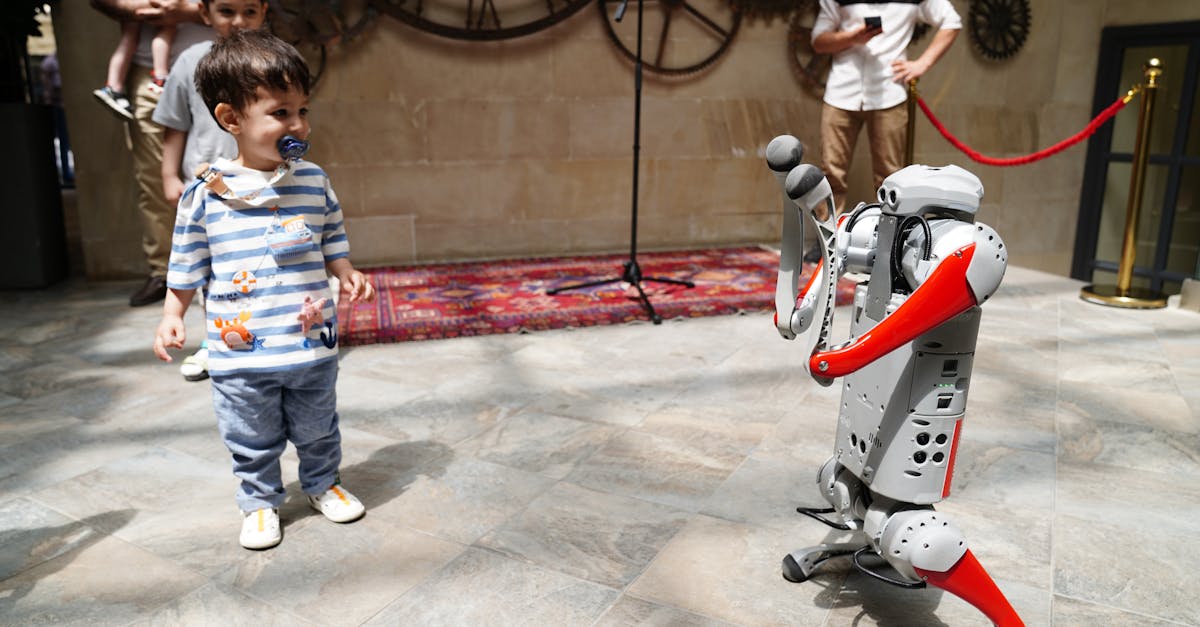
Agility Robotics: Digit, Commercial Deployments, and the State of Humanoid Logistics

Company Overview and Platform Positioning
Agility Robotics, founded in 2015 and headquartered in Bellevue, Washington, has positioned itself as a developer of autonomous bipedal robots designed for commercial and industrial environments. The company’s primary product, Digit, is a full-scale humanoid robot engineered to operate in spaces originally designed for human workers. Unlike wheeled or tracked mobile manipulators, Digit’s bipedal locomotion allows it to navigate stairs, thresholds, and uneven terrain without infrastructure modification. The company’s stated mission centers on replacing repetitive, ergonomically taxing manual labor with autonomous bipedal systems that can integrate into existing facility layouts.
Agility Robotics has maintained a lean operational profile compared to larger robotics conglomerates, focusing on vertical integration of actuators, control software, and perception systems. The company has secured multiple funding rounds from institutional investors and strategic partners, including Amazon Robotics, which has taken both an equity and technology partnership role. The strategic alignment with Amazon reflects a broader industry shift toward deploying humanoid robots in controlled, high-density logistics environments where infrastructure constraints and task standardization make automation more feasible.
Digit Hardware: Engineering Specifications and Shipping Status
Digit’s hardware architecture relies on a combination of custom-designed joint modules, high-torque actuators, and a distributed control system. The robot operates at a height of approximately 1.6 meters (5.3 feet) and weighs roughly 60 kilograms (132 pounds) without payload. Its design emphasizes duty cycle reliability, with manufacturer specifications indicating a target operational lifespan measured in millions of steps rather than calendar years. The platform utilizes a combination of proprioceptive sensors, LiDAR, and stereo vision for navigation and object manipulation.
Core Specifications
- Height: 1.6 m (5.3 ft)
- Weight: 60 kg (132 lbs) base unit
- Payload capacity: 20 kg (44 lbs) at waist height; up to 10 kg (22 lbs) when reaching overhead
- Max walking speed: 1.3 m/s (2.9 mph) in controlled environments
- Battery life: 8 hours continuous operation on standard charging infrastructure
- Actuation: Custom high-torque electric motors with integrated encoders and thermal management
- Navigation: LiDAR + stereo vision + IMU fusion for SLAM and obstacle avoidance
- Connectivity: Wi-Fi 6, Ethernet, and optional 5G for fleet management
Agility Robotics has transitioned from prototype development to limited commercial production. The company’s manufacturing process involves in-house assembly of core components, with final integration and testing conducted at its Washington facility. Shipping hardware has been documented through customer demonstrations, facility tours, and public deployment updates. The company emphasizes that Digit is not a general-purpose service robot but a task-specific automation platform optimized for pallet handling, case picking, and inventory verification in warehouse environments.
Amazon Partnership and Verified Warehouse Deployments
The most publicly documented deployment of Digit occurs within Amazon’s fulfillment network. Amazon Robotics initiated a partnership with Agility Robotics in 2021, providing both funding and technical collaboration. The partnership focuses on evaluating Digit’s performance in real-world logistics workflows, particularly in tasks that require bipedal navigation and dexterous manipulation. Amazon has made multiple public statements regarding the deployment, framing it as part of its broader automation strategy to reduce manual handling of heavy or repetitive items.
Deployment Timeline and Operational Scope
- 2021: Amazon Robotics announces partnership with Agility Robotics
- 2022: Initial pilot deployments begin in select Amazon fulfillment centers
- 2023: Expanded testing across multiple sites, focusing on pallet unloading and case sorting
- 2024: Continued deployment scaling, with public demonstrations showing Digit performing scheduled tasks in active warehouse zones
Amazon’s deployment strategy follows a phased approach. Early pilots were confined to controlled zones with standardized pallet configurations and predictable navigation paths. As the system matured, Amazon expanded testing to include more variable environments, including mixed SKU storage and dynamic floor layouts. The robot’s primary tasks include retrieving standard-sized cases, placing them on conveyors or pallets, and performing basic inventory scans. Amazon has not disclosed the total number of units deployed, nor has it released comprehensive performance metrics. However, the company has confirmed that Digit operates alongside human workers and other automation systems, rather than replacing entire shifts.
Independent reporting and on-stage demonstrations have shown Digit performing repetitive pick-and-place tasks, navigating around temporary obstacles, and charging autonomously at designated stations. The robot’s control software handles path planning, collision avoidance, and task scheduling through a central fleet management system. Amazon’s internal documentation and public updates emphasize that the deployment is experimental, with continuous software updates and hardware iterations based on field data.
Commercial Viability and Deployment Metrics
The commercial viability of bipedal logistics robots depends on three factors: reliability in unstructured environments, total cost of ownership, and task-specific productivity gains. Agility Robotics has addressed these through continuous firmware updates, modular hardware design, and integration with existing warehouse management systems. The company’s approach prioritizes incremental automation over full autonomous operation, allowing human workers to handle edge cases while Digit manages high-volume, repetitive tasks.
Deployment metrics remain partially proprietary, but industry analysis suggests that Digit’s value proposition lies in reducing ergonomic strain and increasing throughput for standardized tasks. The robot’s ability to climb stairs and navigate thresholds reduces the need for facility modifications, which is a significant advantage over wheeled mobile manipulators. However, bipedal locomotion inherently consumes more energy than wheeled systems, and battery management remains a constraint for continuous operation. Agility Robotics has mitigated this through fast-charging infrastructure and duty cycle optimization, allowing the robot to operate across multiple shifts with minimal downtime.
The company’s business model centers on direct sales and long-term service contracts, with pricing structured around hardware acquisition, software licensing, and maintenance support. Agility Robotics has not published standardized pricing for enterprise customers, but industry estimates place the base unit cost in the range of $75,000 to $100,000 USD, depending on configuration and support terms. The company emphasizes that total cost of ownership is evaluated against labor savings, injury reduction, and throughput improvements rather than upfront hardware cost alone.
India Market Availability and Pricing Context
As of the current reporting period, Agility Robotics’ Digit platform is not commercially available in India. The company does not list authorized distributors, service partners, or regional sales channels for the Indian market. Importing Digit into India would require navigating industrial robotics import regulations, customs duties, and certification requirements under the Bureau of Indian Standards (BIS) and the Ministry of Electronics and Information Technology (MeitY) guidelines. Additionally, operational deployment would depend on local technical support infrastructure, software localization, and compliance with workplace safety regulations.
For organizations considering Digit for Indian logistics facilities, the following factors apply:
- Commercial channels: No authorized distributors or service partners currently operate in India
- Import pathway: Direct purchase from Agility Robotics is possible but requires export documentation, freight forwarding, and customs clearance
- Estimated landed cost: Approximately ₹85 lakh to ₹1.15 crore INR per unit, based on current USD-INR exchange rates, international freight, and standard industrial robotics import duties. This estimate is flagged as preliminary and subject to customs valuation, GST, and service contract terms
- Operational readiness: Requires on-site technical training, network infrastructure for fleet management, and integration with existing warehouse automation systems
Indian logistics companies currently rely on wheeled mobile manipulators, autonomous guided vehicles (AGVs), and collaborative robots for warehouse automation. Bipedal platforms remain in the evaluation phase, with most organizations monitoring pilot deployments in North America and Europe before committing to capital expenditure. Agility Robotics has not announced India-specific roadmaps, distribution partnerships, or localized service agreements.
Competitive Landscape and Industry Position
The commercial humanoid robotics market includes multiple developers, each pursuing different architectural approaches. Boston Dynamics’ Atlas (electric variant), Figure AI’s Figure 02, Tesla’s Optimus, and Apptronik’s Apollo represent alternative platforms with varying deployment timelines and target markets. Agility Robotics differentiates Digit through its focus on logistics-specific task optimization, bipedal navigation in existing infrastructure, and phased deployment strategy.
Unlike competitors pursuing general-purpose service robotics or automotive assembly integration, Agility Robotics maintains a narrow focus on warehouse and distribution center workflows. This specialization allows the company to refine its perception systems, task planning algorithms, and hardware durability for specific use cases. The Amazon partnership provides both validation and real-world data, accelerating software iteration and reliability improvements.
Industry analysts note that bipedal logistics automation remains in the pilot-to-early-commercial phase. Challenges include terrain variability, payload limitations, energy consumption, and regulatory compliance across regions. Agility Robotics has addressed these through continuous hardware revisions, cloud-based fleet management, and standardized task programming. The company’s long-term viability will depend on deployment scale, cost reduction through manufacturing optimization, and expansion into additional industrial sectors beyond logistics.
References
- Agility Robotics - Digit Platform Specifications: https://agilityrobotics.com/digit/
- Agility Robotics - Company Overview and Technology: https://agilityrobotics.com/
- Amazon Robotics - Partnership with Agility Robotics: https://robotics.amazon/news/amazon-robotics-agility-robotics/
- Amazon Robotics - Warehouse Automation Updates: https://robotics.amazon/
- IEEE Spectrum - Analysis of Bipedal Warehouse Robots: https://spectrum.ieee.org/agility-robotics-digit
- The Robot Report - Commercial Humanoid Deployment Tracking: https://www.therobotreport.com/
- Agility Robotics - Funding and Strategic Partnerships: https://agilityrobotics.com/news/
✓ Key takeaways
- •Hands-on view of Agility Robotics: Digit, Commercial Deployments, and the State of Humanoid Logistics inside our Agility Robotics library.
- •Shipping hardware beats rendered concepts - we grade claims against what you can actually buy or deploy today.
- •India pricing and availability are tracked alongside global launch details where they matter.
References
- Agility Robotics - Digit Platform Specifications
- Agility Robotics - Company Overview and Technology
- Amazon Robotics - Partnership with Agility Robotics
- Amazon Robotics - Warehouse Automation Updates
- IEEE Spectrum - Analysis of Bipedal Warehouse Robots
- The Robot Report - Commercial Humanoid Deployment Tracking
- Agility Robotics - Funding and Strategic Partnerships
Related articles
More in Agility Robotics →