
Agricultural Drones in India: DJI Agras, Garuda Aerospace, and the Ground Reality of Indigenous Manufacturing
The Current State of Agricultural Drones in India
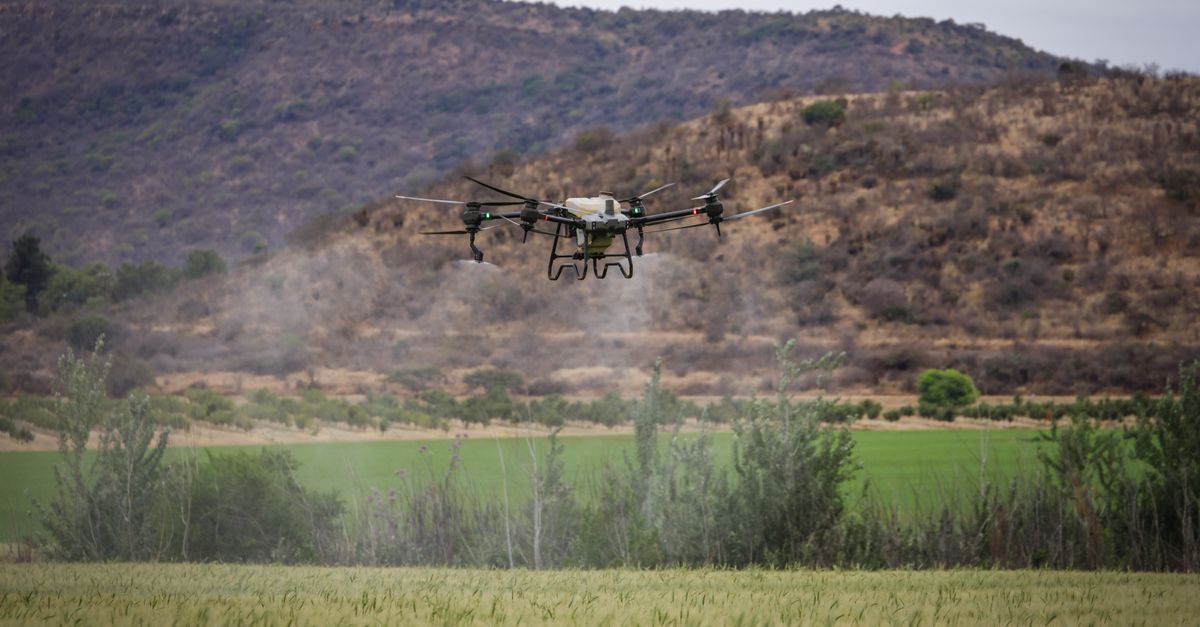
Agricultural drones in India have transitioned from experimental pilots to contracted commercial operations over the past three years. The shift is measurable: contract spraying and fertilizer application units have multiplied across Punjab, Haryana, Telangana, and Andhra Pradesh, while state governments have established Kisan Drone Centres to subsidize equipment purchases. Despite this expansion, the market remains divided between globally sourced platforms and domestically manufactured systems. Evaluation of the sector requires strict evidence grading. Shipping hardware with verified specifications ranks first. Pilot deployments with documented flight hours and payload calibration data rank second. Manufacturer announcements and policy targets rank last. This framework prevents marketing claims from obscuring operational reality.
DJI Agras Series: Shipping Hardware and Ground Truth
DJI’s Agras line dominates the Indian agri-drone segment due to mature supply chains, proven flight controllers, and extensive service networks. The company ships complete systems rather than kits, which simplifies procurement for contract spray operators. Hardware grading places the T20P, T30, and T40/T50 models ahead of earlier prototypes because they are mass-produced, field-tested, and supported by official replacement parts.
Model Lineup and Verified Specifications
The Agras T20P features a 20-litre liquid payload, dual centrifugal pumps, and a downward-facing radar for terrain following. The T30 scales the system to 30 litres with a wider spray width and higher wind resistance tolerance. The T40 and T50 introduce dual-battery swap architecture, increased thrust-to-weight ratios, and modular nozzle arrays calibrated for both liquid and granular payloads. Official DJI spec sheets confirm flight times between 10 and 14 minutes under full payload conditions, with a typical duty cycle of 20 to 25 minutes when including battery swaps and tank refills. Independent field reports from contract spray operators in Punjab note that actual throughput averages 4 to 6 hectares per hour when accounting for wind shifts, nozzle clogging, and battery management.
Deployment Realities and Maintenance Constraints
Hardware shipping does not guarantee seamless deployment. DJI Agras units require calibrated flow meters, regular pump inspections, and firmware updates that occasionally alter spray pattern geometry. Operators report that nozzle wear accelerates in alkaline water conditions, requiring replacement every 150 to 200 hectares. The radar terrain-following system performs reliably on flat terrain but struggles with dense crop canopies and uneven field boundaries. Battery longevity degrades noticeably after 300 to 400 charge cycles, and replacement packs carry a significant portion of the total cost of ownership. These factors are documented in manufacturer maintenance guides and third-party fleet management reports.
Gaarua Aerospace: Indigenous Design and Certification Status
Gaarua Aerospace operates as one of the few Indian manufacturers holding DGCAC (Drone Garment Certification and Airworthiness) type certification for agricultural platforms. Certification status ranks the company above pre-certification announcements, though it does not eliminate production scaling challenges. The company’s hardware grading places the Garua 1 and Garua 2 in the shipping hardware tier, with verified payloads, flight controllers, and propulsion systems.
Garua 1, Garua 2, and DGCAC Compliance
The Garua 1 platform carries a 12-litre payload and is optimized for small and marginal farmers. The Garua 2 scales to 20 litres, incorporates redundant IMU sensors, and meets DGCAC airworthiness requirements for commercial agricultural operations. Type certification confirms that the airframe, propulsion, and ground control station have passed structural fatigue, electromagnetic compatibility, and flight envelope tests. Pilot deployments in Maharashtra and Karnataka have logged operational hours, though fleet-wide reliability data remains limited compared to DJI’s documented service records. The company’s spec sheets list flight times of 12 to 15 minutes, with spray width and nozzle configurations calibrated for rice, wheat, and cotton. Independent reporting notes that indigenous manufacturing reduces import dependency but introduces supply chain bottlenecks for flight controllers, ESCs, and specialized batteries.
Production Scaling and Service Networks
Indigenous assembly does not automatically translate to nationwide service coverage. Gaarua Aerospace has established service hubs in select states, but spare part lead times and technician training vary by region. Hardware grading acknowledges the certification milestone while noting that pilot deployments must still prove long-term reliability under high-temperature and high-humidity conditions common in central and southern India.
Indian Agri-Drone Startups: Manufacturing Scale and Pilot Deployments
Beyond Gaarua Aerospace, several Indian startups and aerospace manufacturers have entered the agricultural drone space. Companies such as Yuvraj Robotics, IdeaForge, and regional OEMs produce platforms ranging from 5-litre to 30-litre payloads. Hardware grading places these manufacturers in a mixed tier: some ship complete systems with verified specs, while others operate at pilot deployment scale with limited fleet data. Announcements regarding future production lines rank last in evidence weight.
Yuvraj Robotics, IdeaForge, and Regional Manufacturers
Yuvraj Robotics focuses on modular platforms designed for contract spraying and soil sampling, with spec sheets indicating payloads between 10 and 15 litres and flight times of 11 to 13 minutes. IdeaForge, known for defense and surveillance UAVs, has adapted its propulsion and ground control architecture for agricultural use, though its primary revenue remains defense contracts. Regional manufacturers in Tamil Nadu, Gujarat, and Uttar Pradesh produce platforms tailored to local crop patterns, often using off-the-shelf flight controllers and locally sourced batteries. Pilot deployments across these companies show variable throughput, with some operators achieving 3 to 5 hectares per hour, while others report downtime due to component failures or calibration drift. Independent fleet management data confirms that indigenous startups are closing the gap in hardware reliability, but service network density and spare part availability remain uneven.
Contract Spraying and Kisan Drone Centre Adoption
The Government of India’s Kisan Drone Centre initiative has accelerated hardware procurement. Operators purchase units through state subsidies, which reduce upfront capital expenditure. Pilot deployments at these centres demonstrate that drone adoption correlates strongly with operator training, maintenance discipline, and crop type compatibility. Rice and wheat fields show the highest adoption rates, while orchard and horticulture applications remain limited by obstacle avoidance requirements and payload calibration complexity.
India Availability and Approximate INR Pricing
Agricultural drone availability in India spans imported systems, certified indigenous platforms, and regional OEM assemblies. Pricing varies by payload capacity, certification status, and service package inclusions. The following figures represent approximate landed costs in India, including GST, import duties where applicable, and standard warranty coverage. These estimates are flagged as approximate and subject to regional dealer pricing, state subsidy eligibility, and currency fluctuations.
- DJI Agras T20P: ₹8,50,000 to ₹9,50,000
- DJI Agras T30: ₹10,50,000 to ₹12,00,000
- DJI Agras T40/T50: ₹13,00,000 to ₹15,50,000
- Gaarua Aerospace Garua 1: ₹9,00,000 to ₹10,50,000
- Gaarua Aerospace Garua 2: ₹11,50,000 to ₹13,50,000
- Indian Startup Platforms (5L to 20L payloads): ₹6,00,000 to ₹12,00,000
State subsidies under the PM-Kisan scheme and state-level agricultural missions typically cover 40 to 50 percent of equipment costs for eligible farmers and FPOs. Contract spray operators purchase at full market rates but recover costs through per-hectare service fees ranging from ₹800 to ₹1,200. Battery replacement, nozzle calibration, and firmware updates add to annual operating expenses, which average ₹1,50,000 to ₹2,50,000 per unit annually depending on usage intensity.
Regulatory Constraints, Maintenance Realities, and Deployment Limits
Regulatory compliance remains a structural constraint. The DGCA requires Remote Pilot Certificates for all commercial agricultural operations, DGCAC type certification for indigenous platforms, and digital permission via the Digital Sky platform for each flight. These requirements are documented in official DGCA directives and Ministry of Agriculture guidelines. Hardware deployment is further limited by payload calibration accuracy, wind speed tolerances, and battery thermal management. Operators report that spray drift increases significantly above 15 km/h winds, and nozzle clogging accelerates in hard water regions. Maintenance schedules must include pump descaling, IMU recalibration, and propeller balance checks. These constraints are not speculative; they are recorded in manufacturer service manuals, pilot deployment logs, and independent fleet management reports.
References
- DJI Agras Official Specifications and Fleet Management Guides: https://www.dji.com/india/agrass
- Gaarua Aerospace Product Specifications and DGCAC Certification Documentation: https://garuaaerospace.com/
- DGCA Drone Rules and Remote Pilot Certification Guidelines: https://dgca.gov.in/
- Ministry of Agriculture & Farmers Welfare PMKSY Drone Policy and Kisan Drone Centre Framework: https://agriculture.gov.in/
- Yuvraj Robotics Agricultural Platform Specifications: https://yuvraj.in/
- IdeaForge Industrial and Agricultural UAV Portfolio: https://ideaforge.in/
- Independent Fleet Management Reports and Contract Spray Operator Deployment Data (Punjab, Telangana, Maharashtra): Industry publications and state agricultural department reports
✓ Key takeaways
- •Hands-on view of Agricultural Drones in India: DJI Agras, Garuda Aerospace, and the Ground Reality of Indigenous Manufacturing inside our Agricultural Drones library.
- •Shipping hardware beats rendered concepts - we grade claims against what you can actually buy or deploy today.
- •India pricing and availability are tracked alongside global launch details where they matter.
Related articles
More in Agricultural Drones →

