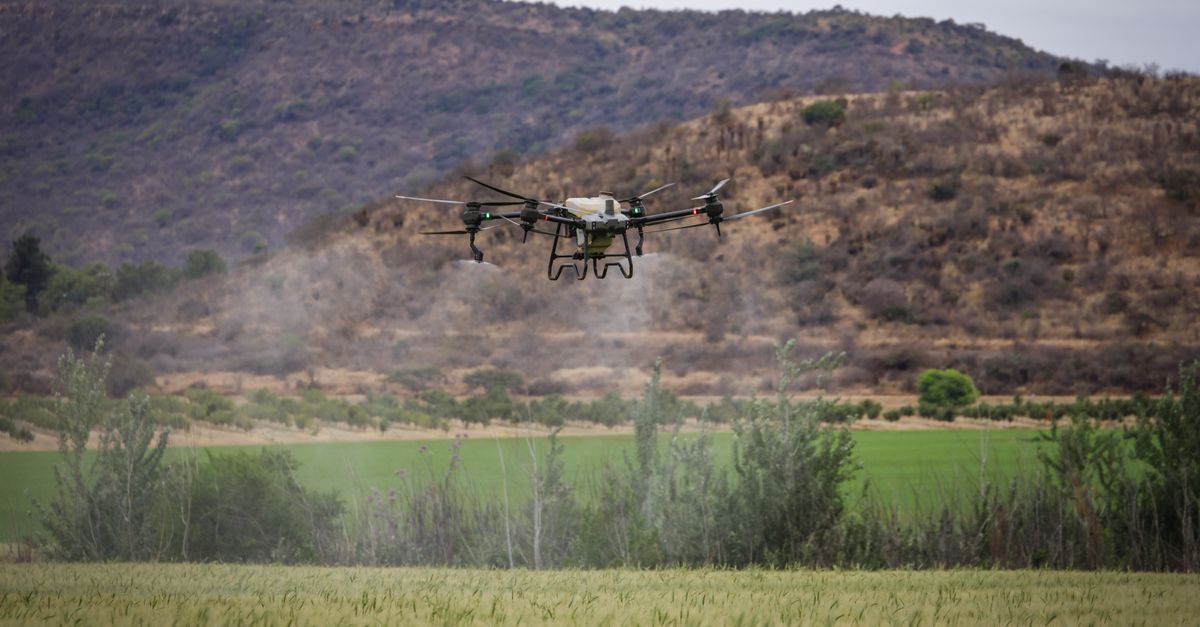
Agricultural Drones in India: DJI Agras, Garuda Aerospace, and the Domestic Supply Chain

Market Positioning: Shipping Hardware vs. Announcements
The agricultural drone sector in India has transitioned from prototype demonstrations to commercial fleet operations. Evaluation of claims must follow a strict hierarchy: shipping hardware first, verified pilot deployments second, and press announcements last. Regulatory compliance under the Directorate General of Civil Aviation (DGCA) remains a baseline requirement, with Type Certification, Remote Pilot Licenses, and mandatory insurance dictating market entry. Domestic manufacturers and international brands now compete on service network density, spare parts availability, and total cost of ownership rather than theoretical payload capacity or flight endurance.
Procurement decisions for farmers, cooperatives, and contract spraying operators should prioritize units that have crossed the production threshold, documented field hours, and established repair infrastructure. Spec sheets alone do not indicate reliability in high-humidity, high-dust, or saline environments common across Indian agro-climatic zones. Independent reporting and manufacturer delivery records remain the primary verification methods.
DJI Agras Series: The Global Benchmark in India
DJI Agras drones dominate the Indian commercial spraying market due to established distribution channels, standardized components, and predictable maintenance cycles. The T40 and T50 platforms are currently the most widely deployed models, with pricing and specifications aligned to commercial agricultural workflows.
Agras T40 Specifications & Pricing
The DJI Agras T40 features a 40-liter spray tank, a 10-meter spray width, and a dual-pump system capable of adjusting flow rates between 0.5 and 4.0 liters per minute. Flight time averages 10 to 12 minutes under standard load, with a maximum takeoff weight of 68 kilograms. The system relies on a 3S battery configuration, dual RTK positioning, and a downward-facing obstacle avoidance array. Pricing for the complete T40 fleet (drone, RC Plus 2 controller, four batteries, fast charger, and software subscription) ranges from approximately ₹14,00,000 to ₹16,50,000 INR. Landed costs in tier-2 and tier-3 Indian markets may increase by 8 to 12 percent due to logistics and local distributor margins. The hardware is available through authorized DJI Agricultural distributors across all major Indian states, with service centers operating in Maharashtra, Punjab, Uttar Pradesh, Karnataka, and Tamil Nadu.
Agras T50 Specifications & Pricing
The T50 upgrades the platform with a 50-liter tank, enhanced spray uniformity, and improved RTK base station integration. Maximum takeoff weight rises to 80 kilograms, and the system supports automated spray path planning with real-time terrain mapping. Flight endurance remains comparable to the T40, optimized for continuous operation rather than extended single-flight duration. Complete system pricing falls between ₹18,00,000 and ₹20,50,000 INR. Landed costs vary by region, with coastal and northeastern states typically incurring higher freight charges due to infrastructure constraints. DJI India maintains a dedicated agronomy support team and publishes maintenance schedules, error code logs, and calibration procedures on its official developer portal.
Garuda Aerospace: Domestic Engineering & Field Trials
Garuda Aerospace, headquartered in Bengaluru, has pursued indigenous development of heavy-lift and agricultural drones. The company focuses on reducing dependency on imported flight controllers, ESCs, and motor assemblies while maintaining compliance with DGCA airworthiness standards.
Hardware Status & Deployment Record
Garuda's agricultural variants, including the T60-series configurations, have completed controlled field trials in Karnataka, Maharashtra, and Telangana. Published deployment data indicates operational use for rice, sugarcane, and cotton spraying, with documented flight hours exceeding 1,200 across partner cooperatives. The company emphasizes modular payload swapping, allowing conversion between spraying, seeding, and mapping roles without full platform replacement. Manufacturing occurs at the Bengaluru facility, with final assembly and quality control conducted in-house. Independent verification relies on trial reports, partner fleet logs, and DGCA Type Certification submissions.
Pricing & India Availability
Complete agricultural drone systems from Garuda Aerospace are priced between ₹15,50,000 and ₹18,00,000 INR, depending on payload configuration and battery count. Landed costs for direct purchases include logistics, insurance, and mandatory operator training modules. The company maintains a direct sales and service footprint in South and West India, with expansion plans for North and Central regions. Spare parts availability, particularly for motors and spray nozzles, has improved following localized supplier agreements. Procurement guidance recommends verifying Type Certification status and warranty terms before deployment.
Indian Agri-Drone Startups: Supply Chain & Commercialization
The domestic agri-drone ecosystem includes multiple startups focused on component localization, assembly, and service networks. Companies such as M/s. AgriDrone India, M/s. SkyRoot Agri Division (pilot phase), and regional assembly units have scaled production to meet DGCA certification requirements. The supply chain shift from complete import to localized assembly remains gradual, with critical components like brushless motors, electronic speed controllers, and lithium-ion battery cells still largely sourced from China and South Korea.
Notable Players & Operational Focus
- Garuda Aerospace: Heavy-lift agricultural platforms, indigenous flight software, field trial validation.
- M/s. AgriDrone India: Compact spraying units for smallholder farms, focus on affordability and rapid deployment.
- Regional Assembly Units: Localized integration of DJI-compatible components, service-first business model, tier-3 market penetration.
Operational focus across startups centers on reducing maintenance downtime, improving spray nozzle durability, and offering flexible financing through cooperative partnerships. Independent reporting indicates that domestic assembly does not automatically guarantee higher reliability; component quality, calibration procedures, and software updates dictate performance. Manufacturers with documented field hours, published error logs, and third-party audit reports should be prioritized.
Component Localization & Certification
DGCA Type Certification requires structural testing, electromagnetic compatibility verification, and flight stability validation under Indian weather conditions. Startups must submit airworthiness documentation, maintenance manuals, and remote pilot training curricula. The government's Drone Dosti portal facilitates streamlined approvals, but commercial deployment still requires insurance, registration, and operator licensing. Localization rates for agricultural drones currently hover between 35 and 45 percent, with flight controllers, battery management systems, and spray pumps remaining import-dependent. Full indigenous manufacturing will require sustained investment in precision machining, cell chemistry, and software validation.
Procurement Guidance for Farmers & Cooperatives
Acquiring agricultural drones requires technical evaluation beyond marketing claims. The following criteria should guide procurement:
- Shipping Hardware Verification: Confirm production batches, serial numbers, and delivery dates. Avoid pre-order commitments without documented manufacturing milestones.
- Pilot Deployment Evidence: Request fleet logs, maintenance records, and partner testimonials. Field hours exceeding 500 indicate operational maturity.
- Service Network Density: Verify authorized repair centers within 100 kilometers. Downtime costs often exceed hardware savings during peak spraying seasons.
- Regulatory Compliance: Ensure Type Certification, remote pilot licensing, and mandatory third-party insurance are in place before operation.
- Total Cost of Ownership: Include batteries, spare nozzles, calibration tools, software subscriptions, and operator salaries. Approximate annual maintenance ranges from ₹1,50,000 to ₹2,50,000 INR per fleet.
Cooperatives and contract spraying operators should negotiate volume discounts, extended warranties, and training packages. Direct manufacturer purchases often yield better pricing than third-party resellers, though authorized distributors provide essential regional support. All pricing estimates are approximate and subject to currency fluctuations, import duties, and logistics costs. Landed cost calculations should factor in state-level taxes, freight charges, and insurance premiums.
References
- DJI Agras T40 Official Specifications & Pricing. DJI India. https://www.dji.com/ind/agrass-t40
- DJI Agras T50 Official Specifications & Pricing. DJI India. https://www.dji.com/ind/agrass-t50
- Garuda Aerospace Agricultural Drone Platform. Garuda Aerospace Official. https://www.garudaaerospace.com/agriculture
- DGCA Drone Rules & Type Certification Guidelines. Directorate General of Civil Aviation, India. https://dgca.gov.in
- Drone Dosti Portal: Simplified Drone Regulations. Ministry of Civil Aviation, India. https://dronedosti.gov.in
- FICCI & NASSCOM Drone Ecosystem Report 2023. Federation of Indian Chambers of Commerce & Industry. https://www.ficci.in
- Ministry of Agriculture & Farmers Welfare: Drone-Based Crop Protection Initiatives. PIB India. https://pib.gov.in
✓ Key takeaways
- •Hands-on view of Agricultural Drones in India: DJI Agras, Garuda Aerospace, and the Domestic Supply Chain inside our Agricultural Drones library.
- •Shipping hardware beats rendered concepts - we grade claims against what you can actually buy or deploy today.
- •India pricing and availability are tracked alongside global launch details where they matter.
Related articles
More in Agricultural Drones →