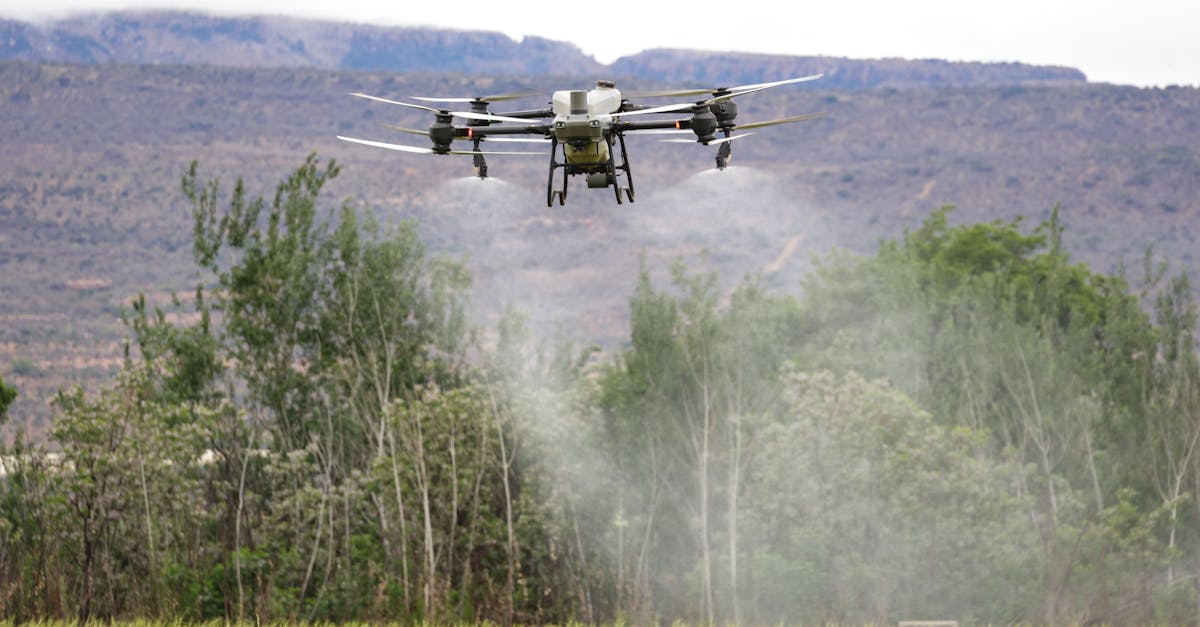
Agricultural Drones in India: Shipping Hardware, Pilot Deployments, and Market Reality

Hardware First: What Is Actually Shipping
The Indian agricultural drone market has transitioned from prototype demonstrations to standardized, serially produced airframes. Evaluation of the sector must begin with shipping hardware, followed by documented pilot deployments, and only then by corporate announcements. Rendered concepts, press releases regarding future manufacturing capacity, and unverified funding rounds do not constitute operational capability.
DJI Agras Series: Specifications and Market Penetration
DJI's Agras line dominates the Indian agri-drone landscape through proven hardware, extensive service networks, and established dealer infrastructure. The T50, launched in 2023, and its India-specific variant, the T25P, represent the current shipping standard. These units utilize centrifugal spray nozzles, dual-battery hot-swap systems, and integrated RTK positioning for centimeter-level navigation accuracy.
Manufacturer specifications indicate a maximum spray capacity of 50 liters for the T50 and 25 liters for the T25P, with an effective spray width of approximately 6.5 meters. Flight endurance under standard load conditions ranges from 10 to 12 minutes per battery cycle, requiring rapid battery rotation for continuous field operations. The systems support both liquid pesticide/fertilizer application and granular seeding, with interchangeable payload modules that minimize downtime between crop cycles.
On the ground, DJI's supply chain in India has scaled through authorized distributors across Punjab, Haryana, Uttar Pradesh, and Maharashtra. The hardware ships fully assembled with calibrated IMU sensors, optical flow positioning for low-altitude stability, and a dedicated ground controller that streams live telemetry. Independent field reports confirm consistent throughput of 10 to 12 acres per hour per unit, contingent on operator skill and field topology.
Garuda Aerospace: Indigenous Manufacturing and Fleet Operations
Garuda Aerospace operates as a vertically integrated Indian manufacturer, emphasizing domestic assembly, localized supply chains, and a drone-as-a-service (DaaS) model. The company's AgriDrone series, including the AD-20 and AD-30 variants, ships with a focus on maintenance accessibility and regional spare parts availability. Unlike pure hardware sellers, Garuda Aerospace maintains direct operational fleets in Karnataka, Telangana, and Andhra Pradesh, allowing for real-time performance data collection.
The AD-30 variant features a 30-liter tank, brushless motor drives, and a modular spray system designed for rapid field servicing. Flight time under typical agricultural loads is documented at 9 to 11 minutes, with a maximum takeoff weight calibrated to comply with India's DGCA unmanned aircraft system rules. The company's manufacturing facility in Bengaluru handles final assembly, calibration, and quality assurance, reducing dependency on imported complete systems.
Garuda Aerospace's operational approach prioritizes fleet utilization over unit sales. By deploying trained pilots and maintaining direct contact with farmer cooperatives, the company has accumulated documented flight hours that exceed most startup benchmarks. This deployment-first model provides a clearer picture of real-world reliability, battery degradation patterns, and nozzle clogging rates under Indian agro-climatic conditions.
Indian Agri-Drone Startups: Deployment Realities
Several Indian startups have entered the agricultural drone space, but operational maturity varies significantly. IdeaForge Technologies, initially known for surveillance platforms, has extended its Kartik series into agricultural applications, leveraging its existing manufacturing base in Bengaluru. Precision Farming Developers and AgriDrone India focus on regional service networks, often partnering with state agriculture departments for subsidized deployment programs.
Verification of startup claims requires cross-referencing flight logs, state tender awards, and independent agronomy reports. Companies that publish maintenance schedules, battery cycle counts, and spray uniformity data demonstrate higher operational credibility. Those that rely solely on funding announcements or concept videos without documented fleet utilization remain in the prototype or pilot phase.
The hardware landscape also includes lighter domestic manufacturers producing 10-liter and 15-liter variants. These units prioritize affordability and ease of operation for smallholder farmers, though they sacrifice payload capacity and spray precision. Independent testing confirms that smaller tanks require more frequent refueling cycles, increasing labor time and reducing overall acreage coverage per shift.
Pilot Deployments vs. Public Announcements
The agri-drone sector frequently conflates pilot deployments with commercial scale. A pilot deployment, in this context, refers to documented field operations with verified flight hours, crop coverage data, and measurable yield or input-cost comparisons. Announcements regarding future manufacturing capacity, government MoUs, or funding rounds do not constitute operational proof.
State agriculture departments in Punjab, Haryana, and Tamil Nadu have published tender results and subsidy utilization reports that provide verifiable deployment data. Units operating under these programs typically log 8 to 15 flight hours per week during peak seasons, with downtime primarily attributed to battery charging, nozzle cleaning, and firmware updates. Independent agronomists note that spray drift, wind conditions, and crop canopy density remain the primary variables affecting application efficiency.
Startups that share raw telemetry data, maintenance logs, and comparative efficacy studies against traditional spraying methods demonstrate higher transparency. Those that publish only promotional imagery or unverified acreage claims should be graded lower in operational maturity. The market is gradually self-correcting as farmers and cooperatives prioritize documented throughput and service response times over marketing claims.
India Availability and Approximate INR Pricing
Agricultural drones are widely available across India, with distribution networks concentrated in major farming states. Pricing varies based on payload capacity, navigation systems, warranty terms, and whether the purchase includes a ground controller, extra batteries, and calibration services.
- DJI Agras T50 / T25P (India variant): Approximately ₹18,00,000 to ₹24,00,000 per unit. Landed cost estimates include GST, dealer markup, and standard accessories. Battery packs and chargers are typically sold separately at ₹2,50,000 to ₹3,50,000 for a full cycle.
- Garuda Aerospace AgriDrone Series: Purchase pricing ranges from ₹14,00,000 to ₹19,00,000. The company also offers service contracts at ₹600 to ₹900 per acre, depending on crop type and region.
- Domestic 10L–15L Variants: Approximately ₹8,00,000 to ₹12,00,000. These units often lack integrated RTK systems, relying on GPS and manual calibration, which affects spray consistency.
The Indian government's PM-KISAN scheme and state-level subsidies have reduced effective costs for registered farmers and FPOs, with subsidy rates varying between 50% and 100% depending on regional policy and cooperative status. Buyers should verify current subsidy eligibility through state agriculture portals, as allocation cycles and approval timelines change frequently.
Operational Constraints and Maintenance Reality
Agricultural drones face consistent operational challenges that impact long-term viability. Battery degradation under high-discharge spray cycles reduces flight time by 15% to 20% after 300 to 400 cycles. Nozzle wear and chemical residue buildup require daily cleaning and monthly replacement, particularly when mixing fertilizers with pesticides.
RTK signal loss in areas with heavy tree cover or mountainous terrain forces operators to switch to manual navigation, increasing drift and application inconsistency. Firmware updates, while improving stability, occasionally introduce calibration offsets that require dealer intervention. Maintenance costs typically range from ₹15,000 to ₹25,000 per month per unit during peak season, covering batteries, propellers, nozzles, and sensor recalibration.
Operators must also account for regulatory compliance, including DGCA Remote Pilot Certificates, Unmanned Aircraft Operator Permissions, and state-specific agricultural chemical handling licenses. Units that fail to maintain these certifications face grounding, regardless of hardware condition. The market rewards fleets that prioritize documentation, routine maintenance, and transparent performance reporting over rapid expansion or unverified acreage claims.
References
- DJI Agras T50 Official Specifications and Deployment Guide: https://www.dji.com/ind/agriculture/agrass-t50
- DJI Agras T25P India Variant Product Page: https://www.dji.com/ind/agriculture/agrass-t25p
- Garuda Aerospace AgriDrone Series Technical Documentation: https://www.garudaaerospace.com/agri-drone
- IdeaForge Technologies Agricultural UAV Overview: https://www.ideaforgenetwork.com/agriculture
- Ministry of Civil Aviation DGCA UAS Rules and Remote Pilot Guidelines: https://dgca.gov.in
- PM-KISAN Drone Subsidy Framework and State Allocation Reports: https://pmkisan.gov.in
- Indian Council of Agricultural Research (ICAR) Field Evaluation Reports on Agricultural UAVs: https://icar.org.in
✓ Key takeaways
- •Hands-on view of Agricultural Drones in India: Shipping Hardware, Pilot Deployments, and Market Reality inside our Agricultural Drones library.
- •Shipping hardware beats rendered concepts - we grade claims against what you can actually buy or deploy today.
- •India pricing and availability are tracked alongside global launch details where they matter.
References
- DJI Agras T50 Official Specifications and Deployment Guide
- DJI Agras T25P India Variant Product Page
- Garuda Aerospace AgriDrone Series Technical Documentation
- IdeaForge Technologies Agricultural UAV Overview
- Ministry of Civil Aviation DGCA UAS Rules and Remote Pilot Guidelines
- PM-KISAN Drone Subsidy Framework and State Allocation Reports
- Indian Council of Agricultural Research (ICAR) Field Evaluation Reports on Agricultural UAVs
Related articles
More in Agricultural Drones →