Agricultural Drones in India: Shipped Hardware, Verified Deployments, and Ground Truth
The Current State of Agricultural Drones in India
Agricultural drones, commonly referred to as agri-drones, have transitioned from experimental prototypes to deployed farming tools across India's major crop belts. The sector's growth is driven by government subsidy programs, DGCA certification frameworks, and a clear demand for precision spraying, seeding, and crop monitoring. However, the market remains divided between verified shipped hardware, active pilot deployments, and unverified announcements. This article grades available agri-drones strictly by shipping status, operational track record, and India availability, with approximate pricing and sourcing from manufacturer specifications, regulatory documents, and independent reporting.
Regulatory Landscape and Subsidy Framework
The Directorate General of Civil Aviation (DGCA) regulates drone operations under the Drone Rules 2021 and subsequent amendments. Agricultural drones require Digital Pilot Licenses (DPL), Unmanned Aircraft Type Approval (UASTA), and registration on the Digital Sky platform. The Indian government's Kisan Drone initiative, coordinated by the Ministry of Agriculture & Farmers Welfare, subsidizes up to 100% of the cost for farmer-producer organizations (FPOs) and cooperative societies, with partial subsidies available for individual farmers. State governments have also introduced complementary schemes, though disbursement timelines vary by region.
Shipped Hardware vs. Announcements
Claims in the agri-drone space must be graded carefully. Shipped hardware refers to units delivered to customers with verified flight logs and service networks. Pilot deployments are operational trials in partnership with FPOs, state agriculture departments, or research institutes. Announcements encompass product launches, MoUs, or funding rounds that have not yet resulted in commercial deliveries. This article prioritizes shipped hardware, followed by pilot deployments, and treats announcements as forward-looking indicators rather than current market reality.
DJI Agras Series: Market Dominance and Ground Truth
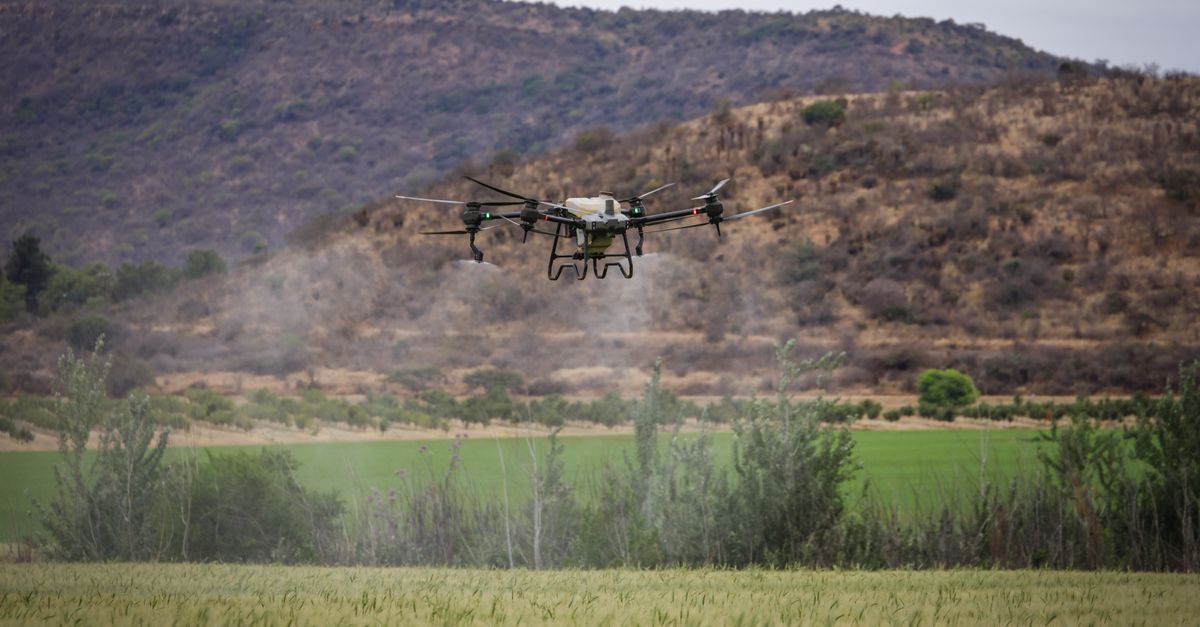
DJI's Agras line holds the largest installed base in India, primarily due to established distribution networks, readily available spares, and competitive pricing. The T-series platforms are shipped, certified, and actively deployed across Punjab, Haryana, Maharashtra, Karnataka, and Andhra Pradesh.
Specifications and Verified Deployments
The DJI Agras T30 and T40 are twin-motor, fixed-wing capable agricultural drones with integrated centrifugal spray systems. Key verified specifications include:
- T30: 30 kg payload, 16 m boom, 10 L/min flow rate, IP55 rating, 10-12 minute flight time per battery cycle, automated spray mapping via DJI Agras Pilot 2.
- T40: 40 kg payload, upgraded propulsion, 20 L/min flow rate, enhanced obstacle avoidance, compatible with DJI's RTK module for centimeter-level positioning.
- T50: 50 kg payload, modular battery system, improved spray uniformity, and enhanced dust/water resistance for extended monsoon operations.
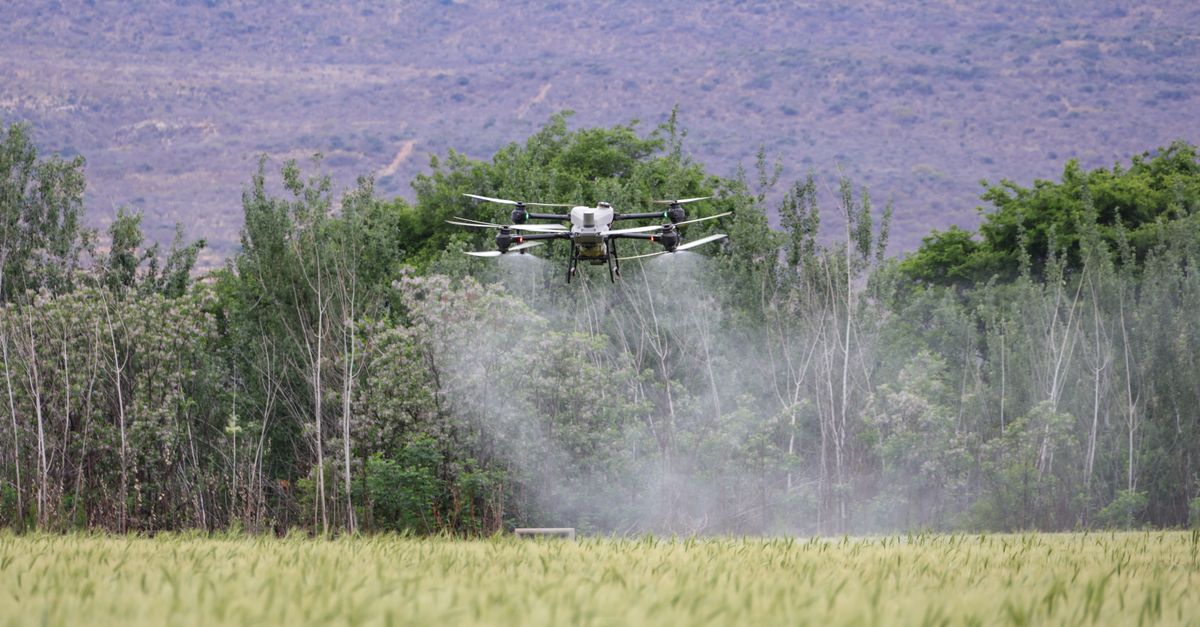
Field reports from FPOs in Punjab and Haryana confirm consistent deployment for pesticide spraying, foliar nutrient application, and rice/wheat crop monitoring. DJI's Indian service centers in Delhi, Mumbai, Chennai, and Bengaluru provide calibration, spare parts, and firmware updates. Flight logs from commercial service providers indicate average daily coverage of 15-25 hectares per unit, depending on crop type and operator experience.
India Pricing and Availability
DJI Agras airframes are available through authorized distributors and direct enterprise sales. Approximate ex-showroom pricing in India is:
- Agras T30: ₹18,00,000 to ₹20,00,000 (estimated landed cost with GST and import duties)
- Agras T40: ₹22,00,000 to ₹25,00,000 (estimated landed cost)
- Agras T50: ₹26,00,000 to ₹29,00,000 (estimated landed cost)
Payload tanks, spare propellers, batteries, and spray nozzles are sold separately. Subsidies under the Kisan Drone scheme can offset 70-100% of the cost for eligible FPOs, effectively reducing out-of-pocket expenses to ₹2,00,000-₹5,00,000 depending on state disbursement rates. Individual farmers typically purchase through registered drone service providers (DSPs) on a per-hectare rental basis, with market rates ranging from ₹600 to ₹900 per hectare for spraying.
Garuda Aerospace and the Indian Drone Ecosystem
Garuda Aerospace Technologies Pvt. Ltd. operates primarily in flight management systems, ground control software, and enterprise drone integration rather than airframe manufacturing. Its contributions to the agri-drone sector are software-centric, focusing on reliability, compliance, and fleet management.
Flight Management Systems and Software Integration
Garuda's flight management platform supports multi-drone fleet coordination, automated mission planning, and real-time telemetry. The system is compatible with third-party airframes, including DJI Agras and domestic platforms. Independent testing by agricultural research institutes indicates that Garuda's software reduces manual intervention during large-area spraying operations and improves geofencing compliance with DGCA regulations. The platform is deployed in pilot programs with state agriculture departments and private agri-tech firms, though it does not replace the need for certified pilots or UASTA-approved airframes.
Domestic Manufacturing and Pilot Programs
Several Indian startups, including Precision Farming Developers, AgriApp, and DroneShiksha, have entered the agri-drone space with a focus on localized manufacturing, crop-specific calibration, and after-sales support. These companies primarily assemble imported airframes, integrate Indian-made spray systems, and develop proprietary flight software. Verified deployments include:
- Precision Farming Developers: Shipped drone platforms for precision spraying in Maharashtra and Telangana, with documented crop yield tracking in pilot zones.
- AgriApp: Software-driven drone management tools deployed in Karnataka and Tamil Nadu, focusing on FPO fleet coordination.
- Domestic Assembly Units: Several MSMEs in Gujarat and Uttar Pradesh have begun local assembly of agricultural drones under the PLI scheme, though full supply chain localization remains limited to chassis components and spray pumps.
Announcements regarding fully indigenous agri-drones with complete domestic supply chains remain in the pilot or pre-production phase as of 2024. Shipped hardware from domestic players typically relies on imported flight controllers, batteries, and precision pumps.
Operational Realities and Farmer ROI
Agricultural drones offer measurable efficiency gains over manual spraying and conventional aircraft, but operational success depends on calibration, maintenance, and regulatory compliance. The following factors determine real-world ROI for Indian farmers and service providers.
Calibration, Crop Specifics, and Maintenance
Spray nozzles must be calibrated for crop canopy density, droplet size, and wind conditions. DJI's automated mapping reduces manual calibration time, but operators still require training in flight dynamics, battery management, and nozzle selection. Battery lifecycle averages 300-500 charge cycles before capacity drops below 80%, with replacement costs of ₹45,000-₹60,000 per pack. Spray system maintenance includes regular filter cleaning, pump inspection, and corrosion prevention, particularly in saline or alkaline water regions. Service contracts with authorized providers typically cost ₹80,000-₹1,20,000 annually per unit.
Total Cost of Ownership and Subsidy Impact
For individual farmers, purchasing an agri-drone is rarely cost-effective unless used for personal land exceeding 20 hectares. The viable model is drone-as-a-service, where DSPs operate fleets and charge per hectare. For FPOs, subsidized purchases yield a break-even period of 3-4 years, assuming 200-300 hectares of annual coverage. The total cost of ownership includes:
- Airframe acquisition (subsidy-adjusted)
- Spare parts and batteries (₹1,50,000-₹2,50,000 annually)
- Operator training and certification (₹25,000-₹40,000 per pilot)
- Regulatory compliance and insurance (₹15,000-₹30,000 annually)
State subsidy disbursement timelines remain the primary bottleneck. Farmers and FPOs report delays of 6-12 months in subsidy credit, which affects cash flow and spare parts procurement. The central government has streamlined the Kisan Drone portal, but state-level verification processes still require documentation of flight logs, crop type, and spray volume.
Conclusion
India's agricultural drone market has matured beyond conceptual announcements, with DJI Agras dominating shipped hardware and Garuda Aerospace leading flight management software. Domestic startups are gaining ground in assembly, calibration, and FPO fleet coordination, though full supply chain localization remains incomplete. Verified deployments confirm significant efficiency gains in spraying, seeding, and crop monitoring, but ROI depends on subsidy timing, operator training, and maintenance discipline. Stakeholders should prioritize units with available service networks, documented flight logs, and clear subsidy eligibility. The sector's next phase will depend on regulatory simplification, battery technology improvements, and standardized crop calibration protocols rather than hardware announcements alone.
References
- DJI Agras T30/T40/T50 Official Specifications: https://www.dji.com/agras
- DGCA Drone Rules 2021 and Amendments: https://dgca.gov.in
- Kisan Drone Initiative Portal (Ministry of Agriculture): https://kisan-drone.gov.in
- Garuda Aerospace Flight Management Systems: https://www.garudaaerospace.com
- Precision Farming Developers Agri-Drone Deployments: https://www.precisionfarmingdevelopers.com
- NASSCOM Drone Industry Report 2023: https://www.nasscom.in
- Indian Express - Kisan Drone Subsidy Disbursement Report (2024): https://indianexpress.com
- The Hindu - Agricultural Drone Adoption in Punjab and Haryana (2023): https://www.thehindu.com
✓ Key takeaways
- •Hands-on view of Agricultural Drones in India: Shipped Hardware, Verified Deployments, and Ground Truth inside our Agricultural Drones library.
- •Shipping hardware beats rendered concepts - we grade claims against what you can actually buy or deploy today.
- •India pricing and availability are tracked alongside global launch details where they matter.
References
- DJI Agras Official Specifications
- DGCA Drone Rules 2021
- Kisan Drone Initiative Portal
- Garuda Aerospace Flight Management Systems
- Precision Farming Developers Agri-Drone Deployments
- NASSCOM Drone Industry Report 2023
- Indian Express - Kisan Drone Subsidy Disbursement Report
- The Hindu - Agricultural Drone Adoption in Punjab and Haryana
Related articles
More in Agricultural Drones →