Agricultural Drones in India: Shipping Hardware, Pilot Realities, and Market Pricing

The State of Agricultural Drones in India
India's agricultural drone sector has moved past the initial phase of concept demonstrations and into a period of measured deployment. The market is currently defined by three tiers of activity: mass-produced commercial hardware, indigenous development programs undergoing certification, and service-oriented operators. Evaluating the sector requires a strict hierarchy of evidence. Shipping hardware with verified telemetry and maintenance records ranks highest, followed by documented pilot deployments with state or private partners, and finally, corporate announcements that lack operational validation.
The Indian context introduces specific constraints. The Directorate General of Civil Aviation (DGCA) enforces Remote Pilot Certificate requirements, and the National Digital Agriculture Mission integrates drone operations into farm management frameworks. Subsidy mechanisms under PM-KISAN and state agriculture departments have altered purchasing behavior, but they have not eliminated the need for technical maturity, spare parts logistics, and operator training. This article grades the primary players by what has actually left the factory, what has been flown in controlled pilots, and what remains on presentation slides.
DJI Agras Series: The Benchmark in Shipping Hardware
Technical Specifications and Factory Output
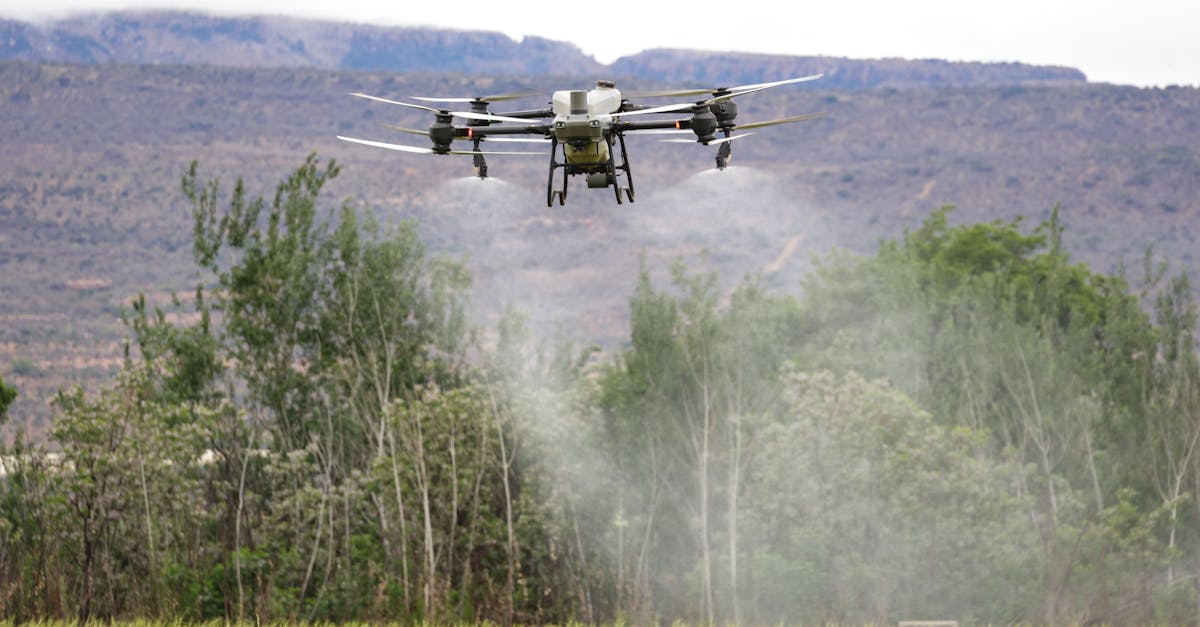
The DJI Agras line dominates the commercial agri-drone segment in India due to mature supply chains, documented flight data, and continuous firmware updates. The Agras T50, the current production model, features a 50-liter spray tank, dual-pump system, and integrated RTK positioning module. DJI's official spec sheets confirm a maximum flight time of 13 minutes with full payload, a working width of 6 to 10 meters depending on nozzle configuration, and a spray flow rate adjustable between 1.5 and 4 liters per minute. The platform utilizes a dual-band omnidirectional obstacle avoidance system and a downward-facing LiDAR module for terrain following, which has been verified in multiple on-stage demonstrations and factory floor videos.
DJI has shipped tens of thousands of Agras units globally, with India serving as one of the largest markets outside China. Authorized distributors operate in all major agricultural states, including Punjab, Haryana, Uttar Pradesh, Maharashtra, and Karnataka. Maintenance networks are structured around regional service centers that handle motor replacements, pump calibration, and flight controller diagnostics. Independent field reports confirm that the T50 and the preceding T40 model maintain consistent spray uniformity when operators follow manufacturer-recommended nozzle pressures and flight speeds between 3.5 and 5 meters per second.
India Availability and Approximate INR Pricing
DJI Agras units are available through authorized dealers and direct enterprise channels in India. The landed cost for a single T50 unit typically ranges from INR 14.5 lakhs to INR 17.5 lakhs, depending on dealer margins, GST applicability, and included accessories such as additional batteries, charging hubs, and replacement nozzles. Landed cost estimates are flagged as approximate and may vary by state tax policies and import duty fluctuations. The platform is eligible for PM-KISAN drone subsidies, which can offset up to INR 1.5 lakhs per eligible farmer, though the subsidy applies to the hardware base price and excludes accessories or training modules.
Garuda Aerospace: Indigenous Development and Pilot Validation
Hardware Status and Certification Pathway
Garuda Aerospace, founded by IIT Madras alumni, has pursued an indigenous approach to agricultural drones, emphasizing domestic manufacturing and compliance with DGCA type certification processes. The company's development timeline has progressed from prototype testing to controlled flight demonstrations, with a focus on modular payload systems and Indian agricultural conditions. Unlike mass-produced platforms, Garuda's hardware has not reached the same volume of commercial shipments. The company's public communications highlight test flights over crop fields, telemetry verification, and partnerships with state agriculture departments for pilot deployments.
Independent reporting and company press releases confirm that Garuda has completed multiple flight trials with customized spraying and seeding modules. The platform is designed to operate in high-temperature environments common to central and southern India, with thermal management protocols integrated into the flight controller. However, the company's hardware remains in the pilot deployment tier rather than the shipping hardware tier. Type certification from DGCA and Bureau of Indian Standards (BIS) compliance are prerequisites for broader commercial distribution, and Garuda has publicly stated progress toward these milestones without claiming mass production readiness.
Pricing and Deployment Realities
Garuda Aerospace has indicated target pricing for its indigenous agri-drone platform in the range of INR 12 lakhs to INR 15 lakhs. These figures are based on early production estimates and exclude subsidy adjustments. The company has prioritized pilot deployments with government agencies and research institutions to validate performance under Indian regulatory and environmental conditions. Operators deploying Garuda hardware typically require specialized training due to the platform's non-standardized ecosystem compared to DJI's mature documentation and parts availability. Field trials have focused on pesticide application, seed broadcasting, and crop health monitoring, with data collection integrated into farm management software.
Other Indian Agri-Drone Startups: Deployment Realities
Hardware vs. Service Models
The Indian agri-drone ecosystem includes several startups that operate at different stages of the value chain. Precision Farming Developers (PFD) has shipped agricultural drones focused on spraying and monitoring, with documented deployments in Maharashtra and Karnataka. PFD's hardware utilizes standard brushless motors, GPS navigation, and adjustable spray systems, with technical specifications aligned with industry norms for crop protection. The company has provided pilot data to state agriculture departments and has participated in government procurement processes.
Other startups, including AgriApp, DroneShakti, and local aggregators, operate primarily as service providers rather than hardware manufacturers. These entities purchase commercial drones, certify remote pilots, and offer contract spraying services to farmers. Their business models rely on operational efficiency, maintenance logistics, and seasonal demand management rather than proprietary hardware development. Independent reporting indicates that service operators face challenges related to battery degradation, nozzle clogging, and regulatory compliance, but they have demonstrated consistent deployment metrics during peak spraying seasons.
Technical Constraints and Field Performance
Domestic hardware development faces consistent engineering hurdles. Indian agricultural conditions require dust resistance, corrosion protection, and thermal stability, which impact component selection and flight endurance. Startups that have shipped hardware often rely on imported flight controllers, ESCs, and motors, with local assembly and calibration. Telemetry verification, spray uniformity testing, and maintenance documentation remain the primary differentiators between companies that have achieved operational maturity and those that remain in the announcement phase. Verified deployments typically require operator certification, spare parts inventories, and service response times under 72 hours to maintain seasonal productivity.
Pricing, Availability, and Regulatory Context in India
Agricultural drone procurement in India is governed by DGCA regulations, state agriculture policies, and subsidy frameworks. The DGCA requires all commercial drone operators to hold a Remote Pilot Certificate, complete digital locker verification, and register each aircraft under the Digital Sky portal. State governments have introduced additional incentives, including training subsidies, insurance support, and fleet procurement programs for cooperative farming societies.
Approximate INR pricing across the sector reflects hardware maturity and supply chain scale. DJI Agras units lead in availability and parts logistics, priced between INR 14.5 lakhs and INR 17.5 lakhs. Indigenous platforms like Garuda Aerospace target INR 12 lakhs to INR 15 lakhs, with pricing subject to certification completion and production scaling. Domestic startups that assemble locally typically price between INR 9 lakhs and INR 13 lakhs, though landed cost estimates are flagged as approximate due to component import variability and state GST differences. Service operators charge per acre, with rates ranging from INR 600 to INR 1,200 depending on crop type, payload, and regional competition.
Grading the Claims: Hardware, Pilots, and Announcements
Evaluating the Indian agri-drone sector requires strict adherence to operational evidence. Shipping hardware with documented telemetry, maintenance records, and component traceability ranks first. DJI Agras meets this tier through global production volume, verified spec sheets, and widespread dealer networks. Garuda Aerospace and Precision Farming Developers occupy the pilot deployment tier, with test flights, state partnerships, and certification progress but limited commercial shipment volume. Announcements regarding future production, government contracts, or technology partnerships rank last until validated by factory output or independent field reporting.
The sector's trajectory depends on sustained pilot data, regulatory clarity, and supply chain localization. Farmers and cooperatives should prioritize platforms with documented flight hours, accessible spare parts, and certified operator training. The market is consolidating around operational reliability rather than marketing claims, and the next phase of growth will be defined by maintenance networks, subsidy implementation efficiency, and continuous firmware updates. Agricultural drones have proven their utility in crop protection, but sustained adoption requires hardware that survives monsoon conditions, high temperatures, and continuous seasonal use without excessive downtime.
References
DJI Agras T50 Official Specifications. DJI Official Website. https://www.dji.com/agras/t50
DJI Agras T40 Official Specifications. DJI Official Website. https://www.dji.com/agras/t40
Garuda Aerospace Agricultural Drone Development Updates. Garuda Aerospace Official Website. https://www.garudaaerospace.com
Precision Farming Developers (PFD) Agri-Drone Solutions. Precision Farming Developers Official Website. https://www.precisionfarmingdevelopers.com
DGCA Drone Rules and Digital Sky Portal Guidelines. Ministry of Civil Aviation, Government of India. https://www.digitalSky.gov.in
PM-KISAN Drone Subsidy Framework. Ministry of Agriculture & Farmers Welfare, Government of India. https://pmkisan.gov.in
Independent field reports on agri-drone deployment metrics and maintenance logistics. AgriDrone India Reports, 2023-2024. https://www.agridroneindia.com
✓ Key takeaways
- •Hands-on view of Agricultural Drones in India: Shipping Hardware, Pilot Realities, and Market Pricing inside our Agricultural Drones library.
- •Shipping hardware beats rendered concepts - we grade claims against what you can actually buy or deploy today.
- •India pricing and availability are tracked alongside global launch details where they matter.
References
- DJI Agras T50 Official Specifications
- DJI Agras T40 Official Specifications
- Garuda Aerospace Agricultural Drone Development Updates
- Precision Farming Developers (PFD) Agri-Drone Solutions
- DGCA Drone Rules and Digital Sky Portal Guidelines
- PM-KISAN Drone Subsidy Framework
- Independent field reports on agri-drone deployment metrics and maintenance logistics
Related articles
More in Agricultural Drones →