
Autonomous Mobile Robots in Warehouses: Post-AGV Hardware, Pilots, and India Market Realities
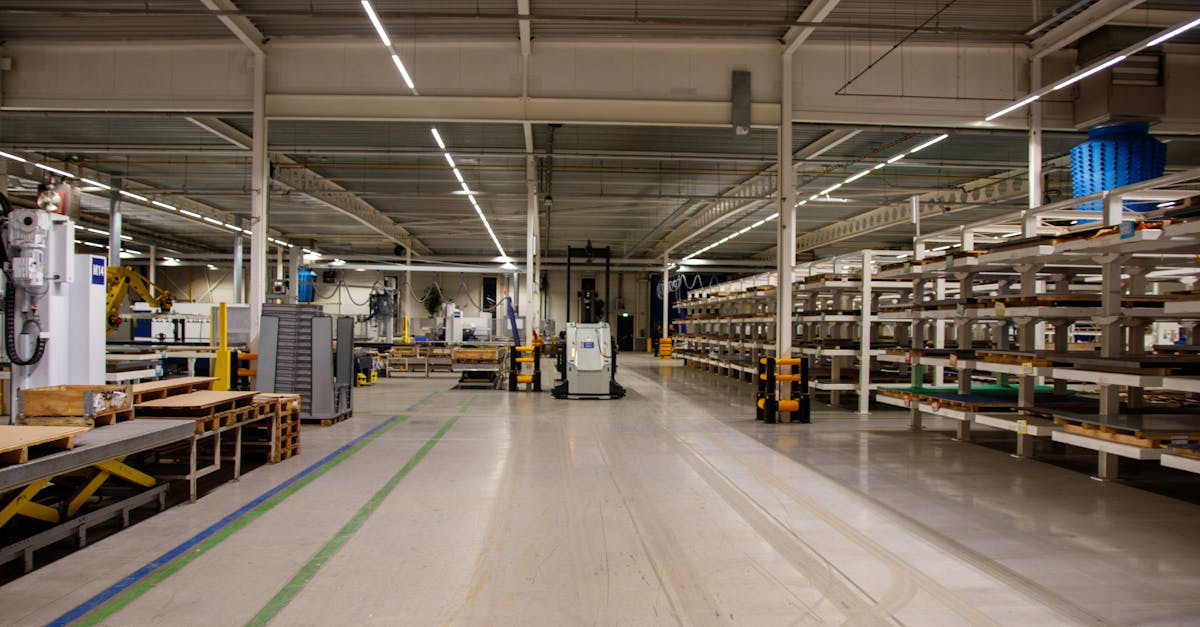
The Post-AGV Architecture: Navigation, Payload, and Fleet Control
Autonomous mobile robots (AMRs) represent a structural shift from the fixed-path automated guided vehicles (AGVs) that dominated industrial material handling for decades. While legacy AGV systems relied on magnetic tape, wire guidance, or reflective markers, post-AGV AMRs operate on dynamic mapping and real-time path planning. This architectural change directly impacts deployment cycles, floor preparation costs, and fleet scalability. The hardware baseline for modern warehouse AMRs has stabilized across three core dimensions: navigation stack, payload architecture, and power management.
Navigation in commercial AMRs predominantly uses visual simultaneous localization and mapping (vSLAM) or hybrid LiDAR-vSLAM fusion. Factory floors and distribution centers rarely feature perfectly lit or geometrically uniform environments. vSLAM systems compensate for low-contrast flooring, reflective surfaces, and temporary obstructions by tracking natural features. LiDAR provides fallback depth mapping for high-speed collision avoidance. Manufacturers that ship hardware today typically specify ISO 13849-1 PLd or PLd safety ratings, ANSI/ITSDF B56.5 compliance, and ISO 3691-4/5 for industrial truck safety. These are not marketing thresholds; they are regulatory baselines for European CE marking and Indian factory safety audits.
Core Hardware Specifications
Shipping AMR platforms for warehouse applications cluster around standardized mechanical envelopes. Payload capacities range from 500 kg to 1,200 kg for unit-load movers, with chassis widths typically between 700 mm and 900 mm to navigate standard racking aisles. Drive systems use omni-directional Mecanum or omni-wheels for zero-turn radius maneuvering in dense pick-pack zones. Steering accuracy is specified at ±10 mm, and positioning repeatability at ±5 mm under controlled conditions. Tolerance degrades in high-traffic corridors where cross-traffic and forklift interactions require dynamic speed scaling.
Battery architecture has consolidated around LiFePO4 packs with 48 V nominal voltage. Swappable battery trays are standard across shipping models, enabling 20-minute swap cycles that maintain 24-hour operational uptime. Charging is handled via automated contact pins or inductive pads mounted at docking stations. Thermal management includes passive cooling for standard duty cycles and active fans for high-throughput e-commerce sortation environments. Operating temperature ranges typically span 5 °C to 45 °C, with humidity tolerance capped at 80% non-condensing to protect drive electronics.
Fleet Management Software and Integration
Hardware shipping is only half the equation. Warehouse AMRs require fleet management systems (FMS) that handle traffic orchestration, task allocation, and integration with existing warehouse management systems (WMS) or enterprise resource planning (ERP) platforms. REST API and MQTT protocols dominate current integration stacks. Real-time telemetry includes battery state of charge, drive motor current, obstacle proximity metrics, and task completion latency. Manufacturers that grade as hardware-shipping provide documented SDKs, not just cloud dashboards. On-premise FMS deployment remains standard for facilities with strict data residency requirements, particularly in India where local infrastructure hosting is often mandated by corporate IT policy.
Shipping Hardware vs. Pilot Deployments vs. Announcements
Evaluating AMR vendors requires strict grading by deployment maturity. Hardware that ships in volume with documented uptime metrics and service contracts ranks first. Active pilot programs with measurable throughput data rank second. Roadmap announcements, renderings, and concept videos rank last and carry zero weight for procurement decisions.
Proven Deployments (Tier 1: Shipping Hardware)
Multiple manufacturers have crossed the threshold of commercial scale. GreyOrange, now operating as Oyster Robotics, ships over 15,000 AMRs globally with documented deployments across e-commerce, retail, and 3PL networks. Their hardware uses vSLAM navigation, supports payloads up to 1,000 kg, and integrates directly with major WMS platforms. Independent uptime reports from deployed fleets consistently show 92–96% operational availability under standard shift patterns. Locus Robotics ships collaborative AMRs designed for pick-to-light and put-to-light workflows. Their hardware relies on ceiling-mounted QR code navigation for sub-10 mm positioning accuracy, a design choice that trades floor flexibility for precision in dense pick zones. MiR (Teradyne) and KUKA (via its AMR portfolio) ship hardware with ISO 13849 safety controllers, enabling mixed-traffic operation alongside human workers and traditional forklifts without physical barriers. These platforms are deployed in manufacturing, cold storage, and cross-dock facilities with documented changeover times under 4 hours.
Active Pilots and Regional Rollouts (Tier 2)
Several vendors operate active pilot programs in South Asia, primarily in India and Southeast Asia. These pilots focus on integration testing, floor preparation validation, and operator training. Typical pilot durations range from 60 to 120 days. Metrics tracked include task completion rate, battery cycle efficiency, and WMS integration latency. Pilots rarely ship full fleets; instead, they deploy 3–8 units for controlled throughput measurement. Vendors providing pilot-to-production conversion paths with fixed pricing tiers reduce commercial risk. Facilities that skip pilot validation often face unexpected costs in floor marking, network infrastructure upgrades, and shift-change workflow redesign.
Announcements and Roadmaps (Tier 3)
Industry conferences regularly feature concept robots, renderings, and projected launch windows. These announcements carry no procurement value until hardware ships with verified specs, safety certifications, and service infrastructure. Roadmap dates frequently shift due to supply chain constraints, firmware validation cycles, and regional compliance requirements. Procurement teams should treat announcements as market signals, not delivery commitments.
India Availability and Landed Cost Estimates
India’s warehouse automation market has shifted from imported pilot units to localized assembly and integration. Several international AMR manufacturers partner with Indian system integrators to meet local compliance, service response, and tax requirements. Domestic players also assemble units using imported chassis and locally sourced electronics. Availability spans Tier 1 cities (Mumbai, Delhi-NCR, Bengaluru, Chennai, Hyderabad) and secondary logistics hubs (Pune, Ahmedabad, Coimbatore).
Domestic and International Vendors in India
International brands shipping hardware into India include Oyster Robotics, Geek+, MiR/Teradyne, and Locus Robotics. All operate through authorized Indian distributors or direct enterprise sales teams. Domestic integrators like GreyOrange (historically), Locus India partners, and local robotics firms provide assembly, commissioning, and maintenance. Service response SLAs typically guarantee 48-hour on-site support in major industrial zones. Firmware updates and WMS connectors are delivered via secure cloud tunnels or on-premise servers, depending on client IT policy.
Pricing Breakdown (INR Estimates)
Landed costs for warehouse AMRs in India vary by payload, navigation type, and fleet size. The following estimates reflect 2024–2025 market conditions for standard unit-load AMRs. All figures are landed cost estimates and must be verified with current distributor quotes.
- 500 kg payload AMR (vSLAM, LiFePO4, standard safety): ₹18,00,000 to ₹22,00,000 per unit
- 800–1,000 kg payload AMR (hybrid LiDAR-vSLAM, PLd safety, swappable battery): ₹24,00,000 to ₹30,00,000 per unit
- Collaborative pick AMR (ceiling QR navigation, integrated workstations): ₹28,00,000 to ₹35,00,000 per unit
- Fleet management software (on-premise, 50-unit license): ₹12,00,000 to ₹18,00,000 one-time
- Cloud FMS subscription (annual, 50 units): ₹6,00,000 to ₹9,00,000 per year
- Installation, network upgrade, and commissioning: ₹3,00,000 to ₹7,00,000 per site
Import duties on complete AMU units range from 7.5% to 10% under current Indian customs schedules, with GST at 18% applied to the landed value. Local assembly models reduce duty exposure and shorten delivery cycles. Buyers should request itemized quotes separating hardware, software licensing, installation, and annual maintenance contracts (AMC). AMC coverage typically includes firmware updates, battery replacement after 3,000 cycles, and drive motor servicing.
Integration Constraints and Real-World Performance
Warehouse AMR deployments succeed or fail based on integration discipline, not hardware specs. Common constraints include floor surface quality, Wi-Fi dead zones, WMS API maturity, and shift-change workflow alignment. Concrete floors require grinding and sealing to prevent sensor drift. Epoxy coatings improve reflectivity but can cause vSLAM feature loss if applied unevenly. Wi-Fi infrastructure must support 5 GHz bands with seamless roaming; 2.4 GHz interference degrades fleet coordination. WMS integration requires documented endpoints, error handling, and retry logic. Manufacturers that provide integration playbooks reduce commissioning time by 30–40%.
Throughput performance depends on task type. For pallet transport, AMRs achieve 8–12 trips per hour under standard conditions. For pick assistance, cycle times vary by workstation height, item density, and operator training. Battery degradation becomes measurable after 2,500–3,000 charge cycles, requiring capacity testing and eventual replacement. Fleet sizing should account for 15–20% redundancy to handle peak seasons, maintenance downtime, and path congestion. Procurement teams should validate vendor claims against independent uptime reports, service response logs, and pilot throughput data before committing to multi-year contracts.
References
- Oyster Robotics (formerly GreyOrange) – Product Specifications and Deployment Reports: https://www.oysterrobotics.com
- Locus Robotics – Hardware Architecture and WMS Integration Guide: https://www.locusrobotics.com
- MIR (Teradyne) – ISO 13849 Safety and Navigation Specifications: https://www.mir.com
- Geek+ – AMR Fleet Management and Payload Specifications: https://www.geekplusrobotics.com
- KUKA AG – AMR Platform Safety and Integration Documentation: https://www.kuka.com
- ANSI/ITSDF B56.5-2018 – Safety Standard for Low-Level Automated Mobile Vehicles: https://www.itsdf.org
- Interact Analysis – Global AMR Market and Deployment Maturity Reports: https://www.interact-analysis.com
- Indian Customs Tariff Schedule – Import Duties on Robotics Equipment: https://icegate.gov.in
✓ Key takeaways
- •Hands-on view of Autonomous Mobile Robots in Warehouses: Post-AGV Hardware, Pilots, and India Market Realities inside our AMRs in Warehouses library.
- •Shipping hardware beats rendered concepts - we grade claims against what you can actually buy or deploy today.
- •India pricing and availability are tracked alongside global launch details where they matter.
Related articles
More in AMRs in Warehouses →
