
AMRs in Warehouses: The Post-AGV Generation and Shipping Reality
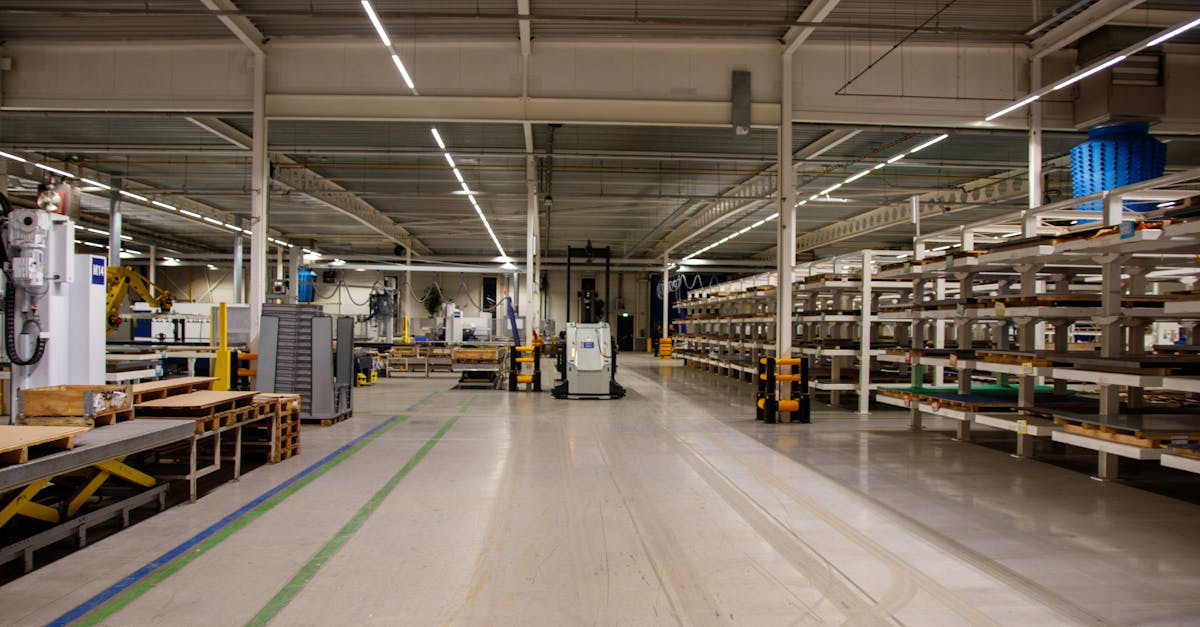
The Post-AGV Transition: From Guided Tracks to Autonomous Navigation
The warehouse robotics sector has shifted from guided infrastructure to autonomous navigation, but the terminology often obscures the engineering reality. Autonomous mobile robots (AMRs) do not operate in isolation. They rely on multi-sensor fusion—typically LiDAR, stereo vision, and inertial measurement units—paired with fleet management software that routes traffic, manages charging, and interfaces with warehouse management systems (WMS). The post-AGV generation is defined less by the robot itself and more by the software stack that coordinates hundreds of units across dynamic floor plans.
Early AGV systems required laser reflectors, magnetic tape, or underground wiring. Those constraints limited flexibility and increased facility modification costs. Modern AMRs use simultaneous localization and mapping (SLAM) to navigate without physical guides. The claim of autonomy, however, must be graded against actual deployment data. Navigation reliability, payload consistency, and safety certification are the only metrics that matter in operational environments.
Hardware-First Metrics: What’s Actually Shipping
Shipping hardware remains the primary grade for evaluating AMR vendors. Spec sheets and factory videos often highlight maximum speed and payload, but real-world performance depends on navigation stability, battery thermal management, and chassis durability. The current shipment tier focuses on platforms that deliver 300kg to 2,000kg payloads with cycle times measured in hours, not minutes.
- Navigation accuracy: Most shipping AMRs maintain positional accuracy within ±10mm to ±20mm using multi-sensor fusion. Pure-vision systems still require supplemental LiDAR for low-light or reflective environments.
- Charging infrastructure: Opportunity charging at docking stations is standard. Battery swap models exist but are limited to specific SKUs. Cycle life typically exceeds 1,500 cycles before capacity drops below 80%.
- Safety certification: ISO 3691-4 compliance is mandatory for industrial AMRs. Vendors must demonstrate Type 3 (mobile robot) and Type 4 (fixed infrastructure) integration testing. CE and UL marks are baseline requirements for export-grade hardware.
Factory throughput data shows that AMR fleets scale linearly until software routing bottlenecks emerge. Fleet management latency, map update frequency, and dock synchronization dictate actual throughput. Hardware alone does not solve warehouse congestion.
Pilot Deployments and Operational Realities
Pilot deployments expose the gap between marketing claims and facility integration. The most common failure points are not robotic but systemic. Floor surface tolerance, ceiling height constraints, and Wi-Fi dead zones directly impact navigation reliability. AMRs require consistent RF coverage for fleet communication; intermittent connectivity causes map divergence and navigation fallback.
- Floor requirements: Epoxy or sealed concrete is standard. Joints, thresholds, and expansion gaps must be documented during site surveys. Uneven surfaces increase wheel slip and reduce payload consistency.
- WMS/WCS integration: AMRs do not replace warehouse management systems. They execute tasks assigned by the WCS. API alignment, task queue management, and error-handling protocols determine pilot success.
- Safety validation: Pilots require third-party safety audits. Light curtains, emergency stop wiring, and acoustic alerts must be validated against local factory regulations. Autonomous navigation does not exempt operators from machinery safety directives.
Pilot durations of 90 to 180 days typically reveal hidden costs: facility retrofitting, IT stack realignment, operator retraining, and spare parts inventory. Vendors that provide comprehensive pilot reports with uptime, MTBF, and integration timelines offer higher credibility than those relying on short-term demonstrations.
Announcement Fatigue vs. Production Lines
The AMR sector generates frequent announcements: funding rounds, partnership MOUs, and concept videos. These must be graded last. Announcements indicate market interest but do not verify manufacturing capacity, supply chain stability, or certified safety approvals. Many vendors operate on contract manufacturing without in-house assembly lines, which complicates warranty fulfillment and component sourcing.
Production capacity is the only reliable indicator of market readiness. Vendors with dedicated assembly lines, in-house firmware development, and certified quality management systems deliver consistent hardware. Those relying on third-party integrators for final assembly often face longer lead times and variable build quality. Announcement velocity should never replace hardware shipment data when evaluating warehouse automation investments.
India Availability and Landed Cost Estimates
India’s AMR market has shifted from pilot-heavy to deployment-driven, with domestic integrators handling system assembly and software localization. Imported platforms face customs duties, GST, and certification requirements that increase landed costs. The market now distinguishes between fully imported units, CKD/SKD assemblies, and domestically integrated fleets.
- Imported platforms: Standard 500kg AMRs land between ₹32L and ₹48L per unit, including customs, IGST, and port handling. Navigation modules and safety controllers drive the majority of the cost.
- CKD/SKD assemblies: Locally assembled units reduce landed cost to ₹28L–₹38L per unit. Labor and component sourcing vary by state, but assembly labor rates in Gujarat, Maharashtra, and Tamil Nadu remain competitive.
- Fleet management software: Licensing ranges from ₹8L to ₹25L annually, depending on fleet size, WMS integration complexity, and support tier. Open-source routing stacks exist but require dedicated engineering resources.
Service networks in Gurgaon, Pune, Chennai, and Hyderabad provide on-site support, but response times depend on local distributor capacity. Vendors without certified Indian service partners often route repairs through Singapore or Dubai, extending downtime. Localization of firmware, safety documentation, and spare parts inventory is essential for operational continuity.
Key Manufacturers and Verified Shipments
The AMR market segments into high-volume industrial platforms and flexible light-duty units. Verified shipments and pilot deployments provide the only reliable grading for this category.
Tier 1: High-Volume Industrial AMRs
- Hikrobot: Shipping AGV/AMR hybrids with LiDAR navigation. Payloads up to 2,000kg. Verified shipments in automotive and electronics logistics. Factory output exceeds 10,000 units annually.
- Geek+: Pioneered mobile manipulation and fleet routing. Shipping 300kg–1,000kg platforms with multi-sensor fusion. Pilot deployments in e-commerce and 3PL facilities across Asia and Europe.
- MIR (Dematic): Acquired by Dematic, shipping CE-certified AMRs with ISO 3691-4 compliance. Focus on manufacturing and distribution centers. Fleet management software integrates with SAP and Oracle WMS.
Tier 2: Flexible and Light-Duty Platforms
- Locus Robotics: Shipping autonomous sweepers and case-handling AMRs. Focus on e-commerce fulfillment. Verified deployments in North America and Europe. Software stack emphasizes task orchestration.
- SSI Schaefer: Industrial AMRs with heavy payload variants. Integrated with conveyor and sortation systems. Pilot deployments in pharmaceutical and FMCG logistics.
- Domestic Integrators: Indian system integrators assemble AMR platforms using imported navigation modules and chassis. Service networks cover major industrial corridors. Pricing competitive but dependent on component availability.
References
- Hikrobot AMR Product Specifications: https://www.hikrobot.com/en/product/automated-mobile-robot
- Geek+ Fleet Management and Hardware Documentation: https://www.geekplusrobotics.com/en/product
- MIR (Dematic) ISO 3691-4 Compliance and Safety Data: https://www.dematic.com/solutions/autonomous-mobile-robots
- Locus Robotics Deployment Reports and System Architecture: https://locusrpa.com/platform/
- SSI Schaefer Industrial AMR Integration Guidelines: https://www.ssi-schaefer.com/en/
- ISO 3691-4:2020 Safety Requirements for Industrial Truck Design: https://www.iso.org/standard/75625.html
✓ Key takeaways
- •Hands-on view of AMRs in Warehouses: The Post-AGV Generation and Shipping Reality inside our AMRs in Warehouses library.
- •Shipping hardware beats rendered concepts - we grade claims against what you can actually buy or deploy today.
- •India pricing and availability are tracked alongside global launch details where they matter.
References
- Hikrobot AMR Product Specifications
- Geek+ Fleet Management and Hardware Documentation
- MIR (Dematic) ISO 3691-4 Compliance and Safety Data
- Locus Robotics Deployment Reports and System Architecture
- SSI Schaefer Industrial AMR Integration Guidelines
- ISO 3691-4:2020 Safety Requirements for Industrial Truck Design
Related articles
More in AMRs in Warehouses →
