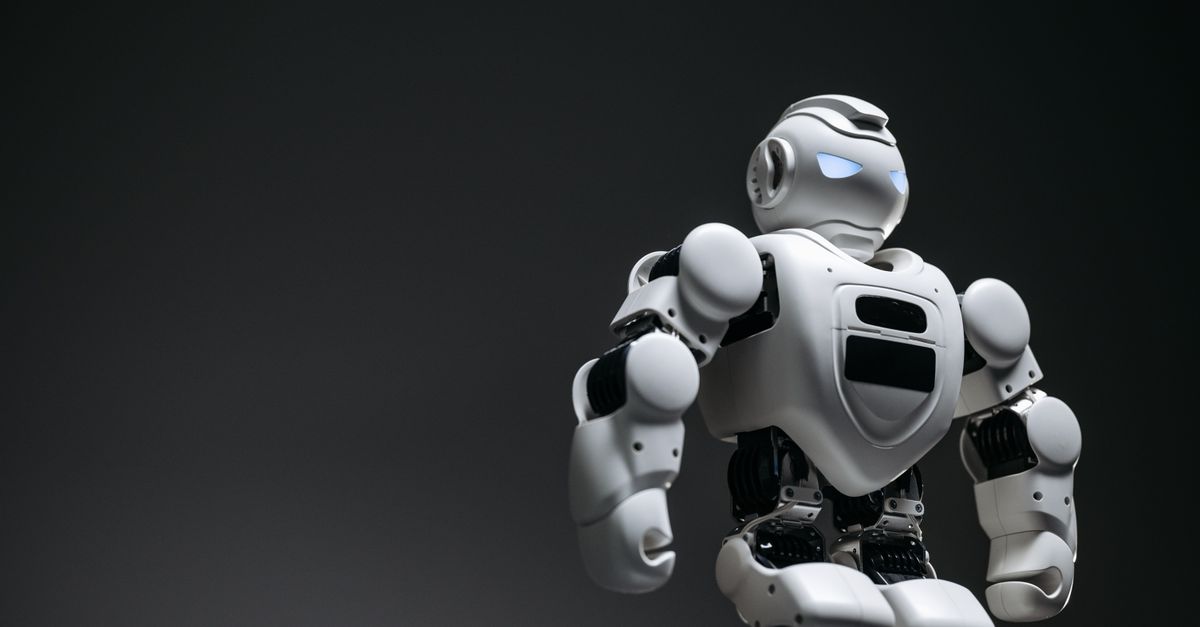
Apptronik Apollo: A Logistics-Focused Humanoid in Pilot Stages

Introduction to Apptronik Apollo
The humanoid robotics sector has seen a surge of interest from both venture-backed startups and established tech giants. Among the most prominent entrants is Apptronik, a company with deep roots in aerospace engineering and NASA heritage. Their flagship product, the Apollo humanoid robot, is distinct in its positioning: it is not designed as a general household assistant or a consumer novelty, but rather as a specialized asset for logistics, warehousing, and last-mile delivery. As of late 2024, Apollo remains in the pilot deployment stage, with no mass-market release timeline announced for consumer or small enterprise adoption.
Apptronik positions Apollo as a solution to the labor shortages facing the logistics industry. The robot is engineered to handle repetitive, physically demanding tasks such as package handling, pallet loading, and sorting. Unlike some competitors that focus on general-purpose mobility or social interaction, Apollo’s design language is utilitarian, prioritizing durability and payload capacity over anthropomorphic aesthetics. This approach aligns with the broader industry trend where ‘industrial-ready’ robot designs are outpacing ‘human-like’ robot designs in practical deployment metrics.
Technical Heritage and Development
Apptronik was founded by a team with significant experience from NASA’s Marshall Space Flight Center (MSFC). This background informs the company’s engineering philosophy, which emphasizes reliability in harsh environments and robust mechanical actuation. The Apollo platform leverages proprietary actuation systems designed to withstand the rigors of a warehouse floor. The robot features a modular architecture, allowing operators to swap out components based on specific deployment requirements.
From a hardware perspective, Apollo stands approximately 5 feet 7 inches (170 cm) tall, a height chosen to align with standard human workspaces and conveyor systems. The design incorporates a bipedal locomotion system capable of navigating uneven terrain, though its primary operational zone is the flat floor of distribution centers. The upper body features a dual-arm manipulation system with dexterous hands, capable of grasping various package sizes. This is not merely a prop for video demonstrations; the arms are integrated with force sensors and torque control to handle fragile items without causing damage.
Autonomy is managed through a combination of onboard sensors and cloud-based orchestration. Apollo utilizes LiDAR and stereo vision for navigation and obstacle avoidance. While the robot can operate autonomously within a mapped environment, it is often deployed with teleoperation capabilities for edge cases where manual intervention is required. This hybrid approach acknowledges the current limitations of pure autonomy in unstructured industrial environments.
Core Specifications and Hardware Capabilities
While Apptronik has not released a detailed public datasheet comparable to automotive specifications, available performance data from pilot programs indicates the following capabilities:
- Payload Capacity: Capable of carrying payloads up to 20 kilograms (approx. 44 lbs) in its manipulation arms.
- Autonomy: Self-navigation in dynamic warehouse environments with human-robot collision avoidance.
- Battery Life: Designed for a full shift of operation, typically estimated at 8 to 10 hours depending on activity level.
- Connectivity: 5G and Wi-Fi integration for real-time data transmission to central logistics management systems.
- End-Effectors: Interchangeable grippers to handle boxes, envelopes, and irregularly shaped cargo.
The battery management system is a critical component. Unlike tethered industrial arms, Apollo is mobile. The power system is designed to support high-torque actuation during lifting tasks while maintaining efficiency during locomotion. Charging infrastructure is a prerequisite for deployment, requiring dedicated charging stations within the facility. Apptronik has not disclosed the exact battery chemistry or energy density, citing competitive reasons, but the form factor suggests a focus on high-discharge lithium-ion variants common in robotics.
It is crucial to note that as of the current reporting period, Apollo is not a ‘black box’ product available off-the-shelf. The hardware is customized based on client requirements. This means a deployment at one logistics hub may feature different gripper configurations or sensor suites compared to another. This customization requirement significantly impacts the total cost of ownership (TCO) and the timeline for deployment.
Pilot Deployments and Partner Ecosystem
The most significant validation for Apptronik Apollo comes from its pilot partnerships. The company has announced collaborations with major logistics and retail entities to test Apollo in real-world scenarios. One of the most publicized partnerships involves FedEx, which has been working with Apptronik to integrate Apollo into its delivery network.
In these pilot programs, the focus is on the ‘last mile’ and ‘middle mile’ processes. The robot is tasked with sorting packages, loading delivery vehicles, and transporting goods between conveyor belts and loading docks. Early reports suggest that Apollo can navigate busy environments, but the primary metric of success is not speed, but reliability and safety. The goal is to supplement the human workforce, not replace it entirely in the immediate future.
Another key area of deployment involves warehouse automation. Here, Apollo is used for repetitive tasks that lead to high rates of worker injury or fatigue. By taking over the heavy lifting, the robot allows human workers to focus on higher-value tasks such as quality control and customer service. The partnership model with companies like Walmart and FedEx indicates a B2B (Business-to-Business) sales strategy rather than a direct-to-consumer approach.
However, it is essential to maintain a realistic view of these deployments. As of late 2023 and into 2024, these are pilot programs, not full-scale rollouts. The number of Apollo units deployed globally is likely in the dozens, not the thousands. This distinction is vital for investors and industry observers. The transition from pilot to production scale involves solving supply chain issues, regulatory compliance, and integration with legacy warehouse management software.
The Logistics Focus vs. General Purpose
Apptronik’s decision to focus heavily on logistics sets Apollo apart from competitors like Tesla’s Optimus or Figure AI. While Tesla aims for a general-purpose home robot, Apptronik targets the industrial floor. This specialization allows for optimized engineering. The robot does not need to mimic the full range of human social interaction or fine motor skills required for cooking or cleaning. Instead, it needs to lift, carry, and place objects reliably.
This focus impacts the safety protocols. Industrial robots must meet standards such as ISO 10218 for robotic safety. Apollo is designed to adhere to these standards, ensuring that it can operate safely alongside human workers. The integration of force-limiting joints is a key feature here. If the robot encounters an obstacle, it is designed to stop or yield force rather than continue pushing, minimizing the risk of injury.
The economic argument for Apollo is centered on the cost of labor and the efficiency of operations. In the logistics sector, labor costs are rising, and turnover is high. A robot that can work 24/7 without fatigue offers a compelling value proposition. However, the initial capital expenditure (CapEx) for Apollo is significant. It is not a device that can be leased cheaply on a monthly basis by small businesses. The target market is large-scale enterprises with the capital to invest in automation infrastructure.
India Market Context and Availability
For the Indian market, the availability of Apptronik Apollo is currently negligible. The robot is manufactured and primarily deployed in the United States. For an Indian logistics company to acquire Apollo, it would require importing the hardware, which involves significant tariffs, import duties, and compliance with the Bureau of Indian Standards (BIS).
Pricing for the Apollo system is not publicly listed. Based on industry standards for humanoid robots in the industrial sector, the landed cost in India would likely be in the range of $150,000 to $250,000 USD per unit, plus installation and integration costs. This places it out of reach for most mid-sized Indian logistics firms. Large conglomerates may consider it, but only after seeing successful pilot data from the US and Europe.
Furthermore, the infrastructure required for Apollo to operate effectively is specific. It requires 5G connectivity for real-time data transmission and a digital twin of the warehouse for navigation. India’s current industrial infrastructure is still catching up to these requirements in many regions. Therefore, while the technology is available globally, its operational viability in India remains speculative until local pilot programs are announced.
For now, Indian businesses interested in humanoid robotics should monitor the development of Apollo’s pilot programs. If the US pilots prove successful and the hardware is standardized, international partnerships may emerge. However, until then, the focus for Indian robotics investment should remain on localized automation solutions and collaborative robots (cobots) that are more readily available and affordable.
Conclusion and Future Outlook
Apptronik Apollo represents a pragmatic approach to the humanoid robotics revolution. By focusing on logistics and avoiding the hype of consumer social robots, Apptronik has positioned the Apollo as a serious industrial tool. The robot’s success will depend on its ability to deliver on the reliability promises made during its pilot phases.
As the technology matures, the hope is that the cost of Apollo will decrease, making it accessible to a broader range of logistics providers. The current trajectory suggests a slow adoption curve, typical of industrial robotics. Unlike consumer electronics, which see rapid adoption, industrial hardware requires rigorous testing and validation over years.
For RobotWale’s readers, the key takeaway is to view Apollo as a work in progress. It is not yet a product you can buy today. It is a platform that is being tested by the industry’s largest players. If Apollo succeeds in these pilots, it could become a standard fixture in global supply chains. If it fails to meet safety or efficiency targets, the company may pivot or merge with larger industrial automation entities.
In the meantime, the Apollo serves as a benchmark for what is achievable in the current hardware ecosystem. It demonstrates that humanoid robots can have a specific, high-value use case beyond the novelty of walking and talking. The logistics sector is the proving ground for this technology, and Apptronik is currently the primary contender in this arena.
References
- Apptronik Official Website. (n.d.). “About Apptronik & Apollo.” Retrieved from https://apptronik.com
- FedEx. (2023). “FedEx to Explore Humanoid Robotics Partnership with Apptronik.” FedEx Newsroom. Retrieved from https://news.fedex.com
- TechCrunch. (2023). “Apptronik’s Apollo humanoid robot is getting a pilot program with FedEx.” Retrieved from https://techcrunch.com
- Bloomberg. (2023). “Apptronik Raises $20 Million to Build Humanoid Robots for Workplaces.” Retrieved from https://bloomberg.com
✓ Key takeaways
- •Hands-on view of Apptronik Apollo: A Logistics-Focused Humanoid in Pilot Stages inside our Apptronik Apollo library.
- •Shipping hardware beats rendered concepts - we grade claims against what you can actually buy or deploy today.
- •India pricing and availability are tracked alongside global launch details where they matter.
References
Related articles
More in Apptronik Apollo →