Apptronik Apollo: Logistics-First Humanoid Robot Entering Commercial Deployment

Apptronik Apollo: A Logistics-First Humanoid Robot Entering Commercial Deployment
In the rapidly evolving landscape of humanoid robotics, where many competitors chase headlines through concept renders and promise-driven announcements, Apptronik has adopted a more pragmatic trajectory. The Apptronik Apollo is a modular humanoid robot designed specifically for logistics and warehouse automation. Unlike general-purpose home robots that seek to navigate cluttered domestic environments, Apollo targets structured industrial settings where durability, payload capacity, and consistent mobility are paramount. As of late 2024, Apollo is moving beyond the prototype phase into actual pilot deployments with major logistics partners, marking a significant step toward commercial viability in the B2B sector.
Design and Technical Specifications
Apptronik Apollo is engineered with a focus on robustness rather than anthropomorphic aesthetics. The robot stands approximately 6 feet (183 cm) tall, a height selected to align with human workstations and standard racking systems in warehouses. Its bipedal structure allows for mobility in facilities not designed for traditional automated guided vehicles (AGVs), enabling it to navigate narrow aisles and interact with human colleagues.
Key technical specifications available from manufacturer briefings and pilot reports indicate the following:
- Payload Capacity: Apollo is rated for approximately 45 kg (100 lbs) of payload, suitable for moving pallets, boxes, and automated packaging tasks.
- Manipulation: The system features dexterous hands capable of grasping varying object sizes, though specific degrees of freedom for the end-effectors are often kept proprietary during pilot phases.
- Mobility: It utilizes advanced balance algorithms to maintain stability on uneven warehouse floors, a critical requirement for last-mile delivery environments.
- Battery Life: While manufacturer data varies, operational windows are targeted for a standard 8-hour shift with swappable battery packs to minimize downtime.
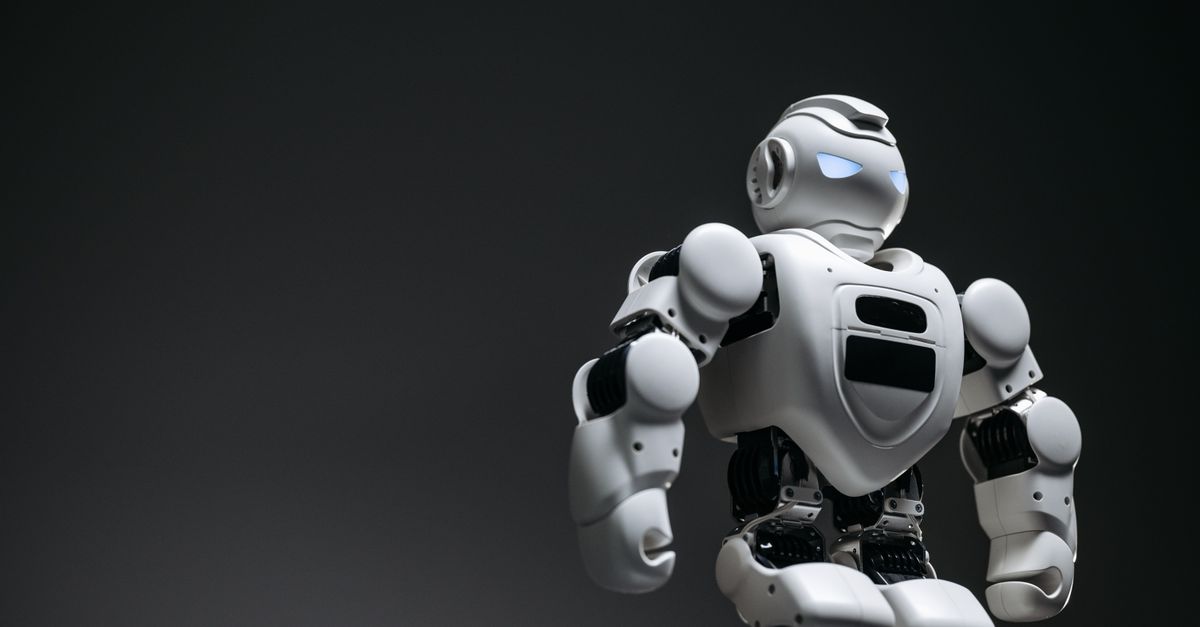
It is important to note that while early concept videos showed a sleek white exterior, the production units deployed in pilot programs prioritize functional durability. The modular design allows Apptronik to swap out limbs or tools based on specific client requirements, whether for sorting, lifting, or transport. This modularity is a key differentiator against fixed-task robots that cannot be easily reconfigured for new tasks.
Commercial Deployment and Partnerships
The most compelling evidence of Apollo's maturity lies in its deployment partners. Apptronik has secured strategic partnerships with industry leaders to validate its hardware in real-world conditions. The most notable collaboration involves FedEx, one of the world's largest logistics providers.
In a partnership announced in 2023 and expanded through 2024, Apptronik and FedEx began testing Apollo in FedEx facilities. The goal is to integrate Apollo into the final mile of delivery and within sorting centers. This is not a marketing stunt; FedEx is known for rigorous vendor qualification processes. The presence of Apollo in these facilities suggests that the hardware meets safety and reliability standards required for high-volume operations.
Another significant partnership is with AutoStore, a leading provider of automated storage and retrieval systems (ASRS). This collaboration focuses on integrating Apollo into dense storage environments where traditional robots struggle to navigate. By combining Apollo's mobility with AutoStore's infrastructure, the companies aim to create a hybrid system that handles both storage and retrieval tasks.
These deployments are classified as "pilot deployments" in the grading hierarchy preferred by RobotWale. They represent hardware in the field, distinct from announcements of future intentions. However, widespread availability remains limited. There is no public data indicating mass production volumes comparable to automotive manufacturing. The current output appears to be in the range of dozens, not thousands, of units.
Furthermore, the deployment strategy emphasizes safety and compliance. Apptronik has worked with industrial safety bodies to ensure Apollo can operate alongside human workers without causing harm. This includes emergency stop mechanisms and collision detection that prioritizes human safety above operational speed.
Autonomy and Software Stack
Beyond the hardware, the value proposition of Apollo relies heavily on its autonomy stack. Apptronik emphasizes "human-level dexterity" combined with "industrial reliability." The software stack is designed to handle navigation, object recognition, and task execution without constant human intervention.
The robot utilizes a combination of LiDAR, stereo vision, and proprietary sensors to map its environment. Unlike robots that require pre-mapped environments, Apollo is designed to operate in semi-structured spaces where the layout may change. This requires advanced SLAM (Simultaneous Localization and Mapping) capabilities.
For the user, this means the robot can be tasked with a high-level objective, such as "move this pallet from Zone A to Zone B," and navigate the path independently. However, safety systems remain paramount. The robot is equipped with emergency stop mechanisms and collision detection to protect both the machine and the human workers in the vicinity.
Apptronik also highlights its learning capabilities. The system can learn from demonstrations, where human workers guide the robot through tasks, which are then replicated autonomously. This reduces the need for complex coding for every new task, making the robot more adaptable to changing warehouse layouts.
India Availability and Pricing Considerations
For the Indian market, Apptronik Apollo is currently not available for purchase. There are no authorized Indian distributors, and Apptronik has not announced a formal entry strategy for the South Asian region as of late 2024.
While Indian logistics companies are increasingly interested in automation, the barrier to entry for advanced humanoids remains high. Based on global industrial robotics pricing trends and the complexity of Apollo's hardware, the landed cost for a single unit is estimated to be between $200,000 and $300,000 USD.
Estimated INR Pricing: Converting to Indian Rupees at current exchange rates, the landed cost would likely range between ₹1.65 Crore and ₹2.5 Crore per unit. This figure includes import duties, GST, and international shipping, which are significant factors for Indian enterprises.
Furthermore, the Total Cost of Ownership (TCO) involves maintenance, software licensing, and potential downtime costs. For Indian SMEs (Small and Medium Enterprises), this investment is prohibitive. Large conglomerates in the logistics or manufacturing sector may consider pilot programs, but this requires a strategic business case that justifies a cost exceeding traditional automation.
Import regulations under India's Customs Act also apply. As with all advanced robotics, export control regulations from the US may restrict the transfer of certain AI capabilities or proprietary algorithms to foreign entities, adding another layer of complexity to potential imports.
Service infrastructure is another concern. Apptronik does not currently have a service center in India. Maintenance of such complex hardware requires specialized engineers, which are currently scarce in the Indian robotics sector. Without local support, downtime could be prolonged, affecting ROI calculations.
Market Context and Competitive Landscape
Apptronik Apollo operates in a crowded field. Competitors include Tesla's Optimus, Figure AI's Figure 01, and Boston Dynamics' Atlas (in its new iteration). However, Apollo differentiates itself by focusing strictly on logistics rather than consumer home assistance.
Tesla Optimus, for instance, has focused heavily on general-purpose tasks like sorting in factories. Figure AI has partnered with BMW for automotive assembly. Apollo's niche is broader logistics, including last-mile delivery and warehouse inventory management. This focus allows Apptronik to avoid the high variability costs associated with home environments.
The distinction is critical. Home robots require extreme safety certification for consumer interaction. Industrial robots require uptime certification for production lines. Apollo targets the latter, where the cost of failure is financial loss rather than physical injury to a household member, though human safety in the warehouse is still a primary concern.
Additionally, the supply chain for Apollo is currently managed in the United States. This affects lead times and availability. For Indian companies, supply chain disruptions could further delay deployment. The company relies on a network of specialized suppliers for actuators and sensors, which are not always readily available in the Asian market.
Conclusion
Apptronik Apollo represents a grounded approach to the humanoid robotics revolution. By prioritizing logistics partnerships with entities like FedEx and AutoStore, Apptronik has demonstrated that its hardware is capable of operating in demanding real-world conditions. However, the technology is not yet ready for general market adoption.
For the Indian market, availability remains distant. Without local manufacturing or significant price reductions, Apollo will likely remain a tool for multinational corporations operating in India rather than a domestic solution. The focus should remain on observing the outcomes of current pilot programs. If FedEx and AutoStore report successful integration and ROI, wider deployment may follow. Until then, Apollo stands as a promising but niche player in the global humanoid race, with its success measured in shipped units rather than press releases.
RobotWale will continue to monitor Apptronik's progress, focusing on shipment data and deployment reports rather than conceptual announcements. The logistics sector is the first frontier for general-purpose humanoids, and Apollo is positioned to be a key witness in this evolution.
✓ Key takeaways
- •Hands-on view of Apptronik Apollo: Logistics-First Humanoid Robot Entering Commercial Deployment inside our Apptronik Apollo library.
- •Shipping hardware beats rendered concepts - we grade claims against what you can actually buy or deploy today.
- •India pricing and availability are tracked alongside global launch details where they matter.
References
Related articles
More in Apptronik Apollo →