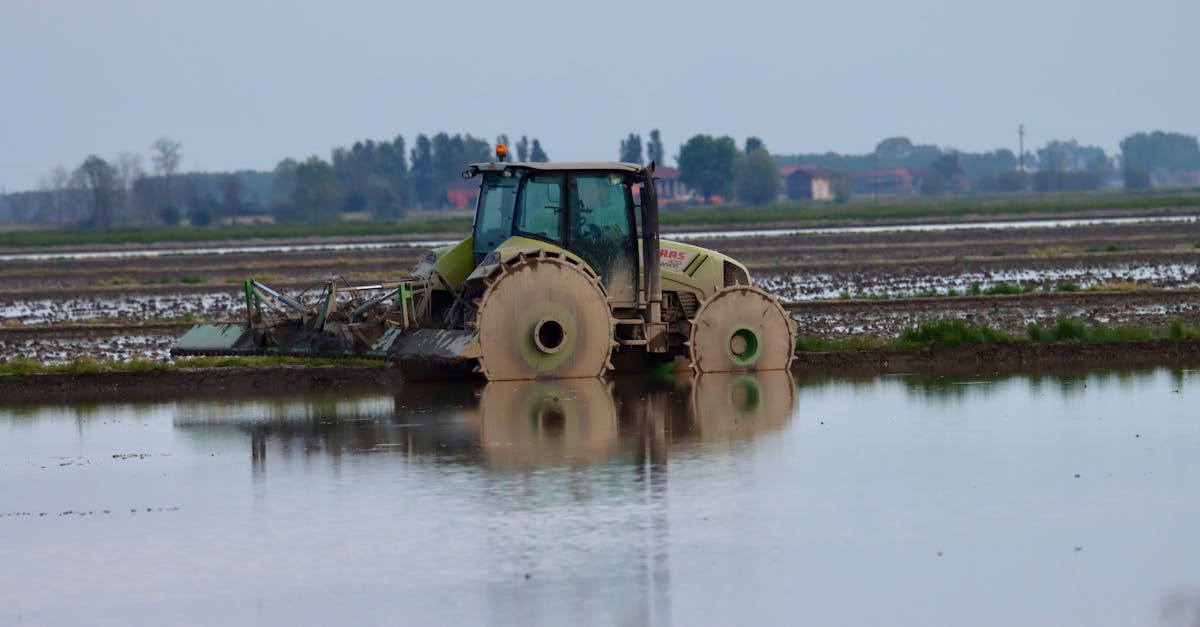
The Ground Truth: A Real-World Assessment of Autonomous Tractors in India and Globally

The Reality of 'Autonomous' in Agriculture
The agricultural sector is undergoing a technological shift, yet the term 'autonomous' often obscures more than it clarifies. In the context of heavy machinery, autonomy rarely implies a vehicle operating without human oversight in all conditions. Instead, it typically refers to GPS-guided steering systems that reduce operator fatigue and increase field efficiency. This article evaluates the current state of autonomous tractor technology, focusing on market leaders John Deere and Mahindra, with specific attention to the Indian market's unique constraints and opportunities.
Before analyzing specific manufacturers, it is crucial to grade the technology on the shipping hardware ladder. The industry distinguishes between 'Guidance Systems' and 'Autonomous Control'. Currently, the market is dominated by Level 2 systems. These utilize Real-Time Kinematic (RTK) GPS receivers to maintain lane accuracy within 2-5 cm. This allows for continuous operation of the tractor's steering mechanism, but the operator remains inside the cab to monitor implement performance and safety. Level 3 systems, which involve automated implement control (depth, pressure), are emerging but require operator supervision. Level 4 autonomy, where a vehicle operates without a driver, remains in pilot deployment or limited beta phases for agricultural equipment.
This distinction is vital for the Indian market. Farmers often conflate 'smart' connectivity with full autonomy. A tractor with a smartphone app for monitoring fuel levels is not autonomous. True autonomy requires sensor fusion, including LiDAR, cameras, and radar, to navigate dynamic environments. For now, the shipping hardware available commercially is predominantly precision guidance augmented by telematics.
John Deere: Precision Farming at Scale
John Deere leads the global market with its SeeTech and ExactEmerge systems. Their 7R and 8R Series tractors represent the cutting edge of available shipping hardware. These models utilize a combination of RTK GPS, camera-based guidance, and increasingly, LiDAR for obstacle detection. The See & Spray technology, for instance, uses machine vision to distinguish between crops and weeds, applying herbicide only where needed. This reduces chemical costs and environmental impact, but the system still relies on a human operator in the seat to manage the machine's physical safety.
In terms of availability, John Deere's autonomous-ready tractors are imported into India. They are not direct imports for the average farmer due to their prohibitive cost and complex after-sales requirements. They are primarily fleet vehicles for large agribusinesses, contract farming entities, or high-value plantation owners. The 8R 370 HP model, a common benchmark for heavy-duty autonomous capability, can exceed $200,000 USD. This translates to a landed cost of approximately INR 1.6 Crore to INR 1.8 Crore, excluding import duties and GST.
The technology stack is robust. The John Deere Operations Center provides cloud-based fleet management, allowing managers to track fuel, performance, and location remotely. However, the hardware requires significant maintenance infrastructure. In rural India, where service centers are concentrated in Tier-1 cities, this presents a barrier. The 7R Series, introduced globally, features a 500-horsepower engine with auto-steer capabilities as a standard or optional feature depending on the configuration. While the 'driverless' concept is marketed in press releases, the actual deployment remains 'driver-supervised' in most operational scenarios.
For the Indian context, the ROI is calculated differently. A $200,000 tractor requires significant landholding to justify the capital expenditure. For a farmer with 10 acres, the cost per acre of technology exceeds the revenue margin. Therefore, John Deere's autonomous hardware is currently restricted to large-scale commercial farming operations in states like Punjab, Haryana, and Maharashtra where land consolidation is higher.
Mahindra & Mahindra: The Indian Context
Mahindra is the volume leader in India, accounting for nearly 40% of the tractor market. Their approach differs significantly from Western manufacturers. Mahindra focuses on 'Smart Tractors' rather than 'Fully Autonomous' units. This distinction is critical for adoption in a market characterized by small land holdings and price sensitivity. The Mahindra e-1000 and the 5055 DI Super models represent the current hardware baseline.
The e-1000 is an electric tractor designed for zero-emission operations in greenhouses or small plots. While it offers remote monitoring via an app, it is not autonomous. It requires a driver. Mahindra has partnered with agri-tech startups to integrate telematics into their existing fleet. For example, the 'Mahindra Connect' platform allows farmers to track location and usage data. This is not autonomy; it is connectivity. However, it lays the groundwork for future automation.
When discussing pricing, the contrast is stark. A 40-60 HP Mahindra tractor ranges from INR 5 Lakh to INR 8 Lakh. An auto-steer add-on, if available through third-party integrators or specific dealerships, adds INR 2 Lakh to INR 4 Lakh to the base cost. This total of roughly INR 10 Lakh to INR 12 Lakh is more accessible to large commercial farmers than the imported John Deere equivalents.
Mahindra's strategy aligns with the Indian government's goals under the Sub-Mission on Agricultural Mechanization (SMAM). The government subsidizes the purchase of agricultural machinery to encourage mechanization. Autonomous-ready tractors qualify for these subsidies, provided they meet specific criteria. This creates a pathway for semi-autonomous systems to penetrate the market faster than fully driverless models. The focus is on labor efficiency rather than labor elimination. With rural labor shortages, a system that reduces steering fatigue is more valuable than one that removes the driver entirely.
The Economic Case for Indian Farmers
The economic viability of autonomous tractors in India hinges on the Return on Investment (ROI). For large landholders, the labor cost savings are significant. A typical tractor operator in India costs INR 15,000 to INR 25,000 per month. Over a harvest season, this is a substantial expense. If an autonomous system can operate 24/7 without sleep breaks, the ROI improves. However, the current hardware cannot operate 24/7 without supervision due to safety regulations and technical limitations.
Another factor is the cost of the technology itself. A precision guidance system costs INR 2 Lakh to INR 5 Lakh. This is an additional capital expenditure on top of the tractor price. For a farmer with a net profit margin of 10-15%, this adds a break-even period of 3 to 5 years. If the tractor depreciates faster than the technology saves, the investment fails.
However, the argument for labor shortages is strong. As rural youth migrate to urban centers, the availability of skilled operators drops. Autonomous systems that reduce the need for highly skilled drivers offer a solution. They allow a farmer to manage operations remotely. This is the core value proposition of Mahindra's telematics and John Deere's guidance systems. They do not eliminate the need for a human, but they make the human role less physically demanding.
The subsidy landscape is also evolving. The Indian government is pushing for 'Farm Machinery Banks' (FMBs) where machines are shared among cooperatives. For FMBs, the ROI calculation is different. A shared autonomous tractor serves multiple farmers, spreading the capital cost. This model favors high-tech tractors over low-cost manual ones. It suggests that the future of autonomy in India lies in the sharing economy rather than individual ownership.
Regulatory and Safety Constraints
Regulatory frameworks are a significant barrier to full autonomy. In the US, the National Highway Traffic Safety Administration (NHTSA) has issued guidelines for automated vehicles. In India, the Motor Vehicles Act is still adapting to these technologies. Liability remains a gray area. If an autonomous tractor crashes into a fence, who is responsible? The manufacturer, the software provider, or the operator?
ISO standards for agricultural machinery require a safety zone around the vehicle. Level 2 systems comply with this by allowing the operator to override the system immediately. Level 4 systems, which remove the operator, require robust fail-safes. Currently, most 'autonomous' tractors on the market are Level 2. They can steer themselves, but the driver must be present to brake or stop.
This distinction protects manufacturers from liability claims. It also ensures safety for the worker. A fully autonomous tractor operating in a field with livestock or pedestrians poses a risk. Until the technology is proven to handle edge cases (like a child running into the field), the industry will not push for driverless status. This conservative approach is necessary for heavy equipment.
Furthermore, the Indian regulatory environment requires adherence to emission norms (CEV Stage V). Autonomous tractors must meet these standards while integrating complex sensor suites. This increases the complexity and cost of the vehicle. For manufacturers like Mahindra, this means balancing compliance with affordability. For John Deere, it means importing compliant units at a premium.
Future Outlook and Availability
The future of autonomous tractors in India depends on three factors: hardware maturity, infrastructure, and economics. Hardware maturity is progressing, with better battery management and sensor fusion. Infrastructure, specifically 4G/5G connectivity in rural areas, is improving but remains inconsistent. Economics is the deciding factor. Until the cost of sensors drops and the cost of labor rises, full autonomy will remain a niche product.
For now, the focus should be on 'Precision Farming'. This includes auto-steer, variable rate application, and yield monitoring. These are proven technologies that offer immediate ROI. Full autonomy is a long-term goal. Manufacturers are investing heavily in R&D, but shipping hardware remains the gold standard. We must grade claims by shipping hardware first, pilot deployments second, and announcements last.
In summary, the autonomous tractor market is not a finished product. It is an evolving ecosystem. For the Indian farmer, the 'Smart Tractor' is the immediate reality. The 'Autonomous Tractor' is the future promise. Bridging the gap requires infrastructure investment, regulatory clarity, and a realistic assessment of technology capabilities.
✓ Key takeaways
- •Hands-on view of The Ground Truth: A Real-World Assessment of Autonomous Tractors in India and Globally inside our Autonomous Tractors library.
- •Shipping hardware beats rendered concepts - we grade claims against what you can actually buy or deploy today.
- •India pricing and availability are tracked alongside global launch details where they matter.
References
Related articles
More in Autonomous Tractors →