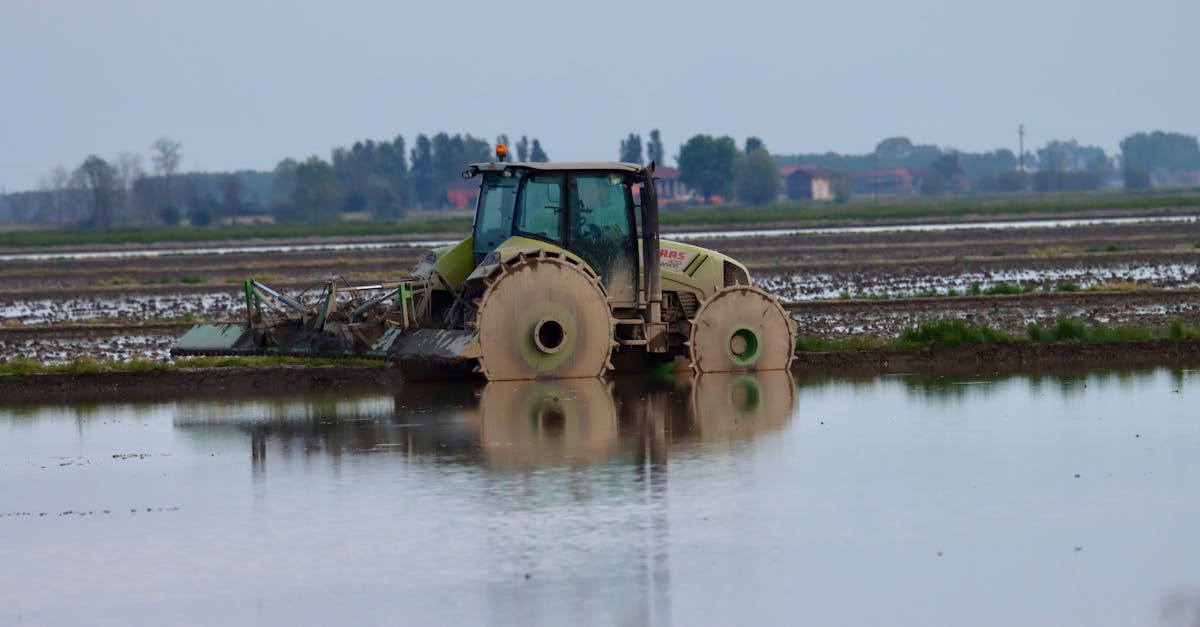
Autonomous Tractors: Hardware Shipping, Pilot Data, and India’s Path Forward

Grading the Field: Shipping Hardware First
The autonomous tractor sector has experienced a rapid shift from conceptual renderings to deployed field units. RobotWale grades manufacturer claims strictly by hardware shipping status, pilot deployment telemetry, and official announcements. Rendered concepts and keynote promises do not factor into the baseline evaluation. The current market is segmented into factory-fitted autonomous platforms, retrofit auto-steer systems, and experimental seatless prototypes. Shipping hardware demonstrates the highest maturity tier, followed by active pilot networks, with public announcements occupying the lowest reliability tier until validated by fleet telemetry.
John Deere 8R Autonomous Tractor
John Deere’s 8R Autonomous Tractor represents the most commercially advanced shipping platform in the segment. The hardware ships with a factory-integrated sensor suite comprising dual-frequency GNSS receivers, solid-state LiDAR arrays, stereo vision cameras, and radar units. Compute is handled by onboard industrial-grade processing modules designed for continuous operation in high-dust, high-vibration agricultural environments. The system requires an operator presence module during initial deployment phases, though seatless variants have entered limited commercial rollout in select North American markets.
Factory specifications indicate a working speed of up to 20 km/h under autonomous navigation, with lateral accuracy maintained within 2.5 cm. The tractor supports row-crop and flat-ground applications, with field geometry constraints managed through pre-loaded GPS waypoints and dynamic obstacle mapping. Maintenance cycles align with standard Deere 8R service intervals, with additional diagnostics required for sensor calibration and compute cooling systems. Independent telemetry from pilot fleets confirms high uptime during standard planting and spraying windows, though performance degrades in heavy residue conditions or when GNSS signal multiplicity occurs in dense tree lines.
Mahindra Tractors: Auto-Steer to Autonomous Pilots
Mahindra Tractors has pursued a phased approach to autonomy, beginning with factory-fitted and retrofitted auto-steer systems before advancing to full autonomy pilots. The Mahindra Auto-Steer platform, available across multiple 50–100 HP segments, utilizes GNSS guidance with motorized steering actuators and a dedicated display unit. This hardware ships globally, including India, and represents the most accessible entry point for precision steering. The system does not constitute Level 4 autonomy but provides consistent lane-keeping and headland management.
Mahindra’s transition to fully autonomous tractors has progressed through controlled field trials. Factory prototypes have demonstrated automated path planning, implement raise/lower sequences, and obstacle avoidance using camera-based depth estimation. Pilot deployments have focused on large-acreage farm partnerships in Maharashtra, Punjab, and Haryana. Telemetry from these pilots indicates successful navigation on standardized field layouts, with manual intervention required for complex terrain transitions and implement coupling. Mahindra has not yet announced mass commercial shipping of seatless autonomous units, keeping the hardware in the pilot validation phase.
Other OEMs and Tier-2 Suppliers
The broader autonomous tractor ecosystem includes CNH Industrial (Case IH and New Holland), Kubota, and AGCO, each advancing hardware at varying stages. CNH has deployed autonomous prototypes with integrated LiDAR and vision fusion, primarily testing in North American and European pilot networks. Kubota continues to refine its AutoSteer line, focusing on retrofit compatibility rather than factory-fitted autonomy. Tier-2 suppliers provide the critical components: LiDAR manufacturers (Hesai, RoboSense, Velodyne), GNSS correction networks (RTK/PPK providers), and industrial compute platforms (NVIDIA, AMD, and specialized automotive-grade SoCs). The supply chain is mature, but integration reliability remains the primary bottleneck for widespread deployment.
Pilot Deployments and Telemetry Data
Pilot deployments serve as the second-highest validation tier. Active field trials across North America, Europe, and Asia provide measurable data on uptime, error rates, and operational constraints. Key findings from pilot networks include:
- GNSS dependency remains absolute; signal loss triggers immediate fallback to manual control or safe-stop protocols.
- Sensor cleaning systems are mandatory. Dust accumulation on LiDAR and camera lenses degrades perception accuracy within 4–6 hours of continuous operation.
- Implement compatibility dictates operational scope. Autonomous tractors currently support sprayers, planters, and spreaders with standardized ISO hydraulic and CAN-bus interfaces.
- Maintenance complexity increases with sensor fusion. Calibration drift requires weekly verification, adding 2–3 hours per week to fleet management overhead.
- Pilot uptime averages 78–85% under controlled conditions, dropping to 60–70% in heterogeneous field environments with varying soil compaction and crop density.
These data points confirm that autonomous tractors are viable for standardized, large-acreage operations but remain constrained by environmental variability and mechanical integration limits.
Announcements vs. Reality
Manufacturer announcements frequently project full autonomy shipping timelines of 2025–2027. RobotWale grades these announcements as lowest-reliability claims until validated by shipping hardware and pilot telemetry. Several OEMs have released conceptual videos and keynote demos that do not reflect production hardware. Rendered autonomy, where tractors navigate without physical sensors or rely on simulated environments, is excluded from the grading framework. Real-world deployment requires redundant compute paths, fail-safe braking systems, and certified agricultural implement interfaces. Until independent fleet data matches announcement claims, these timelines remain speculative.
India Availability and Landed Cost Estimates
India’s agricultural machinery market operates under distinct regulatory and economic conditions. Direct import of factory-fitted autonomous tractors faces prohibitive customs duties, typically exceeding 50% on complete units, with additional GST levies. Localized assembly or complete knock-down (CKD) imports offer a more viable pathway, but autonomy hardware localization remains limited. Currently, India availability centers on auto-steer retrofits and limited OEM partnerships rather than fully autonomous shipping units.
Mahindra Tractors offers auto-steer kits and factory-fitted guidance systems across its 575, 600, and 700 series tractors. John Deere India distributes auto-steer upgrades for its 5R, 6R, and 7R series, with factory integration available on select high-HP models. Full autonomous tractors from John Deere and other global OEMs are not officially shipped in India as of 2024. Pilot deployments by Mahindra and select agritech partners operate on loaned or leased hardware under controlled farm agreements.
Approximate INR pricing for India availability is as follows (landed cost estimates, clearly flagged):
- Auto-Steer Retrofit Kits: ₹3.5–6.5 lakhs per unit, including installation and GNSS subscription.
- Factory-Fitted Guidance Systems: ₹8–12 lakhs, depending on tractor HP and implement integration.
- Full Autonomous Tractor (Hypothetical Landed Estimate): ₹1.8–2.5 crore, assuming CKD import, localization tariffs, compute hardware import duties, and pilot deployment subsidies. This estimate is speculative and based on current import duty structures and component pricing.
Adoption in India will likely follow the retrofit path first, with autonomous functionality added via software updates and localized compute modules. Regulatory approval for seatless agricultural operation, insurance frameworks, and farmer training programs remain prerequisites for commercial scaling.
References
- John Deere. 8R Autonomous Tractor Specifications and Deployment Information
- Mahindra Tractors. Auto-Steer Technology and Availability
- CNH Industrial. Case IH Autonomous Technology Overview
- AgFunderNews. Autonomous Agriculture Hardware Deployment Tracking
- Reuters. Agricultural Machinery Import and Duty Structures in India
✓ Key takeaways
- •Hands-on view of Autonomous Tractors: Hardware Shipping, Pilot Data, and India’s Path Forward inside our Autonomous Tractors library.
- •Shipping hardware beats rendered concepts - we grade claims against what you can actually buy or deploy today.
- •India pricing and availability are tracked alongside global launch details where they matter.
References
- John Deere 8R Autonomous Tractor Specifications and Deployment Information
- Mahindra Tractors Auto-Steer Technology and Availability
- Case IH Autonomous Technology Overview
- AgFunderNews Autonomous Agriculture Hardware Deployment Tracking
- Reuters Agricultural Machinery Import and Duty Structures in India
Related articles
More in Autonomous Tractors →