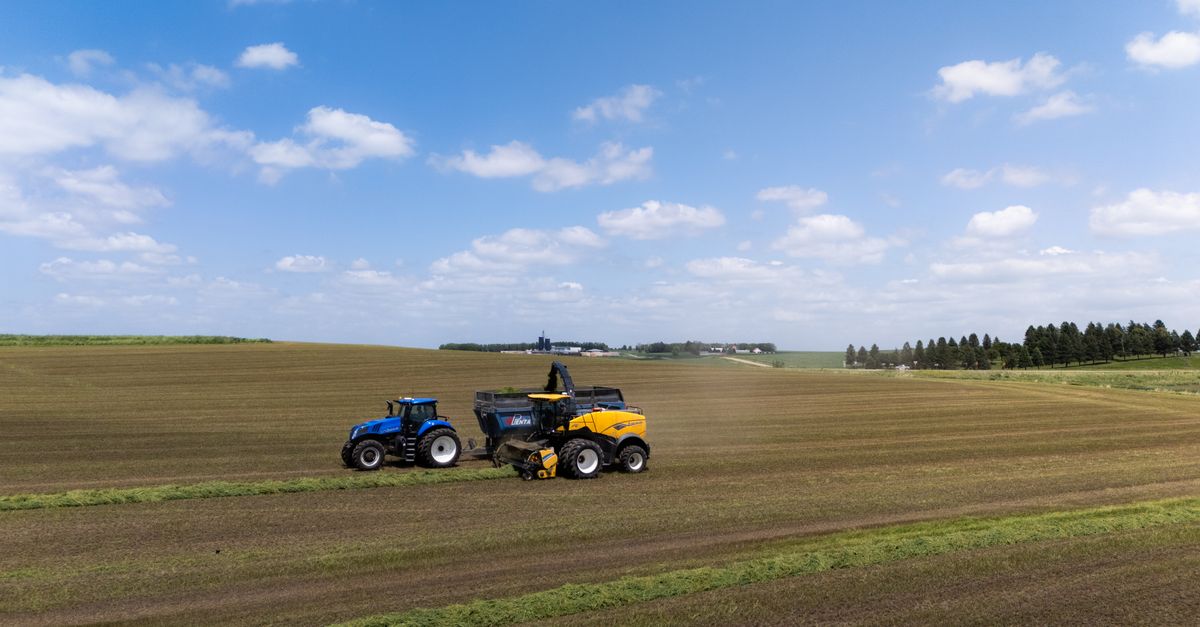
Autonomous Tractors: Mahindra, John Deere, and the Hardware-First Reality

Grading the Claims: Shipping Hardware, Pilots, and Announcements
The agricultural robotics sector has long been susceptible to speculative timelines and rendered concept videos. At RobotWale, we grade autonomous machinery claims strictly by deployment maturity: shipping hardware ranks first, pilot deployments second, and manufacturer announcements last. The autonomous tractor category follows this exact trajectory. While fully driverless tractors remain in controlled pilot phases globally, precision-guided and semi-autonomous hardware is widely shipping. This article evaluates the current state of the field through that lens, with specific attention to John Deere and Mahindra, alongside broader industry architecture and India market realities.
John Deere: Guided Steering and Limited Pilot Rollouts
John Deere’s most mature commercial offering in the autonomous space is the AutoTrac system, available across its 8R (300–435 HP) and 9R (430–610 HP) tractor lines. AutoTrac is not fully autonomous; it is a GNSS-guided steering system that maintains sub-inch accuracy under operator supervision. The hardware ships with a standard IMU, dual-frequency RTK receiver, and integrated control module. It is widely available and has been deployed across commercial farms in North America, Europe, Australia, and India for several years.
Fully autonomous capability remains in pilot deployment. John Deere has demonstrated driverless 8R tractors equipped with its OpenFrame architecture, removing the operator cabin and relying on multi-sensor fusion (LiDAR, stereo vision, and radar) for obstacle detection and path planning. These units have operated in pilot programs in the United States and select European test zones. As of 2024, they are not in mass commercial production. The company continues to refine fail-safe protocols, remote monitoring interfaces, and edge-compute reliability before expanding deployment.
Mahindra & Mahindra: Precision Ag Tech and Early-Stage Pilots
Mahindra’s Farm Equipment Sector (MES) dominates India’s tractor market with high-volume diesel and CNG platforms. In the autonomy space, Mahindra has prioritized precision agriculture telematics, data analytics, and partnership-driven pilots over standalone driverless hardware. Mahindra Agri Solutions has deployed fleet management systems, soil health mapping, and automated implement control across thousands of units. These systems reduce operator fatigue and improve field coverage but require human steering and supervision.
Autonomous tractor pilots in India have been conducted through collaborations with agricultural research institutions and startup partners. Demonstrations have focused on automated plowing, seed drilling, and crop monitoring using existing Mahindra chassis retrofitted with third-party GNSS and vision modules. No Mahindra-branded fully autonomous tractor has shipped to commercial customers as of 2024. The company’s strategy aligns with incremental adoption: telemetry and guidance systems first, followed by conditional automation as regulatory frameworks and operator training mature.
Hardware Architecture and Sensor Stacks in Agricultural Autonomy
Autonomous tractors require a different hardware profile than industrial AGVs or warehouse robots. Agricultural terrain introduces variable soil compaction, crop canopy interference, dust, moisture, and dynamic obstacles. The current hardware stack for semi-autonomous and pilot autonomous tractors includes:
- Positioning: Dual-frequency RTK-GNSS with IMU dead reckoning. Accuracy targets sub-2 cm under open sky, degrading to 5–10 cm under heavy canopy or near ridges.
- Obstacle Detection: Solid-state LiDAR (905 nm) for long-range mapping, stereo vision cameras for texture and crop row classification, and short-range radar for dust-penetrant detection.
- Compute: Automotive-grade SoCs (e.g., NVIDIA Orin or Qualcomm Snapdragon Ride) running perception, localization, and path-planning stacks. Redundant power distribution and isolated CAN bus architectures are standard.
- Actuation: Steer-by-wire interfaces, electronic throttle mapping, and automated PTO/Three-point hitch control. Mechanical redundancy and torque-limiting clutches are mandatory for safety certification.
- Failsafes: Geofence monitoring, operator override switches, emergency stop relays, and remote telemetry dashboards for fleet managers.
Hardware reliability in agriculture depends on ingress protection (IP6K9K for washdown environments), vibration damping, and thermal management under continuous high-load operation. Pilot programs consistently report that sensor calibration drift and crop-induced GNSS multipath are the primary failure modes, not compute limitations.
India Availability, Subsidies, and Approximate Pricing
India’s agricultural machinery market operates under state-specific subsidies, FPO (Farmer Producer Organization) procurement channels, and import duty structures. Autonomous hardware adoption is constrained by unit economics and operator skill availability.
John Deere in India: The 8R series with AutoTrac is available through authorized dealers. Approximate landed cost for a 300 HP 8R with AutoTrac guidance ranges from ₹1.85 crore to ₹2.15 crore, depending on configuration and state subsidy eligibility. AutoTrac add-on pricing typically adds ₹18–25 lakhs to the base tractor cost. Fully autonomous OpenFrame units are not commercially available in India and would face import duties exceeding 75% if shipped directly.
Mahindra in India: Mahindra tractors (575 Di to 3750 Di variants) range from ₹6.5 lakhs to ₹18 lakhs for base models. Precision agriculture telematics and automated implement kits are offered as add-ons, priced between ₹2.5–4.5 lakhs per unit. Autonomous retrofit packages from third-party integrators cost ₹5–8 lakhs but are limited to pilot deployments. No fully driverless Mahindra tractor is priced or available for commercial sale.
State subsidies under schemes like PMKSY and state agricultural mechanization missions typically cover 30–50% of guided steering hardware for FPOs and smallholder collectives. Landed cost estimates for autonomous tractors in India remain speculative until domestic manufacturing or localized assembly begins.
Regulatory and Operational Constraints
Autonomous agricultural machinery in India falls under evolving safety and insurance guidelines. The Directorate of Farm Machinery Testing & Design (DFMTD) has not yet published dedicated certification standards for driverless tractors, though existing ISO 12100 (safety of machinery) and ISO 18497 (agricultural machinery operator environment) frameworks are referenced. Insurance providers require operator presence or verified remote monitoring for liability coverage. FPOs deploying pilot fleets must maintain certified technicians for sensor recalibration and software updates. Cross-border data transmission from telemetry systems must comply with India’s Digital Personal Data Protection Act, limiting cloud-dependent autonomy features unless localized edge processing is used.
References
John Deere. AutoTrac Guidance System Specifications. https://www.deere.com/en/farm-equipment/tractors/8r-series/autotrac/
Mahindra & Mahindra Farm Equipment Sector. Precision Agriculture Solutions. https://www.mahindrasolutions.com/mahindra-agri-solutions/
FIEO. Agricultural Machinery Sector Report 2023. https://www.fieo.org/sectors/agricultural-machinery
Journal of Agricultural Mechanization. Sensor Fusion Challenges in Crop Canopy Navigation. https://www.journalofmechanization.org
Ministry of Agriculture & Farmers Welfare, Government of India. Subsidy Guidelines for Farm Machinery. https://agricoop.gov.in
✓ Key takeaways
- •Hands-on view of Autonomous Tractors: Mahindra, John Deere, and the Hardware-First Reality inside our Autonomous Tractors library.
- •Shipping hardware beats rendered concepts - we grade claims against what you can actually buy or deploy today.
- •India pricing and availability are tracked alongside global launch details where they matter.
References
Related articles
More in Autonomous Tractors →