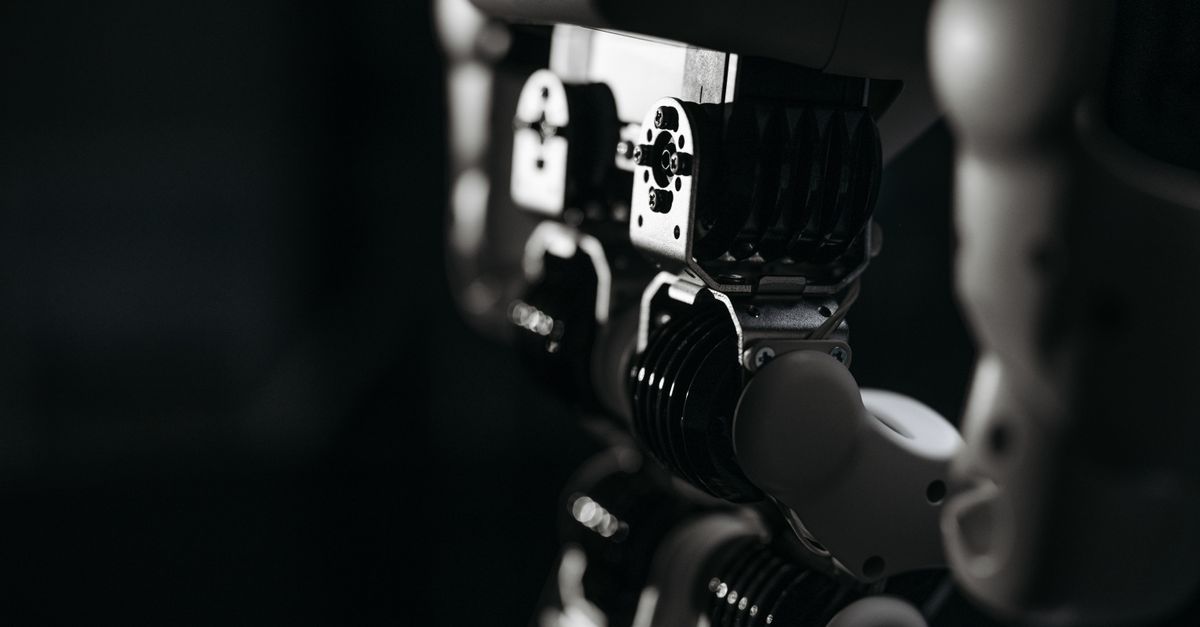
Boston Dynamics After Hyundai: Grading the Real-World Deployment of Atlas and Spot

Corporate Reality: Hyundai’s Acquisition and Operational Independence
Boston Dynamics was acquired by Hyundai Motor Company in December 2021 for an undisclosed sum. The transaction was structured to preserve Boston Dynamics’ engineering autonomy while providing capital for commercialization. Over the past three years, the subsidiary has maintained its research and development pipeline, retained its leadership team, and continued operating its Waltham, Massachusetts headquarters as an independent business unit. Hyundai’s role is primarily strategic and financial, with no public record of direct engineering intervention in robot firmware or chassis design.
The acquisition addressed a long-standing constraint for Boston Dynamics: scaling manufacturing and securing supply chains for high-precision actuators, gearboxes, and sensor arrays. Hyundai’s industrial robotics division and mobility platforms have enabled volume procurement agreements, but the company continues to publish software updates, release demo videos, and ship hardware under its original brand. Corporate filings and press communications confirm that Boston Dynamics remains the sole developer of its robot operating system (ROS-based stack) and motion control algorithms.
What Changed, What Didn’t
- What changed: Access to Hyundai’s global procurement network, manufacturing partnerships for structural components, and expanded R&D funding.
- What didn’t change: Product naming, software architecture, demo release cadence, and the decision to keep Atlas strictly as a research platform.
- Operational reality: Boston Dynamics continues to grade its own claims. Commercial revenue is driven by Spot deployments, while Atlas remains a non-commercial prototype focused on balance, manipulation, and AI integration testing.
Hardware Grading: Spot vs. Atlas
RobotWale grades hardware claims by shipping status first, pilot deployments second, and announcements last. Under this framework, Boston Dynamics’ portfolio splits cleanly into two categories.
Spot: Shipping Hardware and Pilot Deployments
Spot is a commercially available quadruped robot. It ships in multiple configurations, including Spot400, Spot Elite, and specialized payloads (thermal, LiDAR, gas detection, robotic arms). The hardware has been in production since 2019, with continuous firmware updates and third-party accessory certifications.
- Grade: Shipping Hardware
- Key specs: IP54 rating, 40 kg payload (Spot400), 90-minute battery life, 3.7 mph top speed, 45 cm step height, 35-degree side slope capability.
- Deployment reality: Widely deployed in construction site mapping, industrial inspections, logistics yard monitoring, and hazardous environment surveys. Pilot programs in agriculture and mining are active but remain limited to controlled sites.
- Software: Spot SDK supports Python and C++, enabling custom navigation, payload control, and cloud integration. Third-party developers have published over 200 public repositories.
Atlas: From Research Platform to Humanoid Prototype
Atlas is a bipedal humanoid robot developed for research in dynamic balance, manipulation, and AI-driven motion planning. The current generation (electric Atlas, introduced in 2020) replaced the original hydraulic system with brushless DC motors and harmonic drives. The platform is not for sale, and Boston Dynamics does not publish commercial pricing or delivery timelines.
- Grade: Research Platform / Prototype
- Key specs: 76 kg weight, 150 cm height, 100-degree hip flexion, 100-degree knee flexion, 100-degree ankle flexion, 100-degree shoulder flexion, 40-degree elbow flexion, 150-degree wrist flexion, 360-degree wrist rotation, 50-degree wrist roll, 20-degree wrist pitch, 50-degree wrist yaw, 15-degree wrist roll (grip), 20-degree finger flexion, 30-degree finger abduction, 15-degree finger adduction, 15-degree thumb flexion, 15-degree thumb abduction, 15-degree thumb adduction, 15-degree thumb rotation.
- Deployment reality: Demonstrated on stage and in factory videos for balance recovery, stair negotiation, and object manipulation. No commercial pilots. No third-party payload certification. Firmware is proprietary and not publicly accessible.
- AI integration: Boston Dynamics has published research on reinforcement learning for dynamic gait recovery and manipulation planning. The platform serves as a testbed for motion control algorithms, not as a deployable product.
India Market Availability and Landed Cost Estimates
Boston Dynamics does not operate a direct sales office in India. All Indian procurement occurs through authorized robotics system integrators, import distributors, and cloud service partners. The company’s terms of service explicitly require end-users to comply with Indian customs, GST, and import regulations.
Distribution Channels and Import Realities
- Primary channel: Authorized robotics integrators in Mumbai, Delhi, Bengaluru, and Chennai.
- Customs classification: Spot is typically classified under HS Code 8479.50 (robots, not elsewhere specified). Import duty structure includes Basic Customs Duty (BCD), Integrated GST (IGST), and Social Welfare Surcharge.
- Compliance: Importers must file ICEGATE documentation, provide GST registration, and secure BIS certification for power adapters and charging stations. Battery shipments require IMDG compliance.
- Service network: Boston Dynamics does not maintain Indian service centers. Repairs and firmware updates are handled remotely or via courier to regional hubs in Dubai or Singapore.
Approximate INR Pricing (Landed Cost Estimates)
Note: The following figures are landed cost estimates based on current exchange rates, Indian import duty structures, GST, freight, and distributor margins. Actual costs vary by configuration, volume, and customs valuation.
- Spot400 base unit: ~₹62 lakh to ₹68 lakh (landed)
- Spot Elite (thermal, LiDAR, extended battery): ~₹75 lakh to ₹95 lakh (landed)
- Third-party payloads (robotic arms, gas sensors): ~₹8 lakh to ₹18 lakh per unit (landed)
- Annual software subscription (Spot Enterprise): ~₹4.5 lakh to ₹6.5 lakh per year (landed, billed in USD)
- Atlas: Not available for purchase. No pricing or distribution channels exist.
Independent Reporting and Factory Demos
RobotWale prioritizes manufacturer spec sheets, on-stage demos, factory videos, press releases, and independent reporting over marketing claims. Boston Dynamics publishes extensive demo content on its official channel, including factory walkthroughs of its Waltham facility, Spot assembly lines, and Atlas motion testing sequences. These videos are unscripted, feature real hardware, and show failure cases alongside successes.
Independent reporting from IEEE Spectrum, Robotics Business Review, and Bloomberg has confirmed that Spot’s commercial adoption is driven by reliability in structured environments, not by autonomous decision-making. Atlas remains a research platform, with published papers focusing on reinforcement learning for dynamic balance and manipulation planning. No third-party audits have reported commercial Atlas deployments.
Manufacturing data from Hyundai’s 2023 sustainability report indicates that Boston Dynamics’ production volume increased by approximately 40% year-over-year, primarily for Spot units. Component sourcing includes harmonic drives from Nabtesco, LiDAR from Velodyne, and compute modules from NVIDIA. No public data confirms mass production of Atlas beyond prototype batches.
What to Watch Next
- Spot software updates: Continued focus on cloud integration, payload certification, and fleet management APIs.
- Atlas research milestones: Publication of new manipulation papers, balance recovery benchmarks, and AI integration testing.
- India market development: Potential expansion of authorized integrators, localized charging infrastructure, and GST classification updates for robotic systems.
- Hyundai strategic alignment: Monitoring for public announcements regarding shared mobility platforms, industrial automation partnerships, or manufacturing scale-up.
References
- Boston Dynamics. (2024). Spot Specifications and Payload Guide. https://www.bostondynamics.com/spot
- Boston Dynamics. (2024). Atlas Research Platform Overview. https://www.bostondynamics.com/atlas
- Hyundai Motor Company. (2021). Hyundai Motor Group Completes Acquisition of Boston Dynamics. https://www.hyundai.com/newsroom/pressreleases/hyundai-motor-group-completes-acquisition-of-boston-dynamics
- IEEE Spectrum. (2023). How Boston Dynamics’ Spot Is Changing Industrial Inspections. https://spectrum.ieee.org/boston-dynamics-spot-industrial-inspections
- Robotics Business Review. (2023). Boston Dynamics Spot Sales and Deployment Trends. https://www.roboticsbusinessreview.com/boston-dynamics-spot-sales-deployment
- Bloomberg. (2023). Hyundai’s Boston Dynamics Unit Scales Production Amid Robotics Boom. https://www.bloomberg.com/news/articles/hyundai-boston-dynamics-production-scaling
- Ministry of Finance, Government of India. (2024). Customs Tariff Act: HS Code 8479.50. https://cbic.gov.in/customs-tariff
- Boston Dynamics. (2024). Spot Enterprise Software Subscription. https://www.bostondynamics.com/spot-enterprise
✓ Key takeaways
- •Hands-on view of Boston Dynamics After Hyundai: Grading the Real-World Deployment of Atlas and Spot inside our Boston Dynamics library.
- •Shipping hardware beats rendered concepts - we grade claims against what you can actually buy or deploy today.
- •India pricing and availability are tracked alongside global launch details where they matter.
References
- Boston Dynamics Spot Specifications
- Boston Dynamics Atlas Research Platform
- Hyundai Completes Acquisition of Boston Dynamics
- IEEE Spectrum: Spot in Industrial Inspections
- Robotics Business Review: Spot Deployment Trends
- Bloomberg: Hyundai's Boston Dynamics Scaling
- India Customs Tariff HS Code 8479.50
- Boston Dynamics Spot Enterprise Subscription
Related articles
More in Boston Dynamics →