
Boston Dynamics: Shipping Hardware, Humanoid R&D, and India Market Access
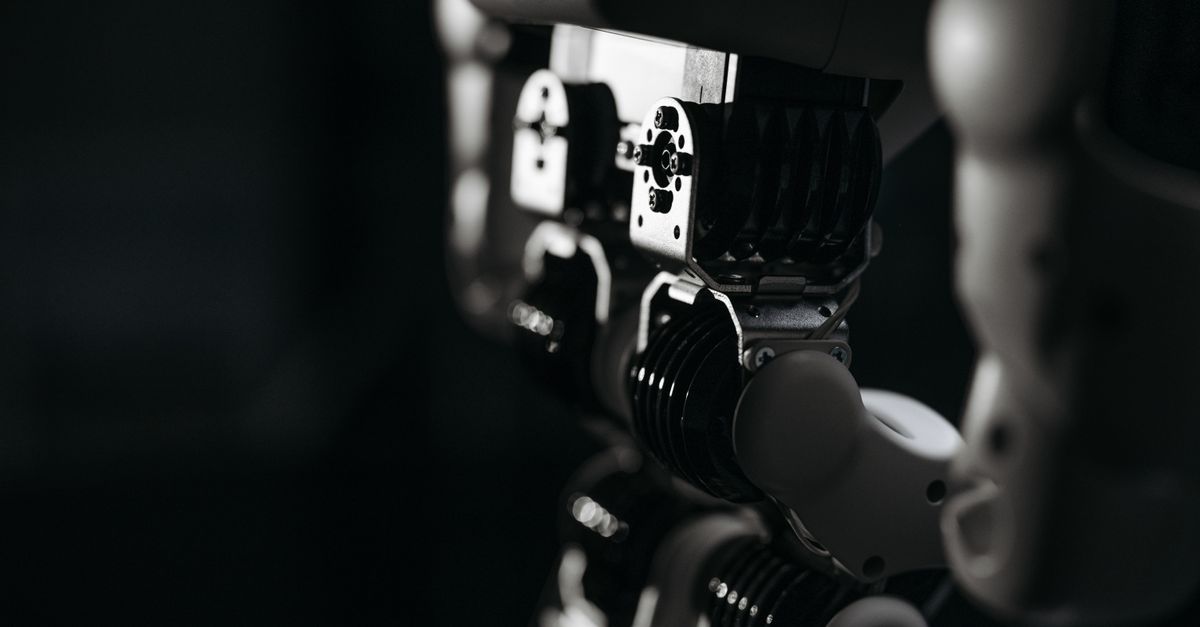
Corporate Structure and Ownership
Boston Dynamics was founded in 1992 and spun out of the Massachusetts Institute of Technology before transitioning to commercial operations. In 2020, Hyundai Motor Group acquired a 90 percent stake, with SoftBank retaining 10 percent. The acquisition was structured to integrate Boston Dynamics’ locomotion platforms into Hyundai’s industrial automation, logistics, and mobility strategies. Boston Dynamics maintains operational independence, retaining its Waltham, Massachusetts engineering center and its focus on quadruped, bipedal, and mobile manipulation hardware. The company does not publish audited financial statements, but Hyundai’s annual reports consistently classify robotics as a strategic growth vertical within its broader automation portfolio.
Spot: Shipping Hardware and Deployment Reality
Spot is Boston Dynamics’ commercially available quadruped platform. The first generation shipped to enterprise customers in 2019, and the platform has since matured through iterative hardware releases. Current production models, designated Spot 3 and Spot 4, are manufactured, tested, and delivered for operational use. Unlike conceptual demonstrations, Spot units are deployed in unstructured environments where wheeled platforms face traction and terrain limitations. The chassis utilizes synchronized hip and knee actuators with closed-loop torque control, enabling walking, running, and stair negotiation. Spot’s design prioritizes field durability, with an IP54 rating for dust and water resistance, and a robust thermal management system for sustained operation.
Technical Specifications and Actuation Architecture
Current Spot hardware specifications include a maximum payload capacity of 30 kilograms and a robot weight of approximately 25 kilograms. The platform features a standardized top plate that accepts modular sensor payloads, including 3D LiDAR, thermal imaging cameras, gas detection modules, and third-party robotic arms. Boston Dynamics provides the Spot SDK and SpotPy, enabling developers to program autonomous navigation, waypoint missions, and sensor data pipelines. The SDK supports ROS 2 compatibility, which has facilitated integration with existing industrial automation stacks. Independent engineering reviews confirm that Spot’s motion control relies on real-time state estimation and model predictive control rather than open-loop gait sequencing. Battery modules provide approximately two hours of continuous operation, with hot-swap capability for extended shifts.
Verified Pilots and Enterprise Integration
Spot deployments are documented across construction site monitoring, infrastructure inspection, and hazardous environment mapping. Verified pilots include structural surveys at industrial facilities, pipe routing verification in power plants, and safety audits in logistics warehouses. These deployments rely on Spot’s autonomous navigation and sensor payloads rather than autonomous decision-making. The robot follows predefined trajectories and captures georeferenced imagery, thermal data, and environmental readings. Field reports indicate that Spot’s primary value proposition is rapid deployment in unstructured environments where traditional automation fails. Integration typically requires network infrastructure for telemetry and cloud-based data processing for post-mission analysis.
Atlas: Humanoid Development and Current Status
Atlas represents Boston Dynamics’ humanoid research platform. The current generation, ATLAS 3, transitioned from hydraulic actuation to electric motors in 2020, improving precision and reducing maintenance requirements. Atlas utilizes 28 degrees of freedom, high-torque electric actuators, and a sensor suite comprising stereo vision, force-torque sensors, and inertial measurement units. The platform demonstrates dynamic locomotion, including running and stair negotiation, but remains in the R&D phase. Boston Dynamics has not shipped Atlas as commercial hardware. The robot is used for control algorithm validation, actuator testing, and balance research. Claims regarding commercial humanoid deployment should be graded as announcements rather than shipped hardware. Independent reporting confirms that Atlas operates on a custom control stack optimized for dynamic stability rather than task automation.
Stretch and Mobile Manipulation Hardware
Stretch is Boston Dynamics’ warehouse automation platform, designed for case handling and palletizing tasks. Stretch units began shipping in 2021, with verified deployments in distribution centers and fulfillment facilities. The platform utilizes a mobile base with a flexible arm end-effector capable of grasping boxes, bins, and sacks without custom tooling. Stretch’s navigation system relies on 3D vision and odometry to map aisles and plan pick paths. Independent reporting confirms that Stretch operates alongside existing conveyor systems and requires minimal infrastructure modification. The platform is graded as shipped hardware with documented enterprise pilots. Maintenance protocols focus on end-effector wear components and wheel traction, with predictable replacement cycles for high-friction parts.
India Market Access, Compliance, and Pricing
Boston Dynamics does not maintain a direct retail presence in India. Enterprise sales are conducted through authorized distributors or direct corporate procurement channels. Importing Spot or Stretch requires compliance with Indian customs regulations, DGFT licensing, and GST applicable to industrial robotics equipment. Prospective buyers should engage registered Indian robotics integrators who can handle customs clearance, electrical safety certifications, and after-sales support. Approximate landed cost for a base Spot configuration ranges between ₹75 lakhs and ₹95 lakhs INR, depending on sensor payloads, import duties, and distributor markup. These figures are estimated based on US MSRP, current import tariffs, and typical enterprise channel margins. Atlas is not available for purchase in India or globally. Companies should request formal quotations from Boston Dynamics enterprise sales or verified Indian partners.
Conclusion
Boston Dynamics’ commercial footprint is defined by shipped quadruped and mobile manipulation hardware rather than speculative humanoid announcements. Spot and Stretch represent mature platforms with documented deployments, SDK accessibility, and predictable maintenance profiles. Atlas remains a research vehicle focused on actuator and control validation. For Indian enterprises, availability depends on distributor networks and import compliance. Hardware evaluation should prioritize verified deployments, sensor payloads, and SDK documentation over roadmap claims. The company’s transition under Hyundai ownership has stabilized supply chains and accelerated industrial integration, but commercial humanoid deployment remains outside current hardware grading criteria.
References
- Boston Dynamics. Spot Technical Specifications. https://www.bostondynamics.com/spot
- Boston Dynamics. Stretch Warehouse Automation Platform. https://www.bostondynamics.com/stretch
- Boston Dynamics. Atlas Humanoid Robot Overview. https://www.bostondynamics.com/atlas
- Hyundai Motor Group. Hyundai Acquires Boston Dynamics. Press Release, August 2020. https://news.hyundai.com
- Boston Dynamics. Spot SDK Documentation. https://dev.bostondynamics.com
- IEEE Spectrum. Boston Dynamics Atlas: From Hydraulic to Electric. https://spectrum.ieee.org
- DGFT India. Robotics and Automation Import Guidelines. https://dgft.gov.in
✓ Key takeaways
- •Hands-on view of Boston Dynamics: Shipping Hardware, Humanoid R&D, and India Market Access inside our Boston Dynamics library.
- •Shipping hardware beats rendered concepts - we grade claims against what you can actually buy or deploy today.
- •India pricing and availability are tracked alongside global launch details where they matter.
Related articles
More in Boston Dynamics →

