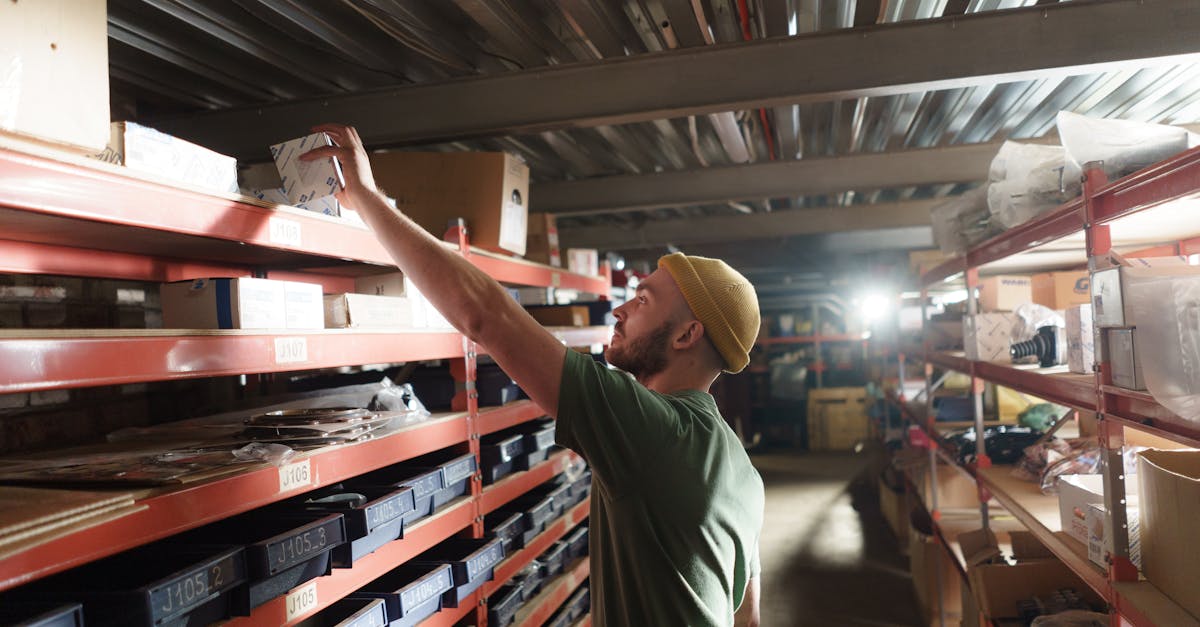
Case & Piece Picking: Engineering Realities of Warehouse Automation
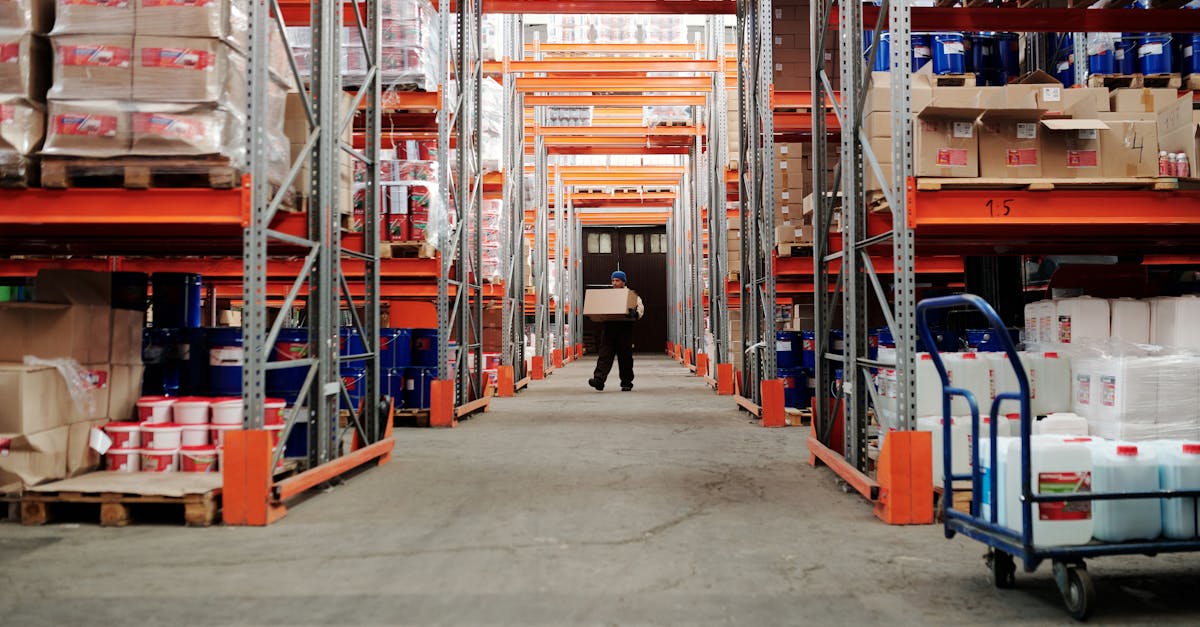
Case & Piece Picking: The Engineering Reality of Warehouse Automation
Case and piece picking form the operational core of modern distribution centers, e-commerce fulfillment, and third-party logistics (3PL) networks. The distinction between the two workloads dictates system architecture, end-effector design, and software integration requirements. Case picking moves entire cartons or totes, typically weighing 5 to 30 kilograms, using grippers or vacuum arrays. Piece picking handles individual SKUs, ranging from small electronics to fragile consumer goods, requiring high-resolution vision, adaptive gripping, and sub-millimeter repeatability. The shift from fixed-automation conveyors to flexible, AI-guided robotics has accelerated, but deployment maturity varies significantly across vendors.
Deployment Grading: Shipping Hardware, Pilots, and Announcements
Evaluating warehouse robotics requires a strict grading hierarchy. Claims must be weighted by verified deployment status. Shipping hardware represents systems actively deployed at customer facilities with measurable throughput data. Pilot deployments indicate contracted installations where performance metrics are still being validated under production conditions. Announcements and concept renders occupy the lowest tier and lack operational verification. The following analysis prioritizes hardware in the field, followed by verified pilots, and treats vendor roadmaps as forward-looking projections rather than current capabilities.
Covariant: Vision-First Logistics Automation
Covariant operates on a vision-driven architecture rather than relying on pre-programmed waypoints or rigid grid systems. The platform combines a proprietary "Brain" software stack with compatible industrial robot arms from manufacturers such as Fanuc, KUKA, and Epson. The system uses multi-spectral cameras and AI models trained on millions of real-world pick scenarios to identify, grasp, and place items without requiring SKU-level pre-scanning or custom end-effectors for every product.
Architecture and Hardware Partnerships
Covariant's deployment model depends on third-party robot arms, which are integrated with the company's vision system and control software. Spec sheets from hardware partners indicate typical reach ranges of 700 to 1,400 millimeters, payload capacities of 3 to 20 kilograms, and repeatability tolerances between ±0.02 and ±0.05 millimeters. The software stack handles pose estimation, collision avoidance, and dynamic path planning. Factory videos and on-stage demonstrations from partner integrators show the system handling mixed-SKU totes, irregularly shaped items, and varying light conditions. However, the architecture requires consistent lighting, clean work surfaces, and structured tote placement to maintain vision accuracy.
Deployment Status and Performance Data
Covariant has moved beyond the announcement phase into active deployment. The company has shipped systems to major e-commerce and logistics operators, with verified pilot installations transitioning to production environments. Independent reporting and partner case studies cite pick rates ranging from 80 to 150 picks per hour per cell, depending on SKU complexity and item density. The system scales through multi-cell configurations, but requires careful layout planning to avoid robotic arm interference and to manage power, network, and safety fencing requirements. Warranty and service terms are typically handled through the robot arm manufacturer, while software updates and model retraining are managed by Covariant.
Symbotic: AGV-Integrated Warehouse Systems
Symbotic operates a vertically integrated warehouse automation platform centered on autonomous guided vehicles (AGVs) and deep-rack storage systems. Unlike vision-guided arms that pick from totes or conveyors, Symbotic's architecture moves inventory using grid-based AGVs that navigate beneath high-density racking. The system handles case picking at scale, with piece picking managed through downstream sortation and micro-fulfillment modules.
System Architecture and Integration
Symbotic's infrastructure includes a control network, charging stations, inventory management software, and specialized AGVs capable of lifting pallets or totes weighing up to 2,500 kilograms. The AGVs operate on a magnetic or vision-guided grid embedded in the warehouse floor. Integration requires extensive civil engineering, including floor leveling, power distribution, and fire suppression upgrades. Manufacturer documentation emphasizes system redundancy, with backup AGVs and parallel control pathways designed to maintain throughput during component failures. On-stage demonstrations and factory tours show AGVs navigating dense storage lanes, depositing inventory into storage cells, and retrieving orders with minimal human intervention.
Operational Track Record and Scalability
Symbotic has shipped hardware to large-scale retail and grocery operators, with multiple facilities operating at full production capacity. Deployment grading places Symbotic firmly in the shipping hardware category, supported by public operational data from customer facilities. The system excels at high-volume case moving and bulk storage, but piece picking requires additional downstream automation. Scalability depends on warehouse dimensions, ceiling height, and AGV fleet management software. Maintenance contracts cover AGV battery replacement, grid calibration, and control network monitoring. The total cost of ownership includes infrastructure modifications, which often exceed the hardware cost itself.
Traditional Pick-and-Place Robotics in Logistics
Before AI vision systems, pick-and-place operations relied on deterministic robotics: SCARA, delta, and articulated collaborative arms. These systems remain relevant for standardized workflows where SKU geometry is consistent and lighting conditions are controlled.
SCARA, Delta, and Collaborative Arm Deployments
Delta robots deliver high-speed pick-and-place cycles for small, uniform items, with cycle times under 0.3 seconds and payloads up to 5 kilograms. SCARA arms provide rigid vertical precision for assembly and packaging lines, with payloads ranging from 3 to 20 kilograms. Collaborative arms (cobots) enable safe human-robot interaction but require force-torque sensors and slower cycle speeds to meet safety standards. Manufacturer spec sheets confirm repeatability tolerances of ±0.01 to ±0.05 millimeters, with working envelopes defined by arm length and joint configuration.
Vision Systems and End-Effector Design
Traditional arms require external vision systems for unstructured picking. 2D barcode readers, 3D laser scanners, and RGB-D cameras provide pose data to the robot controller. End-effectors range from parallel-jaw grippers and vacuum cups to soft grippers and adaptive fingers. Custom tooling is often necessary for irregular or fragile items. Integration relies on ROS, PLC programming, or proprietary teach-pendant software. These systems are highly reliable in fixed applications but struggle with high-variability environments without continuous model retraining or manual intervention.
India Market Availability and Cost Analysis
India's warehouse automation market is transitioning from manual labor dependency to semi-automated and fully automated solutions. Import duties, GST, and local service infrastructure significantly impact total cost and deployment timelines.
Imported Systems and Landed Cost Estimates
Covariant-compatible systems are available through authorized industrial robot distributors in India. Landed cost estimates for a single vision-guided cell, including robot arm, camera array, safety fencing, and initial software licensing, range from INR 22 lakhs to INR 35 lakhs, excluding integration and facility modifications. Symbotic-class AGV systems require dedicated warehouse infrastructure, with landed costs for a complete grid and AGV fleet typically exceeding INR 15 crores for medium-scale facilities. Traditional SCARA and delta robots are widely available through local distributors, with unit prices ranging from INR 8 lakhs to INR 18 lakhs depending on payload and reach. These estimates are flagged as landed cost approximations and exclude customs brokerage, GST (typically 18% on industrial equipment), and local commissioning fees.
Local Integration and Service Infrastructure
India has a growing network of system integrators capable of deploying vision-guided arms and traditional pick-and-place robotics. However, AI model retraining, grid calibration, and AGV fleet management often require vendor-supplied engineers or certified partners. Lead times for imported hardware range from 8 to 16 weeks, with commissioning adding 4 to 8 weeks. Local service centers in Delhi NCR, Mumbai, and Bengaluru provide maintenance support, but spare parts for proprietary vision systems may still be sourced internationally. Companies should verify local warranty terms, software update policies, and SLA response times before procurement.
Conclusion
Case and piece picking automation has matured from concept to deployment, but system selection must align with workload characteristics, facility constraints, and operational tolerance for variability. Vision-driven platforms like Covariant handle high-SKU variability but require controlled environments and continuous model updates. AGV-integrated systems like Symbotic excel at high-volume case moving and bulk storage but demand extensive infrastructure investment. Traditional pick-and-place robots remain cost-effective for standardized workflows but lack the adaptability required for dynamic e-commerce environments. India's market offers access to both imported and locally integrated solutions, with landed costs and service infrastructure requiring careful evaluation. Procurement decisions should prioritize hardware in the field, verified throughput data, and local support capacity over vendor roadmaps or concept renders.
References
- Covariant. (2023). Covariant Brain Architecture and Hardware Compatibility. https://www.covariant.ai
- Covariant. (2024). Partner Robot Arms and Deployment Specifications. https://www.covariant.ai/partners
- Symbotic. (2023). Symbotic Warehouse Automation System Overview. https://www.symbotic.com
- Symbotic. (2024). AGV Fleet Specifications and Grid Infrastructure Requirements. https://www.symbotic.com/technology
- Fanuc. (2024). M-20iD Series Industrial Robot Specification Sheet. https://www.fanuc.co.jp
- KUKA. (2023). KR AGILUS Collaborative Robot Technical Data. https://www.kuka.com
- RobotWale. (2024). India Industrial Robotics Import Guidelines and GST Framework. https://robotwale.com
- Logistics Management. (2023). Automated Warehouse Robotics Deployment Report. https://www.logisticsmgmt.com
✓ Key takeaways
- •Hands-on view of Case & Piece Picking: Engineering Realities of Warehouse Automation inside our Case & Piece Picking library.
- •Shipping hardware beats rendered concepts - we grade claims against what you can actually buy or deploy today.
- •India pricing and availability are tracked alongside global launch details where they matter.
Related articles
More in Case & Piece Picking →