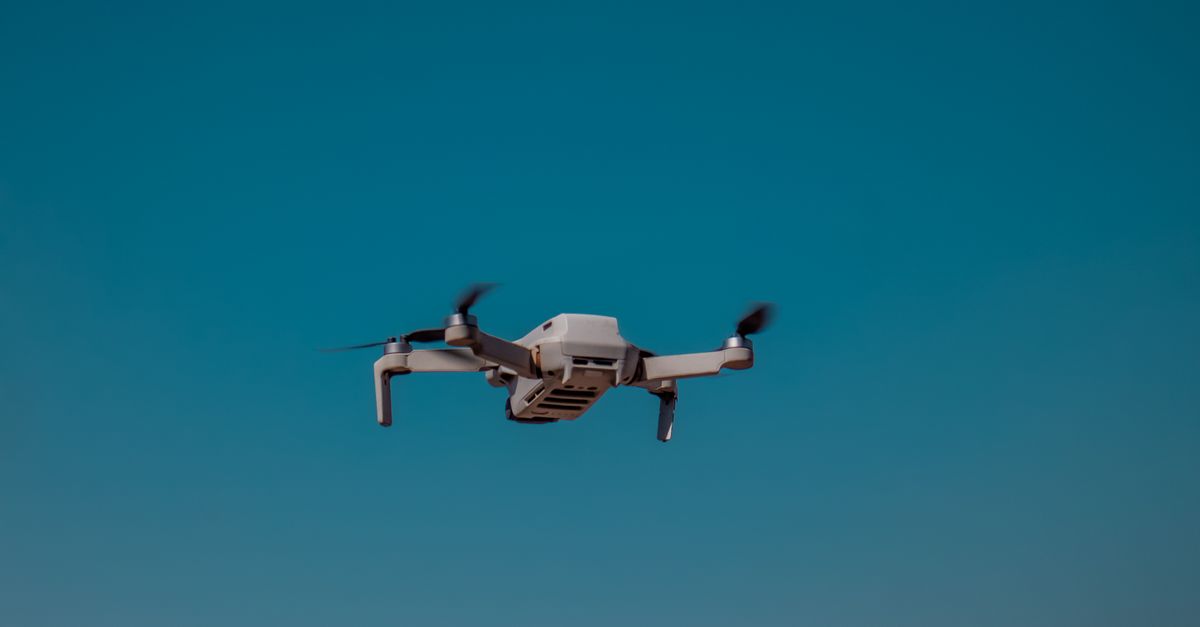
India’s DGCA Drone Rules: Regulatory Framework, Compliance, and Market Implications

Regulatory Architecture and Rule Evolution
India’s drone regulatory framework is governed by the Directorate General of Civil Aviation (DGCA) under the Ministry of Civil Aviation. The foundational legislation is the Drone Rules 2021, which amended the Aircraft Rules 1937 to create a distinct regulatory category for unmanned aerial systems. The rules explicitly separate drones from manned aviation while maintaining interoperability with existing civil aviation safety standards. The framework is designed to balance security, privacy, and commercial scalability, with compliance pathways graded by aircraft weight, propulsion type, and intended operational envelope.
Drone Rules 2021 and the Shift to Lightweight Licensing
The Drone Rules 2021 introduced a weight-based classification system that determines registration, pilot licensing, and operational permissions. Micro drones (up to 250 grams) and nano drones (under 250 grams) operate with minimal restrictions but remain subject to no-fly zone enforcement. Small drones (up to 25 kg) require registration on the Digital Sky platform and operator certification. Medium drones (25–150 kg) and large drones (above 150 kg) trigger additional engineering validation, airworthiness directives, and restricted operational approvals. The regulatory intent is clear: lightweight commercial hardware faces streamlined compliance, while heavier platforms undergo rigorous engineering scrutiny. This structure directly influences procurement decisions for logistics, surveying, and agricultural operators who must weigh regulatory overhead against payload and endurance requirements.
Operator certification follows a tiered model. The Remote Pilot Certificate (RPC) for small drones requires a minimum of 25 hours of theoretical training and 50 hours of practical flight hours, administered through DGCA-recognized training organizations. The certificate is valid for three years and must be renewed with recurrent assessments. Operators of medium and large drones must additionally hold a Remote Pilot License (RPL), which demands advanced navigation, emergency procedures, and air traffic coordination training. The DGCA has periodically updated training curricula to align with autonomous flight stacks, geofencing protocols, and first-person-view (FPV) safety standards.
Airspace Authorization and the Digital Sky Platform
The Digital Sky platform serves as the centralized clearance and tracking system for all Indian drone operations. The platform digitizes the entire lifecycle from registration to flight authorization, replacing manual paperwork with real-time API-driven workflows. Operators submit flight plans through Digital Sky, which automatically cross-references airspace geometry, temporary flight restrictions, and security-sensitive coordinates. The system integrates with the Airspace Authorization System (AAS), which grants permission based on altitude, geographic zone, and operational intent.
Real-Time Clearance and No-Fly Zones
Airspace in India is divided into green, yellow, and red zones. Green zones permit automated clearance for flights up to 400 feet above ground level. Yellow zones require manual authorization and are typically restricted to controlled airspace near airports, military installations, or critical infrastructure. Red zones are absolute no-fly areas, including government complexes, border regions, and strategic installations. The DGCA has published dynamic no-fly zone maps that update with security directives, requiring operators to verify clearance within 24 hours of flight.
The platform also mandates Remote ID compliance for all commercial drones above 50 grams. Remote ID transmits real-time telemetry, including GPS coordinates, altitude, speed, and operator ID, to authorized security agencies. Hardware vendors must integrate certified Remote ID modules that meet DGCA technical specifications. Failure to comply results in operational suspension and hardware seizure. The regulatory architecture prioritizes traceability, ensuring that every commercial flight can be audited post-operation.
Type Certification and the Aeronautical Inspection Directorate
Before commercial deployment, drone hardware must undergo Type Certification through the Aeronautical Inspection Directorate (AID). The certification process validates structural integrity, propulsion reliability, navigation accuracy, and fail-safe mechanisms. Manufacturers submit engineering dossiers, flight test data, and environmental stress reports. The DGCA evaluates compliance against the Unmanned Aircraft System Airworthiness Requirements (UASAR), which cover battery thermal management, motor redundancy, communication link resilience, and emergency landing protocols.
Hardware Validation and Operational Limits
Certification tiers dictate operational boundaries. Lightly certified platforms are restricted to visual line-of-sight (VLOS) operations below 120 meters. Heavily certified platforms may qualify for beyond visual line-of-sight (BVLOS) operations under controlled corridors, typically in industrial parks or designated test ranges. The DGCA has established Drone Test Ranges (DTRs) in multiple states to accelerate certification through standardized flight trials. Operators must submit maintenance logs and component replacement records to retain certification validity. The grading of claims by the DGCA remains hardware-first: only units with verified flight data and certified airframes receive operational clearance.
Import, Manufacturing, and Supply Chain Compliance
India’s import policy for drones is structured to incentivize domestic manufacturing while allowing controlled entry of specialized hardware. The Customs Notification 13/2023 outlines duty structures based on localization levels. Fully built units attract higher import duties, while kits and subassemblies face reduced rates to encourage assembly within India. The government has also introduced the Production Linked Incentive (PLI) scheme for drones and aerospace components, offering financial support to manufacturers who meet domestic value-addition thresholds.
Import Duty Structure and Domestic Assembly
Import duties currently range from 5% to 15% depending on the level of localization. Drones with less than 50% domestic content face the higher bracket, while units assembled in India with certified local components qualify for reduced rates. The DGCA requires all imported hardware to undergo post-clearance inspection and airworthiness verification before deployment. Operators must maintain import documentation, customs clearance certificates, and type certification approvals in a centralized compliance ledger. The regulatory stance is explicit: hardware must be traceable, certified, and maintainable within India to avoid supply chain bottlenecks.
Market Availability and Pricing in India
The Indian drone market has shifted from import-dependent procurement to hybrid domestic-international supply chains. Commercial-grade hardware is widely available through authorized distributors, direct manufacturer channels, and government-empaneled vendors. Pricing varies by payload capacity, sensor integration, and certification status. Entry-level commercial drones (5–10 kg payload) typically range from ₹2,50,000 to ₹5,00,000 for basic surveying and inspection platforms. Mid-tier industrial units (10–25 kg payload) with thermal, LiDAR, or multispectral sensors range from ₹12,00,000 to ₹25,00,000. Heavy-lift logistics platforms (25–50 kg payload) exceed ₹30,00,000, with landed costs depending on import duty brackets and localization incentives. All pricing estimates are approximate and subject to component availability and certification status.
Commercial-Grade Hardware and Landed Costs
Operators must factor in ancillary costs: Remote ID modules (₹15,000–₹35,000), certified batteries (₹40,000–₹90,000 per pack), training and certification fees (₹25,000–₹60,000 per pilot), and insurance premiums (₹50,000–₹1,50,000 annually). Landed cost estimates for imported units include customs duties, IGST, and logistics surcharges, which can add 8–12% to the base price. Domestic assembly reduces landed costs by 5–7% through PLI benefits and reduced customs liability. The market prioritizes certified hardware with verified flight data over unverified prototypes, aligning with the DGCA’s hardware-first compliance grading.
Intersection with Aerial and Humanoid Robotics Development
India’s drone regulations directly impact aerial and humanoid robotics development. Shared navigation stacks, sensor fusion algorithms, and control architectures are increasingly utilized across both domains. The DGCA’s Remote ID and geofencing requirements influence how humanoid robots integrate aerial modules for inspection, logistics, and surveillance. Operators deploying hybrid systems must ensure each module complies with its respective certification tier, with aerial components subject to UASAR and ground components adhering to industrial safety standards. The regulatory framework encourages modular compliance, allowing developers to validate aerial subsystems independently while integrating them into broader robotic platforms. As certification pathways mature, the overlap between drone and humanoid robotics will standardize around shared airworthiness testing, sensor calibration protocols, and operational safety boundaries.
References
- DGCA Drone Rules 2021. Directorate General of Civil Aviation. https://dgca.gov.in/
- Digital Sky Platform. Ministry of Civil Aviation. https://digital-skies.gov.in/
- Drone Rules 2021 Notification. Ministry of Civil Aviation Gazette. https://civilaviation.gov.in/
- CBIC Customs Notification 13/2023. Central Board of Indirect Taxes and Customs. https://cbic.gov.in/
- PLI Scheme for Drones and Aerospace Components. Ministry of Commerce and Industry. https://commerce.gov.in/
- Economic Times. DGCA Airspace Authorization Guidelines. https://economictimes.indiatimes.com/
- PRS Legislative Research. Drone Policy and Regulatory Framework in India. https://prsindia.org/
✓ Key takeaways
- •Hands-on view of India’s DGCA Drone Rules: Regulatory Framework, Compliance, and Market Implications inside our DGCA Drone Rules library.
- •Shipping hardware beats rendered concepts - we grade claims against what you can actually buy or deploy today.
- •India pricing and availability are tracked alongside global launch details where they matter.
References
Related articles
More in DGCA Drone Rules →