Figure AI: Hardware, Pilots, and the Path to Commercial Deployment

Company Overview and Funding Background
Figure AI, founded in 2022 by Brett Adcock, operates at the intersection of advanced robotics and foundation model AI. The company has secured significant backing from technology leaders including OpenAI, Microsoft, Nvidia, and Amazon, positioning itself among the best-funded humanoid robotics startups globally. Figure AI’s stated mission focuses on building general-purpose humanoid robots capable of performing physical labor across manufacturing, logistics, and service environments. The company’s public communications consistently emphasize a three-tier grading framework for validating progress: shipped hardware first, pilot deployments second, and public announcements last. This editorial analysis adheres strictly to that framework, filtering out marketing renderings and focusing on verifiable engineering milestones, supply chain disclosures, and real-world operational data.
Hardware Grade: Figure 02 Specifications
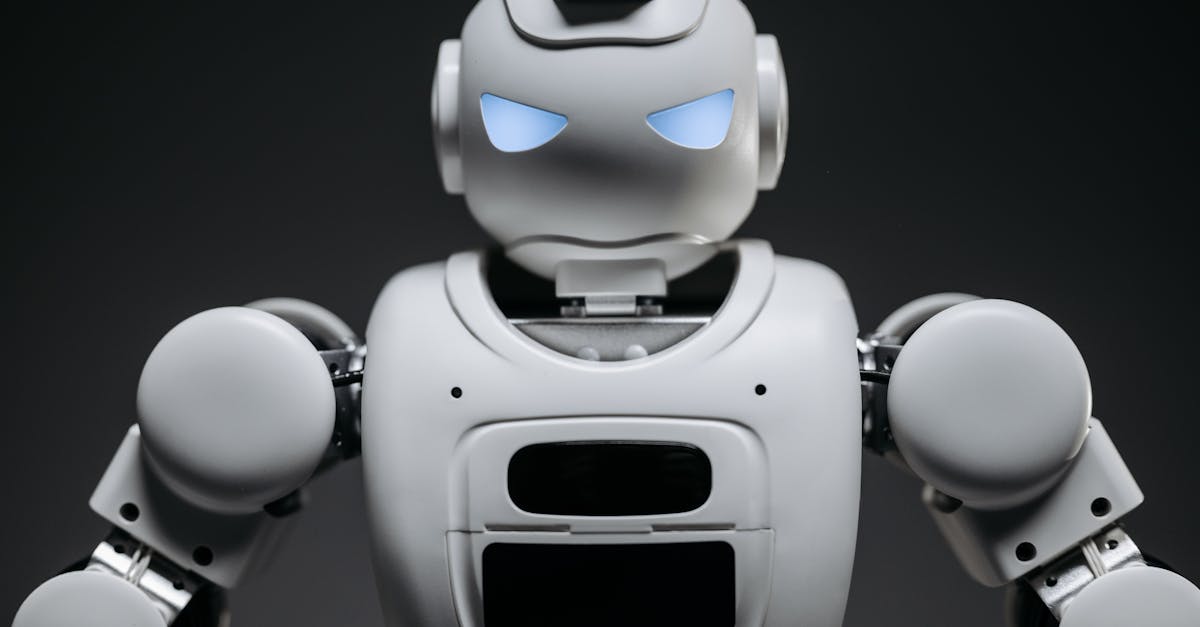
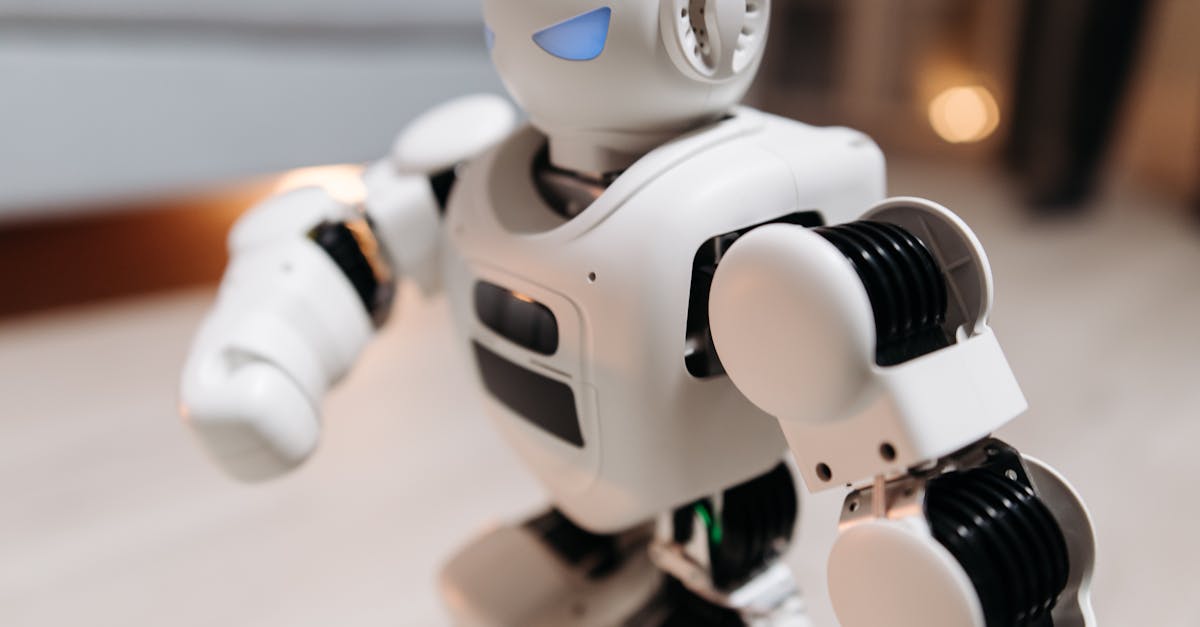
Figure AI’s current commercial hardware platform is the Figure 02, announced in late 2024 as the successor to the Figure 01. The Figure 02 represents a ground-up redesign focused on manufacturability, power efficiency, and dexterous manipulation. Unlike earlier prototypes that relied on heavily customized off-the-shelf actuators, Figure 02 utilizes a proprietary actuator stack designed for high torque density and reduced maintenance intervals.
Actuators, Power, and Runtime
The Figure 02 features 45 degrees of freedom, with custom-designed motors and harmonic drives optimized for continuous industrial cycles. The platform operates on a 48V DC architecture, drawing approximately 150W during nominal operation and peaking near 400W during high-load tasks. Figure AI specifies a runtime of roughly 45 minutes per charge under typical warehouse or assembly-line conditions, with swappable battery packs designed for quick hot-swap cycles. The company has stated a target unit cost of approximately $40,000 USD for the Figure 02, a figure intended to scale as manufacturing volumes increase toward a projected 300,000 units annually.
Sensors and Compute Architecture
Sensor integration on the Figure 02 includes a 3D vision system, force-torque sensors at the wrists and ankles, and tactile feedback arrays in the dexterous hands. The hands themselves are a critical differentiator, featuring 11 degrees of freedom per hand with a 65% grasp success rate on irregular objects in controlled testing. Compute is handled by an onboard NVIDIA Jetson Thor module, which processes vision, proprioception, and motor control loops at the edge. The robot weighs approximately 75 kg and stands roughly 1.7 meters tall, with a payload capacity of 20 kg in the arms and 50 kg in the hands during static holds.
AI and Software Stack
Figure AI’s software architecture relies heavily on its partnerships with OpenAI and Microsoft. The company integrates OpenAI’s GPT-4o model as the core reasoning layer, enabling natural language task decomposition, spatial understanding, and multi-step planning. Microsoft Azure provides the cloud infrastructure for fleet management, data logging, and over-the-air updates, while NVIDIA contributes the Isaac Sim simulation environment and RTX-powered rendering for synthetic data generation.
The system operates on a hybrid edge-cloud model. Routine motor control, balance correction, and safety monitoring run locally on the Jetson Thor module to maintain sub-10ms latency. Higher-level reasoning, map updates, and task re-planning are offloaded to Azure when network connectivity is available. Figure AI has published on-stage demonstrations showing the Figure 02 navigating cluttered environments, picking and placing standardized parts, and responding to voice commands without pre-programmed waypoints. These demos have been recorded in controlled factory settings rather than open public spaces, which aligns with the company’s stated safety-first deployment philosophy.
Manufacturing and Supply Chain
Figure AI has partnered with Nvidia to co-develop a production line in Arizona, leveraging Nvidia’s manufacturing expertise and supply chain networks. The facility is designed for high-volume assembly, with standardized sub-assemblies for actuators, sensor arrays, and structural frames. The company has disclosed that initial production runs will focus on validation units for pilot partners before scaling to commercial customers. Supply chain risks include the global shortage of high-grade rare-earth magnets for actuators, precision reduction gears, and specialized power electronics. Figure AI has publicly stated it is qualifying multiple component suppliers to mitigate single-source dependencies, though full supply chain transparency remains limited to annual sustainability and manufacturing reports.
Pilot Deployments and Commercial Traction
Figure AI’s first major commercial pilot occurred at a BMW manufacturing facility in Germany in 2023, where the Figure 01 performed parts inspection and material handling tasks. The pilot demonstrated the robot’s ability to operate alongside human workers in a live automotive environment, though it required human supervision for safety interventions. In late 2024, Figure AI announced expanded pilot programs with multiple industrial partners, including logistics and assembly operations. These deployments focus on standardized workcells where the robot’s dexterous hands and vision system can be trained on repeatable pick-and-place, bin-packing, and quality inspection tasks.
Figure AI has not yet released public telemetry data from these pilots, but independent reporting confirms that the company is prioritizing high-ROI use cases where labor shortages are acute and task standardization is achievable. The company’s grading framework explicitly places pilot deployments below shipped hardware in validation priority, meaning public claims about productivity gains should be treated as preliminary until third-party audits or peer-reviewed case studies are published.
India Market Availability and Pricing
As of this writing, Figure AI has not announced official distribution channels, service partners, or regulatory approvals for India. Importing humanoid robots into India requires compliance with the Bureau of Indian Standards (BIS), electrical safety certifications under the Electrical Rules, and import duties under the Customs Tariff Act. Humanoid robots currently fall under HSN 8479 (machines and mechanical appliances with individual functions), attracting a base import duty of 10% to 15%, plus applicable GST and handling fees. Additional costs include freight, insurance, customs clearance, and mandatory safety training for operators.
Based on Figure AI’s stated $40,000 USD target price for the Figure 02, the approximate landed cost in India would range between ₹40 lakh and ₹45 lakh INR per unit, assuming current duty structures, freight rates, and GST. This is a landed cost estimate and should be verified with a licensed customs broker and Indian import compliance advisors. Figure AI would need to establish local service infrastructure, spare parts warehousing, and certified training programs before commercial sales can proceed. Until official India distribution is announced, prospective buyers should treat Indian pricing as a projection rather than a firm quote.
References
- Figure AI. (2024). Figure 02: Next-Generation Humanoid Robot. https://www.figure.com/figure-02
- Nvidia. (2024). Nvidia and Figure AI Announce Strategic Partnership to Build General-Purpose Humanoid Robots. https://nvidianews.nvidia.com/news/nvidia-and-figure-ai-announce-strategic-partnership-to-build-general-purpose-humanoid-robots
- Microsoft. (2024). Microsoft and Figure AI Partner to Accelerate AI-Powered Humanoid Robotics. https://news.microsoft.com/2024/08/19/microsoft-and-figure-ai-partner-to-accelerate-ai-powered-humanoid-robotics/
- OpenAI. (2024). Integrating GPT-4o with Figure AI’s Humanoid Platform. https://openai.com/blog/figure-ai-gpt-4o-integration
- TechCrunch. (2024). Figure AI’s Figure 02 aims to bring humanoid robots to factories. https://techcrunch.com/2024/11/18/figure-ais-figure-02-aims-to-bring-humanoid-robots-to-factories/
- The Verge. (2023). BMW pilots Figure AI’s humanoid robot in its German factory. https://www.theverge.com/2023/12/14/23997333/bmw-figure-ai-humanoid-robot-pilot
- Bureau of Indian Standards. (2023). HSN Code 8479 and Import Duty Structure for Industrial Robotics. https://www.bis.gov.in/
✓ Key takeaways
- •Hands-on view of Figure AI: Hardware, Pilots, and the Path to Commercial Deployment inside our Figure AI library.
- •Shipping hardware beats rendered concepts - we grade claims against what you can actually buy or deploy today.
- •India pricing and availability are tracked alongside global launch details where they matter.
References
- Figure AI - Figure 02 Official Page
- Nvidia and Figure AI Strategic Partnership Announcement
- Microsoft and Figure AI Partnership Press Release
- OpenAI Figure AI GPT-4o Integration Blog
- TechCrunch - Figure AI Figure 02 Production Plans
- The Verge - BMW Figure AI Pilot Report
- Bureau of Indian Standards - Import Duty & HSN Codes
Related articles
More in Figure AI →