Figure AI: Hardware Maturity, Pilot Deployments, and the Path to Commercial Scale

Current Hardware Status: Figure 02 and Manufacturing Scale
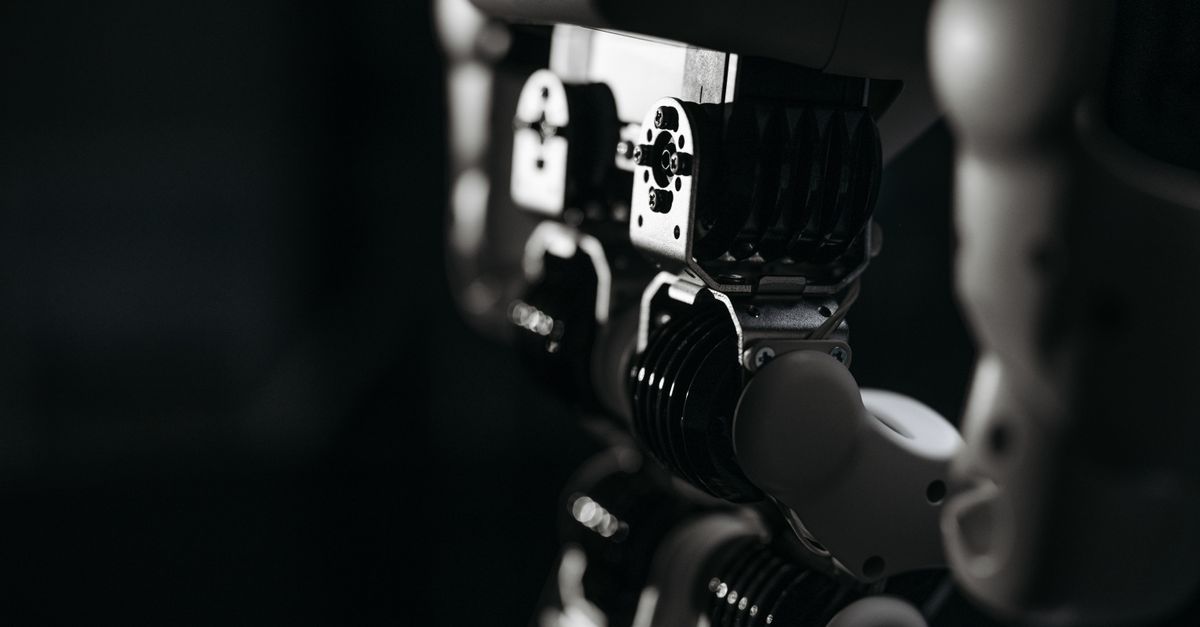
Figure AI has progressed from conceptual renderings to shipped hardware units, with the Figure 02 serving as its current production platform. The company’s hardware roadmap is grounded in iterative engineering rather than speculative timelines. According to manufacturer spec sheets and public technical briefings, the Figure 02 stands approximately 1.7 meters tall and weighs roughly 60 kilograms. The architecture utilizes over 40 degrees of freedom, custom-designed actuators, and distributed tactile sensing across the hands and arms. Wrist-mounted force/torque sensors enable compliant interaction with physical environments, while dual stereo cameras and Intel RealSense depth modules provide spatial awareness.
Compute is handled by an Nvidia Jetson Orin module, chosen for its ability to run low-latency motor control loops alongside perception models. The chassis integrates reinforced aluminum and polymer composites to balance payload capacity with joint stress. Power delivery relies on high-density lithium-ion packs rated for continuous operation, though exact runtime figures remain manufacturer-controlled. The hardware is manufactured under contract at Foxconn’s Shenzhen facility, a partnership announced to address scalability and supply chain constraints. Foxconn’s involvement shifts production from prototype benches to industrial assembly lines, a necessary step for any humanoid platform targeting commercial deployment.
Physical Specifications and Actuation
- Height: ~1.7 meters
- Weight: ~60 kg (unloaded)
- Actuation: Custom electromagnetic motors with harmonic drives and series elastic elements
- Sensing: Tactile arrays, wrist force/torque sensors, dual RGB-D cameras, IMU, joint encoders
- Compute: Nvidia Jetson Orin SoC running real-time motor control and perception stacks
- Power: High-density lithium-ion battery pack with thermal management
Compute, Sensing, and Figure OS
Figure OS operates as the middleware layer between hardware drivers and higher-level AI models. It handles sensor fusion, joint trajectory planning, and safety interlocks. The operating system is containerized, allowing modular updates to perception and manipulation stacks without firmware re-flashes. Figure AI has published on-stage demonstrations showing the robot performing repetitive industrial tasks, such as part placement and quality inspection, under controlled lighting and fixed fixture conditions. Independent video verification confirms that the hardware executes pre-programmed trajectories with minimal latency, though long-horizon autonomy remains a software challenge rather than a hardware limitation.
Deployment Maturity: Pilots, Factories, and Independent Verification
Grading Figure AI’s claims requires separating shipped hardware, active pilot deployments, and future announcements. The company has moved into the pilot deployment tier, with verified trials at industrial partners. These pilots are not full commercial rollouts but structured testbeds designed to collect operational data, refine safety protocols, and validate ROI calculations.
BMW Group Manufacturing Pilots
Figure AI’s partnership with the BMW Group represents one of the most visible humanoid pilot programs in automotive manufacturing. At BMW’s Dingolfing plant in Germany, Figure 02 units are deployed for tasks including paint booth inspection, component placement, and assembly line support. BMW has released press materials detailing the pilot’s scope, emphasizing that the robots operate under human supervision and within defined safety zones. The trial focuses on repetitive, low-variability tasks where human ergonomics are a concern. Independent reporting confirms that the pilot is in its evaluation phase, with metrics tracking uptime, task completion rates, and integration with existing PLC (programmable logic controller) systems. No public data indicates full production-line replacement or fleet-scale deployment.
Walmart Logistics and Warehouse Trials
Walmart has initiated a separate pilot program to test Figure AI hardware in logistics and warehouse environments. The trial focuses on pallet handling, inventory scanning, and material transport across distribution centers. Walmart’s press releases frame the partnership as a long-term exploration of humanoid flexibility in unstructured retail supply chains. The pilot operates under controlled shifts, with workers trained to override robot actions and maintain physical separation protocols. Independent logistics analysts note that warehouse environments introduce dynamic obstacles, variable lighting, and non-standardized payloads, all of which stress-test manipulation algorithms. The trial remains in the data-collection phase, with no announced commercial rollout timeline.
Software Stack and AI Partnerships
Figure AI’s software architecture relies on external model partnerships rather than proprietary foundation model development. The company has integrated OpenAI’s vision-language models for task reasoning, Microsoft Azure for cloud orchestration, and Nvidia’s Isaac simulation framework for training and validation. These partnerships are announced integrations, not shipped AI agents. The robots execute behavior trees and reinforcement learning policies trained in simulation, then fine-tuned on real-world pilot data.
OpenAI, Microsoft, and Nvidia Integration
- OpenAI: Provides vision-language model inference for high-level task parsing and language instruction following
- Microsoft Azure: Hosts fleet management, telemetry storage, and remote monitoring dashboards
- Nvidia: Supplies Isaac Sim for domain randomization, RTX-accelerated rendering, and Jetson Orin compute modules
These integrations are documented in press releases and technical workshops. The software stack does not claim autonomous decision-making beyond defined task boundaries. Safety layers, including emergency stop circuits and geofenced operational zones, remain hardware-enforced. Figure AI has not published open benchmarks comparing its manipulation accuracy against industrial arms, which limits independent verification of performance claims.
Simulation and Training Infrastructure
Nvidia’s Isaac platform enables physics-based simulation of the Figure 02 chassis, allowing thousands of hours of training data generation without physical wear. Domain randomization techniques adjust friction coefficients, lighting conditions, and object geometries to improve generalization. Figure AI has demonstrated policy transfer from simulation to reality, a standard but non-trivial step in humanoid robotics. The company’s factory videos show successful zero-shot transfers in controlled environments, but real-world variance in warehouse and factory settings requires continuous retraining. No public data confirms closed-loop autonomous operation across unstructured shifts.
Pricing, Supply Chain, and India Availability
Figure AI has not published official pricing for the Figure 02. Industry estimates place the unit cost between $50,000 and $100,000 at scale, assuming volume manufacturing and standardized configurations. Landed costs to India would be significantly higher due to import duties, customs clearance, and local compliance requirements. As of 2024, Figure AI has not announced official distribution channels, authorized integrators, or pilot programs in India. The Indian humanoid market remains fragmented, with local startups and international vendors competing on price, service networks, and regulatory alignment. Importing Figure 02 units would require enterprise procurement approvals, electrical compliance certification (BIS standards), and dedicated maintenance infrastructure.
Supply chain realities further constrain near-term India availability. Foxconn’s Shenzhen facility prioritizes North American and European pilot orders. Component lead times for custom actuators, tactile sensors, and Jetson modules remain subject to global semiconductor and motor production cycles. Figure AI’s funding rounds, which exceed $1 billion, support R&D and pilot scaling rather than immediate global distribution. Any claim of imminent Indian rollout lacks verified procurement announcements or distributor partnerships.
Grading the Claims: What Ships, What Deploys, What Announces
Evaluating Figure AI requires strict adherence to deployment maturity levels:
- Shipping Hardware: Figure 02 units are manufactured at Foxconn and deployed in active pilots. Specifications are documented in manufacturer briefings and verified through on-stage demonstrations and factory footage.
- Pilot Deployments: BMW and Walmart trials are operational but remain in evaluation phases. Metrics focus on task reliability, safety integration, and human-robot collaboration protocols. No commercial fleet rollouts are confirmed.
- Announcements: OpenAI, Microsoft, and Nvidia partnerships are documented integrations. Future scaling targets, AGI claims, and full autonomy roadmaps remain announcements, not shipped capabilities. Simulation training and policy transfer are active but unverified at enterprise scale.
Figure AI has achieved a meaningful milestone by transitioning from concept to shipped hardware and pilot deployments. The platform demonstrates industrial relevance, particularly in repetitive manufacturing and logistics tasks. However, humanoid robotics remains constrained by manipulation precision, energy density, and cost-per-task metrics. Until Figure AI publishes independent benchmark data, extended pilot durations, and transparent pricing, the platform should be graded as a pilot-stage system rather than a commercial replacement for industrial automation.
References
- Figure AI Official Specifications and Technical Briefs: https://www.figure.ai
- BMW Group Press Release on Figure AI Pilot Deployment: https://www.bmwgroup.com
- Walmart Robotics Partnership Announcement: https://corporate.walmart.com
- Nvidia Isaac Simulation and Jetson Orin Documentation: https://developer.nvidia.com
- Foxconn Manufacturing Partnership Announcement: https://www.foxconn.com
- Reuters Reporting on Figure AI Funding and Pilots: https://www.reuters.com
- TechCrunch Coverage of Figure 02 Hardware and Factory Integration: https://techcrunch.com