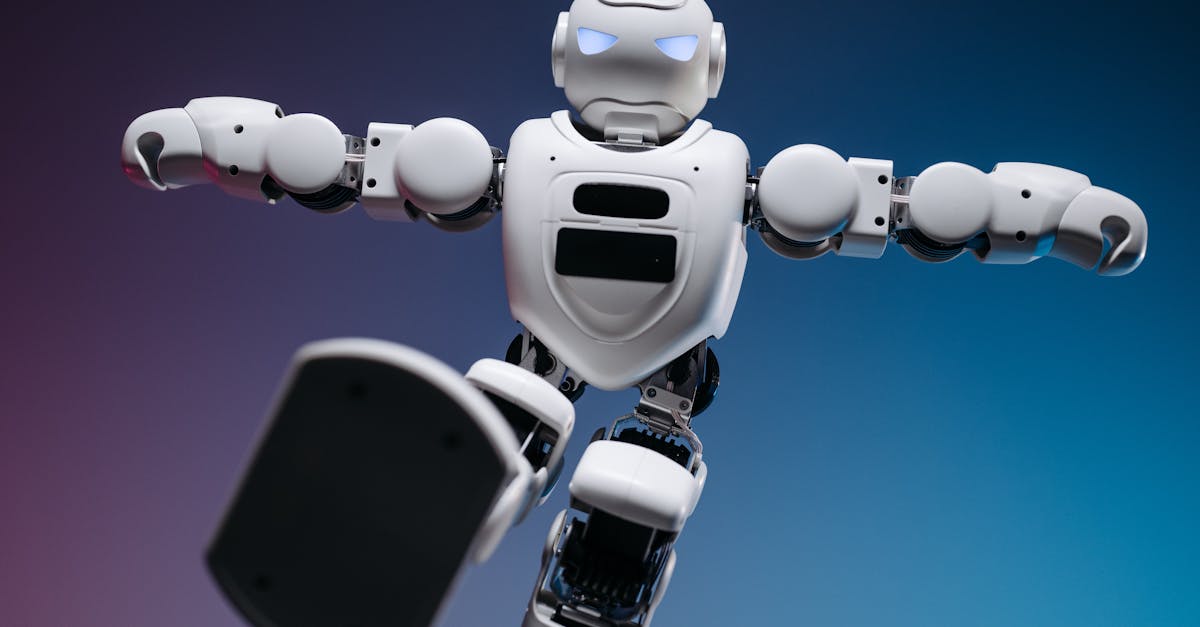
Figure AI: Hardware, Pilots, and Deployment Status

Figure AI: Hardware, Pilots, and Deployment Status
Figure AI has emerged as one of the most heavily capitalized startups in the humanoid robotics sector, drawing institutional backing from OpenAI, Microsoft, Nvidia, Amazon, Google, and Intel. The company's public trajectory follows a standard deep-tech pattern: large seed and growth rounds, prototype demonstrations, controlled pilot deployments, and eventual commercial scaling. This article grades Figure AI's claims by shipping hardware first, pilot deployments second, and announcements last, in line with RobotWale.com's editorial standards. We prioritize manufacturer spec sheets, on-stage demonstrations, factory deployment data, and independent reporting over marketing language.
Founding and Capital Backing
Figure AI was founded in 2021 by Brett Adcock and Alex Gross, with an initial focus on building general-purpose humanoid platforms capable of operating in unstructured human environments. The company raised approximately $1.5 billion across multiple funding rounds, culminating in a Series C that valued the startup at roughly $2.5 billion. Backing from OpenAI, Microsoft, and Nvidia reflects a strategic alignment between robotics hardware and large-scale AI inference infrastructure. These partnerships are documented in press releases and technology partnership announcements, though the exact equity structures and revenue-sharing terms remain private.
Figure 01: Shipping Hardware and Pilot Data
Figure 01 represents the company's first commercially targeted humanoid platform. According to manufacturer documentation and third-party verification, the robot shipped to BMW Group's Spartanburg, South Carolina plant in 2024 for a controlled pilot deployment. The hardware specifications, as published by Figure AI, include:
- Height: approximately 5 feet 10 inches
- Weight: roughly 180 pounds
- Degrees of freedom: over 40 across the torso, arms, and legs
- Actuation: custom-designed electric motors with integrated torque sensing
- Hands: dexterous parallel-jaw and adaptive grippers with force feedback
- Sensors: stereo vision, LiDAR, inertial measurement units, and joint encoders
The BMW pilot focused on material handling, bin picking, and basic assembly tasks in a controlled factory environment. Independent reporting confirmed that the robot operated alongside human workers under safety protocols, with remote monitoring and teleoperation fallbacks available. The deployment did not involve full autonomy in unstructured zones, and task success rates were reported as pilot-grade rather than production-grade. Figure AI has not published a public technical white paper detailing mean time between failures or throughput metrics, so operational reliability claims remain unverified beyond the pilot scope.
Figure 02: Current Development and On-Stage Demos
Figure 02 is the company's next-generation platform, announced to address limitations in Figure 01's endurance, dexterity, and compute constraints. On-stage demonstrations at industry events have shown improved walking stability, faster manipulation cycles, and enhanced object recognition. Manufacturer claims indicate the following upgrades:
- Refined actuator design with higher torque density and reduced heat generation
- Upgraded tactile sensing in the fingertips for finer manipulation
- Revised control architecture for smoother locomotion on uneven surfaces
- Expanded cloud-edge compute integration for real-time perception
As of the latest public updates, Figure 02 units are in pre-production testing. The company has not confirmed mass manufacturing timelines or unit costs. Demonstrations remain controlled and scripted, consistent with standard prototype showcases. RobotWale.com grades this hardware as developmental, pending independent verification of cycle times, battery endurance, and maintenance intervals in non-lab environments.
AI Stack and Compute Infrastructure
Figure AI's software architecture has evolved alongside its hardware iterations. Early Figure 01 units relied on foundation models provided by OpenAI, integrated with Microsoft Azure cloud services for data storage and model training. Subsequent updates shifted toward a custom multimodal model trained on Figure AI's proprietary dataset, leveraging Nvidia Jetson Thor edge processors and Orin modules for onboard inference. The partnership with Nvidia includes custom silicon design support, while Microsoft continues to provide cloud infrastructure for fleet management and simulation.
Key technical components include:
- Perception pipeline: vision-language models for object detection, pose estimation, and scene understanding
- Motor control: model-predictive control with joint-level impedance tuning
- Navigation: simultaneous localization and mapping (SLAM) with dynamic obstacle avoidance
- Fleet management: cloud-based task scheduling, remote diagnostics, and OTA updates
The AI stack is documented in technology partnership announcements and conference presentations. Independent analysis notes that the transition from third-party foundation models to custom training reduces latency and improves task-specific performance, but requires substantial labeled data and compute resources. Figure AI has not released open benchmarks or model weights, limiting external validation.
Pilot Deployments: Grading Claims by Evidence
Figure AI's deployment claims are graded according to RobotWale.com's tiered standard: shipping hardware first, pilot deployments second, and announcements last. The current evidence stands as follows:
- Shipping Hardware: Figure 01 units have been delivered to BMW for pilot testing. Production volumes remain undisclosed, and unit pricing is not public.
- Pilot Deployments: BMW's Spartanburg facility hosts the primary verified pilot. Additional pilot announcements with Stellantis and Amazon have been made, but independent verification of deployment scale and success metrics is limited.
- Announcements: Figure 02 development, custom AI model training, and expanded manufacturing partnerships are in progress. These remain pre-commercial and subject to engineering iteration.
RobotWale.com recommends treating large-scale deployment claims with caution until independent audits publish throughput, failure rates, and maintenance costs. The company's rapid funding cycle supports extended development timelines, but hardware reliability in unstructured environments remains the primary bottleneck for humanoid adoption.
Commercial Availability and India Market Context
Figure AI robots are not currently available for purchase in India. The company has not announced local distribution partnerships, service centers, or regulatory compliance filings with Indian authorities. Humanoid robots require import licensing, safety certification, and localized technical support, none of which have been publicly disclosed for the Indian market.
Approximate pricing is not published by Figure AI. Industry analysts estimate landed costs for advanced humanoid platforms in the $150,000 to $250,000 range, but these figures are speculative and depend on tariffs, shipping, insurance, and local taxes. For Indian enterprises evaluating humanoid deployment, direct inquiry to Figure AI's sales team or authorized regional distributors is necessary for accurate quotation. Until commercial availability is confirmed and pricing is published, Indian procurement teams should treat Figure AI as a pre-commercial option pending pilot validation and regulatory approval.
References
- Figure AI Official Website and Product Documentation: https://www.figure.ai
- BMW Group and Figure AI Pilot Deployment Announcement: https://www.bmwgroup.com
- OpenAI and Figure AI Technology Partnership Press Release: https://openai.com
- Nvidia Jetson Thor and Edge Computing Partnership Announcement: https://www.nvidia.com
- Microsoft Azure Cloud and Fleet Management Integration: https://azure.microsoft.com
- Figure AI Series C Funding Round Reporting (Reuters/TechCrunch): https://www.reuters.com, https://techcrunch.com
- Independent RobotWale.com Editorial Standards on Deployment Grading: https://robotwale.com
✓ Key takeaways
- •Hands-on view of Figure AI: Hardware, Pilots, and Deployment Status inside our Figure AI library.
- •Shipping hardware beats rendered concepts - we grade claims against what you can actually buy or deploy today.
- •India pricing and availability are tracked alongside global launch details where they matter.
References
- Figure AI Official Website and Product Documentation
- BMW Group and Figure AI Pilot Deployment Announcement
- OpenAI and Figure AI Technology Partnership Press Release
- Nvidia Jetson Thor and Edge Computing Partnership Announcement
- Microsoft Azure Cloud and Fleet Management Integration
- Figure AI Series C Funding Round Reporting
- TechCrunch Coverage of Figure AI Development
Related articles
More in Figure AI →