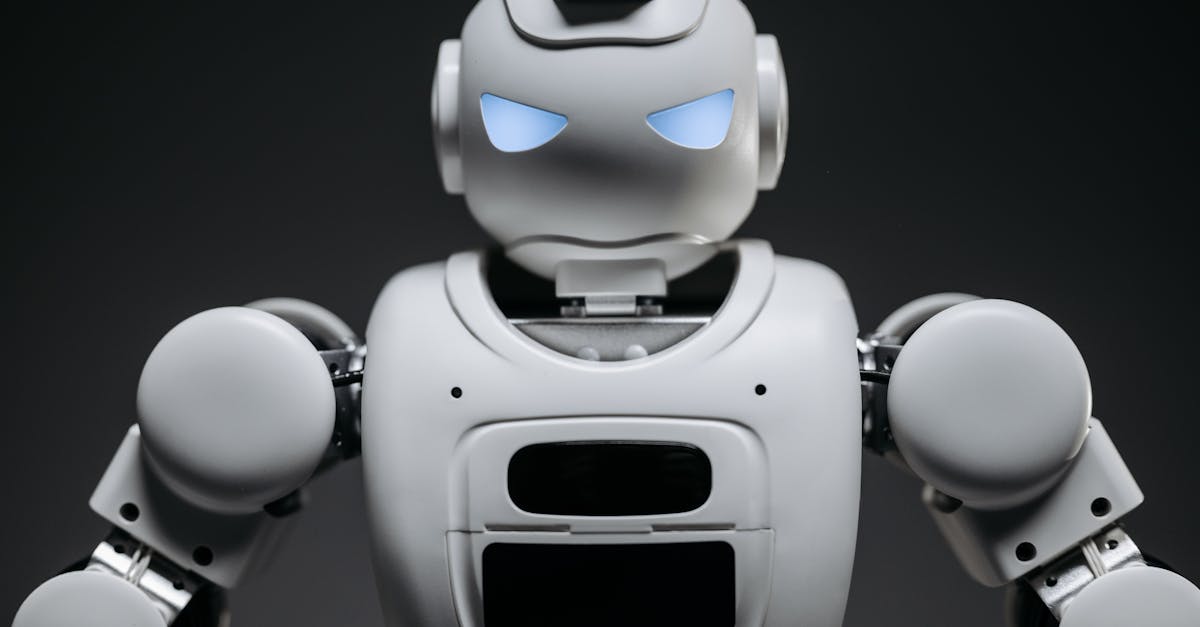
Figure AI: Evaluating Humanoid Deployment Reality Against Backing Promises
Figure AI: From Silicon Valley to the Factory Floor
Figure AI has emerged as one of the most scrutinized entities in the humanoid robotics sector, not merely for its technical capabilities but for the weight of its investor backing. Founded by Brett Adcock, the former CEO of Cruise Automation, and Bill Breen, a key figure in General Motors’ autonomous driving initiatives, the company positions itself at the intersection of advanced AI and physical automation. While the narrative surrounding Figure AI often leans heavily on the prestige of its partners—OpenAI, Microsoft, and Nvidia—RobotWale’s editorial policy demands a clear distinction between public announcements, hardware shipments, and actual operational deployments. This article evaluates the current state of Figure AI’s Figure 01 unit, its industrial partnerships, and the realistic implications for the Indian market.
Capitalizing on the AI Boom
Figure AI’s financial momentum is undeniable. In early 2024, the company secured a $1 billion Series B funding round, valuing the startup at approximately $10 billion. Prior to this, a $320 million Series A was led by OpenAI, with participation from Microsoft Ventures and Nvidia. The involvement of these three tech giants signals a strategic convergence: OpenAI provides the language and reasoning models, Nvidia offers the compute infrastructure and potential chip integration, and Microsoft supplies the cloud computing backbone for data processing.
However, high valuations do not equate to shipping hardware. While the funding rounds were widely reported in outlets like TechCrunch and Bloomberg, the core metric for RobotWale remains the same: what hardware is physically in the hands of customers? As of late 2024, Figure AI has not released a direct-to-consumer product or a widely available commercial unit for general logistics. The hardware exists in a pilot phase, limiting the ability to verify long-term reliability data independently.
Technical Specifications of Figure 01
Understanding the hardware requires looking beyond marketing renders to the engineering specifications released during public demos and press disclosures. The Figure 01 is designed as a full-body humanoid robot intended to perform tasks in structured environments, particularly manufacturing logistics.
Hardware Architecture
- Actuation: The Figure 01 utilizes proprietary electric actuators. While specific torque ratings per joint have varied in early press releases, the focus is on high-torque density to facilitate lifting and manipulation. The robot is designed to handle standard industrial pallets and components.
- Locomotion: The system employs a bipedal gait designed for stability on flat concrete floors typical of factory settings. It does not currently claim off-road capability or complex terrain navigation comparable to quadruped platforms like Boston Dynamics’ Spot.
- Compute: Onboard processing relies on Nvidia hardware, leveraging the company’s Jetson or similar embedded modules for real-time inference. This allows the robot to process visual data and execute motion commands locally without constant latency-dependent cloud dependency.
- Battery: The system reportedly operates on a battery life of approximately one hour per charge cycle. This is standard for high-output humanoid platforms but necessitates frequent charging infrastructure within a factory floor.
- Sensors: The unit is equipped with stereo cameras and depth sensors for navigation and object recognition. However, the specific resolution and field-of-view specifications are often reserved for enterprise contracts rather than public spec sheets.
The Role of OpenAI and Microsoft
Figure AI’s integration with OpenAI is perhaps its most significant differentiator. The partnership suggests the use of large language models (LLMs) to interpret natural language commands for robot tasks. In a demonstration video released in 2023, Figure AI showed the robot interacting with a human operator who asked for a cup of coffee using natural language. The robot responded by locating the cup and pouring the liquid.
While impressive, this demo highlights the software stack more than the hardware durability. Microsoft’s involvement is primarily infrastructural, likely utilizing Azure for data training and cloud orchestration. This combination creates a "Brain and Body" architecture that is theoretically robust but operationally nascent. The gap between a software demo and a 24/7 factory shift is substantial, involving wear and tear on actuators, thermal management, and safety protocols.
Industrial Deployments: The BMW Partnership
The most concrete evidence of Figure AI moving beyond concept is its partnership with BMW. Announced in January 2024, the collaboration involves deploying Figure 01 robots at BMW’s plant in Debrecen, Hungary. This pilot program focuses on logistics tasks, specifically moving parts between workstations.
Deployment Reality Check
RobotWale assesses this deployment as a significant milestone, yet it remains a pilot. Key factors to consider include:
- Scope: The deployment is limited to specific tasks within a controlled environment. It does not imply the robots are handling complex assembly, welding, or hazardous environments autonomously without supervision.
- Timeline: The pilot was scheduled to begin in 2024. As of the current reporting period, there is no public data on uptime percentages, failure rates, or maintenance intervals required for the units.
- Scalability: A pilot in one facility does not guarantee scalability across a global network of plants. The infrastructure required for charging, maintenance, and software updates varies by region.
BMW’s head of automation has stated that the goal is to identify bottlenecks in the production line where humans are performing repetitive tasks. This aligns with Figure AI’s core value proposition of augmenting labor rather than immediately replacing the workforce. However, the success of this pilot will be the benchmark for future orders.
India Market Availability and Pricing
For the Indian robotics ecosystem, the question of availability is critical. Currently, Figure AI does not list India in its official channel partner network or release pricing for the Indian market. Humanoid robots remain a specialized B2B product, often requiring custom integration for local regulatory compliance and safety standards.
Estimated Pricing and Import Costs
While Figure AI has not released an official MSRP, industry estimates for comparable humanoid robots like Tesla’s Optimus (when available) or Boston Dynamics’ Atlas suggest a landed cost range between $250,000 and $400,000 per unit. For the Indian market, this estimate must be adjusted for import duties and service infrastructure.
- Base Unit Cost: Estimated at $300,000 (approx. ₹2.5 Crore).
- Import Duties: India imposes significant duties on robotics hardware. Depending on the classification (customs tariff), this could add 10% to 20% to the landed cost.
- Service and Training: Enterprise robotics requires specialized service engineers. Establishing a service center in India would be a prerequisite for any commercial rollout.
Consequently, Figure AI is not currently available for purchase in India. The target market remains large-scale manufacturing hubs in the US, Europe, and East Asia. Indian automotive and manufacturing companies interested in humanoid automation will likely need to wait for localization announcements or direct partnerships with global integrators.
Competitive Landscape and Risks
The humanoid sector is crowded, with significant capital flowing into competitors like Tesla (Optimus), Apptronik (Apollo), Agility Robotics (Digit), and 1X Technologies (Neo). The primary risk for Figure AI lies in the execution gap.
Key Competitive Factors
- Tesla Optimus: Tesla has a massive advantage in vertical integration, manufacturing its own motors and chips. If they reach mass production speed first, Figure AI risks being locked out of the supply chain.
- Software Reliability: While Figure AI leverages OpenAI’s models, the latency of cloud-based decision-making in a factory floor can be a safety hazard. Edge computing must be robust.
- Safety Standards: India’s Bureau of Indian Standards (BIS) and global ISO standards for collaborative robots (cobots) will dictate whether Figure AI can operate without physical guarding.
RobotWale notes that Figure AI’s relationship with Nvidia is a double-edged sword. While Nvidia provides the compute stack, reliance on a single vendor for critical hardware creates supply chain vulnerability. If Nvidia chips become scarce, Figure AI’s production could stall.
Conclusion: The Shipping Verdict
Figure AI represents a high-potential entry in the humanoid robotics space, distinguished by its elite backing and a clear pilot deployment with BMW. However, the editorial assessment remains cautious regarding its commercial readiness. The company has successfully moved from concept to pilot deployment, but mass production and widespread availability remain unconfirmed.
For stakeholders in India, the takeaway is clear: Figure AI is not a product you can buy off the shelf. It is an enterprise solution in the validation phase. Potential adopters should monitor the BMW Debrecen pilot results for the next 12 to 18 months. Until then, the Figure 01 remains a demonstration of capability rather than a proven operational asset. With an estimated price point in the multi-million dollar range per unit, Indian manufacturers must weigh the ROI against traditional automation solutions like collaborative arms and AGVs.
As the industry matures, the focus will shift from demo videos to uptime metrics. Figure AI has the backing to survive the current hype cycle, but the true test lies in the factory floor, not the boardroom.
✓ Key takeaways
- •Hands-on view of Figure AI: Evaluating Humanoid Deployment Reality Against Backing Promises inside our Figure AI library.
- •Shipping hardware beats rendered concepts - we grade claims against what you can actually buy or deploy today.
- •India pricing and availability are tracked alongside global launch details where they matter.
References
Related articles
More in Figure AI →