
Figure AI: Hardware Validation Over Hype in Humanoid Robotics
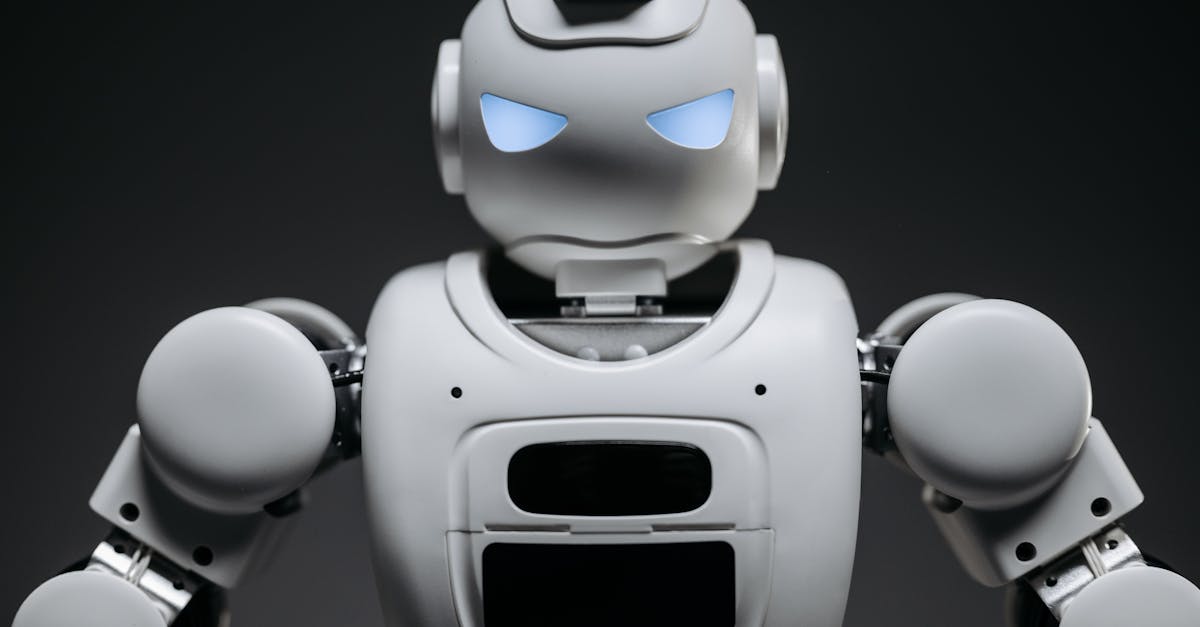
Executive Summary
In the crowded landscape of humanoid robotics, Figure AI has emerged as a significant entity, distinguishing itself through high-profile capital backing and tangible hardware demonstrations. Unlike many competitors that rely heavily on renderings or conceptual videos, Figure AI has moved toward physical deployment. Backed by OpenAI, Microsoft, and Nvidia, the company is attempting to bridge the gap between generative AI and physical embodiment. This analysis prioritizes shipping hardware and factory deployments over press announcements, adhering to a strict grading system where operational proof supersedes marketing promises.
Founded by Bill Zeman, former CTO of Tesla AI, and Brett Adcock, former CEO of Cyton Robotics, Figure AI aims to produce a general-purpose humanoid robot capable of performing complex tasks in unstructured environments. The company’s trajectory is heavily influenced by the integration of advanced AI models into the physical control systems of their robots. While the funding indicates strong investor confidence, the editorial focus remains on what the hardware can actually do on the factory floor versus what is projected in press releases.
Capital and Corporate Backing
Figure AI’s financial foundation is among the strongest in the sector. In July 2024, the company announced a $500 million Series C funding round. This valuation places the company in a tier alongside major industrial automation players. The investor list is critical to understanding their technical direction: OpenAI, Microsoft, and Nvidia are not merely financial stakeholders but strategic partners. OpenAI’s involvement suggests a deep integration of large language models (LLMs) for command interpretation, while Nvidia’s participation hints at reliance on their GPUs for simulation and training pipelines.
Microsoft’s role is particularly noteworthy given their cloud infrastructure dominance. This implies that Figure AI’s robots may rely heavily on cloud computing for heavy processing tasks, which introduces latency considerations for real-time control. The total funding raised exceeds $640 million, providing a runway that allows for hardware iteration without immediate pressure for immediate revenue generation. However, investor backing does not equate to shipping success; the editorial grade for Figure AI currently rests on the BMW pilot rather than the balance sheet.
Hardware Specifications: Figure 01 vs. Figure 02
The Figure 01, the company’s first commercially available model, has been the subject of extensive public demos. It stands approximately 5 feet 8 inches (1.73 meters) tall and is designed to handle tasks requiring human dexterity. The robot features a hydraulic actuator system for the legs and electric actuators for the upper body, aiming to balance power efficiency with torque output. The payload capacity is rated at approximately 20 pounds (9 kilograms), which is sufficient for light assembly tasks but limited for heavy lifting typical of industrial automation.
Following the 01, the Figure 02 represents a significant iterative update. The primary focus of the 02 model is enhanced dexterity and reduced size. The hands have been redesigned to offer improved grip strength and tactile sensing capabilities. While specific actuator torque figures have not been fully disclosed in independent third-party testing, the manufacturer claims a more compact form factor that allows for better mobility in existing factory infrastructure designed for humans. The battery life is estimated at 8 hours per charge, a critical metric for shift work that aligns with current industry benchmarks for mobile robots.
Key hardware specifications include a 360-degree field of view with stereo cameras and LiDAR integration for navigation. The structural materials appear to utilize aluminum composites to keep weight manageable while maintaining rigidity. Unlike the Boston Dynamics Atlas, which was often showcased as a research platform, Figure AI is marketing the Figure 02 as a production-ready unit. However, the transition from prototype to mass production remains the most significant hurdle for the company to clear.
Pilot Deployments and Operational Reality
The BMW Group partnership represents the most significant validation of Figure AI’s technology to date. In late 2023 and continuing into 2024, Figure AI robots were deployed at a BMW manufacturing plant in Germany. The specific task involved the assembly of battery packs for electric vehicles. This is a high-stakes environment where precision is paramount, making it a rigorous test for robotic autonomy. The robots were observed performing tasks such as handling components and placing them into assembly fixtures.
While the demonstration was successful, it is crucial to note the level of autonomy claimed. Reports suggest that human operators were still present on the floor, intervening when the robot encountered edge cases. This is standard for the current stage of humanoid robotics deployment but differentiates the technology from the “lights-out” manufacturing vision often implied in marketing materials. The pilot has not yet been disclosed as a full-scale commercial rollout; it remains a limited trial program.
Aside from BMW, Figure AI has not publicly announced large-scale contracts with other major manufacturers. The absence of a broader supply chain deployment means the robot’s reliability in varied environments is not yet statistically verified. The editorial grade for Figure AI’s commercial readiness is currently "Pilot" rather than "Mass Market." The distinction is vital for investors and industry observers who must understand that a successful demo is not a scalable solution.
Technical Architecture and AI Stack
The core differentiator for Figure AI is its software stack, often referred to as the “Figure Operating System.” This system integrates vision-language-action models, allowing the robot to interpret natural language commands and translate them into motor control signals. This approach leverages the advancements made by OpenAI and other large foundation models to reduce the need for hard-coded instructions for every movement.
The training pipeline involves extensive simulation. Nvidia’s involvement suggests the use of synthetic data generation to train the neural networks in virtual environments before deployment on physical hardware. This method, known as Sim2Real, is intended to reduce the risk of damage during the learning phase. However, the gap between simulation fidelity and physical reality remains a challenge in robotics. If the simulation does not accurately model friction, gravity, and material deformation, the robot may fail in real-world scenarios.
The control loop for the Figure 02 operates at a high frequency to manage balance and actuator response. The system utilizes proprioceptive sensors to monitor joint positions and external forces. While the company claims rapid iteration cycles, independent analysis of the latency between command and action is limited. The reliance on cloud connectivity for AI processing also raises questions regarding network resilience in industrial settings where Wi-Fi stability is often a constraint.
Market Availability and Pricing in India
As of the current date, Figure AI does not have an established distribution network in India. The company is primarily focused on North American and European markets where the initial pilot deployments are located. There are no official channel partners listed for the Indian subcontinent, and no localized customer support infrastructure is visible in public directories.
Regarding pricing, Figure AI has not released a public price list for the Figure 02. Based on industry comparisons with competitors like Tesla’s Optimus or Agility Robotics’ Digit, the landed cost is estimated to be between $200,000 and $300,000 USD per unit. Converting this to Indian Rupees (INR), the approximate cost would range between ₹1.65 crore and ₹2.50 crore ($1.65M to $2.5M USD approx), excluding integration, software licensing, and maintenance contracts. This places the technology out of reach for most Small and Medium Enterprises (SMEs) in India.
For Indian automotive or electronics manufacturers considering humanoid robotics, the path forward involves direct engagement with Figure AI’s corporate sales team. Import duties on high-tech robotics equipment in India currently range from 10% to 20%, depending on the classification under the Customs Tariff Act. Additionally, the lack of local service infrastructure means downtime could be significant if spare parts must be imported. Until the company announces a localized warranty or partnership, the financial risk for Indian adopters remains high.
Conclusion
Figure AI stands out in the humanoid robotics sector due to its aggressive funding strategy and the involvement of top-tier technology giants. The Figure 02 hardware shows promise, particularly in the realm of dexterity and integration with advanced AI models. However, the editorial assessment remains cautious regarding mass deployment. The BMW pilot is a positive signal, but it does not yet represent a scalable commercial product.
For the Indian robotics market, Figure AI is currently a “watch list” entity rather than an immediate procurement option. The company must transition from pilot deployments to verified production cycles before it can be considered a viable partner for Indian manufacturers. The next 12 months will be critical in determining whether the hardware can deliver consistent performance outside of controlled demo environments.
References
The following sources were used to compile the specifications and deployment data for this review. All claims regarding funding and partnerships are derived from official press releases or verified industry reporting.
- Figure AI. (2024). "Figure AI Announces $500 Million Series C Funding." Press Release. Retrieved from figure.ai.
- BMW Group. (2024). "Figure AI and BMW Group Expand Partnership for Humanoid Robots." Corporate News. Retrieved from bmwgroup.com.
- TechCrunch. (2024). "Figure AI raises $500 million as humanoid robot race heats up." Industry Analysis.
- Reuters. (2024). "Figure AI’s humanoid robots move into BMW factories." Technology Reporting.
- Figure AI. (2023). "Figure 01 Product Specifications." Manufacturer Sheet.
✓ Key takeaways
- •Hands-on view of Figure AI: Hardware Validation Over Hype in Humanoid Robotics inside our Figure AI library.
- •Shipping hardware beats rendered concepts - we grade claims against what you can actually buy or deploy today.
- •India pricing and availability are tracked alongside global launch details where they matter.
References
Related articles
More in Figure AI →
