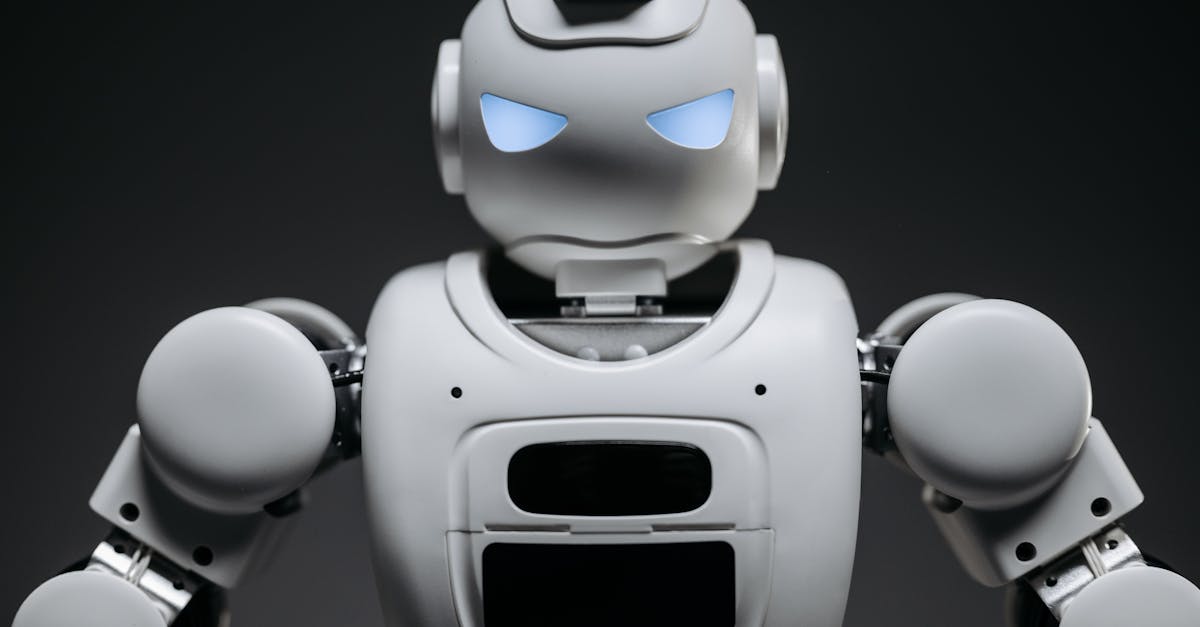
Figure AI: Assessing the OpenAI-Backed Humanoid from Prototype to Production

Introduction: The Capital-Heavy Humanoid Contender
Figure AI represents a distinct shift in the robotics landscape, moving away from traditional hardware-first startups toward an AI-centric architecture. Backed by OpenAI, Microsoft, and Nvidia, the company positions itself not merely as a robotics manufacturer but as an integrator of high-performance foundation models into physical agents. Founded in 2022 by Bill Newell, former Vice President of Tesla Bot, and Brett Adcock, co-founder of Databricks, Figure AI has rapidly climbed the rankings of high-value robotics startups.
As of early 2024, the company’s primary focus remains on the Figure 01, a 1.7-meter tall humanoid robot designed to operate in unstructured environments. While the narrative surrounding Figure AI is often dominated by the prestige of its investors, a RobotWale editorial assessment requires distinguishing between announced partnerships and shipped hardware. Currently, the company’s trajectory places it firmly in the pilot deployment category rather than mass commercial shipping.
Hardware Specifications and Figure 01 Capabilities
The Figure 01 distinguishes itself through a focus on dexterity and speed rather than sheer lifting capacity. Based on on-stage demonstrations at CES 2024 and subsequent factory videos, the robot features a full-body design with 40 degrees of freedom. This allows for complex hand manipulation, a critical requirement for manufacturing tasks that require grasping delicate components.
Key technical specifications available from manufacturer reports include:
- Height: 170 cm (5 ft 7 in)
- Weight: Approximately 70 kg
- Manipulation: 6 degrees of freedom in the hand, capable of fine motor control
- Navigation: Full-body navigation enabling 1.7 m/s walking speed
- Battery: Designed for a full shift operation, though specific capacity remains proprietary
Unlike many competitors who prioritize vertical integration of sensors, Figure AI emphasizes the integration of external foundation models into the robot’s control loop. This suggests that the hardware is designed to be a “body” for a larger AI brain, rather than a standalone system. The company has not released a detailed bill of materials (BOM) publicly, which limits independent cost analysis for potential buyers.
The AI Stack: OpenAI and Microsoft Integration
The strategic backing of OpenAI and Microsoft is arguably Figure AI’s most significant asset. The partnership implies that the Figure 01 is not running on traditional control logic alone but is leveraging Large Language Models (LLMs) for task planning. This approach aims to solve the “embodiment problem,” where robots struggle to interpret ambiguous natural language commands.
Microsoft’ involvement extends beyond funding to cloud infrastructure. The use of Azure for training and inference suggests that the robots may operate partially in the cloud, relying on low-latency connections for high-level decision-making. This architecture shifts the cost model from CapEx-heavy hardware to a hybrid model where software services play a recurring revenue role.
However, reliance on cloud connectivity introduces latency risks for safety-critical operations. Figure AI has stated that the Figure 01 possesses an edge-compute capability for safety shutdowns, ensuring that the robot can detect hazards even if network connectivity is lost. This is a crucial specification for deployment in volatile industrial environments.
Industrial Pilots: The BMW Partnership
Figure AI’s most concrete evidence of production readiness is the partnership with BMW Group. Announced in late 2023, this collaboration involves the testing of Figure 01 units within BMW’s manufacturing facilities. The specific use cases include handling paint components and performing tasks that are currently difficult to automate due to the variability of parts.
This partnership is significant for two reasons. First, BMW is a rigorous evaluator of robotics technology, having previous experience with various automation providers. Their involvement serves as a partial validation of the Figure 01’s operational readiness. Second, the partnership is explicitly described as a pilot program. Figure AI has not disclosed the number of units deployed or the duration of the pilot, which prevents a clear assessment of the return on investment for potential buyers.
RobotWale notes that a pilot deployment does not equate to mass shipping. The distinction is critical for investors and industry observers. While the hardware is being tested, there is no public evidence of a supply chain capable of mass-producing the Figure 01 at scale. The company’s manufacturing partners remain largely undisclosed, adding to the opacity of their production roadmap.
Manufacturing and Supply Chain: Nvidia’s Role
Nvidia’s backing provides Figure AI with access to the Omniverse simulation platform. This allows for the training of humanoid policies in a virtual environment before deployment on physical hardware. This “sim-to-real” transfer is a standard practice in advanced robotics, but Nvidia’s involvement suggests a deeper integration of the Isaac robotics platform.
The hardware itself is being built in-house, with Bill Newell citing the need for vertical control over actuation and sensing. However, the supply chain for high-torque actuators remains a global bottleneck. Figure AI has not explicitly stated if they are manufacturing their own motors or sourcing them from established suppliers like Harmonic Drive or similar entities.
This supply chain constraint is a major factor in the timeline for mass deployment. Without a clear roadmap for actuator production, the company’s shipping estimates remain speculative. The reliance on proprietary hardware development increases the risk profile compared to companies that assemble off-the-shelf components.
India Market Availability and Pricing
As of this writing, Figure AI has not announced a direct commercial distribution channel in India. The company’s focus remains on the North American and European markets, specifically targeting automotive and logistics sectors where BMW and other partners operate.
For the Indian market, availability is likely to be indirect. Indian system integrators may eventually bid on pilot contracts for specific manufacturing plants, but a direct purchase of Figure 01 hardware is not currently an option. This limits the immediate relevance of the robot to Indian manufacturers who require localized support and service.
Regarding pricing, the company has not released a public price list. Based on the complexity of the Figure 01 and the current costs of similar humanoid platforms (such as those from Boston Dynamics or Agility Robotics), the landed cost in India is estimated to be significant. Assuming a unit cost between $250,000 and $300,000 USD for the initial pilot units:
- Estimated USD Cost: $250,000 - $300,000
- Estimated INR Landed Cost: ₹2.1 Cr to ₹2.5 Cr (excluding duties and taxes)
It is important to flag that this estimate includes import duties, GST (18%), and logistics. For most Indian MSMEs (Micro, Small, and Medium Enterprises), this cost is prohibitive. The unit is positioned for large-scale manufacturing plants where labor arbitrage is being replaced by high-precision automation.
Critical Assessment: Claims vs. Reality
Figure AI presents a strong narrative backed by top-tier capital. However, the editorial grading of the company follows the standard hierarchy: shipping hardware first, pilot deployments second, and announcements last.
Currently, Figure AI sits firmly in the pilot deployment category. The BMW partnership is a strong signal, but it lacks the granularity of a public production rollout. The company’s ability to scale manufacturing without a disclosed supply chain remains the primary risk factor for investors.
The integration of OpenAI’s foundation models offers a competitive advantage in flexibility. Traditional robots struggle with generalization; Figure AI aims to solve this through AI. However, the latency of these models and the safety certification required for Indian markets (such as ISO 13482 compliance) are hurdles that have not been publicly addressed in detail.
Conclusion
Figure AI is a high-profile entrant in the humanoid robotics race, distinguished by its AI-first approach and prestigious backing. While the Figure 01 shows promise in controlled environments, the path to mass commercial shipping remains opaque. For the Indian market, the robot is currently not available for direct purchase, with pricing likely exceeding ₹2.5 Cr per unit. Stakeholders should monitor the BMW pilot for concrete evidence of scaling before considering Figure AI as a viable long-term investment or procurement option.
References
✓ Key takeaways
- •Hands-on view of Figure AI: Assessing the OpenAI-Backed Humanoid from Prototype to Production inside our Figure AI library.
- •Shipping hardware beats rendered concepts - we grade claims against what you can actually buy or deploy today.
- •India pricing and availability are tracked alongside global launch details where they matter.
References
Related articles
More in Figure AI →