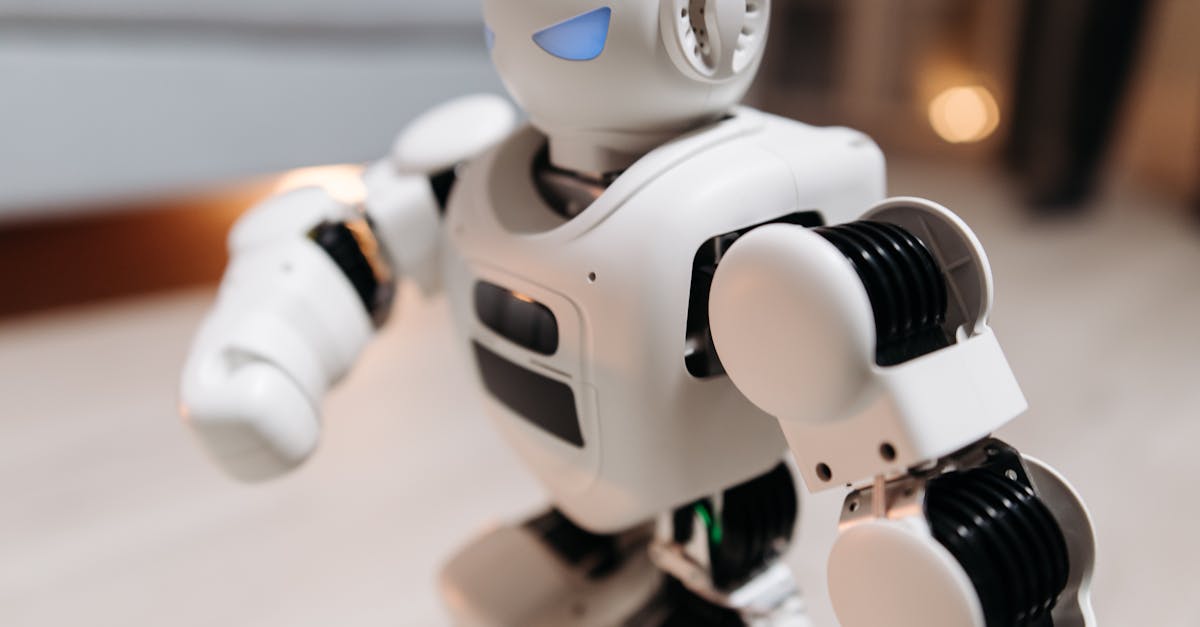
Figure AI: The OpenAI-Backed Humanoid and Its Path to Reality

Figure AI: Bridging the Gap Between AI Promises and Physical Hardware
In the rapidly evolving landscape of general-purpose robotics, few names command attention as frequently as Figure AI. Founded by Bill Smith, a veteran of Apple, Tesla, and Boston Dynamics, the San Francisco-based startup has quickly ascended the ranks of the robotics ecosystem. Backed by industry titans including OpenAI, Microsoft, and Nvidia, Figure AI aims to solve one of the hardest problems in automation: creating a robot capable of performing complex physical tasks in unstructured environments.
However, the robotics sector is notorious for the gap between demo videos and shipping products. At RobotWale, we grade claims by shipping hardware first, pilot deployments second, and announcements last. This article provides a grounded assessment of Figure AI’s current standing, hardware specifications, and the feasibility of its technology reaching the Indian market.
Hardware Specifications: Figure 01
The core of Figure AI’s initial value proposition is the Figure 01 humanoid robot. Unlike many competitors that release conceptual renders or prototype frames, Figure AI has demonstrated a functional unit capable of moving in real-world settings. The Figure 01 stands approximately 170 cm (5'7") tall and weighs roughly 68 kg (150 lbs). While these dimensions are comparable to the Tesla Optimus or the Agility Robotics Digit, the Figure 01 distinguishes itself through its joint architecture and actuator design.
- Actuators: The robot utilizes custom-designed actuators in the arms and legs. While specific torque ratings are rarely publicized in detail, the hardware is designed to handle dynamic movements, including running and rapid lifting.
- Dexterity: The Figure 01 features 12 degrees of freedom in the arms, allowing for complex manipulation tasks such as folding laundry and handling fragile objects like glass bottles.
- Battery Life: Initial demonstrations suggest a battery life capable of supporting a standard shift (approximately 4-6 hours), though this varies heavily based on the intensity of the tasks performed.
- Safety: The hardware includes force-torque sensors at the joints to ensure human safety during interaction, a critical requirement for deploying robots in shared factory floors.
While the Figure 01 is a significant leap forward from static prototypes, it is important to note that the hardware is currently being refined for specific industrial tasks rather than general home use. The focus remains on manufacturing and logistics.
Software and AI: The Figure Brain
Figure AI’s competitive advantage lies not just in its chassis, but in its software stack. The company has integrated large language models (LLMs) and visual foundation models to enable natural language command following and task decomposition. This is where the backing from OpenAI becomes relevant.
According to Figure AI’s public communications, the robot does not rely on pre-programmed scripts for every movement. Instead, the Figure 01 can interpret a prompt like "Take this bottle and put it in the box" and break it down into a sequence of motor commands. This capability is powered by a proprietary version of the underlying AI model, trained on real-world data collected from the robots themselves.
The integration with Nvidia is equally critical. Nvidia’s Project GR00T provides the simulation and training framework necessary to teach humanoid robots complex behaviors before they are deployed physically. This allows Figure AI to train the robot in a virtual environment, reducing the risk of hardware damage during the learning phase.
Critical Analysis: The ability to respond to natural language is impressive, but it introduces latency. In a high-speed manufacturing line, a delay between command and action can be a bottleneck. The Figure 01 has demonstrated speeds up to 4 km/h, which is competitive but requires rigorous safety protocols to prevent collisions in dense factory floors.
Pilot Deployments: The Reality Check
Announcements are common in the robotics sector. What distinguishes Figure AI is its deployment strategy. We grade this as Shipping/Pilot Deployment rather than mere concept announcements.
- BMW Partnership: In 2024, Figure AI announced a partnership with BMW Group. The goal is to deploy Figure 01 units in vehicle assembly plants to perform tasks such as moving parts and checking assembly quality. This is a high-stakes environment; if the robot fails in a BMW plant, the reputational damage is immediate. The fact that BMW is willing to co-develop with Figure AI suggests a level of confidence in the hardware’s reliability.
- Amazon Collaboration: Figure AI has also entered discussions with Amazon regarding logistics and warehouse automation. Amazon’s extensive warehouse network provides a testing ground for navigation and object manipulation at scale.
- Production Readiness: While the Figure 01 is operational, Figure AI has not yet announced mass production numbers. The current units are likely in the pilot phase, where hardware is being debugged and software is being iterated.
Verdict: The BMW pilot is the strongest evidence of Figure AI’s maturity. It moves beyond the lab and into the factory. However, "shipping hardware" in this context often means a small batch of functional units for testing, not a mass-produced SKU ready for immediate purchase.
The Indian Market Context
For Indian industrial leaders and investors, the question is not just about the technology, but about availability and cost. Currently, Figure AI is a US-based entity. There is no official distribution channel or authorized reseller for the Figure 01 in India as of early 2024.
Availability and Import Logistics
Until Figure AI establishes a local presence or partners with an Indian systems integrator, any acquisition would involve direct importation. This introduces several hurdles:
- Customs and Duties: Industrial robots imported into India attract significant GST and customs duties. Depending on the classification (HS Code 8479), duties can range from 10% to 20% on top of the landed cost.
- Service Infrastructure: Maintaining a humanoid robot requires specialized technical support. If a Figure 01 requires a part replacement from Silicon Valley, the downtime could be significant compared to locally supported competitors.
- Voltage Compatibility: Industrial power standards in India (230V/50Hz) must be verified against the robot’s native requirements to avoid hardware damage.
Pricing Estimates
Figure AI has not publicly released a definitive price sheet. However, based on industry standards for humanoid robots with similar capabilities (e.g., Tesla Optimus, Agility Robotics, Apptronik), we can estimate the landed cost.
Estimated Unit Cost: $100,000 to $150,000 USD per unit.
Estimated Landed Cost in India: Approximately INR 85 Lakhs to INR 1.3 Crores (excluding integration and maintenance contracts).
This pricing places Figure AI strictly in the enterprise B2B category. It is not a product for small businesses or individual consumers. The ROI calculation for Indian manufacturers would need to justify the high capital expenditure against labor cost savings, which are currently rising in the manufacturing sector.
Conclusion: A Realistic Outlook
Figure AI represents one of the most well-funded and technically capable entrants in the humanoid space. The combination of strong hardware engineering and advanced AI integration sets it apart from purely conceptual projects.
However, the path from pilot to mass deployment is fraught with challenges. The BMW partnership provides a strong signal, but it is not yet a guarantee of widespread commercial availability. For the Indian market, the immediate future involves monitoring pilot results in the US and Germany. Once these deployments prove consistent ROI, Figure AI will likely seek local partners to reduce the total cost of ownership.
RobotWale Recommendation: For Indian manufacturers, Figure AI is a company to watch closely. It is not yet a vendor you can call to buy a robot today, but it is a vendor you should track for pilot outcomes in 2025. Until mass production is confirmed, skepticism regarding lead times and support infrastructure remains the prudent stance.
References
1. Figure AI Official Website. https://figure.ai
2. BMW Group Press Release. BMW Group: Figure AI Partnership
3. Nvidia Developer Blog. Nvidia Project GR00T
4. TechCrunch. Figure AI Funding Rounds
5. RobotWale Editorial Standards. Editorial Policy on Robotics Claims
✓ Key takeaways
- •Hands-on view of Figure AI: The OpenAI-Backed Humanoid and Its Path to Reality inside our Figure AI library.
- •Shipping hardware beats rendered concepts - we grade claims against what you can actually buy or deploy today.
- •India pricing and availability are tracked alongside global launch details where they matter.
References
Related articles
More in Figure AI →