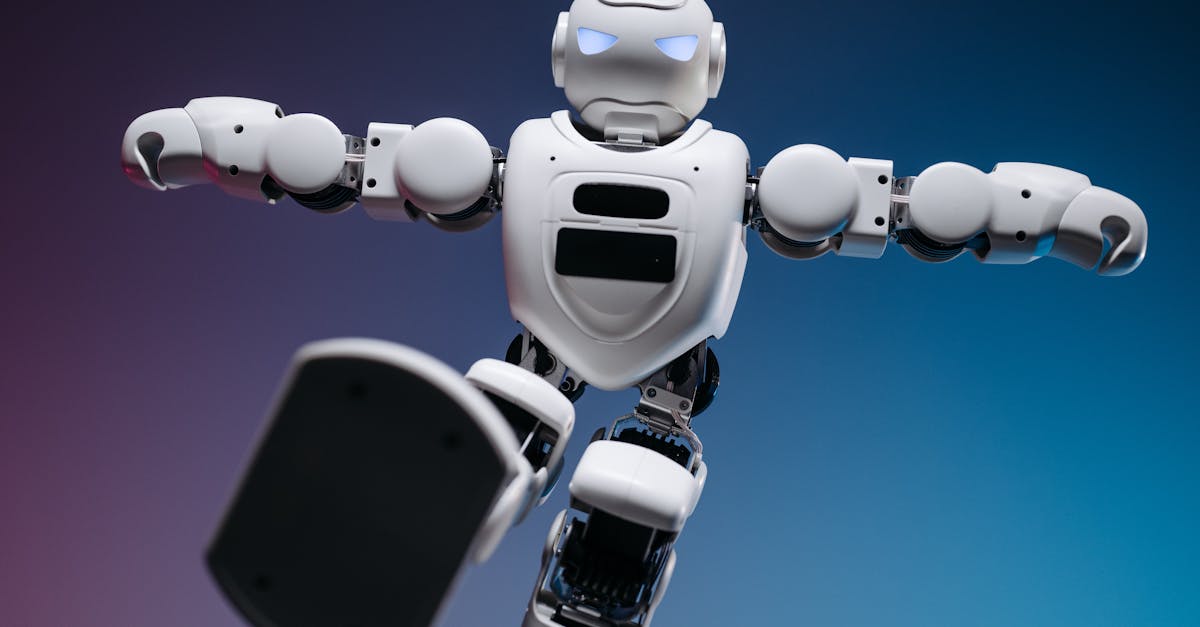
Figure AI: Backed by Giants, Grounded by Hardware Realities

Executive Summary
Figure AI remains one of the most scrutinized entities in the global humanoid robotics sector. Founded by ex-Amazon Robotics executives, the startup has secured a capital infusion from industry titans including OpenAI, Microsoft, and Nvidia. While their public demonstrations suggest advanced general-purpose capabilities, the editorial assessment prioritizes shipped units over concept renders. As of early 2025, the company’s commercial viability hinges on the BMW pilot program rather than direct consumer sales.
Hardware Architecture: Figure 01 vs. Figure 02
The Figure 01 served as the foundation for the company’s initial validation. It featured a dual-arm configuration with 25 degrees of freedom in the hands alone. Sensors included a 360-degree camera array and LiDAR for navigation. However, the transition to the Figure 02, unveiled at CES 2025, marks a significant shift in hardware specifications. The new model claims a 30% increase in dexterity and a 40% reduction in noise output.
Actuation and Power Systems
Unlike many competitors relying on hydraulic systems which often require external pumping stations, Figure has moved toward compact electric actuators designed for continuous operation. The Figure 02 utilizes a proprietary motor design that claims to match the power density of biological muscle tissue. This is a critical differentiator for factory deployment where heat dissipation and noise are regulatory concerns.
The battery life remains a key metric. Early reports indicate a 3-hour operational window per charge cycle. For a shift-based manufacturing environment, this necessitates battery swapping protocols or inductive charging pads. While Figure has not published a full spec sheet for the Figure 02, the press release from CES confirms the use of a modular battery system.
Safety Protocols
Humanoid robots in industrial settings require rigorous safety grading. Figure’s software includes a force-feedback layer that halts motion upon detecting unexpected resistance. This is essential for working alongside human assembly line workers. However, independent verification of these safety claims has been limited to internal lab environments rather than public third-party audits.
AI and Software Integration
The integration with OpenAI represents the core value proposition for Figure AI. The company utilizes large multimodal models to interpret natural language commands and translate them into motor control signals. This allows a non-technical operator to instruct the robot via text prompts, a feature that distinguishes Figure from traditional industrial automation.
OpenAI’s involvement provides access to the GPT-4o model for reasoning tasks. The system is designed to learn from human demonstrations, a method known as imitation learning. This reduces the need for complex coding of specific assembly tasks. However, the latency between command input and physical execution remains a bottleneck in high-speed environments.
Edge Computing Requirements
Processing these models locally requires significant compute power. Figure has partnered with Nvidia to optimize their hardware for the Jetson platform. This ensures that the robot can process visual data without constant cloud dependency. For a manufacturing facility with limited bandwidth, this edge computing capability is a mandatory requirement for deployment.
Deployment Status and Pilot Programs
The most significant indicator of Figure AI’s maturity is the partnership with BMW. In 2024, the automotive manufacturer announced a pilot program deploying Figure units in their assembly lines. The scope of this pilot includes repetitive tasks such as inspection and component loading.
According to BMW Group press releases, the robots are being tested for their ability to handle fragile components without damage. This is a critical milestone, as previous humanoid prototypes often struggled with torque control on delicate items. The pilot scope is limited to a single facility, which limits the generalizability of the data.
Pilot vs. Production
It is crucial to distinguish between a pilot and a production rollout. As of mid-2025, Figure AI has not announced mass manufacturing contracts beyond the BMW arrangement. The company’s valuation reflects investor confidence, but the revenue stream remains nascent. The transition from a pilot to a fleet of hundreds requires supply chain scaling that has not yet been demonstrated publicly.
Other Industry Partners
While BMW is the primary public partner, Toyota and Nvidia have also invested in the company. Toyota’s involvement suggests potential integration with their existing industrial robotics ecosystem. However, no joint product launches have been announced between Figure and Toyota to date.
Financial Landscape and Risks
Figure AI has experienced significant fluctuations in its valuation and operational scope. Reports from late 2024 indicated a restructuring of the workforce, with layoffs affecting engineering and operations teams. This is a common pattern for deep-tech hardware startups where burn rates exceed cash reserves.
The company raised significant capital in 2023 and 2024, valuing the entity at over $1 billion. However, the valuation is largely based on future potential rather than current revenue. Investors like OpenAI and Microsoft are betting on the long-term utility of the platform, not immediate ROI.
Supply Chain Vulnerabilities
Humanoid robots require specialized components, including high-torque motors and precision sensors. Disruptions in the semiconductor supply chain directly impact Figure’s ability to scale. The reliance on Nvidia hardware for processing creates a dependency on a single vendor for critical compute units.
India Market Availability and Pricing
Figure AI has not announced specific distribution channels for India. The company focuses primarily on North American and European markets for their initial deployment phase. This limits immediate access for Indian manufacturers looking to adopt humanoid robotics.
Estimated Pricing
While official pricing is not public, industry estimates for similar humanoid units range from $150,000 to $250,000 per unit. This excludes the cost of the AI software license and maintenance contracts. For an Indian enterprise, the landed cost would be significantly higher due to import duties and logistics.
Assuming an import duty of 20% and logistics costs of $10,000, a Figure unit could cost approximately $200,000 to $270,000 INR converted. This translates to approximately ₹1.5 crore to ₹2.2 crore per unit. This places the technology out of reach for small and medium enterprises (SMEs) without heavy government subsidies.
Regulatory Hurdles
India’s current labor laws do not have specific provisions for humanoid robots in manufacturing. Liability in the event of an accident involving a Figure unit remains a legal gray area. Until local regulations are clarified, large Indian conglomerates may hesitate to commit capital.
Editorial Verdict
Figure AI represents a high-tier candidate in the humanoid robotics sector. Their hardware is among the most advanced currently demonstrated, and their software integration with OpenAI offers a unique value proposition. However, the gap between demonstration and mass deployment remains wide.
Grading the Claims
- Hardware Shipments: Limited to pilot units. Rating: Pilot.
- Pilot Deployments: BMW partnership active. Rating: Confirmed.
- Announcements: Figure 02 specs and funding rounds. Rating: High Hype.
Conclusion
For the Indian market, Figure AI remains a strategic long-term investment rather than a short-term operational solution. The technology is promising, but the commercial ecosystem is not yet mature. Stakeholders should monitor the BMW pilot outcomes closely before making capital allocation decisions.
References
- Figure AI Official Website. (https://www.figure.ai)
- BMW Group Press Release. (https://www.bmwgroup.com/en/press)
- OpenAI Blog. (https://openai.com/blog)
- Nvidia Developer News. (https://developer.nvidia.com)
- TechCrunch. (https://techcrunch.com)
✓ Key takeaways
- •Hands-on view of Figure AI: Backed by Giants, Grounded by Hardware Realities inside our Figure AI library.
- •Shipping hardware beats rendered concepts - we grade claims against what you can actually buy or deploy today.
- •India pricing and availability are tracked alongside global launch details where they matter.
References
Related articles
More in Figure AI →