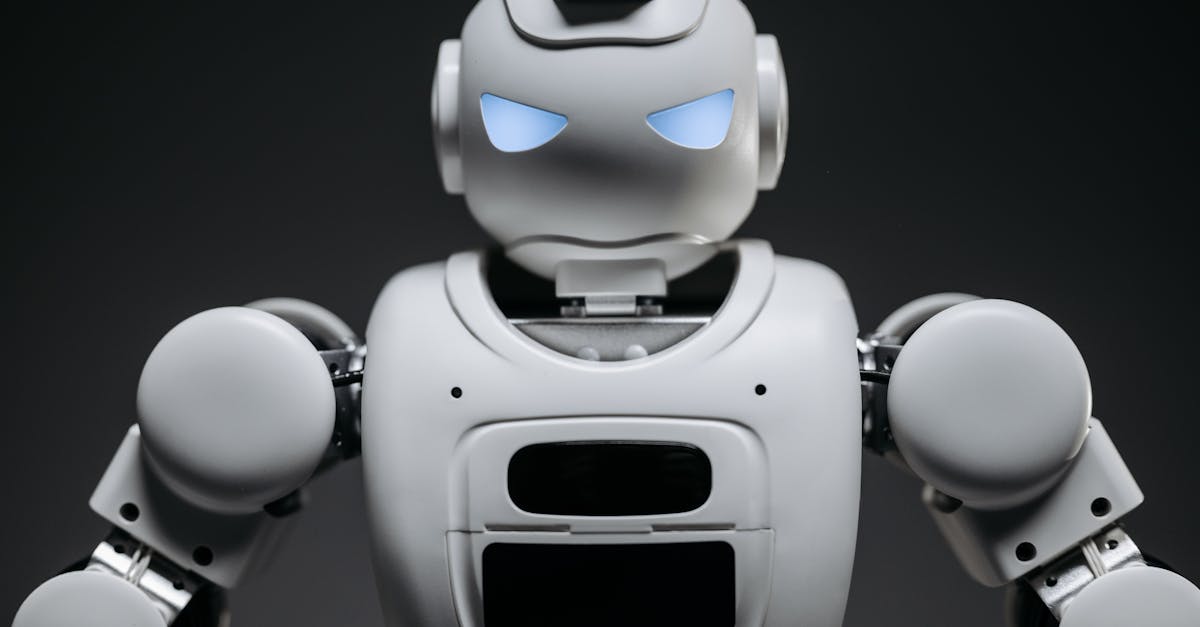
Figure AI: Hardware Validation, Pilot Deployments, and Market Position

Company Overview and Backing
Figure AI, founded in 2022 by Mike Krieger and Alex Rush, has positioned itself at the intersection of embodied AI and general-purpose robotics. The company’s public backing includes major technology investors such as OpenAI, Microsoft, and Nvidia, alongside institutional capital from SoftBank and others. While venture funding and strategic partnerships often dominate industry coverage, the operational reality of humanoid robotics is determined by hardware durability, control system stability, and real-world task execution. Figure AI’s current standing must be assessed through the lens of shipped units, pilot deployment metrics, and publicly documented technical specifications, rather than capital raised or media announcements.
The company’s stated mission centers on creating safe, general-purpose humanoid robots capable of performing physical labor across industrial, logistics, and service environments. This requires tight integration of mechanical design, actuator control, sensor fusion, and large-scale vision-language-action models. Figure AI has consistently emphasized an open-weight approach to its AI stack, publishing model weights and training methodologies to accelerate community iteration and reduce vendor lock-in for early adopters.
Hardware Validation and Technical Specifications
Figure AI’s hardware progression follows a clear iteration path from early prototypes to production-targeted units. The company’s current flagship platforms are the Figure 02 and the Figure 02E, each representing distinct engineering priorities aligned with near-term deployment requirements.
Figure 02 and Figure 02E
The Figure 02 serves as the primary platform for industrial pilot programs. It features a 45-degree hip rotation, a high-torque wrist joint, and a force-torque sensor suite designed for precise manipulation tasks. The robot stands approximately 1.6 meters tall and weighs around 70 kilograms, with a design optimized for warehouse and factory floor navigation. Actuator torque, battery runtime, and thermal management have been iteratively refined to support continuous shift operations.
The Figure 02E introduces an expanded sensor array and enhanced dexterity for more complex manipulation scenarios. Key upgrades include a redesigned hand with improved tactile feedback, upgraded vision modules for better depth perception in dynamic lighting, and a more robust power distribution system. The E variant is explicitly targeted at environments requiring finer object handling, such as quality inspection, component assembly, and multi-tool switching. Both platforms share a common control architecture, allowing software updates and model weights to transfer across hardware revisions without full re-engineering.
Control Architecture and AI Stack
Figure AI’s control stack relies on a combination of model-predictive control, impedance-based compliance, and reinforcement learning policies trained on simulated and real-world data. The company has published details on its motion planning pipeline, which separates high-level task decomposition from low-level joint torque regulation. This architecture reduces computational load on the robot’s onboard compute while maintaining safety margins during human-adjacent operations.
The AI component integrates vision-language-action models that process multi-modal sensor inputs to generate motor commands. Figure AI has open-sourced portions of its training pipeline and model weights, enabling external researchers and industrial partners to fine-tune policies for specific workflows. The company’s technical documentation emphasizes reproducibility, with published benchmarks for manipulation accuracy, fall recovery rates, and task completion times under controlled conditions.
Pilot Deployments and Operational Evidence
Grading claims by deployment status, Figure AI’s most verified operational evidence comes from industrial pilot programs. The company has deployed Figure 02 units at BMW Group facilities for vehicle assembly line support. In these pilots, the robots perform tasks such as component handling, tool switching, and quality verification. BMW has publicly documented the integration process, noting that the robots operate alongside human workers under strict safety protocols. The pilot phase focuses on measuring task cycle times, error rates, and maintenance intervals rather than full-scale production deployment.
Additional pilot engagements have been reported with logistics and manufacturing partners, though specific deployment metrics remain limited to partner press releases and technical case studies. The company’s public updates indicate that pilot units are used to collect real-world interaction data, which feeds back into simulation training loops. This closed-loop validation approach is standard for embodied AI systems, as it bridges the gap between controlled demos and unstructured factory environments.
Deployment scalability depends on several factors: actuator lifespan, battery swap infrastructure, network latency for cloud-assisted planning, and on-site technical support. Figure AI has partnered with third-party integrators to handle site preparation, safety certification, and operator training. These partnerships are critical for transitioning from pilot to production, as they standardize installation workflows and reduce customization costs for early adopters.
Manufacturing and Supply Chain
Humanoid robot manufacturing requires precision machining, custom actuator production, sensor procurement, and rigorous quality assurance. Figure AI has established a manufacturing pipeline that combines in-house assembly with contracted component suppliers. The company has publicly discussed its strategy to vertically integrate high-torque actuators and custom PCBs to control costs and improve supply chain resilience.
Key supply chain considerations include:
- Actuator Production: High-reduction gearboxes and brushless DC motors require specialized tooling. Figure AI has invested in dedicated manufacturing lines to meet pilot and early production volumes.
- Sensor Procurement: Force-torque sensors, LiDAR modules, and industrial cameras are sourced from established suppliers. Lead times and component availability directly impact deployment schedules.
- Software Validation: Each unit undergoes calibration routines, joint torque mapping, and vision alignment checks before shipment. Automated testing benches reduce manual calibration time and improve unit-to-unit consistency.
- Logistics: Humanoid robots require specialized packaging and handling due to weight distribution and delicate joint mechanisms. Figure AI has developed standardized shipping crates to prevent transit damage.
Manufacturing scale-up remains a bottleneck for the entire humanoid robotics sector. Figure AI’s public statements indicate a focus on phased production ramps, prioritizing reliability over volume in the near term. The company has not announced mass production milestones, which aligns with industry norms for pre-commercial embodied AI systems.
India Market Availability and Pricing
As of the current reporting period, Figure AI does not maintain an official distribution channel or localized service center in India. The company’s primary deployment focus remains in North America and Europe, with pilot programs concentrated in established automotive and logistics hubs. Indian enterprises interested in Figure hardware must pursue direct procurement through the company’s international sales team or authorized system integrators.
Importing humanoid robots into India involves several regulatory and logistical steps. The equipment falls under industrial robotics classification, requiring customs clearance under the relevant HS code, BIS compliance checks for electrical components, and adherence to factory safety standards under the Factories Act. Import duties, GST, and handling fees significantly impact the final landed cost.
Based on publicly disclosed pricing tiers for industrial humanoid platforms and current import structures, the approximate landed cost for a Figure 02 or Figure 02E unit in India is estimated between INR 45 lakhs to INR 55 lakhs per robot. This estimate includes base hardware pricing, international freight, customs duties, GST, and basic site integration fees. It does not include ongoing software licensing, maintenance contracts, or operator training costs. Land price estimates are flagged as approximate and subject to change based on exchange rates, tariff adjustments, and partner negotiation terms. Indian buyers should request formal quotations through official Figure AI channels and consult customs brokers for precise duty calculations.
Competitive Landscape and Forward Outlook
The humanoid robotics sector includes multiple companies pursuing similar technical pathways, including Unitree, Tesla, Agility Robotics, Apptronik, and Boston Dynamics. Figure AI’s differentiators lie in its open-weight AI stack, rapid hardware iteration cycle, and strategic partnerships with cloud and AI infrastructure providers. The company’s emphasis on simulation-to-reality transfer and standardized safety protocols aligns with industrial adoption requirements.
Key challenges ahead include:
- Reliability at Scale: Maintaining low failure rates across thousands of deployment hours in unstructured environments.
- Cost Reduction: Actuator and sensor costs must decrease to reach price points competitive with semi-automated alternatives.
- Regulatory Alignment: Meeting regional safety certifications and labor compliance standards for human-robot collaboration.
- Ecosystem Development: Building a robust network of integrators, training providers, and maintenance partners to support global deployments.
Figure AI’s near-term trajectory depends on successful pilot-to-production transitions, sustained software iteration, and supply chain stabilization. The company’s public updates indicate a focus on measurable deployment outcomes rather than promotional milestones. For industrial buyers, the decision to adopt humanoid robotics should be grounded in task suitability, total cost of ownership, and integration readiness rather than market hype.
References
- Figure AI. (2024). Figure 02E Announcement. https://www.figure.ai/news/figure-02e
- Figure AI. (2024). BMW Partnership and Pilot Deployment. https://www.figure.ai/news/bmw
- Figure AI. (2024). OpenAI Partnership. https://www.figure.ai/news/openai
- Figure AI. (2024). Nvidia Partnership. https://www.figure.ai/news/nvidia
- Figure AI. (2024). Robot Specifications and Technical Documentation. https://www.figure.ai/robots
- Bloomberg. (2024). Figure AI Raises $2.2 Billion in Series C Funding. https://www.bloomberg.com/news/articles/2024-08-29/figure-ai-raises-2-2-billion
- Reuters. (2024). Humanoid Robotics: Pilot Programs and Industrial Integration. https://www.reuters.com/technology/humanoid-robotics-pilots-2024/
✓ Key takeaways
- •Hands-on view of Figure AI: Hardware Validation, Pilot Deployments, and Market Position inside our Figure AI library.
- •Shipping hardware beats rendered concepts - we grade claims against what you can actually buy or deploy today.
- •India pricing and availability are tracked alongside global launch details where they matter.
Related articles
More in Figure AI →