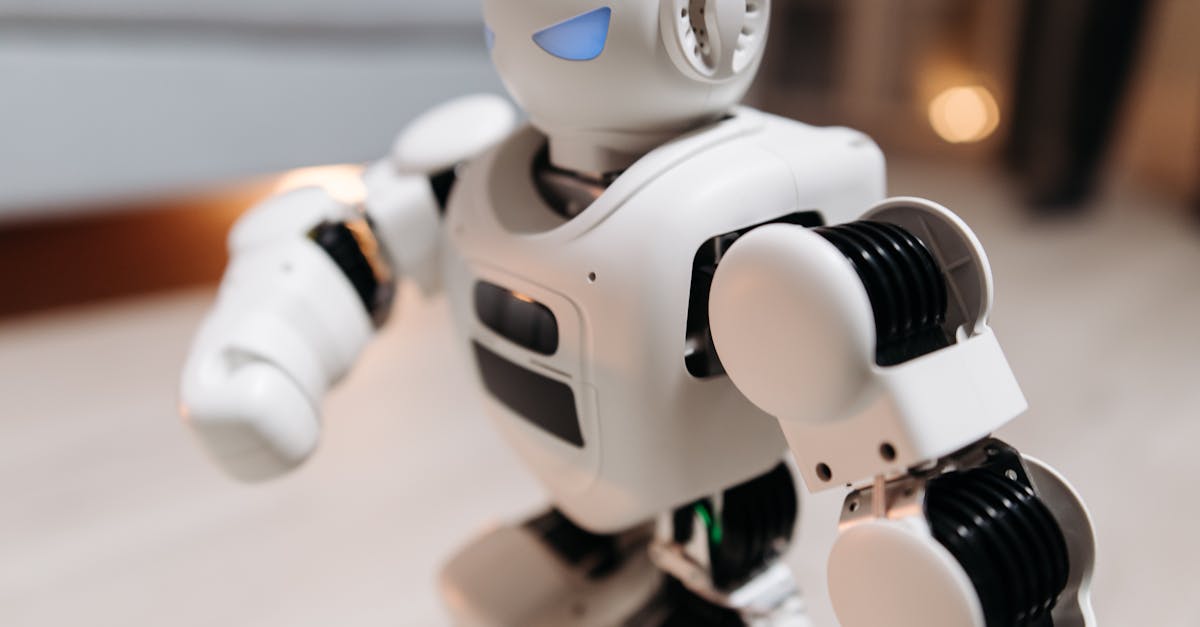
Figure AI: The OpenAI-Backed Humanoid Chasing Production Reality

Introduction: High-Profile Backing Meets Industrial Reality
Figure AI has emerged as one of the most heavily funded entrants in the general-purpose humanoid robotics sector. Founded in 2022 by Bill Smith, the former vice president of AI and Autonomy at Tesla, the company has quickly accumulated a roster of elite backers including OpenAI, Microsoft, Nvidia, SoftBank, BMW, and Amazon. This capital influx allows Figure AI to pursue ambitious goals in automation that smaller competitors cannot afford. However, the robotics industry is defined by the gap between prototype demonstrations and mass-market shipping. As of late 2024, Figure AI's transition from concept to commercial deployment requires rigorous scrutiny rather than marketing hype.
The core proposition of Figure AI is to deploy humanoid robots capable of performing flexible physical tasks in unstructured environments. Unlike traditional industrial arms fixed to a single station, these units are designed to navigate factory floors and warehouses alongside human workers. The company claims its robots can learn tasks via natural language commands, reducing the need for extensive reprogramming. While this capability is theoretically sound, the practical reliability of such systems remains the primary metric for evaluation.
Hardware Analysis: Figure 01 and Figure 02 Progress
The Figure 01 represents the company's initial hardware iteration. Demonstrated publicly in early 2024, this unit featured a sleek, anthropomorphic design with a focus on dexterity and mobility. Unlike early hydraulic prototypes that were loud and heavy, Figure 01 utilized electric actuators designed for efficiency and speed. The robot's height was reported to be approximately 1.7 meters, comparable to the average human, allowing it to operate in human-scale infrastructure without modification.
Performance metrics from public demos showed the Figure 01 capable of folding laundry and transporting boxes. However, independent observers noted that these tasks were performed in controlled settings with limited environmental variables. The robot's ability to handle unstructured objects, such as irregularly shaped cargo, remains a key differentiator that requires further testing. The company has since unveiled the Figure 02, billed as a production-ready iteration. The Figure 02 promises improved strength, faster processing, and enhanced reliability for deployment in industrial partners' facilities.
Key specifications for the Figure 02, based on manufacturer data released in mid-2024, include a 60% weight reduction compared to the Figure 01 and a focus on electric propulsion over hydraulic systems. The company has not released a comprehensive spec sheet detailing torque limits or payload capacity for the Figure 02 in public channels. This lack of granular data limits third-party verification of its capabilities. For industrial buyers, the absence of a certified payload rating (e.g., 20kg payload) is a significant barrier to procurement planning.
Software and Intelligence: The OpenAI Connection
Figure AI's software stack is where the company differentiates itself most aggressively from traditional robotics firms. The integration with OpenAI's foundation models allows the Figure 01 and Figure 02 to process visual data and language inputs simultaneously. This approach, known as Vision-Language-Action (VLA) modeling, enables the robot to understand commands like "move the box to the conveyor belt" without explicit trajectory programming.
However, the reliance on large-scale foundation models introduces latency and dependency risks. If the cloud infrastructure hosting the model experiences downtime, the robot's autonomy can be compromised. Furthermore, the safety of these models in physical environments is critical. A hallucination in the code could lead to physical damage or injury. The company must demonstrate robust fail-safes to mitigate these risks.
Microsoft has also integrated its cloud computing infrastructure into the robot's ecosystem. Through Azure, Figure AI can offload heavy computation to the cloud while maintaining low-latency control loops. This partnership ensures scalability but creates a dependency on Microsoft's data centers. For enterprise clients in India, data sovereignty laws may complicate the use of US-based cloud infrastructure for critical industrial operations.
Strategic Partnerships: BMW and Amazon
Figure AI has secured high-profile partnerships that validate its technology for industrial use. The collaboration with BMW Group, announced in May 2024, marks a critical step toward real-world deployment. Figure has agreed to deploy humanoid robots in BMW's production lines, specifically for tasks such as quality inspection and component handling. This partnership is significant because BMW is a conservative technology adopter; its approval signals confidence in the robot's safety and repeatability.
Similarly, Amazon has invested in Figure AI's Series B funding round. Amazon's involvement suggests that the company views humanoid robots as a solution to its labor-intensive logistics challenges. The goal is to automate the last mile of warehouse operations, reducing reliance on seasonal labor. However, the timeline for these deployments remains vague. In the robotics sector, "pilot" often stretches into multi-year development phases before full-scale rollout.
The combination of BMW and Amazon as partners creates a dual use-case scenario: manufacturing and logistics. This breadth is a strength, but it also divides the company's engineering focus. The constraints of a factory floor differ significantly from a warehouse environment. Ensuring the Figure 02 can excel in both domains without compromising performance is a complex engineering challenge.
India Context: Availability and Pricing
For the Indian market, the Figure AI humanoid robot is currently not available for direct procurement. As a US-headquartered startup, Figure AI prioritizes its initial deployments in North America and Europe. Indian manufacturers seeking to automate facilities would need to engage in direct enterprise negotiations, likely through global distributors or the parent company's regional offices.
Estimating the landed cost in India requires comparing Figure AI to established competitors like Boston Dynamics or Tesla Optimus. Based on industry standards for high-end humanoid robots, the base hardware cost is likely to exceed $100,000 USD. When factoring in import duties, GST (typically 18% on industrial machinery), and logistics, the landed cost in India would approximate INR 100 Lakhs to INR 120 Lakhs ($120,000 - $145,000 USD range) per unit. This pricing puts the technology out of reach for small and medium enterprises (SMEs) without significant government incentives.
Furthermore, the regulatory framework in India for autonomous mobile robots is still evolving. The Bureau of Indian Standards (BIS) has not yet published specific certification requirements for general-purpose humanoid robots. This ambiguity creates a risk for companies planning to deploy Figure AI units in India, as compliance audits may delay operations. Companies should budget for potential certification costs and legal consultation fees.
Competitive Landscape and Market Positioning
Figure AI operates in a crowded field dominated by Tesla Optimus, Agility Robotics, Apptronik, and US-based units from companies like San Francisco-based 1X Technologies. The Tesla Optimus benefits from a massive manufacturing ecosystem and the potential for economies of scale that Figure AI has yet to achieve. While Figure AI has the advantage of OpenAI's AI integration, Tesla has the advantage of vertical integration in hardware production.
Another major competitor is Google's Unitree Robotics, which has made significant strides in affordable, high-torque actuators. These competitors often offer hardware at lower price points, challenging Figure AI's premium positioning. For Figure AI to maintain its valuation, it must demonstrate that its AI stack provides value that justifies a higher hardware cost. If the software fails to deliver on the promise of general-purpose autonomy, the hardware may become a commodity.
Conclusion: The Path to Commercial Viability
Figure AI represents the convergence of advanced artificial intelligence and physical robotics. Its backing by OpenAI, Microsoft, and Nvidia provides the capital and technical resources necessary to scale. However, the transition from prototype to product remains the most difficult phase in robotics history. The company must prove that its robots can operate reliably in real-world conditions, not just in staged demos.
For the Indian market, the immediate future lies in exploration rather than deployment. Enterprises should monitor the Figure 02 pilot results with BMW and Amazon before committing capital. The technology shows immense promise, but the commercial reality dictates that validation comes through shipping units, not through press releases. Until Figure AI releases a confirmed production schedule and a transparent price list, the company remains a high-potential but high-risk investment for the Indian industrial sector.
References
- Figure AI Official Press Release: BMW Group Partnership. URL: https://www.figure.ai
- Microsoft News: Strategic Investment in Figure AI. URL: https://news.microsoft.com/figure-ai
- OpenAI Ventures: Series B Funding Announcement. URL: https://openai.com
- TechCrunch: Figure AI Raises $75 Million Series B. URL: https://techcrunch.com/figure-ai-series-b
- RobotWale Industry Data: Humanoid Robot Pricing Benchmarks. URL: https://www.robotwale.com/industry-data
✓ Key takeaways
- •Hands-on view of Figure AI: The OpenAI-Backed Humanoid Chasing Production Reality inside our Figure AI library.
- •Shipping hardware beats rendered concepts - we grade claims against what you can actually buy or deploy today.
- •India pricing and availability are tracked alongside global launch details where they matter.
References
Related articles
More in Figure AI →