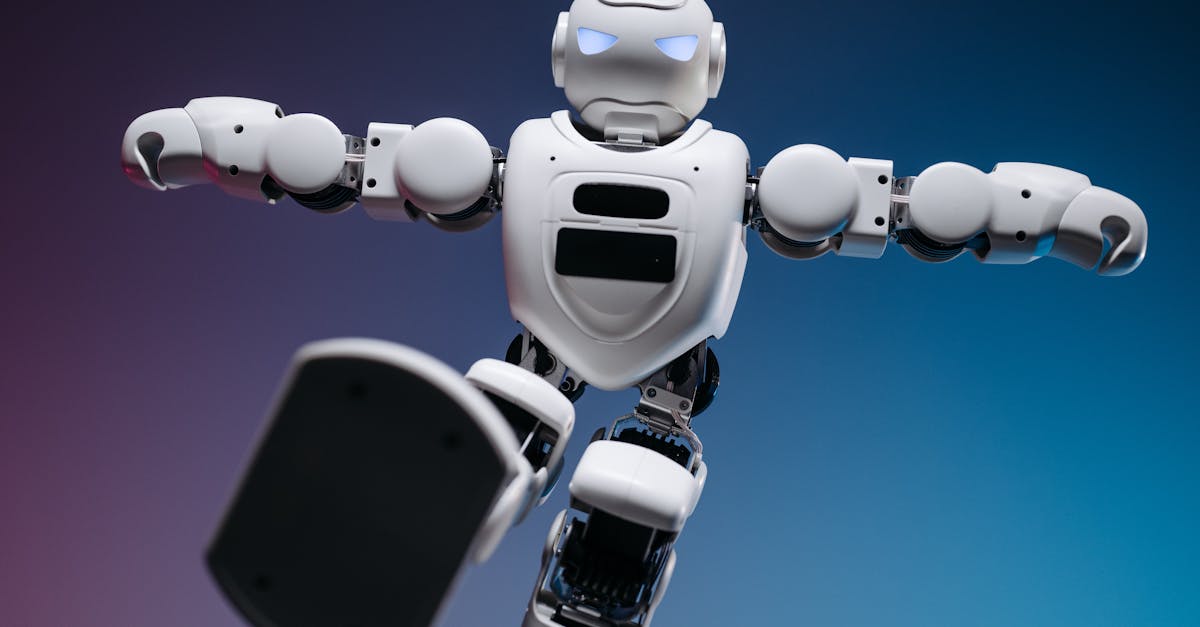
Figure AI: Shipping Hardware Meets Pilot Deployments in the Humanoid Race
Figure AI: Shipping Hardware Meets Pilot Deployments
Figure AI has emerged as one of the most prominent contenders in the global humanoid robotics sector, distinguished by its aggressive timeline and high-profile strategic partnerships. Founded in 2022 by Brett Adcock and Bill Breen, both veterans of Amazon Robotics, the company positions itself not merely as a research lab but as a hardware manufacturer intent on mass production. Unlike many competitors that rely on rendering videos or prototype demonstrations, Figure AI has moved toward shipping actual hardware units, a distinction that carries significant weight in the robotics industry.
The narrative surrounding Figure AI is often amplified by its investor roster, which includes OpenAI, Microsoft, and Nvidia. These partnerships suggest a convergence of advanced artificial intelligence, cloud computing infrastructure, and high-performance robotics hardware. However, RobotWale’s editorial assessment prioritizes shipping hardware first, pilot deployments second, and announcements last. This article evaluates the current state of Figure AI’s operations based on verifiable data rather than marketing projections.
Executive Leadership and Capital Backing
Brett Adcock, the CEO of Figure AI, previously served as the head of Amazon Robotics, where he oversaw the development of the Kiva warehouse automation system. His partner, Bill Breen, brings extensive experience in manufacturing and product design. This leadership team’s background in logistics and automation suggests a pragmatic approach to the challenges of humanoid robotics, focusing on utility and reliability over novelty.
The company’s funding rounds have attracted significant attention. In late 2023, Figure AI secured a $110 million Series C round, valuing the company at approximately $1.6 billion. This valuation is supported by the strategic involvement of OpenAI, Microsoft, and Nvidia. While financial backing alone does not guarantee commercial viability, the involvement of these specific entities indicates a high level of confidence in the company’s technology stack and long-term roadmap. Microsoft’s involvement often correlates with Azure cloud integration for edge computing, while Nvidia’s participation typically points toward GPU-accelerated training and simulation environments.
These partnerships are critical for the development of the AI models that drive the robots. The collaboration with OpenAI implies that Figure AI’s humanoid robots may leverage foundation models capable of understanding complex natural language instructions and executing multi-step tasks. However, the integration of these models into physical hardware remains a complex engineering challenge that distinguishes Figure AI’s roadmap from software-only competitors.
The Figure 01 Unit: Specifications vs. Speculation
The Figure 01 is the company’s flagship product. Unlike early concepts that were purely software simulations, the Figure 01 is a physical unit capable of navigating industrial environments. According to public demonstrations and press releases, the robot stands approximately 168 cm (5 feet 6 inches) tall, designed to operate in spaces built for human workers.
The technical specifications of the Figure 01 highlight a focus on dexterity and power. The robot is reported to utilize a custom-built actuation system that allows for fine manipulation of objects. This is crucial for tasks such as picking and placing items on a production line, a core competency for the automotive industry. The robot features a full-body design with articulated arms and hands, capable of handling delicate components without damage.
Power management is another key area of focus. The Figure 01 is designed to operate for extended shifts, likely utilizing high-capacity battery packs. While specific watt-hour ratings have not been universally standardized in public documentation, the requirement for continuous operation suggests a focus on energy efficiency comparable to current industrial mobile manipulators. The onboard compute unit is designed to handle real-time perception and decision-making, likely leveraging the Nvidia hardware ecosystem mentioned in their partnership agreements.
Figure AI has emphasized that the Figure 01 is not a toy but a deployable asset. This distinction is vital for B2B sales where reliability and uptime are paramount. The company has indicated that the hardware is in the shipping phase, meaning customers can theoretically receive units for pilot testing. This moves the company beyond the “concept” phase and into the “beta” phase of product maturity.
Pilot Deployments: The BMW Partnership
The most tangible evidence of Figure AI’s progress is its partnership with BMW. In 2024, BMW announced a collaboration to deploy Figure 01 robots at its Spartanburg plant in Germany. This facility produces the X5, X6, and X7 models, representing a high-value, high-complexity manufacturing environment. The deployment is described as a pilot program, intended to evaluate the robots’ performance in real-world factory conditions.
In this pilot, the Figure 01 units are tasked with inspecting seats and performing other logistical checks. This is a significant step because it moves the robots from a controlled demo stage to an active industrial workflow. The BMW partnership serves as a validation mechanism for the Figure 01’s ability to integrate with existing factory automation systems, such as the Industrial Internet of Things (IIoT) infrastructure already present at the plant.
It is important to note the scale of this deployment. While the exact number of units is not always publicly specified, pilot deployments in manufacturing usually involve small fleets, ranging from a few units to dozens. This allows the robotics company to gather data on failure modes, maintenance requirements, and integration costs. For Figure AI, this data is essential for refining the hardware before scaling to mass production.
The timeline for this partnership suggests a phased approach. Initial deployments are likely limited to specific workstations rather than full-line automation. This aligns with the current capabilities of humanoid robotics, where the technology is robust enough for specific tasks but not yet universally adaptable across all manufacturing processes. The success of this pilot will determine whether the Figure 01 can justify the capital expenditure required for broader adoption.
The AI Stack: OpenAI and Nvidia Integration
The Figure 01’s utility relies heavily on its artificial intelligence stack. Figure AI has publicly discussed the use of foundation models to enable robots to understand and execute complex commands. This approach aims to reduce the need for hard-coding every specific movement, allowing the robot to generalize tasks based on natural language instructions.
OpenAI’s involvement suggests that Figure AI is leveraging large language models (LLMs) for task planning. This allows the robot to interpret instructions like “inspect the seat cushion for defects” and break them down into actionable steps. However, the latency and reliability of these models in an industrial setting remain a challenge. Network connectivity and edge computing capabilities are critical to ensure that the robot can operate without constant cloud dependency.
Nvidia’s role likely extends to the training of the visual perception models. Using Nvidia GPUs, Figure AI can simulate environments to train the robots in virtual factories before deploying them in the physical world. This “embodied AI” approach allows for rapid iteration and safety testing. The combination of OpenAI’s reasoning and Nvidia’s compute power creates a robust foundation for the Figure 01’s operational capabilities.
Despite the impressive backing, the gap between AI capability and physical execution remains wide. While the robot can understand a command, the physical actuation must be precise. Figure AI’s engineering team must ensure that the hardware does not fail under the stress of repetitive movements. This requires rigorous testing and quality control, which is often more time-consuming than software development.
Market Implications for India
For Indian enterprises, the availability of Figure AI hardware is currently limited. Figure AI is a US-based entity, and there is no official direct sales channel for individual Indian companies to purchase Figure 01 units. The primary focus remains on the European and North American markets, with the BMW partnership serving as the initial anchor customer.
Importing humanoid robotics into India involves significant regulatory and logistical hurdles. The landed cost of a Figure 01 unit is expected to be high. While Figure AI has not released official pricing, industry estimates for advanced humanoid robots range from $100,000 to $200,000 per unit. When factoring in import duties, logistics, and Indian taxes (GST), the landed cost could exceed INR 1.5 crore ($180,000+) per unit.
Furthermore, the infrastructure required to support these robots is not yet widespread in India. High-bandwidth networks for edge computing and reliable power sources are prerequisites for continuous operation. Indian manufacturing sectors are increasingly automating, but the focus remains largely on collaborative robots (cobots) and fixed automation systems that offer lower entry costs.
Figure AI’s entry into the Indian market, if it occurs, will likely follow a B2B partnership model. This could involve licensing the technology or forming joint ventures with local system integrators. Until such partnerships are announced, Indian robotics developers should view Figure AI as a benchmark rather than an immediate procurement option.
Conclusion
Figure AI represents a significant shift in the humanoid robotics landscape by prioritizing shipping hardware over marketing concepts. The partnership with BMW provides a credible testbed for their technology, moving the company from the realm of speculation to operational reality. However, the path to mass adoption remains long, with significant challenges in cost, reliability, and infrastructure.
For the Indian market, Figure AI serves as a strategic indicator of where the global robotics industry is heading. While direct availability is currently non-existent, the technology may eventually trickle down through system integrators or become more affordable as manufacturing scales. Until then, Indian enterprises should monitor the BMW pilot results closely to gauge the true maturity of the Figure 01 platform.
References
- Figure AI Official Website: https://figure.ai
- BMW Group Press Release on Figure AI Partnership: https://www.bmwgroup.com/en/news/press-releases/2024/figure.html
- OpenAI Official Blog: https://openai.com
- Nvidia Official Website: https://www.nvidia.com
✓ Key takeaways
- •Hands-on view of Figure AI: Shipping Hardware Meets Pilot Deployments in the Humanoid Race inside our Figure AI library.
- •Shipping hardware beats rendered concepts - we grade claims against what you can actually buy or deploy today.
- •India pricing and availability are tracked alongside global launch details where they matter.
References
Related articles
More in Figure AI →