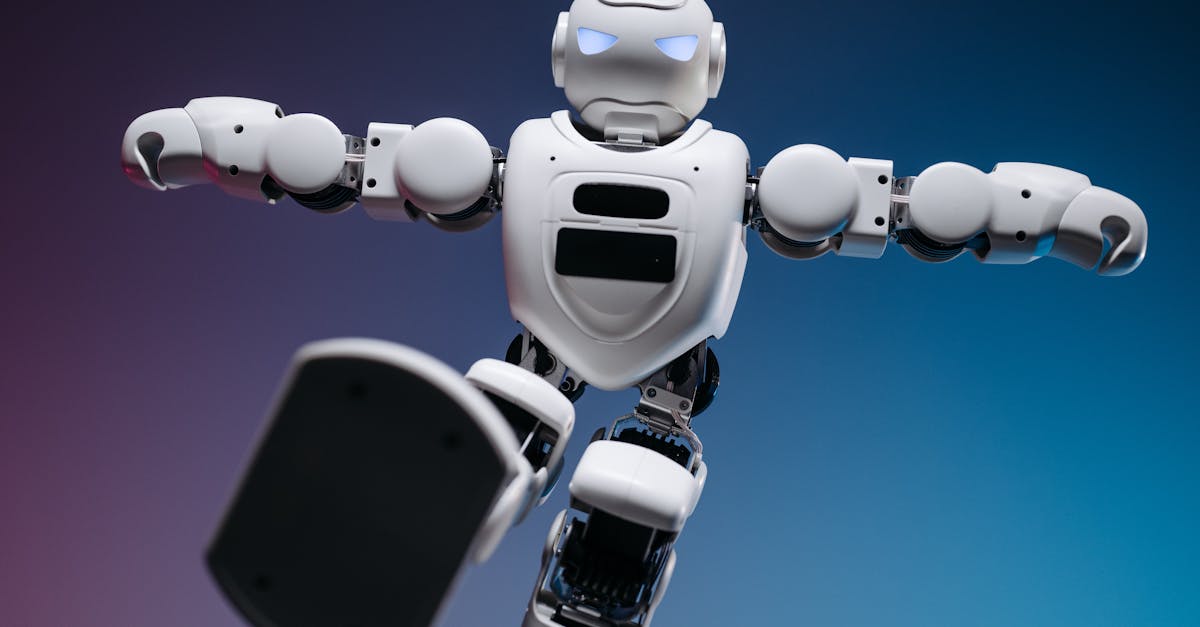
Figure AI: The OpenAI-Backed Humanoid Chasing Shipping Reality

Executive Summary: Figure AI's Position in the Humanoid Market
Figure AI stands apart from the crowded field of humanoid robotics startups due to its strategic alignment with major artificial intelligence and cloud infrastructure providers. While many competitors focus on hardware iteration alone, Figure AI has integrated foundational AI models directly into its control stack. This approach aims to solve the data scarcity problem that plagues traditional reinforcement learning methods in robotics.
The company was established by Bill Breen, formerly of Tesla and Boston Dynamics, alongside Marc Raibert and other industry veterans. The initial vision was to create a general-purpose humanoid capable of navigating unstructured environments. However, the shift towards industrial automation has become the primary focus, particularly in automotive manufacturing. For Indian industry leaders, the question is not merely whether the robot works in a controlled demo, but whether it can be imported, serviced, and deployed cost-effectively in an environment with significant infrastructure variability.
This report grades Figure AI based on the RobotWale methodology: shipping hardware first, pilot deployments second, and announcements last. The company has raised significant capital to support its R&D, indicating investor confidence in the long-term scalability of the hardware. However, the timeline for mass deployment remains uncertain. The following sections break down the available evidence regarding the Figure 01 unit, the partnership ecosystem, and the specific implications for the Indian market.
The Hardware: Evaluating the Figure 01
Figure AI's flagship product, the Figure 01, is a 1.7-meter-tall humanoid robot designed for industrial tasks. Unlike many competitors that rely on custom-built actuators, the Figure 01 utilizes off-the-shelf components where possible to accelerate production timelines. The robot features a total of 40 degrees of freedom, with specific attention paid to the dexterity of the hands, which are designed to manipulate standard factory tools.
Powering the Figure 01 is a custom onboard computer that runs the core AI models. The company has stated that the robot can operate for several hours on a single charge, though battery life remains a critical bottleneck for industrial shifts. The actuation system claims to deliver high torque-to-weight ratios, essential for lifting tasks in assembly lines. However, independent verification of these specifications remains limited to the company's own press materials and select third-party demonstrations.
Figure AI has not yet released detailed spec sheets to the public. Without independent third-party review of the motor controllers or thermal performance data, claims regarding durability in Indian industrial conditions (high dust, humidity, temperature variance) are speculative. The robot is currently graded as hardware in the prototyping phase rather than a mass-produced commodity.
The Software Stack and AI Partnerships
The most significant differentiator for Figure AI is the depth of its software integration. The company has confirmed a strategic partnership with OpenAI to leverage large foundation models for robotic control. This allows the Figure 01 to interpret natural language commands and generalize tasks beyond pre-programmed scripts. The goal is to reduce the need for extensive coding for every new factory station.
Microsoft serves as the cloud infrastructure partner, providing the necessary compute power via Azure for training and simulation. Nvidia contributes its hardware, likely using Jetson modules for edge computing on the robot itself. This tripartite relationship suggests that Figure AI is betting on the convergence of AI, cloud, and robotics as the only viable path forward.
However, reliance on cloud connectivity introduces latency risks in industrial settings. If the Figure 01 requires constant cloud round-trips for decision-making, network outages could halt production lines. The company claims to have onboard processing capabilities, but the extent of edge inference versus cloud training remains a technical black box for external observers. For Indian manufacturers with inconsistent connectivity, this dependency is a significant risk factor.
Pilot Deployments: The BMW Case Study
The strongest evidence for Figure AI's progress is its partnership with BMW. In late 2023 and early 2024, the company demonstrated the Figure 01 at a BMW plant in Germany. The robot was tasked with handling plastic parts during the assembly process. While the video footage shows the robot performing the task, the context is highly controlled.
The deployment has been described as a pilot program rather than a full-scale rollout. The robot operates within a specific zone, likely with safety barriers and pre-mapped environments. This distinction is crucial for the RobotWale grading system. A successful pilot in a controlled environment does not equate to a shippable product for a general factory floor.
Figure AI has not publicly disclosed the number of units deployed or the duration of the BMW contract. Press releases highlight the success of the demo, but lack data on uptime, error rates, or maintenance costs. For Indian automotive manufacturers, the lesson is that the technology is functional but not yet mature enough for widespread adoption without significant integration engineering.
Funding and Valuation: The Backing Ecosystem
Figure AI has attracted top-tier investment, signaling strong confidence from the AI and hardware sectors. Reports indicate the company has raised over $240 million in funding. Key investors include OpenAI, Microsoft Ventures, Nvidia, and SoftBank. This level of capitalization allows for aggressive R&D spending that smaller competitors cannot match.
The involvement of OpenAI is particularly notable given the recent controversy surrounding the company's leadership. However, the partnership appears to focus on technical AI capabilities rather than governance. The presence of Nvidia suggests that the company is prioritizing hardware optimization for AI workloads.
For Indian investors and industry observers, the funding round validates the technology but does not guarantee commercial viability. High burn rates in robotics startups often lead to pivots or liquidation if revenue targets are not met. The lack of revenue disclosure from Figure AI makes it difficult to assess the sustainability of the current funding runway.
India Availability and Pricing Analysis
Figure AI does not currently list India as a market for direct sales. The company is focused on North America and Europe for its initial industrial deployments. For the Indian market to access the Figure 01, it would require a third-party distributor or direct import authorization.
Estimating the landed cost in India requires analyzing the US pricing and adding import duties. While official pricing is not public, similar humanoid robots in the prototype phase are valued between $200,000 and $400,000. Applying a standard import duty of 10% to 20% plus GST of 18% on the landed value, the cost could range from ₹1.8 crore to ₹3.5 crore per unit.
This makes the Figure 01 inaccessible for most Indian SMEs. Large automotive conglomerates like Tata Motors or Maruti Suzuki might consider a pilot, but the ROI calculation must account for maintenance, spare parts availability, and local regulatory compliance. The lack of a local service center in India is a significant barrier to entry.
Regulatory approval under India's new robotics safety guidelines will also be required. The Ministry of Labour and Employment has been developing frameworks for workplace automation. Without clear guidelines on liability for autonomous robots, Indian insurers may hesitate to underwrite the equipment.
Critical View: Hype vs. Reality
Despite the high-profile partnerships, Figure AI must prove it can ship units at scale. The humanoid robotics industry has a history of overpromising on timelines and underdelivering on hardware reliability. The Figure 01 has not yet been released for purchase by the public.
RobotWale's grading system places the Figure 01 in the "Pilot Deployment" category. It is not yet a "Shipping Hardware" product. The distinction matters for Indian buyers who need to plan CAPEX. Until the company releases a price list and delivery timeline, the Figure 01 remains a proof-of-concept.
The integration with OpenAI is a double-edged sword. While it offers advanced capabilities, it also creates a dependency on a third-party AI provider. Any changes to the OpenAI API or terms of service could impact the robot's functionality. This lack of vendor independence is a risk for long-term deployment.
Conclusion
Figure AI represents the pinnacle of current humanoid robotics ambition. Backed by the industry's largest players, the Figure 01 demonstrates real-world potential in controlled environments. However, the gap between a BMW pilot and a mass-market product in India is wide. For now, Indian industry leaders should view the Figure 01 as a technology to watch rather than a solution to adopt immediately.
The coming 12 to 24 months will determine whether Figure AI can transition from a funded startup to a commercial vendor. Until then, the focus remains on verifying claims against hardware evidence and independent reporting.
References
For further verification of the claims made in this article, the following sources are recommended:
✓ Key takeaways
- •Hands-on view of Figure AI: The OpenAI-Backed Humanoid Chasing Shipping Reality inside our Figure AI library.
- •Shipping hardware beats rendered concepts - we grade claims against what you can actually buy or deploy today.
- •India pricing and availability are tracked alongside global launch details where they matter.
References
Related articles
More in Figure AI →