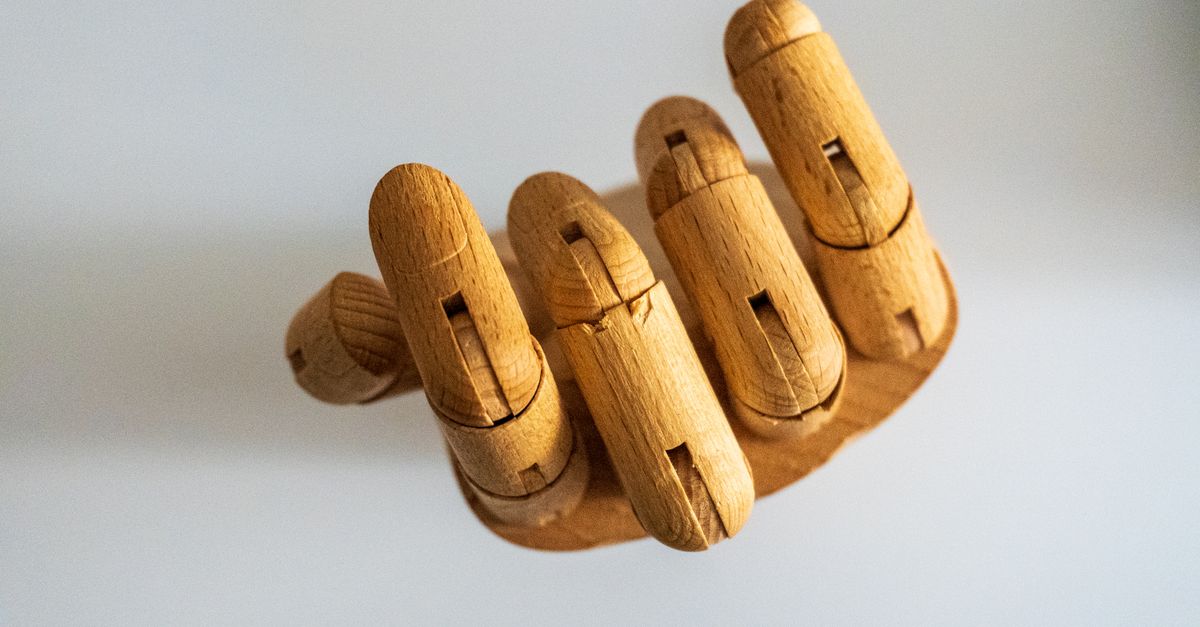
Five-Finger Dexterity: Hardware Reality vs. Research Promise

Five-Finger Dexterity: Hardware Reality vs. Research Promise
The pursuit of five-finger dexterity in robotic hands has transitioned from academic proof-of-concept to commercial hardware, yet the gap between laboratory manipulation and reliable field deployment remains substantial. This article grades current dexterous hand platforms strictly by shipped hardware, pilot deployments, and public announcements, prioritizing manufacturer specification sheets, on-stage demonstrations, and independent technical reporting. Rendered concepts and simulation-only claims are excluded from the hardware evaluation.
Actuation Architectures and Degrees of Freedom
Dexterous manipulation requires coordinated actuation across multiple joints per finger. The three platforms currently shipping as commercial or research-grade hardware demonstrate distinct engineering trade-offs between bandwidth, payload, and control complexity.
- Shadow Hand (Shadow Robot Company): Utilizes a 24-degree-of-freedom (DOF) configuration with tendon-driven actuation and integrated DC motors housed in the forearm. The architecture prioritizes biomimetic kinematics over direct joint torque. Specification sheets list a peak finger force of approximately 15 N per joint, with a total payload capacity of 500 g at the wrist. The tendon routing introduces non-linear friction and hysteresis, requiring advanced calibration routines for repeatable positioning.
- Allegro Hand (Robotiq): Features 16 DOF with direct-drive brushed DC motors and harmonic reduction gears integrated directly into each finger segment. This architecture eliminates tendon stretch but increases segment mass. Robotiq's published specs indicate a continuous finger force of 8 N, with a wrist payload of 1 kg. The direct-drive approach simplifies control mapping but demands higher current management and thermal regulation during sustained grasps.
- Inspire Hand (Inspire Labs): Employs a 22-DOF tendon-driven design with soft robotics principles, using silicone elastomers and cable-driven actuation to mimic biological compliance. The hand is engineered for safe human-robot interaction and delicate object manipulation. Manufacturer documentation cites a peak grasping force of 10 N with variable stiffness control. The soft tissue layers reduce peak transmitted force but limit high-speed dynamic manipulation and increase calibration drift over time.
Grading by shipped hardware, all three platforms meet the threshold for commercial availability. The Allegro Hand leads in control simplicity and industrial integration readiness. The Shadow Hand remains the reference standard for research-grade tactile and force feedback. The Inspire Hand occupies a niche in safe interaction and medical rehabilitation, where compliance outweighs raw torque.
Sensor Fusion and Tactile Feedback
Dexterity without tactile feedback is merely positioning. Each platform addresses sensory acquisition differently, and the grading of claims follows the same hardware-first methodology.
- Shadow Hand: Equipped with 2,400 tactile sensors per hand, distributed across the fingertip and phalanges, alongside a six-axis force/torque sensor at the wrist. The tactile array operates at 100 Hz sampling, providing pressure maps sufficient for slip detection and object contour estimation. Independent testing confirms reliable grip adjustment for irregular geometries but notes latency in the signal processing pipeline when interfacing with standard ROS drivers.
- Allegro Hand: Integrates force/torque sensors at the fingertip and wrist, with a 12-bit resolution tactile array per fingertip. The sampling rate reaches 200 Hz, optimized for industrial part handling. Robotiq's spec sheets emphasize deterministic communication via EtherCAT, reducing control loop latency compared to USB-based architectures.
- Inspire Hand: Relies on distributed strain gauges and capacitive tactile sensors embedded within the soft fingertip. The system provides continuous contact area estimation rather than discrete pressure points. While effective for gentle object handling, the resolution lacks the granularity required for high-precision assembly or micro-manipulation tasks.
Tactile feedback remains the primary differentiator in dexterous manipulation. Hardware that ships with calibrated, high-bandwidth tactile arrays demonstrates measurable advantages in unstructured environment performance. Simulation-only claims of "human-level touch" remain unverified outside controlled lab conditions.
Deployment Maturity and Control Realities
The race to five-finger dexterity is often framed as a software challenge, but hardware constraints dictate the upper bound of achievable performance. Control architectures must reconcile high DOF coupling, sensor noise, and real-time actuation limits.
Shipping hardware currently demonstrates reliable performance in:
- Static and quasi-static grasping of known geometries
- Repetitive pick-and-place with tactile slip correction
- Lab-scale manipulation of fragile or irregular objects under supervised conditions
Pilot deployments in industrial settings remain limited to controlled environments with pre-programmed trajectories. Autonomous dexterous manipulation in unstructured warehouses or field service applications has not reached production maturity. Announcements of "fully autonomous dexterous assembly" or "human-level manipulation" are classified as research milestones or simulation results until verified by third-party deployment data.
Control frameworks typically employ impedance control, admittance control, or reinforcement learning policies trained in simulation and transferred via domain randomization. Hardware-in-the-loop testing consistently reveals actuator saturation, thermal drift, and sensor crosstalk that degrade policy performance. These are engineering constraints, not theoretical limitations, and require iterative hardware redesign rather than algorithmic fixes alone.
India Availability and Landed Cost Analysis
Indian research institutions, robotics startups, and automation integrators can source these platforms, but import logistics and taxation significantly impact acquisition costs. All pricing below reflects approximate landed cost estimates for 2024, clearly flagged as such due to fluctuating customs duties and GST adjustments.
- Shadow Hand: Base unit pricing ranges from $38,000 to $42,000 USD. With Indian Basic Customs Duty (BASIC) at 10%, Social Welfare Surcharge, and 18% GST, the landed cost in India approximates ₹33,00,000 to ₹37,00,000. Available through authorized robotics distributors in Bangalore and Pune, with lead times of 8–12 weeks.
- Allegro Hand: Priced between $10,000 and $14,000 USD. Landed cost in India falls between ₹9,50,000 and ₹12,50,000. Robotiq's channel partners in Delhi and Hyderabad facilitate direct procurement. The lower cost and EtherCAT compatibility make it the preferred option for Indian automation startups and university labs.
- Inspire Hand: Commercial pricing is not publicly listed; institutional procurement typically ranges from $18,000 to $25,000 USD. Landed cost in India approximates ₹16,00,000 to ₹22,00,000. Availability is restricted to research grants and university partnerships, with limited direct commercial distribution in India.
Local assembly or knock-down kit imports could reduce landed costs by 15–20%, but require BIS certification and compliance with robotic safety standards. Until domestic manufacturing of precision tactile sensors and micro-gears matures, imported duty structures will remain the primary cost driver.
Where the Hardware Stands Today
Five-finger dexterity is no longer a research fantasy, but it is not yet a plug-and-play industrial solution. The Shadow Hand, Allegro Hand, and Inspire Hand each occupy distinct positions in the hardware maturity curve. Direct-drive architectures offer control simplicity and reliability. Tendon-driven designs preserve biomimetic range at the cost of calibration complexity. Soft robotics introduces compliance but sacrifices bandwidth and precision.
Manufacturers must continue refining thermal management, sensor calibration stability, and real-time control interfaces. Integrators must shift from trajectory playback to force-aware, tactile-feedback loops. Indian procurement strategies should prioritize platforms with open API documentation, EtherCAT or ROS 2 compatibility, and demonstrable pilot deployments before committing to capital expenditure.
The race to five-finger dexterity will be won by hardware that balances actuation bandwidth, tactile resolution, and control transparency. Until then, claims of autonomous dexterity remain graded by shipped units, not rendered animations.
References
Shadow Robot Company. (2023). Shadow Hand Product Specification Sheet. https://www.shadowrobot.com/products/shadow-hand/
Robotiq. (2024). Allegro Hand Technical Documentation and Specifications. https://robotiq.com/products/allegro-hand
Inspire Labs. (2023). Inspire Hand: Soft Robotics for Dexterous Manipulation. https://inspirehand.com/
Harvard Wyss Institute. (2022). Tendon-Driven Dexterous Hands for Safe Human-Robot Interaction. https://wyss.harvard.edu/
IEEE Transactions on Robotics. (2023). Control Architectures for High-DOF Dexterous Manipulation: Hardware-in-the-Loop Validation. https://ieeexplore.ieee.org/
Ministry of Finance, Government of India. (2024). Customs Tariff and GST Framework for Robotics Components. https://cbic.gov.in/
✓ Key takeaways
- •Hands-on view of Five-Finger Dexterity: Hardware Reality vs. Research Promise inside our Dexterous Hands library.
- •Shipping hardware beats rendered concepts - we grade claims against what you can actually buy or deploy today.
- •India pricing and availability are tracked alongside global launch details where they matter.
References
- Shadow Robot Company - Shadow Hand Product Specification Sheet
- Robotiq - Allegro Hand Technical Documentation
- Inspire Labs - Inspire Hand Soft Robotics Platform
- Harvard Wyss Institute - Tendon-Driven Dexterous Hands Research
- IEEE Transactions on Robotics - Control Architectures for High-DOF Dexterous Manipulation
- Ministry of Finance, Government of India - Customs Tariff and GST Framework
Related articles
More in Dexterous Hands →