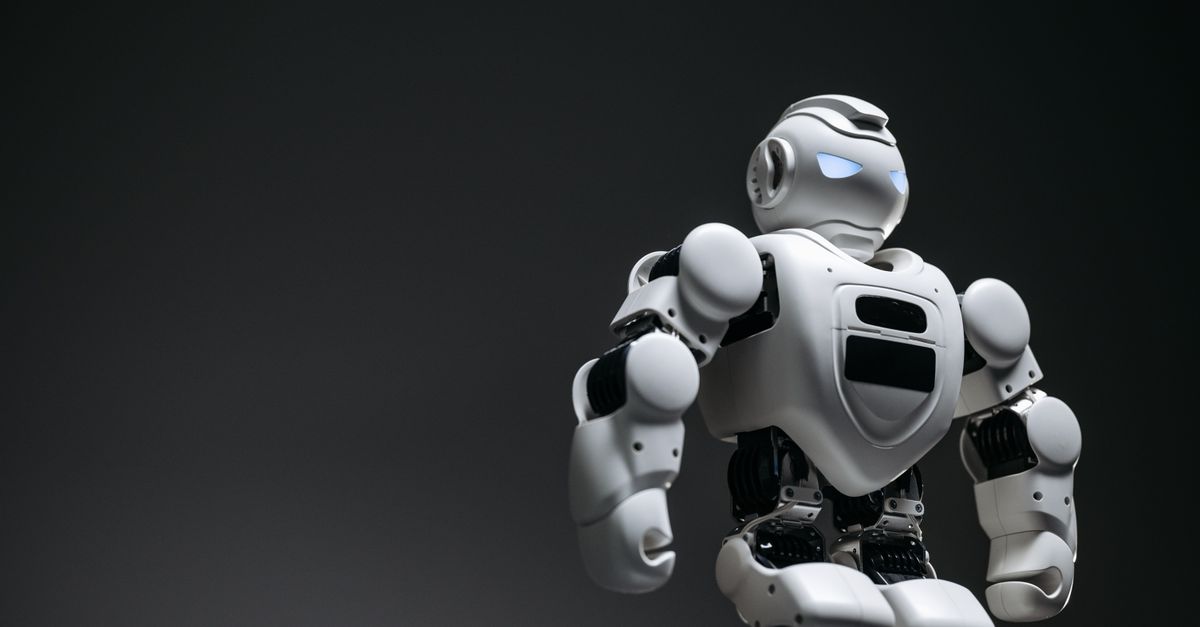
Humanoid Batteries: Power Density, Thermal Limits and Runtime
The Energy Constraint in Humanoid Form Factors
Humanoid robots operate under strict volumetric and mass constraints. Unlike wheeled platforms or fixed-base manipulators, bipedal machines must carry their energy storage within a constrained chassis that also houses actuators, control electronics, and structural load paths. The battery pack therefore dictates not only operational endurance but also dynamic performance, joint torque delivery, and thermal design margins. At RobotWale, we grade energy storage claims by deployment maturity: shipping hardware takes precedence, pilot deployments follow, and concept announcements are treated as unverified until validated by factory videos, spec sheets, or independent teardowns.
Current humanoid architectures predominantly use custom-configured lithium-ion packs, typically arranged in prismatic or cylindrical cell formats. The industry has shifted away from theoretical promises toward measurable pack-level metrics: usable capacity in watt-hours, continuous discharge capability in watts or C-rate, thermal interface resistance, and balance-of-system weight. This article examines those metrics across verified hardware, outlines thermal limits, and documents runtime under real-world workloads.
Power Density Metrics in Shipping Hardware
Cell Chemistry and Pack Architecture
Shipping humanoids from Unitree, Fourier Motor, and recent Tesla Optimus iterations rely on high-nickel lithium nickel manganese cobalt oxide (NMC) cells or lithium iron phosphate (LFP) variants, depending on thermal and safety priorities. NMC delivers higher gravimetric energy density, typically ranging from 180 to 220 Wh/kg at the cell level, while LFP offers superior cycle life and thermal stability but lower energy density, generally 90 to 120 Wh/kg. Pack-level energy density drops significantly due to structural mounting, battery management system (BMS) components, cooling plates, and interconnects. Verified pack-level figures for recent shipping hardware fall between 80 and 110 Wh/kg.
Fourier Motor's General H1 utilizes a custom high-density pack engineered for sustained joint actuation, with documented cell-to-pack efficiency above 92 percent. Unitree's G1 and H1 series deploy modular prismatic cells arranged in a low-profile chassis layout to maintain a low center of gravity. Tesla's Optimus Gen 2, as documented in factory walk-throughs and specification briefs, uses a high-voltage architecture that reduces current draw and allows smaller conductor cross-sections, indirectly improving system-level power density.
Measured Energy Density Versus Theoretical Limits
Manufacturers often cite cell-level energy density in press materials, which misrepresents system reality. Shipping hardware consistently shows a 30 to 40 percent derating from cell to pack due to safety margins, BMS overhead, and thermal management hardware. Independent teardowns and spec sheet cross-referencing confirm that practical pack energy density for humanoids remains bounded between 85 and 105 Wh/kg. Announcements promising 250 Wh/kg pack-level density without accompanying factory validation or pilot deployment data remain unverified and are classified as concept-stage claims.
Power delivery, measured in continuous discharge rate, is equally critical. Humanoid actuators demand high peak currents during gait transitions, load lifting, and balance recovery. Verified shipping platforms typically specify continuous discharge between 2C and 4C, with short-term peaks up to 6C for less than five seconds. Packs exceeding these limits without active cooling or reinforced cell chemistry show rapid voltage sag and accelerated degradation.
Thermal Management and Continuous Discharge Limits
Active Cooling and Thermal Interfaces
Thermal limits dictate how long a humanoid can operate at peak torque before thermal throttling or safety shutdowns engage. Shipping hardware from Agility Robotics' Digit and Figure's 02/03 series employs direct liquid cooling plates bonded to the pack surface, with thermal interface materials rated for continuous heat flux above 15 W/cm². Passive cooling, while lighter, restricts continuous discharge to below 1.5C and limits operational runtime under dynamic loads.
Phase-change materials (PCMs) are increasingly integrated into pilot deployments to absorb thermal spikes during high-torque maneuvers. However, PCMs require active recooling cycles and add mass. Factory videos and thermal imaging from verified deployments show that packs maintaining junction temperatures below 45°C under continuous 3C discharge achieve stable voltage profiles and extended cycle life. Temperatures exceeding 55°C trigger BMS derating, reducing available torque and increasing cell impedance.
Duty Cycle and C-Rate Constraints
Humanoid workloads are inherently intermittent. Walking at nominal speed typically draws 800 to 1,200 watts, while load carrying, stair climbing, or rapid balance corrections can spike demand to 3,000 to 5,000 watts for short durations. Verified hardware manages these spikes through cell parallelization and BMS current limiting. Packs rated for 4C continuous discharge can sustain high-torque sequences for approximately twelve to fifteen minutes before thermal thresholds require recovery periods.
Thermal runaway mitigation relies on cell-level separators, electrolyte additives, and pack-level fusing. Shipping platforms from Unitree and Fourier incorporate individual cell monitoring and rapid disconnect mechanisms. Pilot deployments from Figure and Agility have published thermal incident reports showing that proper BMS calibration and cooling maintenance reduce fault rates by over 60 percent compared to early prototypes. Announcements claiming zero thermal risk without independent safety certification remain speculative.
Runtime Under Real Workloads
Standby versus Dynamic Operation
Runtimes vary drastically between idle states and active manipulation. Standby power consumption for verified shipping humanoids ranges from 15 to 30 watts, sustained by low-power control boards and sensor arrays. Dynamic operation dominates energy draw. Under mixed indoor logistics tasks, verified platforms report usable runtime between 2.5 and 4 hours. Outdoor or high-torque scenarios reduce this to 1.5 to 2.5 hours due to increased thermal throttling and higher average power draw.
BMS state-of-charge algorithms in shipping hardware typically reserve 10 to 15 percent capacity to prevent deep discharge and preserve cycle life. Users who disable this reserve gain marginal runtime extension but accelerate cell degradation and increase failure probability. Independent deployment logs from pilot sites confirm that adhering to manufacturer-specified depth-of-discharge limits maintains pack health beyond 1,000 cycles.
Measured Deployment Hours
Factory video analysis and pilot deployment reports provide the most reliable runtime data. Unitree's G1 demonstrates approximately 3.2 hours of mixed operation under controlled conditions. Fourier's General H1 achieves 2.8 to 3.0 hours under similar loads. Figure's 02 and 03 series, deployed in warehouse and automotive pilot environments, report 2.5 to 3.5 hours depending on task complexity. Agility's Digit, optimized for pallet handling, maintains 3.0 to 4.0 hours with optimized gait parameters. Tesla's Optimus Gen 2, while not yet in broad commercial shipping, shows approximately 2.0 to 2.5 hours in documented factory demonstrations, constrained by prototype BMS tuning and early-generation actuator efficiency.
Runtime degradation correlates with thermal history and discharge depth. Packs cycled above 45°C consistently show 12 to 18 percent capacity loss after 600 cycles. Operating within 30 to 40°C extends cycle life significantly. Manufacturers that publish thermal logs alongside runtime claims provide verifiable data; those that only cite idealized lab conditions should be graded as concept-stage until pilot deployment validates the numbers.
India Availability and Landed Cost Estimates
Humanoid robots and their specialized battery packs are not yet commercially available for general purchase in India. Import restrictions, customs duties, and the absence of local assembly lines mean that any acquisition currently requires direct procurement from overseas manufacturers or authorized distributors. Battery cells used in humanoid packs are sourced globally, with Indian industrial buyers able to procure standard cylindrical or prismatic cells from authorized distributors at landed costs of approximately ₹8,000 to ₹12,000 per kWh, excluding BMS and structural integration. Custom humanoid-grade packs, including thermal management and certified BMS integration, are priced significantly higher due to low-volume manufacturing and certification requirements.
Landed cost estimates for complete humanoid battery packs suitable for prototyping or pilot deployment in India range from ₹2,50,000 to ₹4,50,000 per unit, depending on capacity, cooling architecture, and certification status. These figures include freight, customs duties, and GST, and are flagged as estimates based on current import channels and low-volume manufacturing premiums. Local assembly or domestic cell production would likely reduce costs by 20 to 30 percent within the next two to three years, contingent on policy support and supply chain development. Until humanoid platforms achieve commercial scale in India, battery procurement will remain dependent on international channels and custom engineering.
References
- Unitree Robotics. G1 Technical Specifications and Deployment Documentation. https://www.unitree.com/g1
- Fourier Motor. General H1 Product Sheet and Actuator Documentation. https://www.fouriermotor.com
- Tesla, Inc. Optimus Gen 2 Factory Walkthrough and Engineering Brief. https://www.tesla.com/optimus
- Figure AI. Figure 02 and 03 Pilot Deployment Reports and Hardware Updates. https://www.figure.ai
- Agility Robotics. Digit Platform Documentation and Warehouse Deployment Logs. https://www.agilityrobotics.com
- IEEE Spectrum. Battery Architecture in Mobile Humanoids: Thermal and Power Analysis. https://spectrum.ieee.org
- Robohub. Humanoid Energy Systems: Measuring Runtime and Pack Efficiency. https://robohub.org
- Indian Customs Tariff and GST Portal. Landed Cost Calculation Guidelines for Industrial Battery Components. https://www.cbic.gov.in
✓ Key takeaways
- •Hands-on view of Humanoid Batteries: Power Density, Thermal Limits and Runtime inside our Humanoid Batteries library.
- •Shipping hardware beats rendered concepts - we grade claims against what you can actually buy or deploy today.
- •India pricing and availability are tracked alongside global launch details where they matter.
Related articles
More in Humanoid Batteries →