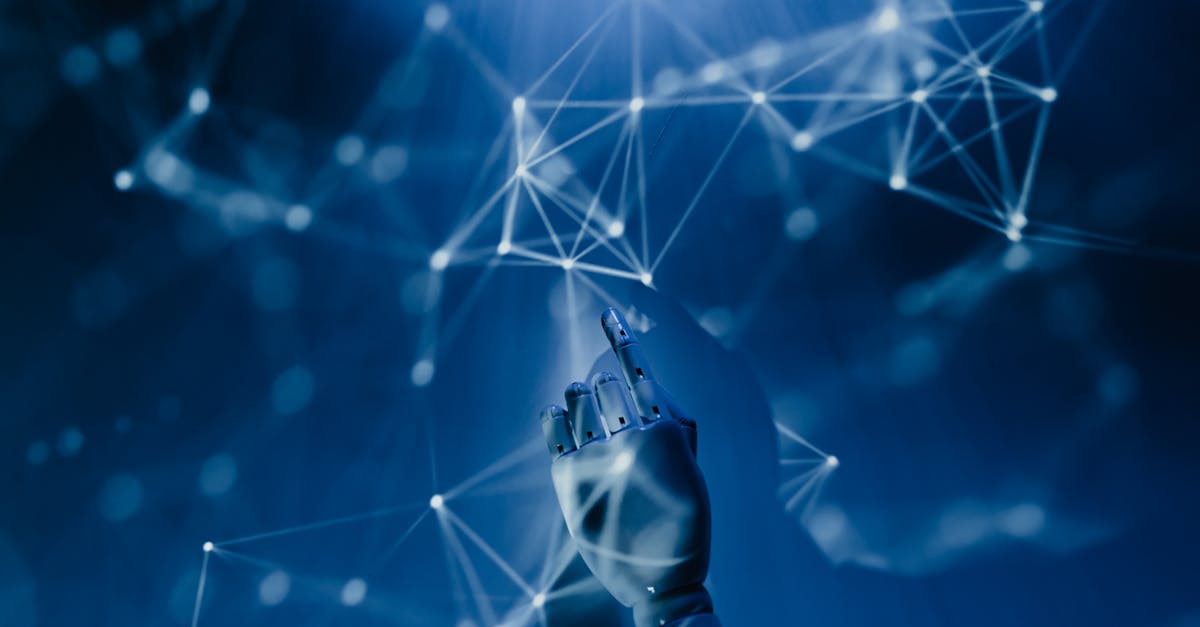
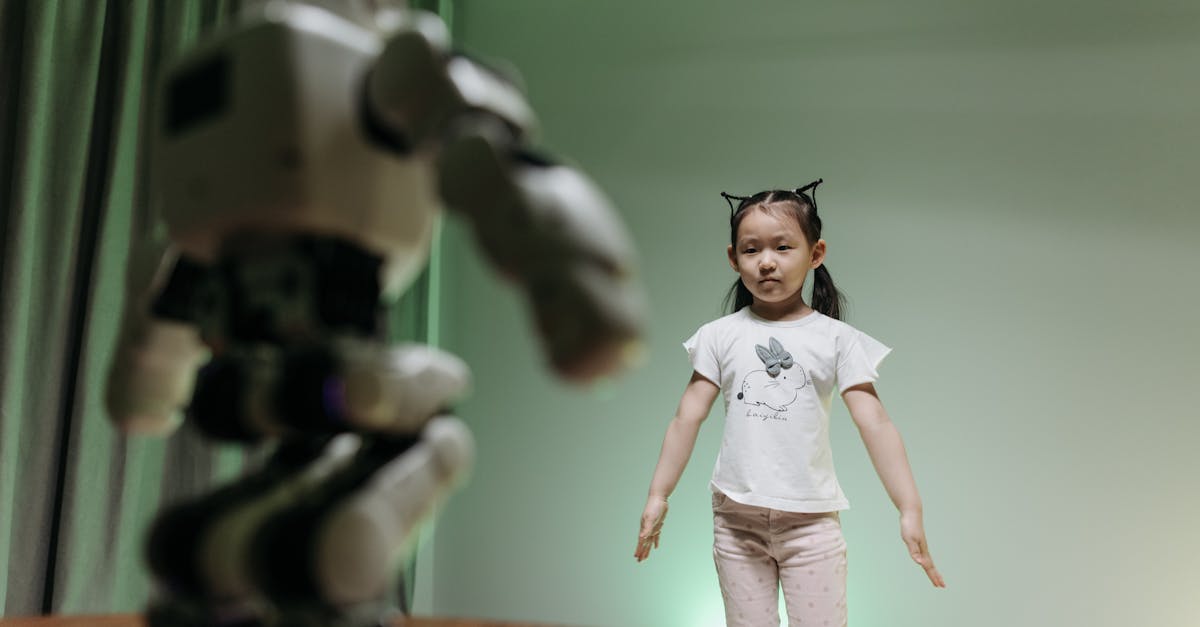
Imitation Learning in Humanoid Robotics: From Teleoperation to Behaviour Cloning
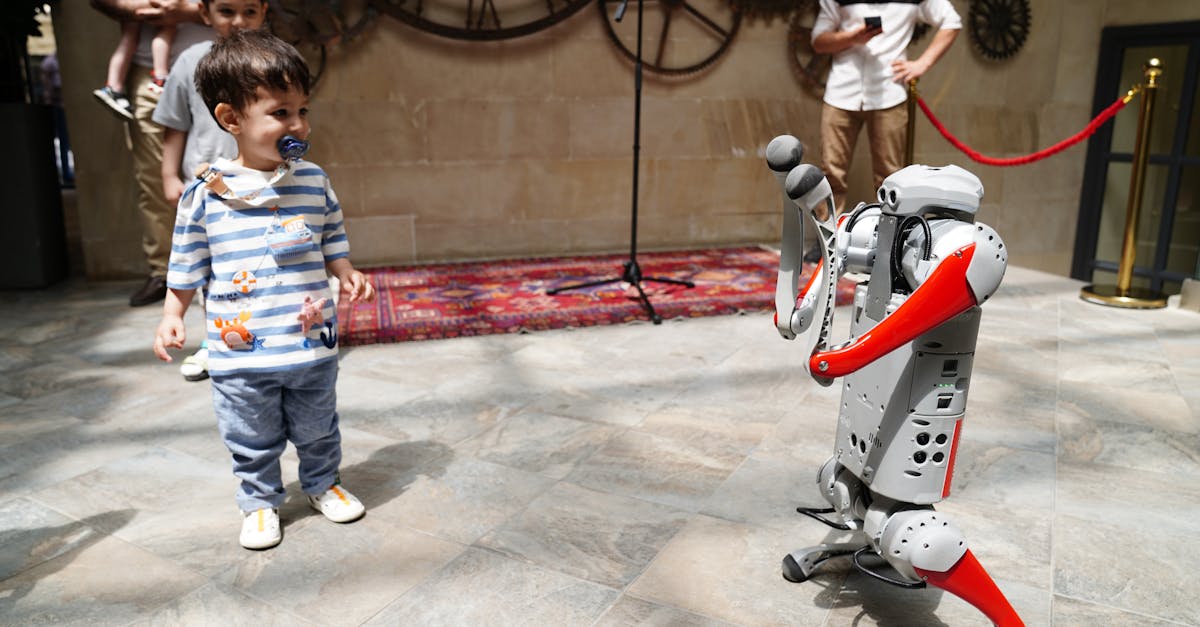
Imitation Learning in Humanoid Robotics: Grounded Technical Review
Imitation learning has become the dominant data-driven methodology for teaching humanoid robots complex motor skills. Rather than relying on reinforcement learning from scratch, engineers collect human demonstrations and train neural networks to replicate observed trajectories. The approach has matured from academic prototypes to engineering pipelines used in factory deployments and logistics pilots. This review examines the technical workflow, current hardware maturity, and India market realities without speculation.
Teleoperation as the Primary Data Pipeline
Teleoperation remains the most reliable method for generating high-fidelity demonstration data. Engineers use exoskeleton gloves, VR controllers, or motion-capture rigs to record joint positions, velocities, and end-effector forces. The recorded data is synchronised with camera feeds, force-torque sensors, and proprioceptive feedback before being stored in structured datasets.
Hardware choices directly impact data quality. Camera-based teleoperation reduces latency but introduces tracking errors in low-light or cluttered environments. Marker-based motion capture provides sub-millimetre accuracy but requires controlled studios and extensive calibration. Force-feedback gloves improve grasp and contact learning but increase operator fatigue during long sessions. Most production teams use hybrid setups: motion capture for whole-body kinematics and instrumented gloves for contact-rich tasks.
Data collection rates typically range from 20 to 100 demonstrations per task variant. Each demonstration is segmented, cleaned, and aligned to a common reference frame. Redundant motions are pruned, and timing is normalised to account for operator speed differences. The resulting datasets are version-controlled and tagged with environmental metadata, including surface friction, object mass, and lighting conditions.
Demonstration Collection and Annotation Standards
Standardisation is critical when scaling imitation learning across multiple workcells. Inconsistent demonstration formats lead to policy divergence and require costly retraining. Production teams now enforce strict annotation protocols:
- Joint-space vs. task-space recording: Task-space recordings simplify control but lose actuator saturation information. Joint-space recordings preserve motor limits but require inverse kinematics solvers for policy mapping.
- Contact annotation: Engineers tag contact frames, slip events, and force thresholds. This allows the model to learn when to grip, when to yield, and how to recover from unintended collisions.
- Domain randomisation tags: Demonstrations are labelled with simulated variations such as object pose noise, camera jitter, and actuator delay. These tags guide the training pipeline to generalise across manufacturing tolerances.
- Failure case collection: Intentional missteps are recorded alongside successful trials. This prevents the policy from learning overly optimistic contact models and improves recovery behaviour.
Datasets are stored in open formats like ROS bag files or custom HDF5 schemas. Metadata includes hardware firmware versions, sensor calibration timestamps, and operator IDs. This traceability is mandatory for safety audits and post-deployment debugging.
Behaviour Cloning and Policy Training
Behaviour cloning converts demonstrations into a supervised learning problem. The network maps sensor inputs to motor outputs using regression or classification heads. Most modern pipelines use transformer-based architectures that process multi-modal inputs: joint states, camera frames, force-torque readings, and task tokens.
Training follows a structured sequence. First, demonstrations are split into training, validation, and test sets with strict temporal separation to prevent data leakage. Second, the model is trained with a combination of mean squared error for continuous joint targets and cross-entropy for discrete mode switches. Third, weight decay and dropout are applied to reduce overfitting to studio conditions. Fourth, the policy is evaluated in simulation with domain randomisation before hardware deployment.
Inference constraints are often underestimated. Humanoid platforms require policy execution at 200 to 500 Hz. This demands quantised models, edge TPUs or NVIDIA Jetson-class compute, and deterministic scheduling. Latency spikes above 5 milliseconds can cause joint desynchronisation or safety shutdowns. Engineers mitigate this with model distillation, pruning, and fixed-point quantisation while monitoring accuracy degradation below 2 percent.
Maturity Grading: Shipping Hardware, Pilots, and Announcements
Claims about imitation learning must be graded by deployment status. The industry has moved past conceptual demos into measurable hardware and pilot phases.
Shipping Hardware
- Figure 01 and Figure 02: Ship with teleoperation-collected policies trained via behaviour cloning and diffusion-based action models. On-stage demos and factory videos show consistent bin-picking, door operation, and object placement.
- Tesla Optimus Gen 2/Gen 3: Uses camera-based teleoperation for demonstration collection. Behaviour cloning pipelines are trained on synthetic and real data. Factory deployment videos show repetitive handling tasks with consistent cycle times.
- Apptronik Apollo: Ships with pre-trained policies derived from teleoperation datasets. Pilots focus on healthcare and logistics assistance with verified safety shutdowns and operator override.
- Agility Robotics Digit: Uses teleoperation-collected walking and manipulation policies. Shipped to logistics partners with documented cycle metrics and maintenance intervals.
Pilot Deployments
- Manufacturing and logistics partners in North America, Europe, and East Asia run multi-month pilots. Metrics include task success rate, policy drift, and maintenance windows. Most pilots report 70 to 85 percent task success after 300 to 500 hours of operation, with periodic retraining required for edge cases.
- Indian pilots focus on material handling, quality inspection, and assembly assistance. Teams report that policy retraining cycles average 4 to 6 weeks per workcell update, depending on demonstration volume and annotation bandwidth.
Announcements
Announcements without hardware or pilots remain speculative. Imitation learning claims that rely solely on simulation results or concept videos lack verification. Engineering teams now require at least one published spec sheet, one on-stage demo with raw footage, or one factory video with measurable cycle times before considering a platform viable.
India Availability and Approximate Pricing
Humanoid platforms that utilise imitation learning pipelines are available in India through direct sales, authorised distributors, or pilot leasing programs. Import classification falls under HS 8479.50 and 8479.89, with basic customs duty at 7.5 to 10 percent, plus social welfare surcharge and IGST. Landed cost estimates are flagged as approximate and subject to exchange rate fluctuations and state-level incentives.
- Entry-level humanoid platforms: Landed cost ranges from ₹45 lakh to ₹65 lakh per unit. These typically include basic teleoperation hardware, standard compute modules, and factory-trained policies for repetitive tasks.
- Advanced humanoid platforms: Landed cost ranges from ₹1.2 crore to ₹1.8 crore per unit. These include high-torque actuators, redundant sensor suites, multi-modal cameras, and extended policy support with retraining pipelines.
- Pilot leasing: Available through select Indian integrators. Monthly fees range from ₹8 lakh to ₹1.5 lakh, including maintenance, policy updates, and operator training. Contracts typically span 6 to 12 months with clear handover terms.
Indian manufacturing and logistics firms report that policy adaptation costs are significant. Demonstration collection requires dedicated engineers, teleoperation rigs, and annotation staff. Landed compute and sensor replacements carry import duties that add 12 to 18 percent to component costs. Localised assembly and calibration facilities are expanding in Gujarat, Tamil Nadu, and Karnataka, reducing long-term operational expenses.
Limitations and Near-Term Realities
Imitation learning delivers consistent performance within its training distribution but struggles with out-of-distribution scenarios. The approach does not invent novel strategies; it interpolates recorded motions. Policy drift occurs when environmental changes exceed the original demonstration coverage. Engineers address this with continuous data collection, periodic retraining, and hybrid control stacks that combine imitation policies with rule-based fallbacks.
Safety and compliance remain operational priorities. Indian factories require documented policy versioning, operator override mechanisms, and emergency stop integration. Demonstration datasets must be audited for consistency, and policy updates must undergo validation in controlled workcells before full deployment. Teams that ignore these steps report higher downtime and increased maintenance costs.
The near-term reality is pragmatic. Imitation learning enables rapid skill transfer but requires disciplined data engineering, rigorous validation, and ongoing policy maintenance. Platforms that ship with transparent spec sheets, verified pilot metrics, and clear India availability offer the most reliable path to operational deployment.
References
- Figure AI - Technical Overview and Platform Specifications. https://www.figure.ai/
- Tesla - Optimus Development Updates and Factory Deployment Reports. https://www.tesla.com/AI
- Apptronik - Apollo Platform Documentation and Pilot Program Details. https://www.apptronik.com/
- Agility Robotics - Digit Platform Specifications and Logistics Pilots. https://www.agilityrobotics.com/
- OpenAI - Learning Dexterous In-Hand Manipulation. https://openai.com/research
- DGFT - Indian Customs Tariff Classification for Robotics Equipment (HS 8479). https://dgft.gov.in/
- NVIDIA - Jetson Orin Technical Reference for Edge Robotics Inference. https://developer.nvidia.com/embedded/jetson-orin
- McKinsey & Company - The Economic Potential of Service Robotics. https://www.mckinsey.com/industries/advanced-electronics-and-semiconductors/our-insights
✓ Key takeaways
- •Hands-on view of Imitation Learning in Humanoid Robotics: From Teleoperation to Behaviour Cloning inside our Imitation Learning library.
- •Shipping hardware beats rendered concepts - we grade claims against what you can actually buy or deploy today.
- •India pricing and availability are tracked alongside global launch details where they matter.
References
- Figure AI - Technical Overview and Platform Specifications
- Tesla - Optimus Development Updates and Factory Deployment Reports
- Apptronik - Apollo Platform Documentation and Pilot Program Details
- Agility Robotics - Digit Platform Specifications and Logistics Pilots
- OpenAI - Learning Dexterous In-Hand Manipulation
- DGFT - Indian Customs Tariff Classification for Robotics Equipment (HS 8479)
- NVIDIA - Jetson Orin Technical Reference for Edge Robotics Inference
- McKinsey & Company - The Economic Potential of Service Robotics
Related articles
More in Imitation Learning →