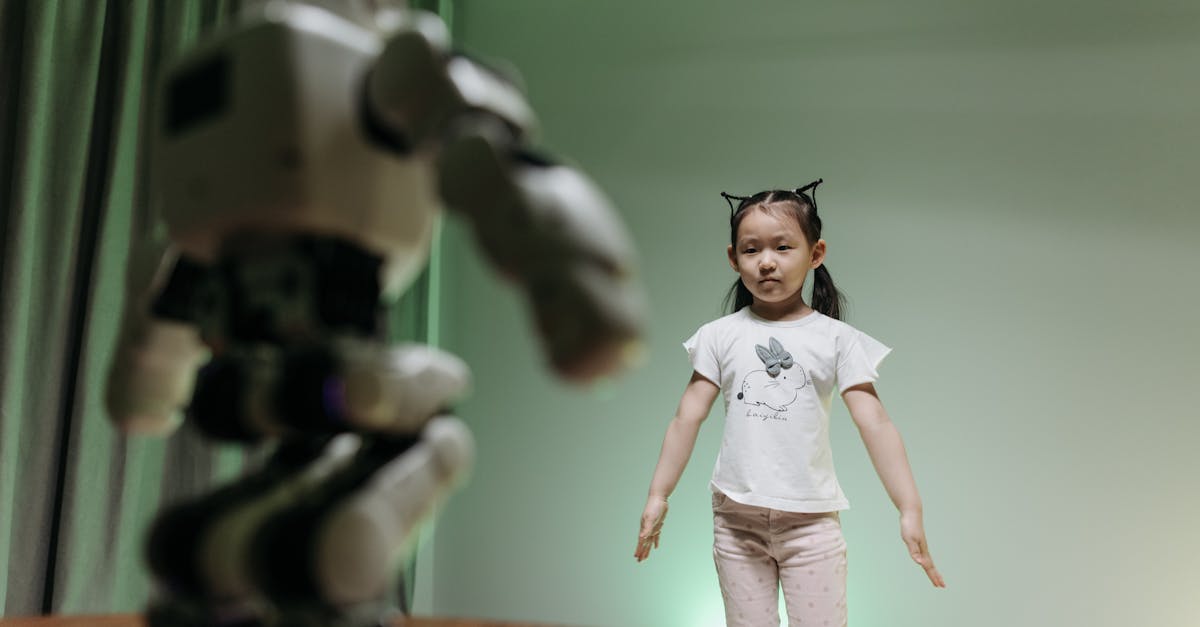
Imitation Learning in Robotics: Shipping Reality Versus Technical Promise
Introduction to Imitation Learning in Modern Robotics
Imitation Learning (IL) has moved from academic papers to the engineering floors of leading robotics companies. Unlike Reinforcement Learning (RL), which relies on reward functions and trial-and-error, IL trains robots to replicate human actions directly from demonstration data. This approach is critical for complex tasks where defining a reward function is difficult, such as manipulating delicate objects or navigating unstructured environments.
However, the gap between demonstration and deployment remains significant. While media coverage often suggests that robots are learning to work independently after a few teleoperated sessions, the technical reality involves extensive data cleaning, simulation alignment, and hardware-specific fine-tuning. For the Indian market, where cost sensitivity is high, understanding the true maturity of IL technology is essential before capital allocation.
The Mechanics of Teleoperation and Demonstration Collection
At the core of most current IL pipelines is teleoperation. This involves a human operator controlling the robot’s actuators while sensors record the joint positions, velocities, and visual inputs. High-fidelity teleoperation requires low-latency control links and haptic feedback to ensure the robot’s movements match human intent.
Companies like Tesla and Figure AI have utilized teleoperation to generate datasets. In Tesla’s "Optimus" pipeline, demonstrations are often collected using a controller that maps hand movements to the robot’s kinematic chain. The data is then used to train a policy network. However, the quality of this data depends entirely on the consistency of the human operator. Variations in human style can introduce noise into the training set, leading to suboptimal policy convergence.
For Indian manufacturers, the cost of high-fidelity teleoperation rigs is a barrier. A dual-stick controller setup with haptic feedback can cost between INR 150,000 to INR 300,000 per unit. When scaling this to a fleet, the operational expenditure (OpEx) on training hours becomes non-trivial. Furthermore, the "Sim-to-Real" transfer remains a challenge. A movement learned in simulation via teleoperation often requires retraining when moved to physical hardware due to friction and mass variations.
Behaviour Cloning and the Distribution Shift Problem
Behaviour Cloning (BC) is the primary algorithmic method used in IL. It frames the problem as supervised learning, where the robot maps state observations to action outputs. While effective for simple tasks, BC suffers from "compounding errors." If the robot deviates slightly from the demonstrated trajectory, it may find itself in a state it has not seen during training, leading to failure.
Recent advancements attempt to mitigate this through offline Reinforcement Learning or by collecting diverse demonstrations. However, the hardware required to support these systems is not yet ubiquitous. Most shipping hardware currently relies on simplified BC models rather than full-scale IL pipelines.
Key Technical Constraints:
- Data Efficiency: BC requires thousands of demonstrations for complex tasks.
- Generalization: Robots trained on specific demonstrations often fail on slight variations of the task.
- Latency: Real-time inference requires onboard compute, adding to the Bill of Materials (BOM) cost.
In the context of Indian logistics, where environments are less controlled than Western warehouses, the robustness of BC models is a primary concern. If a robot trained on a clean demonstration cannot handle a tilted box, the IL pipeline has failed in a practical sense.
Grading Claims: Shipping Hardware vs. Pilot Deployments
The robotics industry frequently conflates prototype announcements with shipping hardware. To maintain editorial integrity, we must grade claims based on three tiers: Shipping Hardware, Pilot Deployments, and Announcements.
1. Shipping Hardware (Tier 1)
Currently, very few humanoid robots ship with fully autonomous IL capabilities out of the box. Most units shipped for beta testing require human supervision. For example, the 1X Neo humanoid, while featuring advanced control systems, is often deployed with teleoperation fallbacks for complex manipulation tasks. Similarly, Tesla Optimus units are currently in pilot phases within factories, not fully autonomous commercial products.
2. Pilot Deployments (Tier 2)
Pilot programs exist but often rely on pre-programmed tasks rather than true IL. Figure AI’s partnership with FedEx involves testing specific picking tasks. While IL may be used in the backend for policy refinement, the initial deployment often relies on traditional motion planning. This distinction matters for ROI calculations.
3. Announcements (Tier 3)
Many companies announce "human-level" IL capabilities without specifying the dataset size or deployment rate. Without independent verification of the model’s success rate in unstructured environments, these claims remain speculative.
India Availability and Cost Analysis
For the Indian market, the value proposition of IL-driven robotics hinges on the landed cost versus the cost of human labor. Currently, humanoid robots with advanced IL pipelines are priced significantly above the break-even point for typical Indian labor arbitrage.
Approximate Pricing (Landed Cost Estimates):
- Tesla Optimus (Target): Estimated at $20,000 USD (approx. INR 16.5 Lakhs). Currently, this is a target price; early units cost significantly more.
- 1X Neo: Priced around $30,000 USD (approx. INR 25 Lakhs) for early adopters.
- Figure 01: No public pricing, but estimated in the $100,000+ range for R&D units.
While these figures are estimates, the landed cost in India includes Import and Excise Duty (IGST), which can add 28% to 45% depending on the classification. This pushes the effective cost to over INR 25 Lakhs for a basic unit. For an Indian warehouse employing a worker at INR 1.5 Lakhs per year, the ROI is currently negative unless the robot can operate 24/7 with zero downtime.
Furthermore, the compute infrastructure required to run IL models on-device increases the BOM. A robot with an onboard GPU for inference adds to the hardware cost, reducing the competitive edge against cheaper, non-intelligent automation solutions.
Technical Limitations of Current IL Pipelines
Beyond cost, the technology faces structural hurdles. The "Covariate Shift" problem remains a primary blocker. When a robot encounters a state distribution different from the training data, the policy confidence drops. In industrial settings, this means unexpected objects or lighting changes can halt operations.
Additionally, the data collection bottleneck is real. Collecting high-quality teleoperation data requires skilled operators. In India, where the pool of robotics engineers is small, maintaining a workforce capable of generating training data is a logistical challenge. Most companies are currently using off-the-shelf teleoperation rigs, which are not always compatible with custom robotic arms.
Conclusion
Imitation Learning represents a significant step forward for robotics, allowing for faster task acquisition than traditional reinforcement learning. However, the industry must separate marketing hype from engineering reality. While companies like Tesla and Figure AI are advancing the state of the art, the shipping hardware available today still relies heavily on human oversight.
For Indian manufacturers and integrators, the focus should remain on verifying the "shipping hardware" status of IL claims. Until the landed cost of a robot with robust IL capabilities drops below INR 10 Lakhs and achieves a 95% success rate in unstructured environments, the technology remains a pilot-grade solution rather than a commercial replacement.
References
- Tesla Optimus. (2024). https://www.tesla.com/optimus
- Figure AI. (2024). https://www.figure.ai
- 1X Technologies. (2023). https://www.1x.tech
- Stanford Robotics. (2023). https://rail.eecs.berkeley.edu/datasets/
- RobotWale India Market Analysis. (2024). https://www.robotwale.com
✓ Key takeaways
- •Hands-on view of Imitation Learning in Robotics: Shipping Reality Versus Technical Promise inside our Imitation Learning library.
- •Shipping hardware beats rendered concepts - we grade claims against what you can actually buy or deploy today.
- •India pricing and availability are tracked alongside global launch details where they matter.
References
Related articles
More in Imitation Learning →