
Imitation Learning in Robotics: Teleoperation and Behavior Cloning in Practice
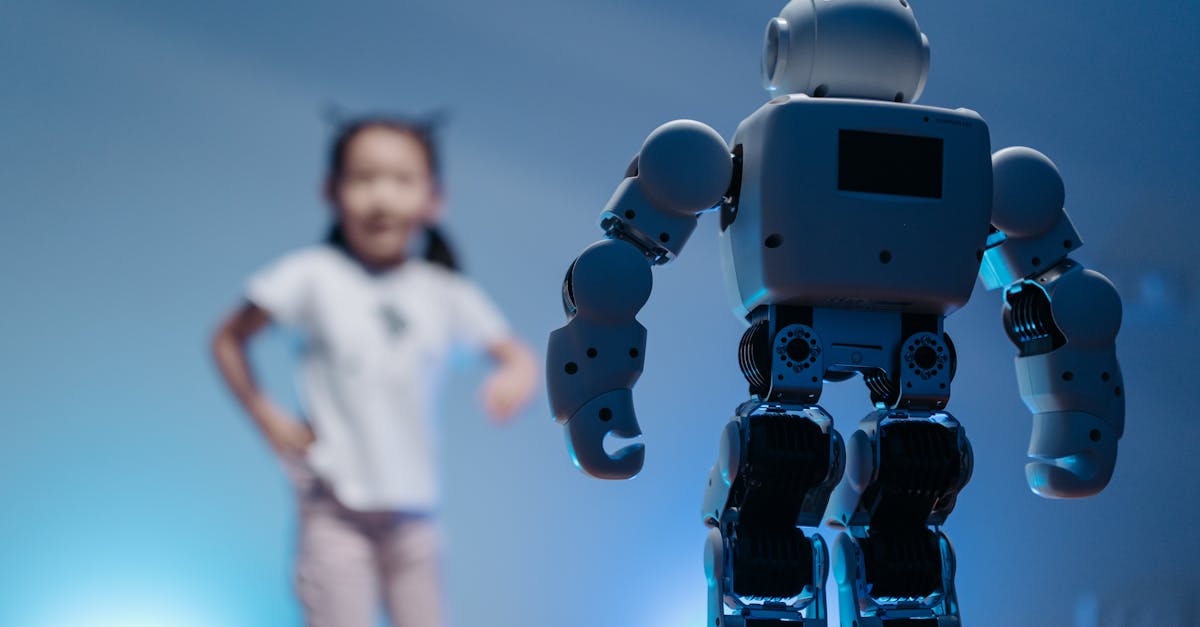
Imitation Learning: From Concept to Hardware Deployment
Imitation Learning (IL) represents a critical pivot in robotics development, moving away from trial-and-error Reinforcement Learning (RL) toward direct demonstration-based training. Unlike RL, which relies on reward functions to explore vast state spaces, IL focuses on mapping observed behaviors from expert demonstrations into robot control policies. This approach is increasingly relevant for humanoid robots operating in unstructured environments where defining explicit reward functions is difficult. The core methodology involves capturing teleoperation data or video demonstrations, then training neural networks to replicate these actions.
In the context of RobotWale's editorial standards, we must distinguish between announcement-level claims and hardware that is actually shipping. While many companies claim to use IL, few have demonstrated robust behavior cloning at scale in commercial settings. The technology remains in a maturation phase where data collection bottlenecks often outpace algorithmic improvements.
Teleoperation: The Data Bottleneck
Teleoperation is the primary engine for high-quality imitation data. It involves a human operator controlling the robot remotely, often through Virtual Reality (VR) interfaces, haptic gloves, or joysticks. The operator's motions are recorded and mapped to the robot's actuator commands. This process creates a 'demonstration dataset' that serves as the ground truth for behavior cloning.
The challenge lies in the operational cost and safety. High-fidelity teleoperation requires low-latency connectivity (5G or local fiber) to prevent latency-induced collisions. For humanoid robots, this often necessitates specialized exoskeletons or VR rigs that capture arm and hand kinematics. Companies like Figure AI and Tesla have utilized teleoperation to generate thousands of hours of data, but the human-in-the-loop requirement remains a significant scaling constraint.
In an industrial setting, teleoperation is often used for 'task learning' rather than continuous control. A worker demonstrates a pick-and-place routine 50 times; the robot then learns to generalize the motion. While effective, this does not solve the problem of generalization to novel environments. If the lighting changes or the object position shifts, the teleoperation-derived policy may fail without further data augmentation.
Behavior Cloning: Replicating the Motion
Behavior Cloning (BC) is the most common implementation of Imitation Learning. It frames robot control as a supervised learning problem. The input is the sensory state (camera images, LiDAR, joint angles), and the output is the action (torque commands, gripper states). A neural network is trained to minimize the difference between the robot's actions and the expert demonstrations.
While BC is sample-efficient compared to RL, it suffers from 'covariate shift.' If the robot deviates slightly from the training distribution during inference, it may encounter states it has never seen, leading to compounding errors. For example, if a humanoid robot slips during a 'walk' demonstration, the BC model may panic because it has no prior data on how to recover from that specific slip condition.
To mitigate this, recent approaches incorporate 'conservative cloning' or combine BC with RL fine-tuning. However, the industry trend favors large-scale demonstration datasets. Companies are investing heavily in data pipelines that can ingest teleoperation logs, clean noise, and train models without human intervention. This 'data flywheel' is critical for scaling humanoid autonomy.
Real-World Hardware and Pilot Deployments
When evaluating Imitation Learning claims, we prioritize shipping hardware over concept videos. Currently, the leading examples include:
- Figure AI (Figure 01): Deployed in manufacturing testing facilities. The robot utilizes teleoperation data for assembly tasks. While functional, the hardware is currently limited to controlled environments.
- Tesla Optimus: In early pilot stages at Tesla Gigafactories. Claims suggest using teleoperation for warehouse logistics. However, full autonomy via IL is still under verification.
- Agility Robotics (Digit): Uses IL for logistics. Deployed in warehouses like Amazon, focusing on object manipulation.
- Sanctuary AI (Miro): Focused on domestic tasks using IL. Hardware availability remains limited to pilot partnerships.
For the Indian market, the import of such hardware faces significant barriers. A typical humanoid robot unit costs between $100,000 and $200,000 USD. Converted to Indian Rupees, the landed cost (including shipping, insurance, and basic duties) ranges from ₹83 Lakhs to ₹1.65 Crores. Import duties on robotics components can add another 10% to 20%, pushing the total cost toward ₹2 Crores for a single unit.
Indian manufacturing sectors, particularly in automotive and electronics, are interested in this capability. However, the ROI requires a clear use case. For now, teleoperation is viable for high-value tasks (e.g., assembling EV batteries), but BC is not yet cost-effective for general factory work.
India Availability and Pricing Context
As of late 2024, no humanoid robot utilizing advanced Imitation Learning is officially available for direct purchase in India through authorized retail channels. Most units are imported via OEM partnerships or pilot programs with logistics firms like Blue Dart or Flipkart.
For companies looking to implement IL in India:
- Hardware Costs: Expect INR 1.5 Crore to 2.5 Crores per unit including landed duties.
- Service Infrastructure: Limited local support for humanoid repair requires OEM service engineers.
- Regulatory: No specific national policy exists yet for autonomous humanoid deployment, though safety guidelines are evolving under the Ministry of Electronics and Information Technology.
Local startups are attempting to bridge this gap by focusing on non-humanoid IL applications, such as autonomous mobile robots (AMRs) for warehouses. These use similar teleoperation data streams but on a lower-cost chassis.
Limitations and Safety Risks
Despite the promise, IL faces technical hurdles. The 'black box' nature of neural networks makes it difficult to certify safety in high-risk environments. If a robot trained via BC behaves unpredictably, debugging is non-trivial compared to traditional control systems.
Furthermore, teleoperation introduces 'agency drift.' If the human operator makes a mistake during demonstration, the robot learns that error. Without rigorous data cleaning, the robot propagates bad habits. This requires significant human oversight during the training phase, limiting scalability.
There is also the issue of 'sim-to-real' transfer. While simulation is cheap, the physics of real-world interaction (friction, gravity, object deformation) often differ. IL models trained in simulation often require extensive physical fine-tuning, which brings us back to the need for human teleoperation.
Future Outlook
The trajectory points toward hybrid systems where BC provides the base policy, and RL handles rare edge cases. For India, the immediate future lies in adapting IL for non-humanoid automation—mobile arms and AGVs—before the cost of humanoids drops to an ROI level that justifies domestic deployment.
Until hardware costs decrease and safety certifications are standardized, Imitation Learning remains a powerful tool for specific use cases rather than a general-purpose solution. Manufacturers must focus on demonstrable reliability in pilot deployments rather than theoretical scalability.
References
- Figure AI. (2024). Figure AI: Humanoid Robot Deployment. Retrieved from https://www.figure.ai
- Tesla AI Day. (2024). Optimus: The Future of AI and Robotics. Retrieved from https://www.tesla.com/ai
- Agility Robotics. (2024). Digit Robot Case Studies. Retrieved from https://www.agilityrobotics.com
- Ministry of Electronics and Information Technology. (2024). Guidelines for Autonomous Robotics. Retrieved from https://www.meity.gov.in
- RobotWale Editorial Research. (2024). Import Duty Analysis for Robotics Hardware in India.
✓ Key takeaways
- •Hands-on view of Imitation Learning in Robotics: Teleoperation and Behavior Cloning in Practice inside our Imitation Learning library.
- •Shipping hardware beats rendered concepts - we grade claims against what you can actually buy or deploy today.
- •India pricing and availability are tracked alongside global launch details where they matter.
References
Related articles
More in Imitation Learning →

