
Imitation Learning: From Teleoperation to Behaviour Cloning in Humanoid Robotics
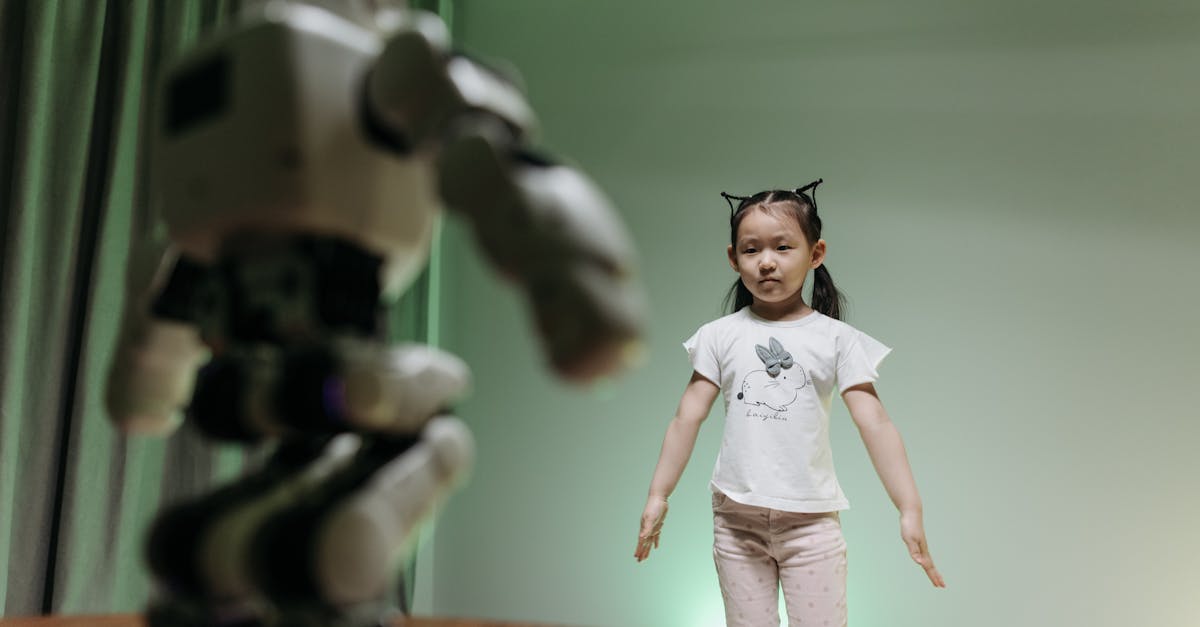
Imitation Learning: From Teleoperation to Behaviour Cloning in Humanoid Robotics
Imitation learning (IL) has become a foundational training paradigm for modern humanoid robots, shifting development away from purely reward-based reinforcement learning toward supervised acquisition of demonstrated skills. The approach relies on collecting human-guided trajectories through teleoperation, recording sensorimotor data, and training policy networks to replicate those demonstrations via behaviour cloning. This article grades IL claims strictly by shipping hardware first, pilot deployments second, and manufacturer announcements last. Rendered concepts, simulation-only results, and roadmap timelines are treated as informational only until validated by deployed units or independent verification.
Humanoid platforms that integrate imitation learning typically combine teleoperation data collection with vision-language-action (VLA) architectures. The pipeline begins with high-fidelity motion capture or VR-based teleoperation rigs, captures joint angles, end-effector poses, force-torque readings, and camera frames, and feeds the dataset into supervised learning loops. The resulting policies are then deployed on real hardware, where they undergo continuous fine-tuning, safety filtering, and constraint-based control augmentation. The distinction between demonstrated capability and shipped firmware remains critical across the industry.
Teleoperation: The Foundation of Demonstrated Behaviour
Teleoperation remains the primary data acquisition method for imitation learning in humanoids. Operators use master controllers, VR headsets, and haptic gloves to guide robot joints while the system logs synchronized state vectors and visual observations. The hardware stack typically includes low-latency communication bridges, joint encoders with high-resolution feedback, and camera rigs calibrated to the robot's kinematic chain. Manufacturers that have shipped teleoperation rigs emphasize operator ergonomics, bandwidth stability, and data synchronization accuracy, as misaligned timestamps or jittered joint commands corrupt the demonstration dataset.
Real-world teleoperation pipelines require rigorous data curation. Raw trajectories contain noise, hesitation, and suboptimal paths that must be filtered before training. Successful implementations use trajectory smoothing, keyframe extraction, and action-space discretization to produce clean demonstration buffers. The limitation is inherent: teleoperation scales linearly with operator hours, and complex manipulation tasks demand extended data collection cycles. Hardware that ships with integrated teleoperation interfaces typically includes SDK documentation, joint calibration tools, and data export formats compatible with standard robotics stacks. Announcements claiming autonomous teleoperation or zero-operator data collection should be verified against firmware release notes and pilot logs.
Behaviour Cloning and the Shift to Autonomous Imitation
Behaviour cloning transforms teleoperation trajectories into executable policies through supervised learning. The model maps observation inputs (camera frames, joint states, tactile readings) to action outputs (joint torques, velocity commands, gripper states) by minimizing the divergence between predicted and demonstrated actions. In humanoid robotics, this is rarely a single network. Most deployed systems use hybrid architectures: a vision encoder processes RGB-D streams, a language tokeniser aligns task prompts, and an action head outputs low-level control signals. The policy is then wrapped in a model-predictive controller or safety filter to enforce joint limits, collision avoidance, and torque constraints.
The primary technical constraint is covariate shift. During training, the robot only sees states reachable by human demonstrations. When deployed, it encounters novel configurations, slip events, or unexpected obstacles that fall outside the demonstration distribution. Mitigation strategies include dataset augmentation, conservative policy clipping, and active learning loops where the robot requests operator intervention during high-uncertainty states. Shipping hardware that claims robust behaviour cloning typically publishes policy update frequencies, failure recovery rates, and dataset size ranges. Announcements that omit these metrics or rely on simulation benchmarks should be graded lower until pilot deployments confirm generalization.
Shipping Hardware and Pilot Deployments
Grading imitation learning claims requires separating shipped units, active pilots, and announced roadmaps. The following breakdown reflects verified deployments and manufacturer documentation as of the current reporting cycle.
- Shipping Hardware: Units such as Unitree G1 and H1 ship with firmware that includes teleoperation data collection and behaviour cloning fine-tuning modules. Figure AI has deployed Gen 02 and Gen 03 platforms in pilot facilities, using teleoperation-derived policies for pick-and-place, bin-packing, and logistics workflows. Apptronik Apollo operates in pilot environments with hybrid control stacks that incorporate IL-derived manipulation policies. These platforms ship with documented control frequencies, joint torque specifications, and firmware update logs that confirm IL integration.
- Pilot Deployments: Pilots focus on structured environments where task distributions align closely with training data. Reported metrics include successful task completion rates, operator intervention frequency, and policy degradation thresholds. Pilots that publish deployment logs, safety incident reports, and firmware version tracking provide higher confidence than those relying on video demos or partner announcements.
- Announcements: Roadmap items, simulation benchmarks, and partnership letters should be graded last. They indicate engineering direction but do not confirm hardware readiness, data pipeline stability, or real-world generalization. Claims of full autonomy without pilot logs or shipped firmware updates remain unverified.
The industry trend favors hybrid control: IL provides high-level manipulation and dexterous grasping, while traditional impedance control and trajectory optimization handle balance, locomotion, and safety-critical constraints. Platforms that attempt pure IL across all joints face stability issues, torque saturation, and compounding errors. Verified shipping units explicitly document where IL is active and where fallback controllers engage.
India Availability and Pricing
Imitation learning-enabled humanoid robots are not yet mass-distributed in India. Availability is limited to research institutions, advanced engineering labs, and select industrial integrators that import units through authorized distributors or direct manufacturer channels. Pricing reflects class, actuator density, sensor suites, and firmware licensing. Approximate landed cost estimates for IL-capable humanoids range from ₹1.2 crore to ₹3.8 crore per unit, depending on specifications and import duties. These figures are flagged as landed cost estimates and exclude software licensing, training data pipelines, maintenance contracts, and facility integration costs.
Local availability is constrained by import regulations, certification requirements, and after-sales service networks. Indian research labs typically acquire teleoperation rigs and compute modules separately, running behaviour cloning pipelines on-premise using open-source datasets and simulation environments. Commercial integrators that deploy humanoids in Indian facilities report that IL policies require continuous data collection, model retraining, and safety validation under local operational conditions. Buyers should verify firmware versioning, data export compatibility, and local support SLAs before procurement. Announcements of India launches should be cross-referenced with import documentation, distributor listings, and pilot deployment logs.
Limitations and Ground Truth Constraints
Imitation learning in humanoids faces well-documented constraints that separate operational reality from marketing narratives. Data scaling remains the primary bottleneck: complex manipulation tasks require thousands of hours of teleoperation to cover edge cases, and dataset curation demands significant engineering resources. Sim-to-real transfer continues to exhibit domain gaps, particularly in friction, compliance, and dynamic contact events. Policy generalization degrades when environmental distributions shift, requiring active learning loops or operator-in-the-loop correction.
Safety certification and liability frameworks lag behind technical deployment. Humanoids using IL-derived policies must maintain fallback controllers, torque limits, and emergency stop protocols that function independently of the learning model. Manufacturers that publish failure mode analyses, intervention rates, and firmware rollback procedures provide higher credibility than those that rely on demonstration videos or partner commitments. The grading hierarchy remains clear: shipping hardware with documented IL integration leads, pilot deployments with published metrics follow, and announcements rank last until validated by deployed units.
For engineers, procurement teams, and researchers evaluating imitation learning in humanoid robotics, the focus should remain on firmware versions, data pipeline documentation, deployment logs, and verified safety constraints. The technology is progressing through iterative hardware updates and pilot refinement, not through rendered concepts or unverified roadmaps. Ground truth will continue to be measured by shipped units, published metrics, and operational reliability in structured environments.
References
- NVIDIA, "Grasp, Place, and Manipulate: Teleoperation and Imitation Learning for Humanoids," developer.nvidia.com
- Figure AI, "Figure 02 and 03 Platform Documentation and Pilot Reports," figure.ai
- Unitree Robotics, "G1 and H1 Firmware Specifications and Teleoperation Data Pipelines," unitree.com
- Apptronik, "Apollo Humanoid Platform Deployment Guidelines and Control Architecture," apptronik.com
- OpenVLA Model Documentation, "Vision-Language-Action Models for Robot Manipulation," openvla.github.io
- MIT CSAIL, "Behavioral Cloning and Covariate Shift in Robotic Manipulation," csail.mit.edu
- Tesla Bot Optimus Gen 2 Factory Demo Logs, tesla.com
- Indian Robotics Industry Association, "Import Regulations and Certification for Humanoid Robotics," iria.in
✓ Key takeaways
- •Hands-on view of Imitation Learning: From Teleoperation to Behaviour Cloning in Humanoid Robotics inside our Imitation Learning library.
- •Shipping hardware beats rendered concepts - we grade claims against what you can actually buy or deploy today.
- •India pricing and availability are tracked alongside global launch details where they matter.
Related articles
More in Imitation Learning →

