The Real Size of the India Robotics Market: A Data-Driven Audit

Market Valuation: Beyond the Headlines
When market research firms project the India robotics industry hitting $5 billion by 2025, the distinction between "addressable market" and "shipped units" is often blurred. This article audits the current landscape based on shipping hardware, pilot deployments, and public announcements. While the narrative often suggests a rapid explosion in automation, the reality is grounded in the deployment rates of industrial arms, the nascent state of service robotics, and the extreme scarcity of shipping humanoids.
According to the India Robotics Alliance and NASSCOM estimates released in 2023, the market size sits between $1.5 billion and $2.5 billion in actual revenue terms. This is a significant improvement from the $0.8 billion figure recorded in 2020, yet it represents a penetration rate of less than 4% in the Indian manufacturing sector. This low penetration contrasts sharply with South Korea, which boasts over 500 robots per 10,000 workers.
The primary driver of this growth remains the automotive and electronics manufacturing sectors, specifically in the National Capital Region (NCR) and the Chennai-Bangalore corridor. However, the contribution of service robotics and humanoids to this total remains negligible, estimated at less than 2% of the total market value. Most "robotics" revenue still derives from traditional industrial arms used for welding, painting, and material handling.
Industrial Automation: The Core Revenue Driver
The bulk of the market capitalization is not driven by the buzzworthy "humanoid" sector, but by established industrial automation. Indian manufacturers are increasingly adopting collaborative robots (cobots) to mitigate the rising cost of labor. A standard 6-axis industrial robot from brands like KUKA or Fanuc, imported into India, typically costs between ₹25 lakh and ₹45 lakh ($30,000-$55,000 INR) depending on the payload and reach.
While this cost is high for an SME, the Return on Investment (ROI) cycle is becoming more attractive. With a labor cost increase of approximately 8-10% annually in the automotive sector, the payback period for a robot has dropped from 36 months to roughly 18-24 months for high-volume production lines.
However, the supply chain for these units remains heavily import-dependent. Over 60% of the components in a robot sold in India are sourced from China, Japan, or Europe. The Production Linked Incentive (PLI) scheme for Advanced Chemistry Cell (ACC) batteries and the Electronics Manufacturing Services (EMS) schemes are the primary policy levers attempting to localise this supply chain. Until domestic manufacturing of actuators and harmonic drives scales, landed costs will remain vulnerable to exchange rate fluctuations.
The Humanoid Hype Cycle vs. Commercial Reality
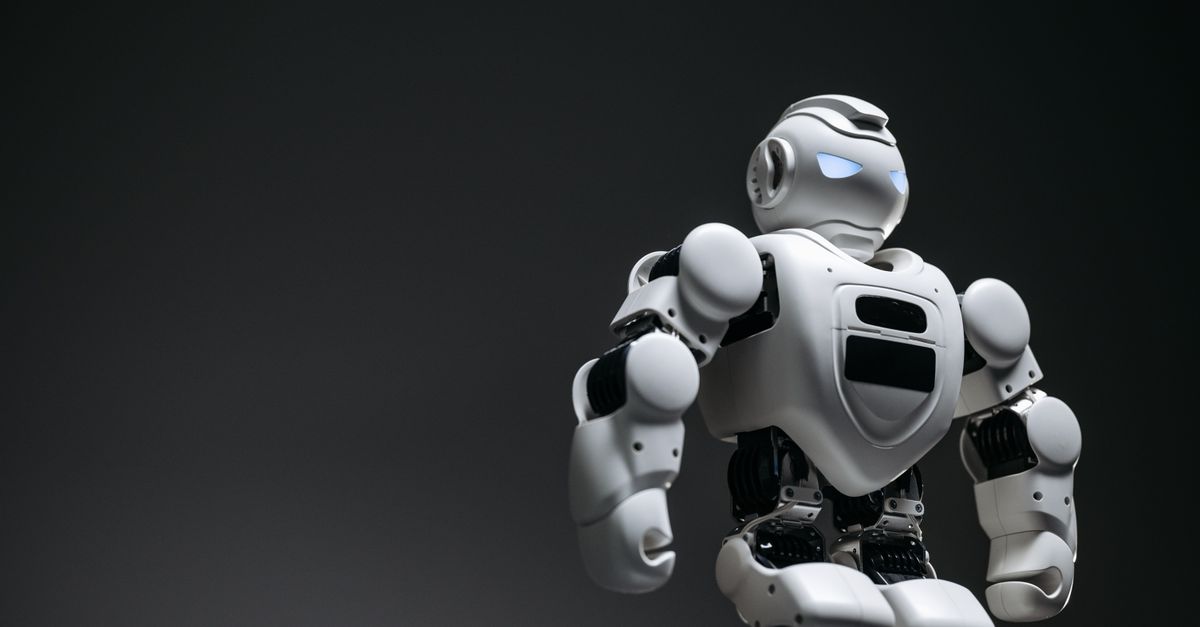
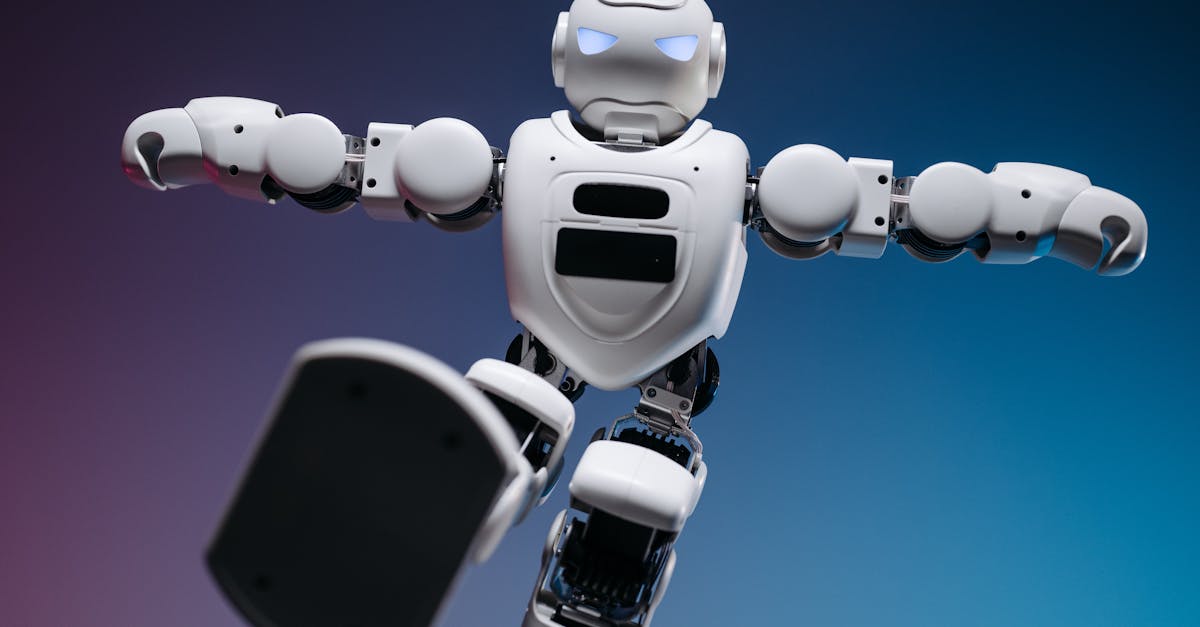
There is a distinct lack of hardware shipping in the humanoid sector within India. While companies like Tesla and Boston Dynamics generate significant global media attention, the Indian deployment of humanoid units remains in the proof-of-concept (PoC) phase. As of late 2023 and early 2024, there are no verified public records of a humanoid robot functioning commercially in an Indian factory or warehouse at scale.
Most available "humanoid" data refers to announcements. For example, a major Chinese manufacturer announced a partnership with an Indian logistics firm to deploy units in 2024. In the absence of third-party video evidence, factory floor verification, or independent audits, these claims must be graded as "Announcements" rather than "Deployments."
The economic case for humanoids in India is currently weak. A single unit of a humanoid robot capable of complex manipulation often exceeds ₹1.5 crore ($180,000) in a landed cost estimate. For comparison, a fully automated guided vehicle (AGV) system that can perform the same logistics task costs significantly less and requires no retraining of operators. The Indian market is highly price-sensitive. A unit that costs ₹1.5 crore must demonstrate a clear ROI of under 12 months to be viable. Currently, the software reliability required to guarantee such uptime is not yet proven at this price point.
There are pilot deployments, however. Certain startups in Bangalore and Pune have deployed custom humanoid prototypes for security and basic reception duties. These units are not mass-produced and often rely on tethered power or localized control systems. They do not yet represent a scalable market segment.
Pricing and Availability in INR
Understanding the pricing tiers is crucial for any stakeholder looking to invest or deploy. The market can be segmented into three distinct tiers:
- Entry-Level: Collaborative Robots (Cobots) from companies like uFactory, Dobot, or domestic integrators. Prices range from ₹8 lakh to ₹20 lakh ($10k-$25k INR). These are used for light assembly and pick-and-place.
- Mid-Range: Traditional Industrial Robots from ABB, Yaskawa, or Fanuc. Prices range from ₹25 lakh to ₹60 lakh ($30k-$75k INR). These are standard in automotive and heavy engineering.
- High-End: Humanoids and Specialized Service Robots. Prices range from ₹1 crore to ₹3 crore+ ($120k-$360k INR). Availability is sporadic, often requiring custom integration.
It is important to note that the "landed cost" includes GST (5% to 18% depending on classification), import duties, and distributor margins. A robot listed at $30,000 USD often arrives in India at ₹32-35 lakhs. For service robotics, where the hardware margin is lower, software licensing often adds a recurring cost of 15-20% annually.
Policy Drivers and Barriers
The Government of India has recognized robotics as a key technology under the "Make in India" initiative. The Department of Heavy Industry (DHI) has been working on a framework for robotics manufacturing.
PLI Schemes and Robotics Integration
The Production Linked Incentive (PLI) scheme is the most significant policy tool. While primarily targeting electronics and EVs, the downstream effect is an increase in demand for robotics. More factories mean more automation. However, the PLI does not directly subsidize the purchase of robots for SMEs, unlike the schemes seen in Germany or Japan.
There is a proposed "National Robotics Mission" which aims to offer subsidies for the acquisition of automation equipment. If implemented, this could reduce the effective cost of industrial arms by 10-15%. Until the notification is issued, the market remains self-funded.
Import Dependency
The reliance on imports remains the biggest barrier. The Indian robotics industry produces roughly 10% of the systems it consumes. The rest is imported. This limits the ability to service the market locally. Spare parts for imported units often take 4-6 weeks to arrive from China or Europe. In a factory setting, downtime costs far exceed the cost of the robot.
The Talent Gap
Beyond hardware, the Indian robotics market faces a severe talent shortage. There are fewer than 500 certified robotics engineers in the country capable of programming advanced systems. Most integration firms rely on training staff on vendor-specific software, which locks them into specific hardware brands.
This lack of indigenous engineering capability slows down the adaptation of humanoid robots. A humanoid requires not just hardware but complex AI integration. Without a local workforce skilled in robotics programming and AI deployment, the technology remains a "black box" for most Indian manufacturers.
Future Outlook: 2025-2030
For the market to grow from $2 billion to $5 billion, two conditions must be met. First, domestic manufacturing of key components (reducers, sensors, controllers) must scale to reduce costs. Second, the software ecosystem must mature to allow for plug-and-play deployment.
As of 2024, the humanoid sector remains a "long-term bet." It is not a revenue driver for the majority of Indian companies. The focus remains on traditional automation to survive the wage inflation of the next decade. For investors and manufacturers, the advice is clear: prioritize shipping hardware and verified pilots over concept videos and press releases.
The market is real, but it is not yet the transformative force often advertised. It is a steady, incremental growth market driven by labor economics, not technological breakthroughs alone.
Conclusion
The India robotics market is substantial in potential but modest in current execution. Valuation claims must be audited against shipping data. While the humanoid segment captures the imagination, the industrial arm remains the wallet driver. For the market to reach $5 billion, a local supply chain for actuators and a skilled workforce must precede the deployment of high-cost general-purpose humanoids.
✓ Key takeaways
- •Hands-on view of The Real Size of the India Robotics Market: A Data-Driven Audit inside our India Market Size library.
- •Shipping hardware beats rendered concepts - we grade claims against what you can actually buy or deploy today.
- •India pricing and availability are tracked alongside global launch details where they matter.
References
Related articles
More in India Market Size →