Indian Drone Startups: Shipping Hardware Over Hype in a Regulated Market

The Reality Check: Indian Drone Manufacturing
The Indian drone ecosystem has undergone a significant transformation in the last three years. While the initial phase was characterized by concept videos, pitch decks, and regulatory ambiguity, the current landscape is defined by actual shipments, Defense Ministry contracts, and adherence to the Digital Sky Platform. For RobotWale, the focus remains on hardware that ships, deployments that operate, and pilots that fly—not announcements that remain on paper. This article evaluates the three dominant players in the Indian drone sector: ideaForge Technology, Garuda Aerospace, and ePlane Robotics, alongside the regulatory framework that governs their operations.
Unlike the Western consumer drone market, which is heavily populated by consumer-grade photography hardware, the Indian drone industry is driven largely by defense, surveillance, and agricultural applications. The government’s Drone Technology Innovation and Incubation Hub (DTIIH) and the Production Linked Incentive (PLI) scheme have accelerated domestic manufacturing. However, the barrier to entry remains high due to the Drone Rules 2021, which mandate strict licensing, no-fly zones, and remote pilot certification. We grade these companies based on their ability to navigate these regulations while delivering functional hardware.
ideaForge Technology: The Defense Anchor
ideaForge Technology stands out as the most commercially mature entity in the Indian drone sector. Founded in 2014 and headquartered in Bangalore, the company has transitioned from a research project to a critical vendor for the Indian Army and Police forces. Unlike many startups that promise “swarm capabilities” without flight data, ideaForge has a verified track record of shipping hardware under difficult field conditions.
Their flagship product, the Trishna, is a thermal imaging drone designed for border surveillance and anti-infiltration operations. It operates in the 400MHz to 2.4GHz range and offers a range of up to 10 kilometers with a 30-minute flight time. In 2023, ideaForge secured a contract worth over ₹300 crore for the supply of drones to the Indian Army. This is not a pilot deployment; it is a bulk procurement order. The Trishna has been deployed in active conflict zones, including the Line of Control (LoC) in Jammu and Kashmir, providing real-time thermal imagery to ground forces.
Beyond defense, ideaForge has expanded into the civil sector with the Falcon 100. This multi-rotor drone is designed for inspection work in the power and utility sectors. It carries a payload of 100 grams and can operate in extreme temperatures ranging from minus 30 degrees Celsius to plus 50 degrees Celsius. The hardware is ruggedized for industrial use, featuring vibration damping and redundant flight controllers. While the retail price is not publicly disclosed, industry estimates place the landed cost for a Falcon 100 unit, including accessories and software licensing, between ₹15 lakh and ₹20 lakh. This pricing reflects the specialized components and the regulatory compliance costs inherent in the Indian market.
ideaForge also emphasizes its supply chain localization. The company manufactures its electronic systems and airframes in India, adhering to the PLI scheme requirements. This localization reduces dependency on imported chipsets and ensures supply chain security for defense contracts. Their focus on “shipping first” aligns with RobotWale’s grading criteria, where deployment history outweighs marketing claims.
Garuda Aerospace: Civilian and Military Integration
Garuda Aerospace, based in Bangalore, has carved a niche by targeting both civil and defense sectors simultaneously. Their approach differentiates them from pure-play defense vendors. They have developed the Garuda 10 and Garuda 20 series, which are designed for heavy-lift applications in agriculture, surveying, and security.
The Garuda 10 is a VTOL (Vertical Take-Off and Landing) drone that can carry payloads up to 10 kilograms. It features a hybrid propulsion system, combining a multi-rotor configuration for take-off with a fixed-wing design for efficient cruising. This hybrid architecture is crucial for Indian agriculture, where large tracts of land require long-endurance flight paths without constant battery swaps. The drone is certified under the DGCA’s Type Certification for Unmanned Aircraft Systems, which is a significant hurdle for competitors who have not yet cleared this regulatory threshold.
Garuda has also secured significant orders from state governments for crop monitoring and disaster management. In 2023, the company was selected for the PM’s Self-Reliance in Defence and Aerospace Programme (PMSDA) to manufacture drones for the Indian Air Force. The specific model details are often classified, but reports indicate the use of their heavy-lift platforms for logistics in difficult terrain. This dual-use capability is a strategic advantage, as it diversifies revenue streams between government contracts and civil commercial operations.
Pricing for Garuda Aerospace’s systems is similarly premium. The Garuda 20, with its extended range and heavy lift capabilities, is estimated to cost between ₹25 lakh and ₹35 lakh per unit. This includes the ground control station and the proprietary flight software suite. The company emphasizes that the cost includes a one-year warranty and maintenance support, which is critical for operators who cannot afford downtime during critical missions. Unlike some startups that offer hardware with minimal support, Garuda has established a service network across major Indian metros, including Delhi, Mumbai, and Chennai.
ePlane Robotics: Agritech and Logistics Focus
ePlane Robotics, headquartered in Bangalore, focuses primarily on the agricultural sector and last-mile logistics. Their portfolio is less about heavy military surveillance and more about practical application in farming and delivery. The company has developed the ePlane 100, a multi-rotor drone designed for precision spraying and mapping.
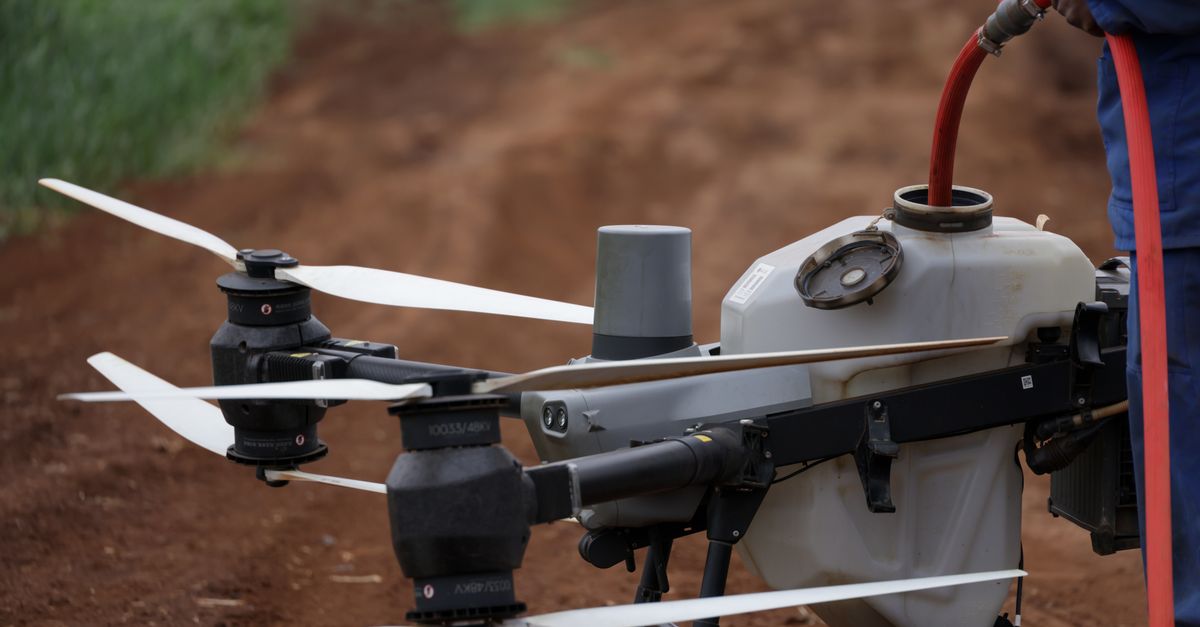
The ePlane 100 is equipped with a liquid payload tank capable of holding up to 10 liters of pesticide or fertilizer. It uses GPS-guided autonomous flight paths to ensure even coverage over crops, reducing chemical usage by up to 30 percent compared to manual spraying. This efficiency is a key selling point for Indian farmers who face rising input costs. The drone is certified under the DGCA’s Digital Sky Platform, allowing it to be operated legally for agricultural purposes under specific conditions.
ePlane has also ventured into the logistics space with a dedicated delivery drone. This model is designed for transporting medical supplies to remote areas, particularly in hilly regions where road access is limited. The company has partnered with state health departments in Karnataka and Kerala for pilot deployments. These deployments are not just concept tests; they involve actual medical supply chains moving from district hospitals to rural health centers. The drone carries payloads of up to 5 kilograms and operates within a range of 10 kilometers.
The pricing for the ePlane 100 is more accessible to smaller entities. The base unit, including the controller, is estimated to be priced around ₹8 lakh to ₹10 lakh. However, the total cost of ownership includes registration fees, remote pilot training, and insurance, which can add another ₹2 lakh annually. This makes the drone a viable option for larger cooperatives or government-backed agricultural schemes rather than individual smallholders.
Regulatory Landscape: DGCA and the Digital Sky Platform
No analysis of Indian drone startups is complete without addressing the regulatory framework. The Directorate General of Civil Aviation (DGCA) introduced the Drone Rules 2021, which simplified the licensing process but did not remove the compliance burden. The Digital Sky Platform (DSP) is the central hub for everything from drone registration to flight permissions.
Under the new rules, drones are classified into categories: Nano, Micro, Small, Medium, and Heavy. Each category has specific restrictions on where they can fly. For instance, Nano drones can fly without registration in certain areas, but Medium and Heavy drones require a Unique Identification Number (UIN) and a Remote Pilot Certificate. ideaForge, Garuda, and ePlane all operate within this framework, ensuring their clients are compliant. This compliance is a barrier to entry that protects established players from unregulated competitors.
The no-fly zones (NFZs) are another critical constraint. Sensitive areas, including airports, military installations, and high-security zones, are mapped on the DSP. Operators must apply for a flight permit at least 24 hours in advance. This delay can impact the viability of rapid response drones. However, the companies have integrated these constraints into their flight software, which automatically locks operations in NFZs. This feature ensures that pilots do not accidentally violate regulations, which could lead to severe penalties.
Pricing and Availability in India
Availability of Indian drones is generally robust, with most manufacturers offering direct sales through their websites or authorized dealers. However, the lead time for custom orders can vary. For standard models, delivery is typically within 4 to 6 weeks. For defense-specific configurations, lead times can extend to 3 to 6 months due to quality assurance protocols.
The pricing structure reflects the high cost of R&D and compliance. A typical Indian drone manufacturing ecosystem requires significant investment in testing facilities, which are expensive to build and maintain. This is why the landed cost of a single unit often exceeds the global average for similar specifications. For example, a heavy-lift drone in the US market might cost $15,000, but in India, the same unit could cost ₹15 lakh ($18,000) due to import duties on components and local manufacturing costs.
Despite the high costs, the market is growing. The PLI scheme aims to boost manufacturing capacity and reduce dependency on imports. As more startups achieve certification and scale up production, unit economics are expected to improve. For now, operators must budget for the hardware, the regulatory fees, and the ongoing maintenance costs.
Conclusion: A Market Moving from Concept to Deployment
The Indian drone industry has moved past the hype cycle. Companies like ideaForge, Garuda Aerospace, and ePlane Robotics are delivering hardware that ships, flies, and performs in real-world scenarios. While regulatory hurdles remain high, the regulatory framework provides a stable environment for compliant manufacturers. As the Digital Sky Platform matures, we expect to see more data on flight hours and deployment success rates.
For investors and operators, the focus should be on the shipping history and deployment data rather than marketing claims. The companies listed above have demonstrated the ability to deliver in the Indian context. As the market expands, the ones that prioritize regulatory compliance and hardware reliability will lead the sector. The era of concept videos is over; the era of flight data has begun.
References
1. ideaForge Technology Official Website and Press Releases: ideaforge.com
2. Garuda Aerospace Official Information: garudaaero.com
3. ePlane Robotics Product Specifications: eplanedrones.com
4. Directorate General of Civil Aviation (DGCA) Drone Rules 2021: dgca.gov.in
✓ Key takeaways
- •Hands-on view of Indian Drone Startups: Shipping Hardware Over Hype in a Regulated Market inside our Indian Drone Startups library.
- •Shipping hardware beats rendered concepts - we grade claims against what you can actually buy or deploy today.
- •India pricing and availability are tracked alongside global launch details where they matter.
References
Related articles
More in Indian Drone Startups →