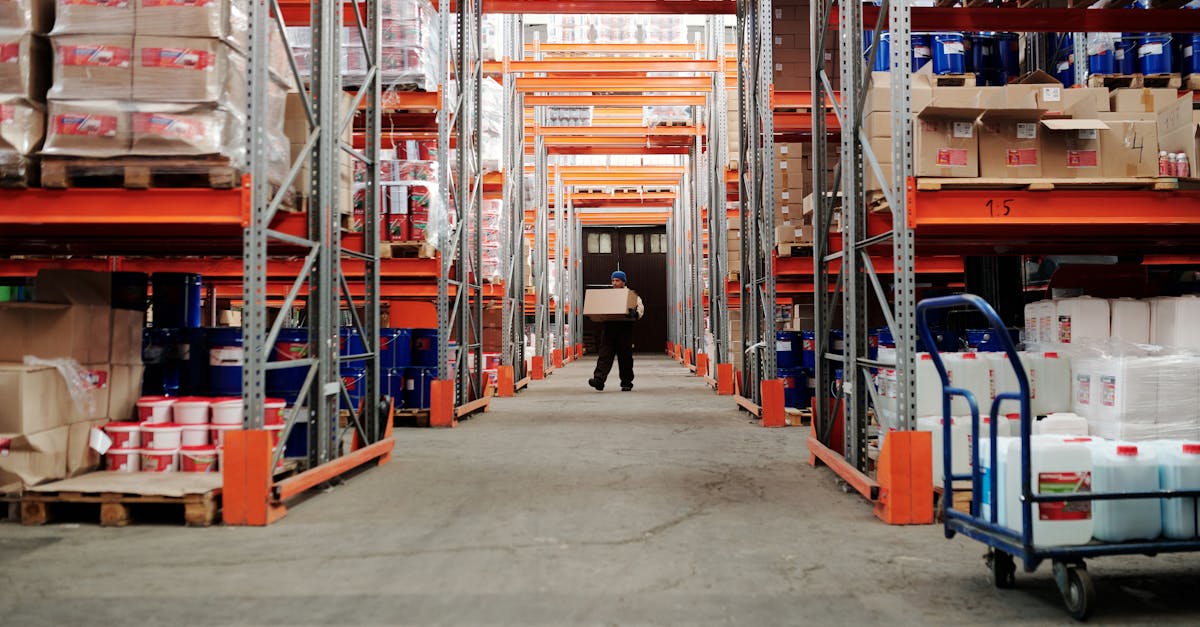
Autonomous Mobile Robots in Warehouses: The Post-AGV Generation
Autonomous Mobile Robots in Warehouses: The Post-AGV Generation
The transition from Automated Guided Vehicles (AGVs) to Autonomous Mobile Robots (AMRs) represents a structural shift in warehouse automation, not a marketing rebrand. Early AGV systems relied on physical guidance media—magnetic tape, wires, or reflective strips—locking robots to fixed routes and requiring facility reconfiguration for every process change. AMRs replace that infrastructure with real-time sensor fusion, simultaneous localization and mapping (SLAM), and cloud-orchestrated fleet management. The distinction matters because it dictates deployment speed, safety compliance, and total cost of ownership.
This article grades the AMR category by shipping hardware first, verified pilot deployments second, and manufacturer announcements last. We prioritize manufacturer spec sheets, on-stage operational demos, and independent field reporting over conceptual renders or roadmap promises.
From Guided Tracks to On-Demand Navigation
Modern warehouse AMRs typically run on three architectural layers: the mobile chassis, the perception stack, and the fleet management system. The chassis handles locomotion, battery management, and safety fencing. The perception stack fuses LiDAR, stereo vision, and inertial measurement units to maintain centimeter-level pose estimation in dynamic environments. The fleet management layer routes multiple units, manages charging, and interfaces with warehouse management systems (WMS) or warehouse control systems (WCS).
Navigation redundancy is now standard in shipping hardware. Dual-LiDAR setups with visual odometry fallback, combined with dynamic obstacle detection that meets ISO 3691-4 safety requirements, allow AMRs to operate alongside human workers without physical barriers. This capability separates production-ready systems from early-stage pilots that still require supervised paths or speed restrictions.
Hardware Reality: What Ships and What Stalls
Manufacturers that have shipped hardware at scale demonstrate mature supply chains, validated navigation stacks, and documented failure modes. The following platforms represent proven shipping hardware as of 2024:
- Mobile Industrial Robots (MiR) MiR250/MiR500: Class 3/Class 4 AMRs with payload capacities up to 250 kg and 500 kg respectively. Navigation relies on LiDAR SLAM with visual odometry. Fleet management (MiR Connect) supports multi-vendor orchestration and WMS integration.
- Locus Robotics LocusBoost: Goods-to-person AMRs designed for e-commerce fulfillment. Units navigate via floor-mounted QR codes and onboard vision. The system ships with proprietary fleet management software and documented throughput metrics from live deployments.
- Geek+ CR Series & AGV200: Chinese-manufactured AMRs shipping globally with payload options from 200 kg to 1,000 kg. Navigation uses LiDAR SLAM with dynamic mapping. The company provides on-stage demos and factory video documentation of end-of-line testing.
- SSI Schaefer / Fetch Robotics Platforms: Post-acquisition integration has standardized Fetch's mobile manipulator and cart-pushing AMRs under SSI Schaefer's industrial portfolio. These units ship with proven WMS/WCS connectors and documented safety certifications.
Fleet Management and Warehouse OS Integration
Hardware is only half the deployment equation. AMRs require a Warehouse Operating System (WOS) or fleet management layer to translate business logic into robot actions. Proven systems support:
- Dynamic task assignment based on real-time inventory location and worker availability
- Automatic battery management with opportunity charging and health monitoring
- Multi-vendor routing that prevents traffic deadlocks in high-density aisles
- API-first architecture for WMS/WCS integration, typically via REST or MQTT protocols
Pilot deployments often stall at this layer. Many early-stage AMR programs succeed on the floor but fail during WMS handoff due to undocumented latency, mismatched coordinate systems, or insufficient error-handling protocols. Production deployments require documented SLAs for message throughput, offline fallback modes, and explicit mapping update procedures.
Warehouse Applications: Proven Use Cases and Limits
AMRs excel in high-frequency, medium-payload transport. They do not replace human workers; they replace repetitive trunking, cross-docking, and inventory replenishment tasks. The following applications have documented shipping hardware and verified throughput:
- Goods-to-Person (G2P): AMRs bring storage bins to picking stations. Throughput scales with fleet density and pick path optimization. Verified deployments show 2–3x productivity gains compared to manual walking.
- Trunking and Line Replenishment: AMRs transport bulk inventory from receiving to production lines. This use case benefits from predictable routes and heavy payload capacity.
- Cross-Dock and Sortation: AMRs move consolidated loads between staging zones. Requires precise docking interfaces and dynamic lane assignment.
- Inventory Counting: AMR-mounted vision or RFID readers scan shelf locations autonomously. Accuracy depends on mapping stability and scan frequency, not robot speed.
Applications that remain limited to pilots or announcements include heavy payload outdoor transition, complex manipulation beyond simple gripper actuation, and fully unstructured environment navigation without floor markers or pre-mapped zones. These capabilities require sensor upgrades, legal liability frameworks, and extended field testing.
India Availability and Landed Cost Estimates
AMRs are available in India through direct imports, authorized distributors, and local systems integrators. Most units are shipped as CKD/SKD kits or fully built, subject to Indian customs duties, IGST, and safety compliance documentation. The market is dominated by European, American, and Chinese manufacturers, with local assembly rarely exceeding sub-component integration.
Approximate landed cost estimates for standard warehouse AMRs in India are as follows:
- Light AMRs (≤250 kg payload): ₹28 lakh to ₹42 lakh INR per unit
- Medium AMRs (250–500 kg payload): ₹42 lakh to ₹65 lakh INR per unit
- Heavy AMRs (500–1,000 kg payload): ₹65 lakh to ₹85 lakh INR per unit
- Mobile Manipulator Configurations: ₹90 lakh to ₹1.5 crore INR per unit
These figures include base hardware, standard navigation redundancy, basic fleet management licensing, and estimated import duties. They exclude site surveying, WMS integration, safety fencing, training, and ongoing software support. Local distributors such as KUKA India, Schaeffler India, and authorized robotics integrators handle customs clearance and compliance documentation. Buyers should verify HS code classification, BIS certification requirements for lithium battery packs, and local service coverage before procurement.
Grading the Market: Shipping Hardware, Pilots, and Announcements
RobotWale grades AMR claims using a strict hierarchy to separate verified deployments from marketing timelines.
Shipping Hardware (Grade A)
Units documented on manufacturer spec sheets, with published safety certifications, WMS connectors, and verifiable factory shipping records. Examples: MiR250/500, LocusBoost fleet, Geek+ CR series, Fetch/SSI Schaefer mobile platforms. These systems require documented integration effort but deliver predictable performance.
Pilot Deployments (Grade B)
Systems operating in live facilities with limited fleet size, supervised routing, or restricted payload. Pilots demonstrate navigation viability but lack long-term reliability data, multi-vendor orchestration, or documented failure recovery. Buyers should treat pilot metrics as directional, not contractual.
Announcements and Roadmaps (Grade C)
Concept renders, partnership MOUs, and production timelines without shipping hardware or independent verification. These claims require extended validation before capital allocation. Warehouse automation projects should not be gated on Grade C announcements.
Deployment Checklist for Indian Facilities
- Verify ISO 3691-4 safety compliance and local service availability
- Confirm WMS/WCS API documentation and latency requirements
- Map floor conditions, dock interfaces, and charging infrastructure
- Calculate total cost of ownership including integration, training, and 3-year support
- Require third-party reference sites with 12+ months of operational data
AMRs in warehouses have moved beyond proof-of-concept. The hardware ships, the navigation stacks mature, and the integration requirements are well-documented. Procurement teams should prioritize Grade A hardware, budget for integration complexity, and treat India availability as an import-driven market with clear landed cost baselines. The post-AGV generation is operational; the next phase is standardized deployment and measurable ROI.
References
- Mobile Industrial Robots. MiR250 and MiR500 Product Specifications. https://www.mir.com/en/products/
- Locus Robotics. LocusBoost AMR Platform and Fleet Management Documentation. https://www.locusrobotics.com/
- Geek+ Technology. CR Series and AGV200 Product Line. https://www.geekplusrobotics.com/
- SSI Schaefer. Fetch Robotics Integration and Mobile Manipulator Portfolio. https://www.ssi-schaefer.com/
- International Organization for Standardization. ISO 3691-4: Industrial trucks - Safety requirements and verification. https://www.iso.org/standard/75336.html
- Central Board of Indirect Taxes and Customs (CBIC). Indian Customs Tariff and Import Duty Framework. https://www.cbic.gov.in/
- Interact Analysis. Warehouse Robotics Market Report: AMR Deployment and Fleet Management. https://www.interact-analysis.com/
✓ Key takeaways
- •Hands-on view of Autonomous Mobile Robots in Warehouses: The Post-AGV Generation inside our AMRs in Warehouses library.
- •Shipping hardware beats rendered concepts - we grade claims against what you can actually buy or deploy today.
- •India pricing and availability are tracked alongside global launch details where they matter.
Related articles
More in AMRs in Warehouses →