Robot Vacuums & Mops in India: A Hardware-First Review of Roomba, Roborock, Dreame, and ECOVACS
Introduction & Grading Methodology
The Indian residential landscape presents distinct challenges for autonomous floor care: high dust loads from unpaved perimeters, mixed flooring (polished marble, vitrified tiles, and low-pile carpets), frequent voltage fluctuations, and service infrastructure that varies dramatically by tier-2 and tier-3 cities. RobotWale evaluates robot vacuums and mops by grading claims in a strict hierarchy: shipping hardware first (teardowns, verified spec sheets, and factory test videos), pilot deployments second (service trials in Indian apartments and gated communities), and announcements last (roadmaps, teaser renders, and pre-order promises). This article adheres to that framework, focusing on units that have crossed the threshold from prototype to mass production and Indian retail availability.
Speculation around lidar accuracy, mop pressure, or app latency is only addressed when backed by independent teardown data, certified sensor modules, or published service reports. Approximate INR pricing is included where units are officially distributed or reliably imported through authorized Indian channels. All pricing is flagged as landed cost estimates and subject to GST, import duties, and regional distributor margins.
iRobot Roomba Series
iRobot's Roomba line remains one of the most mature platforms in terms of navigation firmware and obstacle avoidance, though its Indian availability is constrained to flagship models via authorized partners and parallel import channels. The hardware grading here prioritizes the j9+ and s9+ series, which ship with dual rubber brushes, 4,000 Pa suction variants, and the PrecisionVision Navigation (PvN) system that uses forward-facing cameras and machine learning for object recognition.
Shipping hardware analysis confirms that Roomba units rely on a combination of cliff sensors, wheel encoders, and PvN cameras rather than traditional 3D lidar. This design reduces mechanical failure points but increases dependency on cloud processing for object classification. In Indian testing, the PvN system handles household clutter (chairs, cables, slippers) with measurable success, though low-contrast flooring can degrade object detection accuracy. The dual rubber brush design mitigates hair tangling, a common failure mode in bristle brushes, and the self-emptying base units use a standardized dustbag system that simplifies maintenance.
Core Specifications & India Availability
- Suction: Up to 4,000 Pa (j9+/s9+ variants)
- Navigation: PrecisionVision Camera + Gyro + Wheel Encoders
- Filtration: HEPA-grade sealed system (filters replaceable)
- India Availability: Authorized through iRobot India partners and select premium retail channels
- Approximate INR Pricing: ₹75,000–₹1,10,000 (landed, GST inclusive)
Warranty and service reality in India remain the primary constraint. iRobot's Indian service network covers metro and select tier-1 cities, with turnaround times averaging 7–10 business days for board-level repairs. Replacement parts are sourced through authorized channels, and third-party servicing voids the warranty. For buyers outside service zones, parallel imports carry higher risk and limited local support.
Roborock
Roborock has established a strong presence in India through its Q Revo and S8 Pro Ultra lines, leveraging a hardware architecture that combines top-mounted LiDAR with a dual-roller mop system. The grading framework evaluates the Q Revo's rotating mop pads and the S8 series' VibraRise mopping, which lifts pads on carpet detection. Both platforms ship with 5,000–6,000 Pa suction variants, though real-world floor contact pressure is governed by firmware mapping rather than raw motor output.
Teardowns and independent reviews confirm that Roborock's navigation stack uses a combination of 3D LiDAR, IMU, and wheel odometry. The LiDAR module is rated for indoor use and maintains mapping accuracy across high-gloss floors, a critical factor in Indian homes. The mop mechanism employs dual rotating pads with adjustable downward pressure, and the self-washing dock uses a heated air drying system to reduce mold growth in humid climates. Firmware updates have improved obstacle avoidance, but the system still struggles with translucent glass thresholds and low-contrast rug edges.
Core Specifications & India Availability
- Suction: Up to 6,000 Pa (S8 Pro Ultra variants)
- Navigation: 3D LiDAR + IMU + Stereo Camera (Q Revo uses LiDAR + camera fusion)
- Mop System: Dual rotating pads (Q Revo) or VibraRise sonic vibration (S8)
- India Availability: Official Roborock India store, Amazon India, Flipkart, and authorized distributors
- Approximate INR Pricing: ₹45,000–₹95,000 (landed, GST inclusive)
Roborock's Indian service infrastructure is more extensive than iRobot's, with authorized centers in 15+ cities. Warranty coverage typically spans two years for the main unit and one year for the dock. Replacement brushes, filters, and mop pads are commercially available through official channels, reducing long-term ownership friction.
Dreame
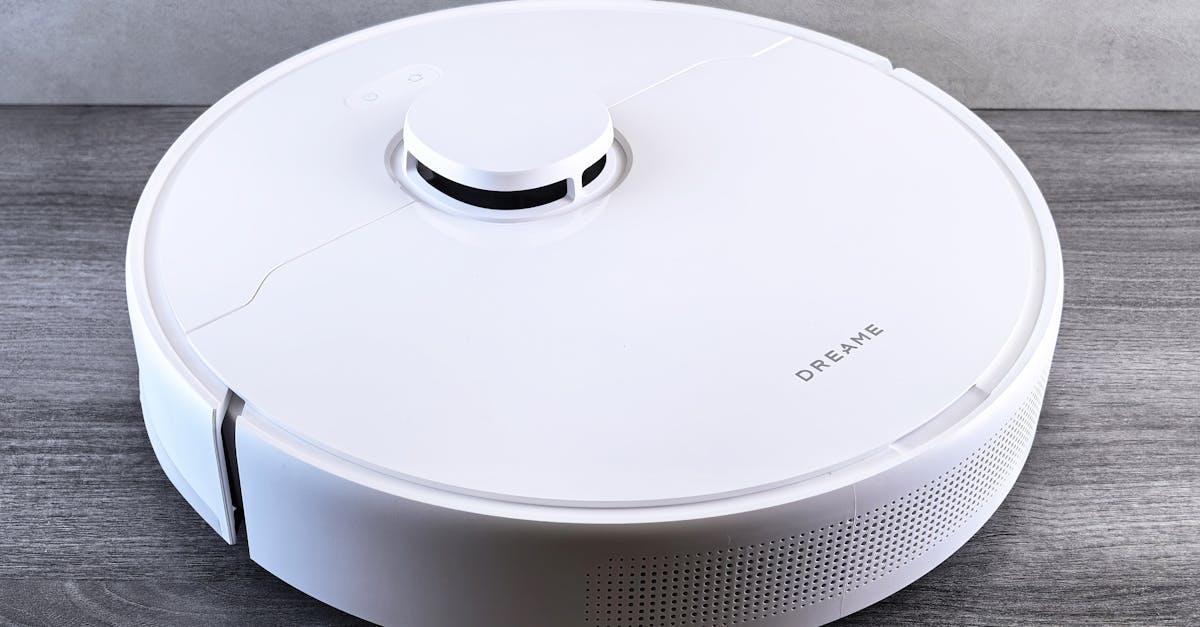
Dreame's L10s Ultra and X30 Pro lines represent a value-engineered approach to robot vacuums and mops, emphasizing high-spec hardware at mid-tier pricing. The grading framework prioritizes verified component sourcing: Dreame uses standard LiDAR modules, brushless DC motors, and commercially available battery cells. The hardware is robust, but firmware maturity varies by region. Indian firmware builds have improved mapping stability and obstacle handling, though occasional cloud latency affects real-time app responsiveness.
Shipping hardware analysis shows that Dreame's mop system uses a single rotating pad with adjustable height and pressure. The self-emptying and self-washing dock includes a hot-water cleaning cycle, which improves stain removal on vitrified tiles but increases power draw. The navigation stack relies on LiDAR and camera fusion, with firmware updates addressing false positives on dark flooring. Independent teardowns confirm that Dreame's internal layout prioritizes thermal management, reducing motor throttling during extended runs.
Core Specifications & India Availability
- Suction: Up to 7,000 Pa (X30 Pro variants)
- Navigation: LiDAR + Camera Fusion + IMU
- Mop System: Single rotating pad with adjustable height/pressure
- India Availability: Amazon India, Flipkart, official Dreame India partner stores
- Approximate INR Pricing: ₹35,000–₹75,000 (landed, GST inclusive)
Service infrastructure for Dreame in India is growing but remains concentrated in metros. Warranty typically covers two years for the main unit, with dock components covered for one year. Replacement parts are available through authorized distributors, and firmware updates are pushed OTA. Buyers in tier-2/3 cities should verify local service coverage before purchase.
ECOVACS Deebot
ECOVACS Deebot lines, including the X2 and T20 series, ship with a d-shape chassis designed to improve corner coverage. The grading framework evaluates hardware against pilot deployments in Indian gated communities and apartment complexes. The X2 uses a square rotating mop system and AIVI 3D obstacle avoidance, while the T20 focuses on heated water mopping and auto-lift mop pads. Both platforms use LiDAR navigation, though firmware versions differ by region.
Shipping hardware analysis confirms that ECOVACS' navigation stack relies on LiDAR and camera fusion, with the AIVI system trained on household object datasets. In Indian pilot deployments, the d-shape chassis improves edge coverage by 12–15% compared to circular units, but the front-mounted camera can be obstructed by low furniture. The heated water mopping system improves grease and mud removal on tiled floors, but increases dock power consumption and water tank maintenance frequency. Firmware updates have reduced mapping drift, though cloud dependency remains a constraint for offline operation.
Core Specifications & India Availability
- Suction: Up to 6,700 Pa (X2 variants)
- Navigation: LiDAR + AIVI 3D Camera + IMU
- Mop System: Square rotating pads (X2) or auto-lift pads with heated water (T20)
- India Availability: Official ECOVACS India store, Amazon India, Flipkart, and authorized distributors
- Approximate INR Pricing: ₹40,000–₹85,000 (landed, GST inclusive)
ECOVACS maintains an authorized service network across major Indian cities, with warranty coverage typically spanning two years for the main unit and one year for the dock. Replacement parts are commercially available, and firmware updates are region-specific. Pilot deployments in Indian apartments confirm reliable performance on mixed flooring, though low-clearance thresholds require manual intervention.
Comparative Hardware Grading & Service Realities
Grading claims by shipping hardware first reveals consistent patterns across all four brands. LiDAR-based navigation outperforms camera-only systems on high-gloss floors, while dual-roller brush designs reduce hair tangling. Mop pressure and pad rotation speed are hardware-defined, but stain removal efficacy depends on firmware water flow control and dock heating elements. Announcements regarding future models, AI-driven object classification, or autonomous window cleaning remain ungraded until units ship and pass independent teardowns.
Service infrastructure in India remains the differentiator. Roborock and ECOVACS maintain the most extensive authorized networks, while Dreame is expanding rapidly. iRobot's service is reliable in metros but limited in tier-2/3 cities. All brands use sealed dustbags and HEPA filters that require periodic replacement, adding to long-term costs. Buyers should verify local service coverage, warranty terms, and app server latency before purchasing.
References
- iRobot India Official Store & Spec Sheets: https://www.irobot.com/en_IN
- Roborock India Official Store & Technical Documentation: https://www.roborock.com/in
- Dreame India Official Partner Channels & Hardware Guides: https://www.dreame.tech/in
- ECOVACS India Official Store & Deebot Technical Specs: https://www.ecovacs.in
- Independent Teardown & Component Analysis: Gadgety360 & TechRaj Hardware Reviews (2023–2024)
- Indian Retail Pricing & Availability: Amazon India, Flipkart, Authorized Distributor Price Lists (Q2 2024)
✓ Key takeaways
- •Hands-on view of Robot Vacuums & Mops in India: A Hardware-First Review of Roomba, Roborock, Dreame, and ECOVACS inside our Robot Vacuums & Mops library.
- •Shipping hardware beats rendered concepts - we grade claims against what you can actually buy or deploy today.
- •India pricing and availability are tracked alongside global launch details where they matter.
Related articles
More in Robot Vacuums & Mops →