Make in India Robotics: Policy, Incentives, and Domestic Manufacturing Realities
The Policy Framework Driving Domestic Robotics
India’s approach to robotics manufacturing is structured across two distinct layers: central fiscal incentives and state-level industrial policies. The central government has not yet published a dedicated production-linked incentive (PLI) scheme exclusively for robotics. Instead, robotics hardware and component manufacturing fall under broader digital manufacturing, advanced electronics, and capital goods frameworks. The Department for Promotion of Industry and Internal Trade (DPIIT) administers incentive structures that indirectly support robotics assembly, particularly through customs duty exemptions on imported capital equipment and component imports under the Advance Authorization Scheme.
State governments have taken a more direct role. Karnataka, Tamil Nadu, Gujarat, Uttar Pradesh, and Telangana have each published robotics-specific or automation-focused industrial policies. These documents outline land allocation, capital subsidy ranges, stamp duty waivers, and power tariff concessions. The policy architecture is consistent in intent but varies significantly in execution timelines, compliance requirements, and disbursement mechanisms. Manufacturers must navigate state-specific eligibility criteria, minimum investment thresholds, and employment generation mandates to qualify for support.
Central Incentives and Industrial Policy
At the federal level, the most relevant mechanism for robotics hardware is the Customs Duty framework. Basic Customs Duty (BCD) on complete industrial robots typically ranges from 7.5% to 15%, depending on the classification under the Harmonized System of Nomenclature (HSN). Collaborative robots and certain automated guided vehicles often attract lower duty bands, while precision actuators and servo motors face higher rates. The Goods and Services Tax (GST) on imported robotics equipment is uniformly 18%. Domestic assembly operations that utilize Indian-made components can leverage input tax credit mechanisms, reducing effective tax burden compared to fully imported units.
The Production Linked Incentive scheme for advanced chemistry cell (ACC) batteries and electronics manufacturing provides indirect support to robotics companies that integrate power systems, control boards, and sensor arrays. While not robotics-specific, the scheme has accelerated domestic component fabrication, particularly in motor controllers, battery management systems, and PCB assembly. Manufacturers shipping complete hardware units benefit from reduced dependency on foreign power electronics, though core motion control components remain largely imported.
State-Level Variations and Compliance
State policies differ in subsidy structure and approval speed. Karnataka’s Robotics and Automation Policy offers up to 25% capital subsidy on plant and machinery, with additional incentives for intellectual property creation and export orientation. Tamil Nadu’s policy emphasizes cluster development near existing automotive and electronics hubs, providing infrastructure readiness and single-window clearance. Gujarat focuses on land allotment at concessional rates in designated industrial corridors, while Uttar Pradesh and Telangana offer direct equity participation or interest subvention for early-stage hardware manufacturers.
Compliance remains the primary bottleneck. State disbursements require audited financials, employment verification, and production milestone tracking. Delays in state-level approvals frequently push manufacturers toward private financing or cross-border joint ventures. The absence of a unified national robotics manufacturing portal complicates cross-state expansion, forcing companies to maintain separate compliance teams for each jurisdiction.
Domestic Manufacturing: Hardware vs. Announcements
The robotics sector in India operates on a clear evidence hierarchy. Announcements of assembly facilities, pilot deployments in logistics or manufacturing plants, and shipped hardware represent distinct maturity levels. Policy documents and press releases should be weighted last in any assessment of domestic capability.
Grading Claims by Evidence
Shipping hardware constitutes the highest tier of validation. Companies that have delivered complete robotic systems, provided installation documentation, and maintained post-deployment service contracts demonstrate functional manufacturing or assembly capability. Pilot deployments rank second, indicating integration readiness and site-specific validation but not yet commercial scale. Announcements of factory construction, partnership MoUs, or policy-aligned commitments rank last, as they rarely translate to revenue-generating units without independent verification.
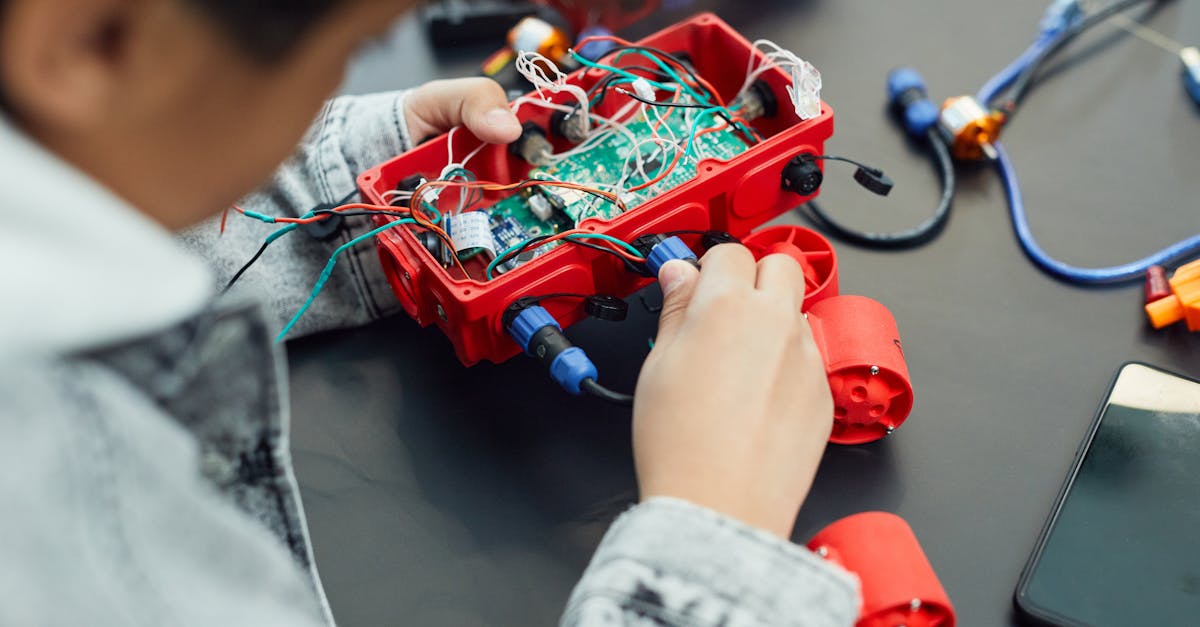
Domestic humanoid robot manufacturing remains in the pilot and prototype phase. Several Indian startups and academic spin-offs have demonstrated functional prototypes, but none have shipped commercial units at scale. Industrial cobots and mobile robots show stronger domestic assembly records, with several companies operating final assembly lines in India. These lines typically import kinematic arms, servo drives, and safety controllers, performing integration, software flashing, calibration, and quality assurance domestically.
Key Domestic Players and Production Status
GreyOrange has established domestic assembly and software development operations in Tamil Nadu, focusing on warehouse automation hardware. Embot maintains manufacturing and R&D facilities in Tamil Nadu, producing autonomous mobile robots for manufacturing and logistics. KUKA India, Fanuc India, and ABB India operate assembly and service centers in Chennai, Pune, and Bengaluru, performing final integration, software configuration, and regional calibration. These operations reduce lead times and customs exposure but do not constitute full domestic manufacturing of core components.
Indian startups such as Symbio, Robovision, and BlueBird focus on specific automation segments, including material handling, quality inspection, and last-mile logistics. Production volumes remain modest, with most units shipped to domestic enterprises in manufacturing, logistics, and retail. Humanoid robot manufacturers operating in India, including early-stage ventures, have demonstrated functional prototypes and pilot deployments in controlled environments. Commercial shipping of humanoid hardware has not yet been independently verified by third-party auditors or published sales data.
Availability, Pricing, and Landed Costs in India
Domestic availability of robotics hardware depends on the product category and manufacturer presence. Industrial cobots and mobile robots are widely available through authorized distributors and direct sales teams. Humanoid robots remain limited to pilot deployments, academic research, and controlled factory trials. Import-dependent models face longer lead times due to customs clearance, component sourcing, and software licensing.
Pricing in India reflects import duty, GST, logistics, and integration costs. Imported industrial cobots typically land between INR 12 lakh and INR 22 lakh per unit, depending on payload, reach, and peripheral equipment. Domestic assembly reduces landed cost by approximately 10% to 18%, primarily through duty optimization and reduced freight. Humanoid robot hardware, where available through pilot programs or early commercial trials, carries estimated landed costs between INR 35 lakh and INR 60 lakh, with software licensing and maintenance contracts adding recurring expenses. These figures are approximate and vary by configuration, warranty terms, and financing arrangements.
State subsidies can offset up to 25% of capital expenditure for eligible manufacturers, but disbursement timelines often extend beyond 12 months. Companies relying on incentive-driven pricing must account for cash flow gaps during the approval period. Independent financing through equipment leasing or vendor credit remains the standard approach for system integrators and end users.
Supply Chain Constraints and Component Dependency
Domestic robotics manufacturing in India faces persistent component dependency. Servo motors, harmonic drives, planetary gearboxes, and safety controllers are predominantly sourced from Japan, Germany, and South Korea. Indian component manufacturers have made progress in encoder production, cable assemblies, and structural fabrication, but precision motion components remain import-dependent. This dependency limits full localization and increases exposure to exchange rate fluctuations and geopolitical supply disruptions.
Software ecosystems show stronger domestic development. Indian engineering firms maintain in-house trajectory planning, vision processing, and fleet management software. Cloud connectivity, edge computing, and digital twin integration are increasingly handled by local teams, reducing reliance on foreign software licensing. However, real-time operating systems, safety certification software, and proprietary kinematic libraries remain controlled by overseas vendors.
Quality assurance and calibration infrastructure require specialized test benches, laser trackers, and force-torque sensors. Domestic calibration labs are expanding in Chennai, Pune, and Bengaluru, but certification of safety-critical components still requires third-party validation from recognized agencies. Manufacturers shipping hardware domestically must maintain documented calibration records to comply with ISO 10218 and ISO/TS 15066 standards.
Pathways to Sustainable Domestic Production
Scaling domestic robotics manufacturing requires three coordinated actions. First, component localization must advance beyond structural fabrication to include precision reducers, servo drives, and safety controllers. Joint ventures with established foreign component manufacturers can accelerate technology transfer without compromising quality standards. Second, a unified national robotics manufacturing certification framework would streamline compliance, reduce state-level fragmentation, and enable cross-border expansion for Indian hardware companies. Third, demand aggregation through public procurement and manufacturing cluster incentives would provide predictable order volumes, allowing domestic assemblers to achieve economies of scale.
Policy continuity remains critical. Incentive programs must transition from announcement-driven frameworks to disbursement-verified mechanisms. Manufacturers should prioritize hardware shipping milestones over policy alignment claims, as production volume and service coverage determine long-term viability. The Indian robotics market is expanding, but sustainable domestic manufacturing will depend on component localization, calibration infrastructure, and consistent incentive execution.
References
- DPIIT Production Linked Incentive Schemes - https://dipp.gov.in/writereaddata/files/PLI_Scheme.pdf
- Karnataka Robotics and Automation Policy 2024 - https://commerce.karnataka.gov.in/storage/pdf-files/RAP%202024.pdf
- Tamil Nadu Robotics and Automation Policy - https://www.industry.tn.gov.in/policies/robotics-policy
- GreyOrange Manufacturing and Operations - https://www.greyorange.com/about-us
- KUKA India Assembly and Service Centers - https://www.kuka.com/in/en/company/locations
- Fanuc India Manufacturing and Integration - https://www.fanuc.co.in/
- ABB India Robotics and Automation - https://new.abb.com/robots/india
- Customs Duty Schedule for Robotics Equipment - https://cbic-gst.gov.in/customs/notifications/cus-duty-notif.html
- ISO 10218-1 and ISO/TS 15066 Safety Standards - https://www.iso.org/standard/75668.html