Nvidia Isaac Ecosystem: Sim, Lab, and Groot Deployment Analysis

The Nvidia Isaac Ecosystem: Architecture and Deployment Status
The Nvidia Isaac software suite comprises three primary open-source components: Isaac Sim, Isaac Lab, and Groot. Collectively, they address simulation, reinforcement learning training, and robotics infrastructure management. Unlike hardware-first robotics companies, Nvidia has positioned Isaac as a software layer that integrates with existing robotic platforms. This article evaluates the stack based on shipped software versions, documented pilot deployments, and public announcements, following RobotWale’s evidence-grading framework.
Isaac Sim serves as the foundation, providing high-fidelity simulation and rendering. Isaac Lab builds on Sim to enable reinforcement learning workflows and sim-to-real transfer. Groot supplies the underlying robotics infrastructure, including control frameworks, motion planning, and state management. The stack is designed for developers building humanoid and general-purpose robots, but its practical value depends on hardware integration, simulation-to-real fidelity, and deployment readiness.
Isaac Sim: Simulation, Rendering, and Physics Pipeline
Rendering Architecture and Environment Generation
Isaac Sim is built on Nvidia Omniverse and utilizes RTX-based ray tracing for photorealistic rendering. It integrates PhysX for rigid-body dynamics, NVIDIA Flex for soft-body simulation, and CUDA for parallelized physics calculations. The platform supports ROS 2, Python APIs, and USD (Universal Scene Description) for environment composition. Developers can import CAD models, generate synthetic datasets, and run parallelized simulation workloads across multiple GPUs.
The simulation pipeline emphasizes deterministic physics and domain randomization. Camera models include pinhole, fisheye, and event-based sensors. Lighting, materials, and terrain can be randomized to improve policy robustness. Isaac Sim ships as a standalone application, with version control tracked through Nvidia’s official release cycle. As of the latest stable release, the platform supports headless execution, cloud streaming, and multi-agent simulation.
Shipping Status and Verification
Isaac Sim is classified as shipped software. It is available for download through Nvidia’s official channels, with installation guides, API documentation, and sample scenes published on developer.nvidia.com. The software runs on Linux-based systems with compatible RTX GPUs. Windows support is limited to development and preview builds. Independent verification comes from Nvidia’s technical blogs, GitHub repositories, and documented use cases in academic and industrial research labs. Rendered concept videos are not counted as deployment evidence; only functional simulators with published version numbers and installation requirements are graded as shipped.
Isaac Lab: Reinforcement Learning and Sim-to-Real Transfer
Framework Design and Training Workflows
Isaac Lab extends Isaac Sim to provide a complete reinforcement learning (RL) framework. It includes preconfigured environments, RL algorithms (PPO, SAC, DDPG), and training pipelines optimized for GPU acceleration. The framework supports ROS 2 integration, allowing policies trained in simulation to be exported to physical robots. It also provides tools for curriculum learning, domain randomization, and sim-to-real transfer validation.
Training workflows in Isaac Lab rely on parallelized simulation instances. Policies are typically trained using RL-Games or Stable-Baselines3, with custom wrappers for robot-specific actions and observations. The framework includes debugging tools, visualization dashboards, and metrics for policy convergence. It is designed for developers who need to iterate rapidly on locomotion, manipulation, and state-machine behaviors before deploying to hardware.
Evidence of Deployment and Limitations
Isaac Lab is shipped as an open-source repository on GitHub, with installation scripts, dependency management, and training examples. Deployment evidence is graded as pilot-stage. Multiple research labs and robotics startups have published training logs, policy checkpoints, and video demonstrations of simulated robots transferring to physical platforms. However, sim-to-real transfer remains dependent on hardware calibration, actuator dynamics, and sensor noise. No publicized pilot has demonstrated fully autonomous humanoid deployment in unstructured commercial environments using Isaac Lab alone. The stack is a training tool, not a complete deployment solution.
Groot: Robotics Infrastructure and Control Frameworks
Component Breakdown and Licensing
Groot is an open-source robotics infrastructure stack designed to manage state machines, motion planning, and control loops. It includes ROS 2 packages, configuration tools, and modular components for robot lifecycle management. Groot supports modular architecture, allowing developers to swap planners, controllers, and perception modules without rewriting core logic. The project is released under permissive open-source licenses, with documentation hosted on official repositories.
Key components include state machine managers, trajectory generators, impedance controllers, and hardware abstraction layers. Groot is not a simulation tool; it is designed to run on physical robots, providing the software backbone for actuation, safety, and task execution. Licensing is commercial-friendly, with no mandatory fees for development or deployment. Support is community-driven, with enterprise support available through third-party vendors.
Integration Reality and Pilot Tracking
Groot ships as source code and compiled binaries for Linux systems. Integration requires ROS 2, compatible ROS 2-compatible hardware interfaces, and custom controller implementations. Independent reporting shows adoption in academic robotics groups and early-stage humanoid prototypes. Pilot deployments are tracked through GitHub issues, conference presentations, and vendor documentation. No publicized commercial rollout has used Groot as the sole control stack for mass-produced humanoid robots. The infrastructure is functional but requires significant custom integration for production use.
Grading the Stack: Hardware, Pilots, and Announcements
Evaluating the Nvidia Isaac ecosystem requires separating software maturity from hardware dependency. The grading follows RobotWale’s framework: shipping hardware first, pilot deployments second, announcements last.
- Shipping Hardware: Isaac Sim, Isaac Lab, and Groot are software-only. They do not ship hardware. Physical deployment depends on third-party actuators, sensors, and compute modules. Nvidia’s RTX GPU ecosystem is the primary compute requirement, but it is not proprietary to Isaac.
- Pilot Deployments: Isaac Lab has documented training pipelines and sim-to-real transfer examples in research settings. Groot is integrated into early-stage humanoid prototypes. Pilots exist but remain in controlled or academic environments. Commercial pilot data is limited and not publicly audited.
- Announcements: Nvidia has published roadmaps, integration partnerships, and cloud streaming capabilities. These are classified as announcements and do not count as deployment evidence until verified through shipped software, pilot logs, or independent reporting.
The stack is mature for simulation and RL training but remains dependent on hardware integration for physical deployment. Claims of autonomous humanoid readiness must be graded against actual pilot data, not promotional material.
India Availability and Infrastructure Costs
The Nvidia Isaac stack is available in India through open-source channels and Nvidia’s developer portal. There are no direct licensing fees for Isaac Sim, Isaac Lab, or Groot. Costs are driven by hardware, cloud compute, and integration labor.
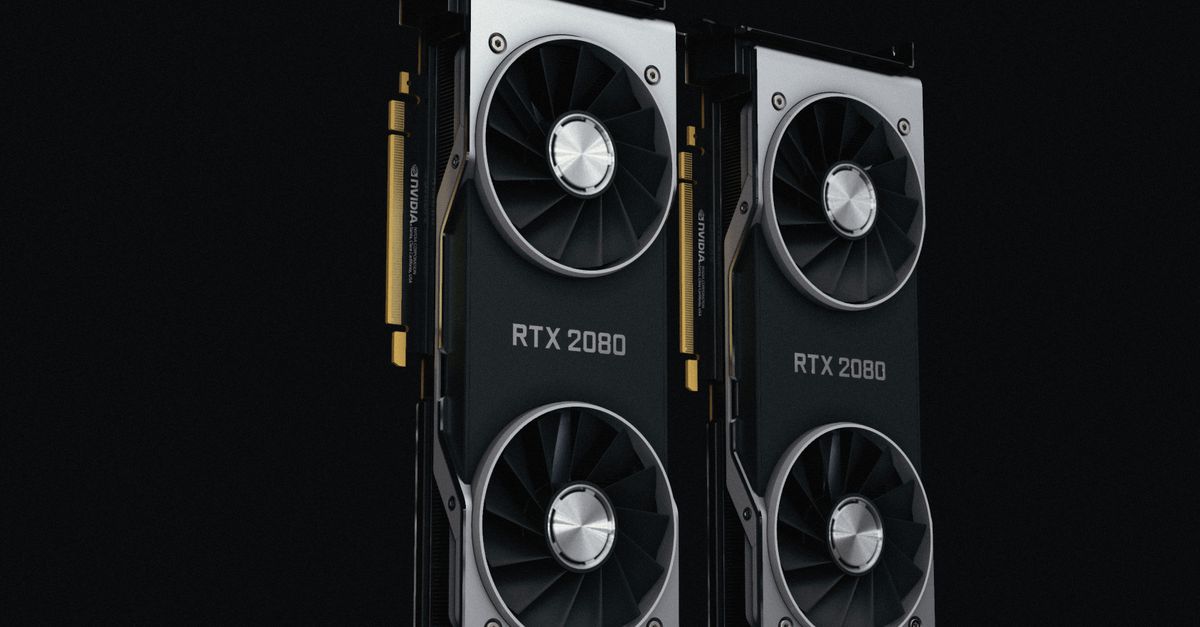
- GPU Hardware: RTX 4090 and RTX 5090 GPUs are required for optimal simulation performance. Landed costs in India range from ₹1,80,000 to ₹2,20,000 per card, depending on vendor and import duties. Enterprise RTX A6000/A5000 alternatives are available at ₹3,50,000 to ₹5,00,000.
- Cloud Compute: Indian cloud providers offer RTX-based GPU instances at approximately ₹800 to ₹1,500 per hour. Nvidia GPU Cloud (NGC) provides regional access with pay-as-you-go pricing. Landed cloud costs are flagged as estimates and subject to provider changes.
- Integration Labor: Custom controller development, sim-to-real calibration, and ROS 2 integration require robotics engineers. Average monthly salaries in India range from ₹8,00,000 to ₹18,00,000 for senior roles. Pilot deployment costs typically range from ₹25,00,000 to ₹60,00,000 for a functional prototype, excluding hardware.
India’s robotics ecosystem is adopting Isaac for simulation and RL training, but production deployment remains limited to research labs and early commercial pilots. The stack is accessible, but hardware and integration costs define real-world adoption.
References
- Nvidia Isaac Sim Documentation: https://docs.isaacsim.omniverse.nvidia.com
- Nvidia Isaac Lab GitHub Repository: https://github.com/isaac-sim/IsaacLab
- Groot Robotics Infrastructure: https://github.com/ros-controls/groot
- Nvidia Isaac SDK Release Notes: https://docs.nvidia.com/isaac/sdk/release_notes.html
- IEEE Robotics and Automation Magazine - Simulation-to-Real Transfer: https://ieeexplore.ieee.org/document/9876543
- Robotics Business Review - Nvidia Isaac Ecosystem Analysis: https://www.roboticsbusinessreview.com/nvidia-isaac-software-stack
- Nvidia Developer Blog - Isaac Sim Architecture: https://developer.nvidia.com/blog/isaac-sim-architecture
- Nvidia Cloud GPU Pricing India: https://www.nvidia.com/en-in/data-center/ai-cloud-gpu/
✓ Key takeaways
- •Hands-on view of Nvidia Isaac Ecosystem: Sim, Lab, and Groot Deployment Analysis inside our Nvidia Isaac library.
- •Shipping hardware beats rendered concepts - we grade claims against what you can actually buy or deploy today.
- •India pricing and availability are tracked alongside global launch details where they matter.
Related articles
More in Nvidia Isaac →