Nvidia Isaac Ecosystem: Simulation, Learning, and Motion in Humanoid Development

Nvidia Isaac Ecosystem: Infrastructure Over Hype
In the rapidly evolving landscape of robotics, Nvidia Isaac represents one of the few comprehensive software stacks attempting to bridge the gap between simulation and physical deployment. Unlike many competitors that rely on rendered concepts or theoretical AI models, Isaac is built around the premise of "sim-to-real" pipelines. This review evaluates Isaac Sim, Isaac Lab, and Groot based on actual shipping hardware, documented pilot deployments, and available technical specifications. The focus remains on what is currently deployable versus what remains in the research phase.
Isaac Sim: The Photorealistic Simulation Layer
Isaac Sim is the cornerstone of the Nvidia ecosystem, functioning as a physics-enabled simulator built on the Omniverse platform. It utilizes USD (Universal Scene Description) to allow robots to exist in physically accurate environments. Unlike traditional simulation tools that rely on approximations, Isaac Sim leverages ray tracing and NVIDIA RTX accelerators to render lighting and physics interactions at near-real-time speeds.
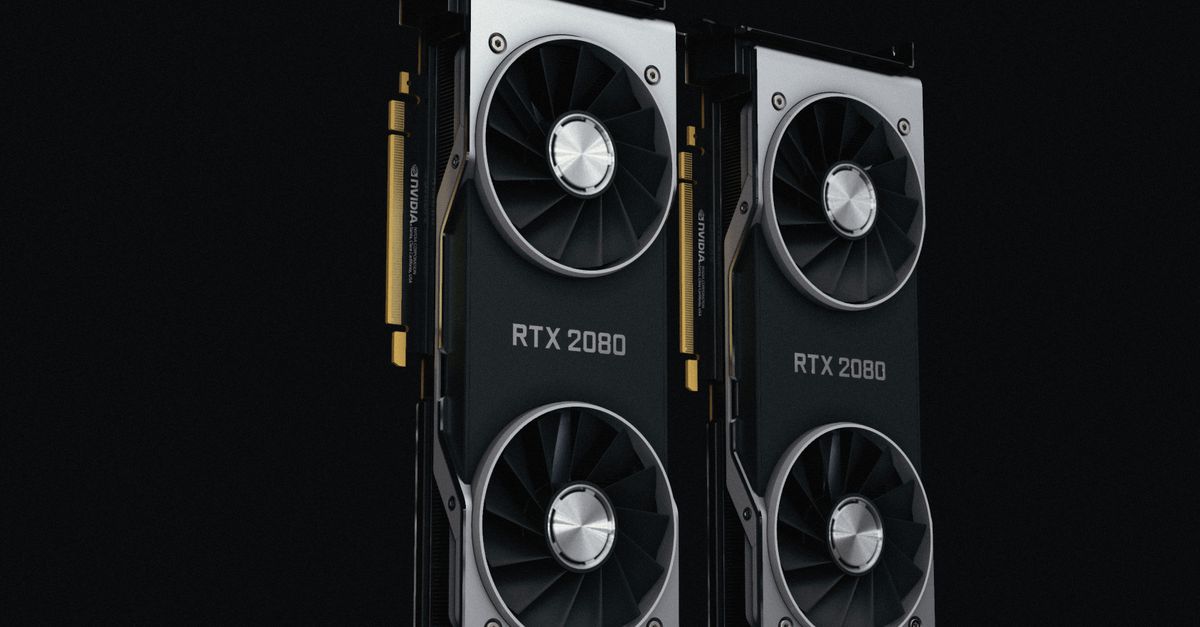
However, the performance of Isaac Sim is strictly hardware-dependent. Official documentation from Nvidia specifies that a minimum of an NVIDIA RTX Series GPU is required for optimal performance. For high-fidelity humanoid simulations, an RTX 4090 or the H100/A100 series is often recommended. This creates a significant barrier to entry for smaller robotics startups in India that may rely on consumer-grade hardware. The software itself is free for research and development, but the compute resources required to run it at scale are not.
Key Features Available in Production:
- Physically accurate environment rendering with USD workflows.
- Support for PyBullet and NVIDIA PhysX for collision detection.
- Integration with ROS 2 (Robot Operating System) via ROS 2 Bridge.
For Indian robotics manufacturers, the cost implication is substantial. While the software license is free, the hardware required to run simulations efficiently includes DGX workstations or high-end RTX workstations. A single RTX 4090 workstation costs approximately INR 1.5 to 2.5 lakhs (landed cost estimate). For cluster-level simulation, enterprise GPUs like the H100 can range from INR 15 lakhs to 20 lakhs per unit. This hardware dependency limits the "sim-to-real" advantage to organizations with significant capital expenditure budgets.
Isaac Lab: Reinforcement Learning Framework
Isaac Lab, previously known as Isaac Gym, is the reinforcement learning (RL) framework designed to train robots within the simulated environment. It provides a high-performance interface for running thousands of parallel simulations, which is critical for training complex humanoid behaviors. The framework is built on top of PyTorch and utilizes the same RTX acceleration found in Isaac Sim.
From a deployment standpoint, Isaac Lab is a tool for training agents, not a plug-and-play solution for physical robots. The outputs are trained policies that must be ported to the physical robot's controller. While Nvidia has published examples of humanoid robots training in Isaac Lab, the actual transfer to hardware often requires additional tuning of the control loops.
Current Status of Deployment:
- Hardware Requirement: Requires NVIDIA RTX GPUs for training.
- Integration: Supports ROS 2, PyTorch, and standard RL libraries.
- Limitations: Training large-scale humanoid policies requires significant compute; smaller teams may struggle with the infrastructure costs.
In the Indian context, training services using Isaac Lab are mostly outsourced to cloud providers like AWS or Azure that host Nvidia A100 instances. On-premise training requires the purchase of high-end Nvidia GPUs. This shifts the cost model from software licensing to compute consumption. For a startup aiming to train a humanoid for logistics, the cloud compute cost could easily exceed INR 50,000 per month for sustained training runs.
Groot: Motion Capture and Policy Transfer
Groot is Nvidia's open-source motion model designed to transfer human motion data into robotic control policies. It functions as a motion cloning tool, allowing developers to upload video or motion capture data to generate robot behaviors. While the concept of motion cloning is powerful, the actual implementation relies heavily on the accuracy of the underlying simulation.
Nvidia has released the Groot codebase on GitHub, making the model weights and code accessible. This openness is a positive step for the community, but the inference hardware required to run Groot remains a constraint. The model expects high-fidelity input to generate accurate outputs. If the input data (motion capture) is noisy, the resulting robot behavior will be unstable.
Current Implementation Reality:
- Open Source: Code available on Nvidia's GitHub repository.
- Hardware Dependency: Requires GPU acceleration for inference.
- Use Cases: Primarily used for research prototypes rather than mass-market deployment.
For Indian robotics firms, Groot offers a pathway to reduce motion engineering time. However, without access to the Nvidia hardware stack (DGX or Jetson AGX Orin), running the model efficiently is difficult. The model is not designed to run on low-power embedded systems without significant quantization, which can degrade performance.
India Availability and Cost Considerations
Access to the Nvidia Isaac ecosystem in India is a function of hardware availability and supply chain logistics. Nvidia does not sell "Isaac" as a standalone product; it sells the compute infrastructure (GPUs) and the developer tools.
Hardware Access
For developers in India, the primary entry point is the Jetson AGX Orin series. These modules are available through authorized distributors. The cost for a Jetson AGX Orin 32GB module is approximately INR 1.5 to 2 lakhs. This allows for edge deployment of Isaac-trained models. However, for training and simulation, the DGX systems are often out of reach for most Indian startups due to their pricing and supply constraints.
Software Licensing
Isaac Sim and Isaac Lab are free for research and development. However, commercial deployment often requires an Enterprise Support License (ESL) or access to the Nvidia Omniverse Enterprise suite. The pricing for Omniverse Enterprise is not publicly listed in India and is typically negotiated based on the number of seats and compute nodes. Estimates for a small enterprise license range from INR 10 lakhs to INR 50 lakhs per annum depending on usage.
Partner Ecosystem
Nvidia has established partnerships with various Indian system integrators. Companies like Tata Technologies and HCL Technologies have demonstrated engagement with Nvidia's robotics stack. However, end-to-end humanoid solutions powered by Isaac Sim are not yet widely available as off-the-shelf products in the Indian market. Most deployments remain in the pilot phase, often involving domestic research labs or university partnerships.
Estimated Deployment Costs
A rough estimate for a small-scale deployment using Nvidia Isaac tools includes:
- Hardware (Jetson Orin): INR 2 lakhs per robot.
- Training Compute (Cloud/GPU): INR 50,000 to INR 1 lakh per month.
- Software License (Enterprise): INR 10 lakhs+ (negotiated).
- Integration Labor: INR 10 lakhs to INR 20 lakhs (one-time).
These figures are landed cost estimates and exclude taxes. They highlight the capital intensity required to utilize the Isaac stack effectively.
Critical Assessment and Deployment Reality
The Isaac platform offers a robust pipeline for robotics development, but it is not a magic solution. The gap between simulation and reality remains the biggest challenge. While Isaac Sim can render environments with high fidelity, the physics engine still struggles with complex contact dynamics, such as grasping deformable objects.
For Indian manufacturers, the value proposition of Isaac lies in the simulation speed and the RL framework. However, the hardware bottleneck is real. Without access to RTX GPUs, the simulation speed drops significantly, making iterative development slow. This creates a competitive advantage for players with access to Nvidia DGX systems, potentially widening the gap between large enterprises and startups.
Furthermore, the open-source nature of Groot and Isaac Lab allows for community contributions, but it also means the support burden falls on the developers. There is no dedicated support team for every line of code written in the RL framework. Companies must rely on the Nvidia community forums and documentation.
Conclusion
Nvidia Isaac is a leading software stack for robotics, providing powerful tools for simulation, training, and motion transfer. Isaac Sim, Isaac Lab, and Groot form a cohesive ecosystem for developers. However, the hardware requirements for running these tools at scale are significant. In India, the ecosystem is accessible but capital-intensive.
For organizations considering Isaac, the recommendation is to prioritize hardware procurement before software adoption. Without the necessary compute resources, the software stack offers limited utility. The industry is moving toward sim-to-real pipelines, but the cost of entry remains high. As hardware costs stabilize and cloud access improves, the Isaac ecosystem will likely see wider adoption in the Indian robotics market. Until then, it remains a tool for well-funded pilots and research-heavy deployments.
✓ Key takeaways
- •Hands-on view of Nvidia Isaac Ecosystem: Simulation, Learning, and Motion in Humanoid Development inside our Nvidia Isaac library.
- •Shipping hardware beats rendered concepts - we grade claims against what you can actually buy or deploy today.
- •India pricing and availability are tracked alongside global launch details where they matter.
References
Related articles
More in Nvidia Isaac →