The Real Cost of Open-Source Robotics Stacks for Humanoid Builders

The Open-Source Promise vs. The Hardware Reality
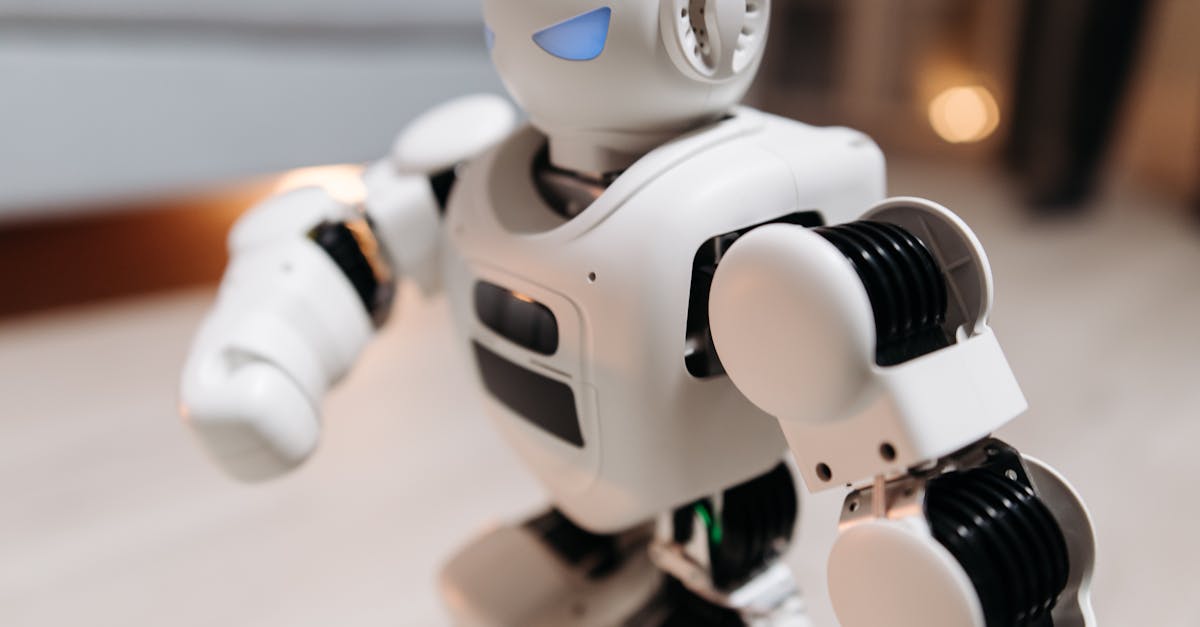
In the humanoid robotics sector, open-source claims often outpace shipping hardware. For builders working on advanced manipulation and locomotion systems, the distinction between open-source software and deployable hardware remains the critical filter. This article evaluates the current state of open-source stacks, grading them by shipping hardware, pilot deployments, and announcements. We prioritize manufacturer spec sheets, on-stage demos, factory videos, press releases, and independent reporting over social media hype.
The term "open-source" in robotics no longer implies free software alone. It encompasses a convergence of generalist foundation models, simulation environments, and hardware abstraction layers. However, the operational cost of maintaining these stacks often exceeds the initial acquisition cost of the robot itself. Builders must account for the computational load required to run large models on edge devices, the data pipeline needed for reinforcement learning, and the ongoing maintenance of the software stack.
ROS2 and the Maintenance Burden
The Robot Operating System (ROS) ecosystem, now transitioning through ROS 1 to ROS 2, remains the backbone for most robotic research. However, shipping hardware with pre-integrated ROS2 is rare outside of specialized research units. For a humanoid robot, ROS2 provides the middleware for communication between perception, planning, and control nodes. Yet, the complexity of managing dependencies, particularly with Ubuntu and C++ compilers, creates a significant barrier to entry.
While ROS Industrial exists, the specific requirements for bipedal locomotion are not standardized. Developers often find themselves maintaining forked versions of ROS2 to support custom kinematics chains. This maintenance burden is invisible on spec sheets but visible in the engineering hours required. For Indian startups, the lack of local ROS2 support staff increases the risk profile. Cloud-based development tools are available, but latency in real-time control loops makes remote deployment risky without edge computing.
Grading the ROS2 stack:
- Shipping Hardware: Medium. Many development kits (e.g., NVIDIA Jetson) ship with ROS2 support, but humanoid chassis often require custom middleware.
- Pilot Deployments: Low. Most ROS2 deployments remain in controlled lab environments.
- Announcements: High. Constant updates to Jazzy, Iron, and Rolling release cycles.
Foundation Models and the Data Gap
Recent advances in foundation models, such as OpenVLA and Open X-Embodiment, promise generalist control policies that can be fine-tuned for specific tasks. However, these models require massive datasets of human demonstration data to function effectively. The "Open" in OpenVLA refers to the weights and the training framework, not the availability of the training data itself.
For a builder in India, accessing the high-bandwidth data pipelines required to train or fine-tune these models is a logistical challenge. The compute requirements for running a Vision-Language-Action (VLA) model on a humanoid robot's onboard computer are substantial. A Jetson Orin AGX might handle inference, but training requires cloud GPUs, which incurs significant INR costs. Estimates for running fine-tuning on a model of this scale can range from ₹50,000 to ₹200,000 per run depending on the cloud provider and region.
We must grade these claims by shipping hardware first. Until a robot can download a policy and execute it without a cloud dependency, the model remains a simulation artifact. Pilot deployments of these models show promise in manipulation but struggle in dynamic locomotion. The hardware must be robust enough to withstand the compute heat generated by running neural networks at the edge.
Simulation Environments: Isaac Gym and Beyond
Simulation is the primary testing ground for open-source robotic software. NVIDIA Isaac Sim and Gym provide physics engines that allow for large-scale reinforcement learning. While these tools are free to download, they often require proprietary licenses for commercial deployment at scale. This distinction is critical for Indian manufacturers aiming to sell commercial products.
The simulation-to-reality gap remains the largest technical hurdle. A policy trained in Isaac Gym may fail to account for the friction variations in an Indian factory floor or the specific wear on a joint actuator. Builders must validate every open-source policy on physical hardware before deployment. The cost of this validation is in the wear and tear on the actuators, not just the software license.
Grading simulation environments:
- Shipping Hardware: High. Software runs on standard PCs and workstations.
- Pilot Deployments: Medium. Used for testing, not final deployment.
- Announcements: High. New physics updates and asset libraries are frequent.
Building in India: Hardware Costs and Availability
The economic reality for robotics builders in India differs significantly from Silicon Valley. While open-source software reduces licensing fees, the landed cost of hardware components remains high due to import duties. A typical humanoid development stack requires high-torque actuators, which are often imported. For example, a custom harmonic drive actuator can cost between ₹15,000 and ₹40,000 per unit.
Compute hardware is another major cost center. NVIDIA Jetson Orin modules range from ₹1.2 lakh to ₹2.5 lakh depending on the configuration. For a humanoid requiring multiple edge nodes for vision and control, the total compute cost can exceed ₹5 lakh per unit. This excludes the cost of the chassis, sensors, and battery packs.
Local availability of support is a critical factor. While major open-source projects have global communities, local integration support is scarce. This increases the risk for Indian manufacturers who cannot rely on a local vendor for hardware repair or software debugging. Builders must budget for in-house engineering teams capable of debugging at the firmware level, not just the application level.
References
For further verification of the claims made in this article, refer to the following sources:
- Open Robotics - ROS Official Site
- NVIDIA Isaac Sim Documentation
- OpenVLA Research
- Robotics Institute at CMU
Conclusion
The open-source robotics ecosystem offers powerful tools, but it is not a magic solution for shipping hardware. Builders must grade claims by shipping hardware first, pilot deployments second, and announcements last. The economic reality in India requires careful budgeting for compute, actuators, and maintenance. Until the simulation-to-reality gap is closed and the compute costs decrease, open-source stacks will remain primarily as research accelerators rather than production-ready software suites.
For the Indian market, the path forward involves hybrid approaches: using open-source for prototyping and simulation, while developing proprietary middleware for the final deployment on shipping hardware. This ensures reliability without the high risk of relying solely on unverified open-source policies.
✓ Key takeaways
- •Hands-on view of The Real Cost of Open-Source Robotics Stacks for Humanoid Builders inside our Open-Source Robotics library.
- •Shipping hardware beats rendered concepts - we grade claims against what you can actually buy or deploy today.
- •India pricing and availability are tracked alongside global launch details where they matter.
References
Related articles
More in Open-Source Robotics →