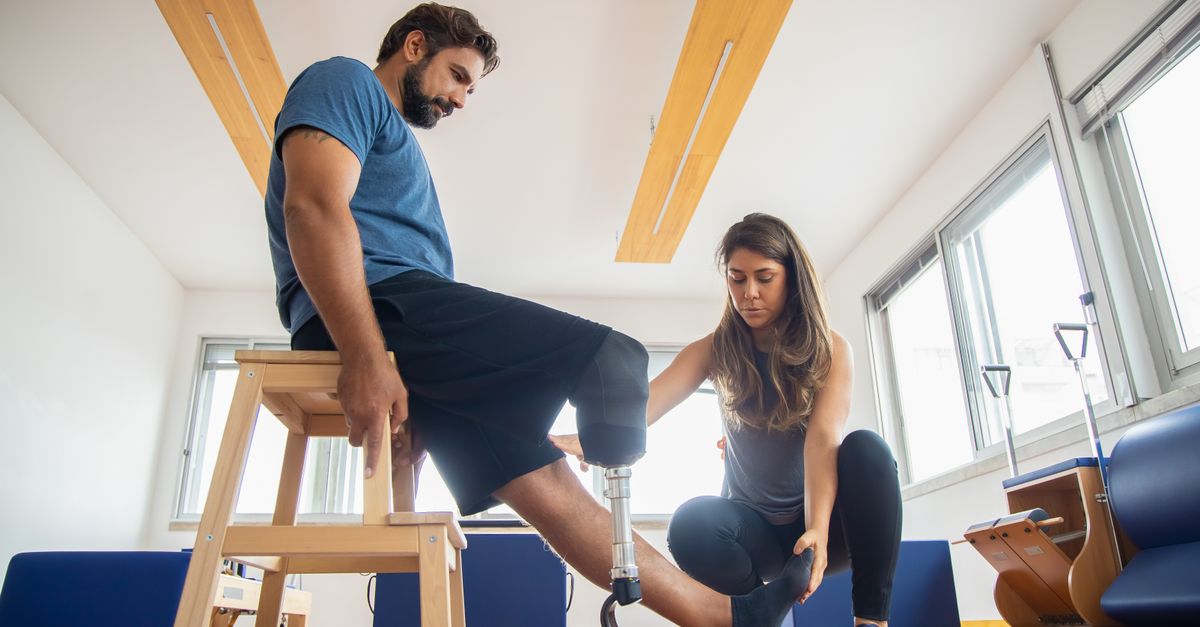
Rehab Exoskeletons: Shipping Hardware, Clinical Evidence, and India Market Realities

Rehab Exoskeletons: Shipping Hardware, Clinical Evidence, and India Market Realities
Rehabilitation exoskeletons occupy a narrow but clinically significant segment of assistive robotics. Unlike consumer or industrial variants, these systems are regulated medical devices designed to restore or augment gait mechanics for individuals with spinal cord injury, stroke, multiple sclerosis, or traumatic brain injury. The hardware class is mature enough to ship globally, yet clinical integration remains constrained by cost, infrastructure requirements, and physiological variability. RobotWale evaluates this category strictly by shipping hardware first, pilot deployments second, and vendor announcements last.
Grading Claims by Deployment Maturity
Claims in the exoskeleton space are frequently overstated by rendering concepts or prototype footage. The only defensible grading framework for this category is hardware maturity:
- Shipping hardware: Devices with CE/FDA clearance, documented mass production, and active clinical installations.
- Pilot deployments: Hospital or research center installations with published outcome data but limited commercial scale.
- Announcements: Pre-releases, crowdfunding campaigns, or regulatory submissions without verified delivery.
Applying this framework, three systems dominate the lower-limb rehab exoskeleton market: ReWalk (Rewalk Robotics), Ekso Bionics (EksoGT/EksoNR), and Cyberdyne HAL. All three meet the shipping hardware threshold. None qualify as curative interventions. Their value lies in controlled, supervised gait training, metabolic conditioning, and spasticity management.
ReWalk (Rewalk Robotics)
Rewalk Robotics has manufactured and shipped lower-limb exoskeletons since 2014. The ReWalk Personal 6.0 and ReWalk Rehab variants feature lithium-ion battery packs (approximately 4–6 hours of operation), hip and knee actuators with closed-loop control, and a lightweight carbon-fiber frame weighing roughly 18–22 kg depending on configuration. The system is FDA 510(k) cleared and CE marked for paraplegic gait rehabilitation.
Clinical deployments span North America, Europe, and parts of Asia. Rewalk provides manufacturer spec sheets detailing torque limits, gait speed (typically 0.2–0.8 m/s), and step count targets. Independent validation studies consistently report improved walking distance and reduced energy expenditure compared to crutch-assisted ambulation, though gains plateau after 6–12 months of supervised training. The hardware does not restore neurological function; it provides mechanical substitution for impaired motor pathways.
Ekso Bionics (EksoGT / EksoNR)
Ekso Bionics manufactures the EksoGT (home/community) and EksoNR (neurorehabilitation) systems. The hardware utilizes an electric drive train with hip and knee actuation, a harness-based load distribution system, and a removable battery module. Weight ranges from 20–25 kg depending on configuration. Ekso holds FDA clearance for clinical use and operates through a network of US-based rehabilitation centers, with select international installations.
Manufacturer documentation emphasizes progressive gait training, real-time kinematic feedback, and therapist-assisted parameter tuning. Clinical evidence, including randomized controlled trials and systematic reviews, indicates statistically significant improvements in 6-minute walk test scores, step symmetry, and spasticity reduction. The hardware requires a treatment room with adequate floor space, ceiling support or wall anchors for safety, and trained clinical staff. Ekso’s deployment model relies on institutional partnerships rather than direct-to-consumer sales.
Cyberdyne HAL (Hybrid Assistive Limb)
Cyberdyne Inc. manufactures the HAL under its hybrid assistive limb architecture. Unlike purely mechanical exoskeletons, HAL integrates bioelectric signal sensors that detect residual muscle potentials from the skin surface. The system processes these signals to trigger actuation in hip and knee joints, creating a closed-loop human-machine interface. The lower-limb variant weighs approximately 14–16 kg and operates on rechargeable battery packs.
Cyberdyne HAL has received FDA 510(k) clearance and has been deployed extensively in Japanese hospitals and long-term care facilities. Clinical publications, including multi-center trials and IEEE-translated studies, document improved walking distance, muscle activation patterns, and functional independence scores. The system’s reliance on intact peripheral nerve pathways limits eligibility; patients with complete spinal cord transection or severe neuropathy typically do not qualify. Cyberdyine’s manufacturing and calibration processes are tightly controlled in Japan, with limited international distribution channels.
Clinical Evidence and Functional Outcomes
Clinical evidence for rehab exoskeletons is robust but bounded. Systematic reviews in peer-reviewed journals (e.g., Frontiers in Neurology, IEEE Transactions on Neural Systems and Rehabilitation Engineering) consistently report:
- Gait speed and endurance: Moderate improvements in walking velocity and step count during supervised sessions.
- Metabolic cost: Reduced oxygen consumption compared to traditional crutch-assisted gait, though higher than physiological walking.
- Spasticity and bone density: Secondary benefits in muscle tone management and weight-bearing stimulus, but not disease modification.
- Neurological recovery: No evidence of restored neural connectivity or cure for central nervous system injuries. Gains are mechanical and training-dependent.
Hardware limitations remain consistent across platforms: weight distribution places load on the pelvis and shoulders, requiring caregiver assistance for transfers; battery life constrains field use; and adaptive algorithms lack true environmental perception, relying on pre-programmed gait cycles. Claims of autonomy or home independence are overstated without additional infrastructure and support staff.
India Availability and Approximate Pricing
India’s healthcare ecosystem has not adopted rehab exoskeletons at scale. Commercial availability is limited to select metro hospitals, research institutes, and private clinics in Delhi NCR, Mumbai, Bengaluru, and Chennai. Most installations operate as pilot or research deployments rather than routine clinical services.
Global pricing for shipping hardware typically ranges from $100,000 to $200,000 USD per unit, depending on configuration, software licensing, and service contracts. Landed cost in India, including import duties, GST, customs clearance, and clinical training, is estimated at ₹80–150 lakhs INR per system. This estimate is flagged as approximate and subject to currency fluctuation, regulatory fees, and vendor negotiation. Direct-to-consumer sales are not standard; procurement follows institutional tendering or research grant pathways.
Domestic alternatives remain in prototype or early pilot stages. No Indian manufacturer has shipped a CE/FDA-cleared lower-limb rehab exoskeleton as of this reporting. The market relies on imported hardware, clinical partnerships, and specialized physiotherapy integration.
Hardware Limitations and Deployment Realities
Rehab exoskeletons are not consumer electronics. They require:
- Clinical infrastructure: Ceiling tracks, wall anchors, or heavy-duty trolleys for safe transfers.
- Trained personnel: Physiatrists, neurologists, and certified therapists for prescription, fitting, and parameter tuning.
- Regulatory compliance: Device registration with the Central Drugs Standard Control Organization (CDSCO) for clinical use in India.
- Maintenance cycles: Factory-calibrated actuators, battery replacement protocols, and firmware updates that require vendor support.
Vendors frequently market exoskeletons as lifestyle devices. The hardware grade tells a different story. Shipping units exist, clinical evidence supports supervised gait training, and pilot deployments demonstrate measurable functional gains. Announcements of autonomous navigation, home-only use, or neurological regeneration remain outside the current hardware capability. RobotWale grades these claims accordingly: hardware first, pilots second, announcements last.
References
- Rewalk Robotics. Official Product Specifications and Clinical Data. https://www.rewalk.com
- Ekso Bionics. EksoGT and EksoNR Clinical Documentation. https://www.eksobionics.com
- Cyberdyne Inc. HAL Lower Limb System Technical and Clinical Reports. https://www.cyberdyine.jp
- FDA 510(k) Summaries for ReWalk, Ekso Bionics, and Cyberdyne HAL. https://www.fda.gov/medical-devices
- Systematic reviews on exoskeleton-assisted gait rehabilitation. Frontiers in Neurology and IEEE Transactions on Neural Systems and Rehabilitation Engineering.
- India CDSCO Medical Device Classification and Import Guidelines. https://cdsco.gov.in
✓ Key takeaways
- •Hands-on view of Rehab Exoskeletons: Shipping Hardware, Clinical Evidence, and India Market Realities inside our Rehab Exoskeletons library.
- •Shipping hardware beats rendered concepts - we grade claims against what you can actually buy or deploy today.
- •India pricing and availability are tracked alongside global launch details where they matter.
References
- Rewalk Robotics Official Product Specifications and Clinical Data
- Ekso Bionics EksoGT and EksoNR Clinical Documentation
- Cyberdyne Inc HAL Lower Limb System Technical and Clinical Reports
- FDA 510(k) Summaries for ReWalk, Ekso Bionics, and Cyberdyne HAL
- Systematic reviews on exoskeleton-assisted gait rehabilitation
- India CDSCO Medical Device Classification and Import Guidelines
Related articles
More in Rehab Exoskeletons →