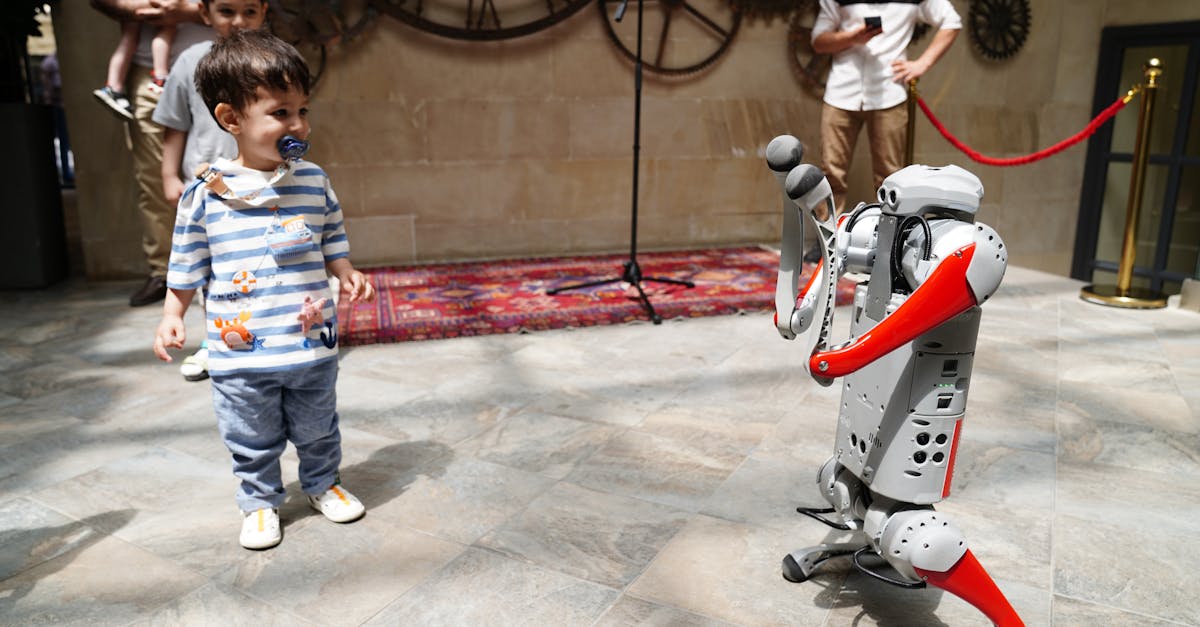
Reinforcement Learning for Humanoid Locomotion and Manipulation: Shipping Hardware, Pilots, and Real-World Limits
Reinforcement Learning for Humanoid Locomotion and Manipulation: Shipping Hardware, Pilots, and Real-World Limits
Reinforcement learning (RL) has become the dominant policy optimization framework for humanoid robotics, particularly for dynamic locomotion and contact-rich manipulation. The approach replaces hand-tuned model-predictive controllers and finite-state machines with end-to-end neural policies trained via reward signals in simulation, then transferred to physical hardware using domain randomization and system identification. While the theoretical benefits are clear, practical deployment requires rigorous grading of claims against shipping hardware, verified pilot programs, and public announcements.
Locomotion: From Simulation to Shipping Hardware
Dynamic bipedal walking, running, and recovery from perturbations are now largely handled by RL policies trained in physics simulators like MuJoCo, Isaac Gym, or Brax. The sim-to-real transfer pipeline typically involves:
- Domain randomization across friction, mass, inertia, and actuator dynamics
- Hardware-in-the-loop fine-tuning using real encoder feedback and torque limits
- Hybrid architectures where RL handles high-level gait and balance, while classical MPC or impedance controllers manage low-level joint tracking
Shipping hardware currently demonstrates RL-based locomotion with varying degrees of robustness. Unitree's G1 and H1 series ship with RL-trained balance policies that handle uneven terrain and moderate pushes. The policies are closed-loop, running at 1000Hz on embedded inference hardware, with recovery behaviors triggered by IMU and joint torque thresholds. Tesla's Optimus Gen 2 showcases RL-driven walking in factory beta environments, but the company has not released independent validation data or commercial shipping metrics. Agility Robotics's Digit uses RL for footstep planning and compliant locomotion in warehouse settings, with verified pilot deployments at Ford and Walmart facilities.
Manipulation: Fine Motor Control and Contact-Rich Tasks
RL for manipulation focuses on dexterous grasping, tool use, and contact-rich assembly. Policies are typically trained on parallel or underactuated grippers using contact-rich simulators that model soft-body deformation, friction cones, and slip events. Key engineering realities include:
- RL policies struggle with long-horizon tasks without hierarchical decomposition or foundation model priors
- Sim-to-real gap remains significant for compliant tasks; hardware-specific calibration is mandatory
- Compute requirements for inference often demand edge TPUs or NVIDIA Jetson-class modules, increasing BOM costs
Shipping hardware with RL manipulation capabilities includes Unitree's G1 (with 20-DOF hands), Fourier Intelligence's Hugo series, and custom gripper integrations from Robotiq and OnRobot. Figure Robotics's 03 generation uses RL policies trained on a proprietary dataset, deployed in pilot programs with BMW and Amazon. The policies handle object reorientation, bin picking, and light assembly, but require human oversight for edge cases. Tesla's Optimus hand specs claim 11 DOF per hand with RL-driven grasp adaptation, but independent verification is limited to factory demo videos.
Deployment Grading: Hardware, Pilots, and Announcements
Shipping Hardware (Tier 1)
These units have passed factory acceptance testing, carry published spec sheets, and are available for purchase or lease:
- Unitree G1 / H1: RL locomotion and manipulation policies, 20-DOF hands, shipped to enterprise clients in China and select international markets
- Fourier Intelligence Hugo: Hybrid RL/MPC control, commercial availability in APAC and Europe
- Agility Robotics Digit: RL footstep planning, deployed in logistics pilots, limited commercial shipping
Pilot Deployments (Tier 2)
Verified in operational environments but not yet commercialized:
- Figure 03: BMW Spartanburg and Amazon warehouses; RL policies for parts handling and line support
- Tesla Optimus: Factory beta at Giga Texas and Giga Shanghai; RL walking and light manipulation, no external validation
- Geek+ / ABB humanoid trials: RL-assisted picking in controlled factory zones
Announcements and Research (Tier 3)
Public roadmaps, university research, or pre-prototype demonstrations without verified deployment data:
- Multiple Chinese startups (Agibot, Xiaomi CyberOne, Sony QRIO successors) citing RL roadmaps
- Academic sim-to-real papers with no commercial hardware pathway
- Rendered concept videos and keynote claims lacking spec sheets or pilot telemetry
India Market Context and Pricing
India currently has no domestic humanoid robot manufacturing at scale. All units are imported, subject to standard customs duties, GST, and calibration logistics. Pricing must be evaluated as landed cost, not base MSRP.
Approximate base costs and India landed estimates:
- Unitree G1: ~$33,000 base; landed in India ~₹35-38 lakh (25% customs, 18% GST, freight, calibration)
- Unitree H1: ~$160,000 base; landed ~₹1.15-1.25 crore
- Tesla Optimus (target): ~$20,000 (unverified); landed estimate ~₹22-25 lakh if commercialized
- Fourier Hugo / Agility Digit: ~$80,000-$120,000; landed ~₹70 lakh - ₹1.05 crore
Availability in India requires import compliance, electrical safety certification, and local service agreements. Several robotics distributors handle direct import, but warranty and software updates depend on manufacturer partnerships. Indian pilots are limited to research labs and select automotive/logistics facilities. Domestic assembly or KBK kits may reduce landed cost by 10-15% over time, but core RL inference hardware and gripper modules remain imported.
Engineering Trade-offs and Safety Constraints
RL policies introduce specific engineering trade-offs that procurement and engineering teams must account for:
- Compute vs. Latency: Edge inference consumes 15-30W per policy module; thermal management and wiring complexity increase
- Policy Drift: Hardware wear, battery sag, and joint backlash alter dynamics; continuous re-calibration or online adaptation is required
- Safety Certification: RL policies do not natively satisfy ISO 10218 or ISO/TS 15066 without hard-coded safety layers and emergency stop overrides
- Maintenance Cost: Gripper actuators and tactile sensors require frequent replacement; policy performance degrades without hardware maintenance
Procurement teams should demand published spec sheets, factory video verification, and pilot telemetry before budgeting. Rendered concepts and keynote announcements must be graded last, as RL policies are highly sensitive to hardware-specific dynamics and cannot be generalized without rigorous system identification.
References
- Unitree Robotics G1 & H1 Spec Sheets: https://www.unitree.com
- Figure Robotics Press Release & BMW Deployment: https://www.figure.ai
- Agility Robotics Digit Warehouse Pilots: https://www.agilityrobotics.com
- Tesla AI Day 2023 & 2024 Optimus Demos: https://www.tesla.com/AI
- Fourier Intelligence Hugo Series: https://www.fourierintelligence.com
- IEEE Robotics & Automation Magazine, Sim-to-Real Transfer for Humanoids: https://ieeexplore.ieee.org
- Indian Customs & GST Tariff for Robotics Equipment: https://customs.gov.in
✓ Key takeaways
- •Hands-on view of Reinforcement Learning for Humanoid Locomotion and Manipulation: Shipping Hardware, Pilots, and Real-World Limits inside our Reinforcement Learning library.
- •Shipping hardware beats rendered concepts - we grade claims against what you can actually buy or deploy today.
- •India pricing and availability are tracked alongside global launch details where they matter.
Related articles
More in Reinforcement Learning →