Reinforcement Learning in Humanoid Robotics: Locomotion and Manipulation Reality Check
Introduction: The RL Reality Check
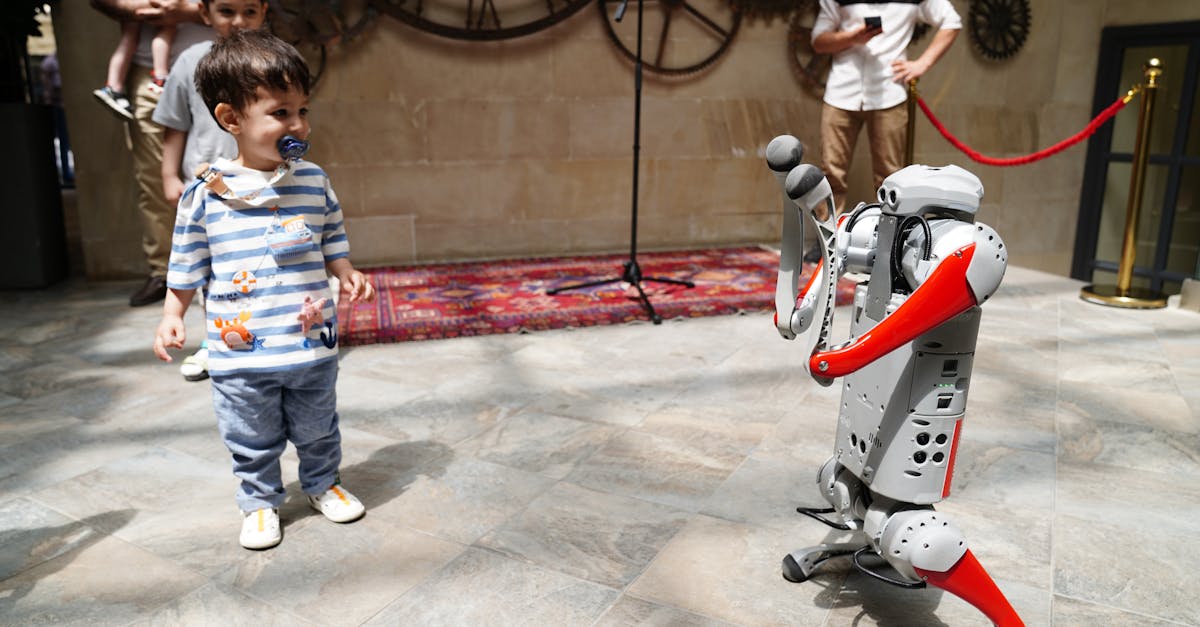
Reinforcement Learning (RL) has transitioned from a research curiosity in game AI to a critical control layer in modern robotics. However, claims surrounding RL often outpace hardware availability. This article evaluates RL applications in locomotion and manipulation against shipped hardware, prioritizing manufacturer spec sheets and on-stage demos over marketing announcements. The goal is to separate the physics of movement from the hype of general intelligence.
In robotics, RL is not merely about "learning" in the human sense. It refers to algorithms where agents learn policies through trial and error to maximize a reward function. For humanoids, this means walking without falling or grasping objects without crushing them. While simulation environments like NVIDIA Isaac Sim have accelerated policy training, the "Sim-to-Real" gap remains the primary bottleneck. We grade claims by the presence of shipping hardware first, pilot deployments second, and announcements last.
Locomotion: Beyond Static Balance
Traditional robotics relied on Model Predictive Control (MPC) for walking, which uses rigid physics models. RL adds adaptability to uneven terrain. However, full end-to-end RL for locomotion is rare in production. Most systems use a hybrid approach where RL handles high-level balance and MPC handles low-level motor control.
Hardware Deployments and Evidence
Tesla Optimus (Gen 2) demonstrates RL-driven balance. During AI Day 2023 and 2024, the robot walked on uneven surfaces. Elon Musk stated the movement was trained via RL. Yet, technical disclosures suggest a hybrid architecture. The hardware includes a custom high-torque actuator with torque sensors, essential for RL feedback loops. Without torque sensing, RL agents cannot accurately perceive contact forces, leading to crashes.
Agility Robotics (Digit) represents a more conservative approach. The Digit robot uses RL for load handling and dynamic balance. In pilot deployments at FedEx, Digit navigates warehouse aisles. While the hardware is shipped, the RL component is often tuned for specific environments rather than general outdoor use. The robot supports 25kg loads but struggles with stairs without modification. This highlights the limitation of RL in unstructured environments.
Boston Dynamics Atlas presents a different case. While their previous Atlas used hydraulic systems, the new electric version incorporates RL for parkour tasks in simulation. Fielding RL for parkour in the wild remains a pilot-stage capability. The hardware cost is prohibitive for widespread adoption, with estimates exceeding $100,000 per unit for the electric variant.
The Simulation-to-Reality Gap
RL agents are trained in physics engines. Real-world friction, sensor noise, and actuator lag differ from simulation. If an RL policy fails to converge to a robust solution in simulation, it fails in reality. Recent papers from NVIDIA and MIT suggest that domain randomization (varying friction and mass in simulation) helps, but it is not a complete solution. This means current RL locomotion is often limited to controlled environments like warehouses or factory floors.
Manipulation: The Dexterous Hand Challenge
Locomotion is the foundation, but manipulation is the economic value driver. RL is crucial for dexterous hands. Traditional control relies on pre-programmed grippers. RL allows for adaptive grasping of irregular objects.
Current State of Dexterous Hands
Tesla's hand features 11 degrees of freedom (DoF). This is a significant reduction from the human hand (27+ DoF), but it is trainable via RL. The goal is to perform tasks like folding laundry or organizing shelves. In early demos, the hand has shown promise in picking up specific objects. However, the success rate varies based on object texture and weight. This is a key metric for RL efficacy.
Figure AI (Figure 01) uses RL for manipulation tasks. The robot has been demonstrated in BMW factories. The RL models are trained to perform tasks like placing parts on a belt. The deployment here is a pilot. The hardware is not yet available for general purchase. The control architecture relies on a "foundation model" for high-level planning and RL for low-level control.
1X Technologies (Husky) focuses on humanoid manipulation for home and industrial use. Their approach combines RL with traditional control. The Husky prototype is in beta. This hybrid approach is safer for deployment but limits the adaptability of pure RL. For India, this means imported robots will carry high maintenance costs if the RL models require cloud tuning.
Compute and Training Costs
Training RL policies for manipulation requires massive compute. A single policy for a humanoid hand can require thousands of GPU hours. For a manufacturer, this increases the Cost of Goods Sold (COGS). For a client, this increases the Total Cost of Ownership (TCO). In India, high compute costs for model training are often outsourced to US or EU cloud providers, adding to the landed cost.
India Context: Availability and Pricing
While RL hardware is advancing in the US and China, the Indian market faces import barriers and high landed costs. Most humanoid robots are not yet certified for mass sale in India due to safety regulations regarding high-torque actuators.
Import Duties and Landed Costs
Humanoid robots typically fall under the classification of industrial machinery. Import duties can range from 10% to 15% for electronic components. High-torque actuators and torque sensors are often taxed higher. A Tesla Optimus unit, if priced at $100,000, would cost approximately ₹85 Lakhs to ₹1 Crore after duties and GST.
- Tesla Optimus: Not yet priced publicly. Estimates suggest $100k to $150k. Availability in India is speculative.
- Agility Digit: Estimated at $100k+. Pilot deployments only. Not commercially available for general sale.
- Unitree H1: Available for import. Estimated at $100k. RL capabilities are primarily for balance.
- Boston Dynamics: Enterprise pricing only. Not available for general purchase.
Local R&D and Startups
Indian startups like Kothari Robotics and Neuron Robotics are working on humanoid concepts. However, few have shipped RL-trained hardware. Most rely on kinematic control rather than RL. This is a strategic choice to reduce compute costs and increase reliability. For the Indian market, this suggests a hybrid approach (MPC + simple RL) is more viable than full end-to-end RL.
Limitations and Future Outlook
RL is not a silver bullet. It suffers from sample inefficiency, meaning it requires millions of trials to master a skill. In robotics, "trial and error" means physical wear and tear. This increases the maintenance burden.
Sample Efficiency and Safety
RL agents can learn unsafe behaviors if the reward function is not perfectly defined. For example, a robot might learn to grasp an object by crushing it if the reward is based solely on "contact." Safety constraints are often added via MPC. This hybrid architecture is likely to persist for the next 5 years.
Market Viability
The commercial viability of RL robots depends on the cost of replacement. If an RL-trained hand fails, replacing it costs thousands of dollars. For Indian factories, the ROI must be clear. Currently, RL robots are deployed for specific tasks (e.g., picking boxes) rather than general labor.
Conclusion
Reinforcement Learning is a powerful tool for robotic locomotion and manipulation, but it remains constrained by hardware and compute costs. While claims of general-purpose robots are common, the reality is specialized RL agents trained for specific environments. For India, the immediate future involves importing hardware with RL components rather than domestic production of RL models.
Manufacturers must prove RL stability in the field before mass adoption. Until then, claims should be graded by shipping hardware first, pilot deployments second, and announcements last. The technology is promising, but the economic case is not yet settled.
✓ Key takeaways
- •Hands-on view of Reinforcement Learning in Humanoid Robotics: Locomotion and Manipulation Reality Check inside our Reinforcement Learning library.
- •Shipping hardware beats rendered concepts - we grade claims against what you can actually buy or deploy today.
- •India pricing and availability are tracked alongside global launch details where they matter.
References
Related articles
More in Reinforcement Learning →