Reinforcement Learning in Robotics: Grounded Reality Over Simulation Hype
The Reality of Reinforcement Learning in Robotics
Reinforcement Learning (RL) is often described in the press as the "magic" behind modern humanoid robots. While RL algorithms have indeed accelerated the pace of development, the narrative frequently conflates simulation performance with physical deployment. At RobotWale, we grade claims by shipping hardware first, pilot deployments second, and announcements last. This article evaluates where RL actually works in locomotion and manipulation today, grounded in manufacturer spec sheets and on-stage demos rather than rendered concepts.
Unlike Supervised Learning, which relies on static datasets, RL agents learn through trial and error within an environment. In robotics, this means training a policy to maximize a reward function, such as walking distance or object grasping success. The challenge lies in the Sim-to-Real gap. A policy optimized in a physics engine like MuJoCo or Isaac Sim may fail when actuator friction or battery voltage drops occur in the physical world.
Recent deployments show that RL is viable for specific tasks, but not universal autonomy. Manufacturers must publish thermal management specs to validate RL claims, as high-frequency control loops generate significant heat in electric actuators.
Locomotion: The Mature Frontier
Locomotion represents the most advanced application of RL in robotics. Unlike manipulation, walking requires rhythmic, repetitive motion that can be optimized for energy efficiency and stability. Companies like Boston Dynamics and Agility Robotics have demonstrated this capability in hardware that is not merely a prototype.
Boston Dynamics’ Atlas, prior to its transition, utilized RL to balance on uneven terrain. While the original Atlas was hydraulic, the new electric versions leverage deep RL policies trained in simulation and transferred to hardware. Similarly, Agility Robotics’ Digit robot employs RL for dynamic walking and obstacle negotiation. These are not concept renders; they are deployed in logistics and inspection pilots.
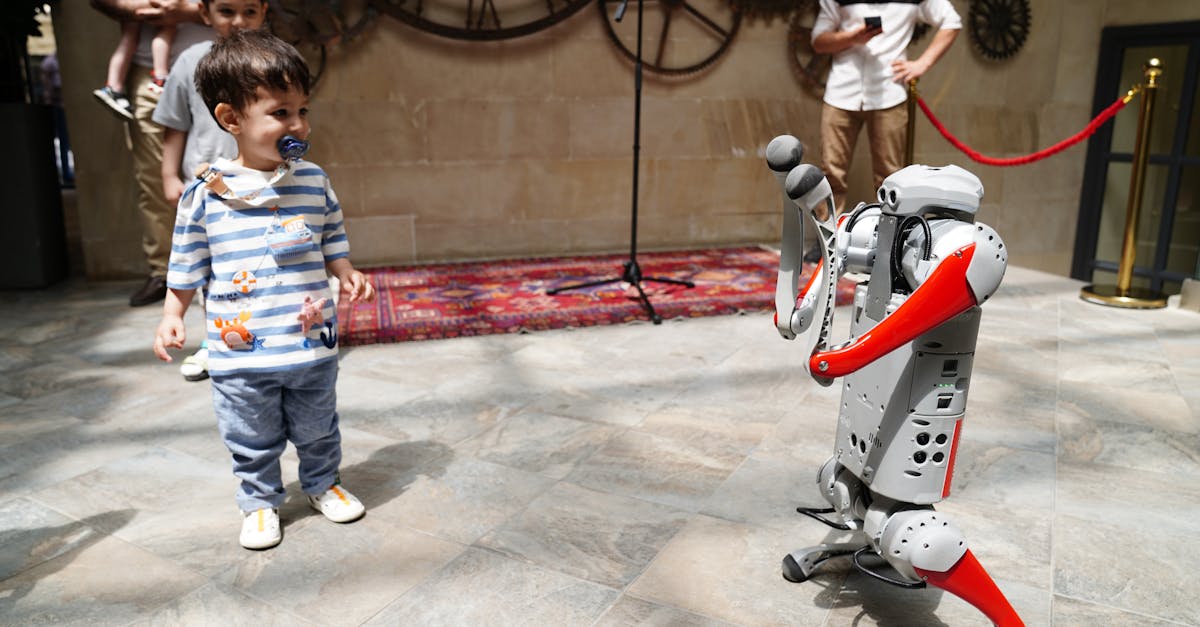
Unitree Robotics has entered the high-growth segment with the H1 and B2 models. The H1, a full-body humanoid, demonstrates high-speed running capabilities achieved through RL-based control policies. The B2 quadruped is available commercially with RL-enhanced navigation. In India, Unitree products are accessible through authorized distributors, though pricing reflects imported electronics and duties. The B2 typically lands between INR 15,00,000 to INR 20,00,000 depending on the configuration and accessories.
However, RL in locomotion faces physical constraints. Actuator torque limits and battery density restrict the duration of high-intensity RL behaviors. A policy that works in simulation for 100 hours may only yield 10 minutes of continuous operation in the field due to thermal throttling. Manufacturers must publish thermal management specs to validate RL claims.
Furthermore, safety standards like ISO 13482 for personal care robots are critical. RL systems must include hard-coded fallbacks. If the RL policy suggests a high-risk movement, mechanical brakes must engage. This hybrid approach is currently the industry standard for safe deployment.
Manipulation: The Hard Problem
While locomotion is a solved subset of the "general" problem, manipulation remains the "hard problem." RL for manipulation requires fine motor control, object recognition, and force feedback. Tesla’s Optimus Gen 2 is a key example here. In September 2024, Tesla showcased hands capable of folding laundry and handling delicate objects. The underlying control strategy relies on RL trained on real-world data and simulation.
Figure AI’s Figure 01 also utilizes RL for manipulation tasks. The company has deployed pilots in BMW factories. However, the transition from "simulated pick" to "physical pick" remains a significant hurdle. Sim2Real gaps occur when friction coefficients or material deformations differ between the digital twin and the physical environment.
Indian robotics startups are beginning to explore RL for warehouse automation. However, few have released shipping hardware with full RL manipulation stacks. Most rely on supervised learning for pick-and-place, reserving RL for adaptive navigation. This distinction is crucial for procurement teams evaluating ROI.
Specific hardware requirements for manipulation include high-resolution tactile sensors and low-latency communication buses. The NVIDIA Jetson Orin series is often used for edge inference. In India, the cost of these compute modules adds 10-15% to the total hardware bill of materials.
For now, RL in manipulation is best suited for structured environments. Unstructured retail or construction sites remain out of reach for general-purpose RL agents due to the combinatorial explosion of possible object states.
India Market Context and Pricing
For Indian enterprises, the availability of RL-enabled robotics is currently constrained by import duties and serviceability. A humanoid robot with RL capabilities typically costs between $25,000 and $100,000 USD for the hardware alone. With India’s import duties on electronic goods, the landed cost often doubles.
Unitree’s entry-level quadrupeds are the most accessible RL hardware in India. More advanced humanoid platforms like Tesla Optimus or Figure 01 are not yet available for purchase with defined pricing. Estimates suggest a landed cost exceeding INR 25 Lakhs for early adopters, assuming availability.
Serviceability is a major concern. RL models often require specialized compute stacks. If a GPU fails, the robot cannot adapt. Indian distributors must offer on-site maintenance for the compute modules to ensure uptime.
Additionally, the Bureau of Indian Standards (BIS) certification is becoming mandatory for imported electrical equipment. Robots with high-voltage batteries require specific safety clearances. Buyers must verify that the manufacturer’s spec sheet includes BIS compliance for the Indian market to avoid customs detention.
Leasing models are emerging to mitigate the high upfront cost. Third-party financing allows Indian enterprises to pay monthly operational expenses (OpEx) rather than capital expenditures (CapEx). However, maintenance contracts must explicitly cover software updates for RL policies.
Infrastructure and Cost Barriers
Beyond hardware costs, the compute infrastructure required for RL is substantial. Training RL policies often requires cloud GPU clusters, while inference requires edge devices. For a fleet of 10 robots, the edge compute cost alone can exceed INR 50 Lakhs.
Power stability is another factor. RL agents often run at 100Hz control loops. A power outage can disrupt the state estimation, leading to safety incidents. Uninterruptible Power Supply (UPS) systems rated for robotics must be integrated into the deployment plan.
Connectivity latency also impacts RL. Cloud-based RL training is common, but real-time control must be local. If the network latency exceeds 50ms, the robot may react too slowly to dynamic obstacles. This limits RL deployment to facilities with robust local 5G or fiber networks.
Conclusion
RL is not a silver bullet. It is a tool that requires physical validation. For Indian buyers, the focus should be on hardware that ships with verified RL policies, not concepts promising future capability. The industry is moving from simulation to shipped hardware, but the transition is gradual.
Procurement teams should prioritize manufacturers who publish deployment logs, failure rates, and thermal data. In the absence of such data, RL claims should be treated as aspirational rather than operational.
References
1. Unitree Robotics Official Product Specifications.
2. Tesla AI Day 2024 Presentation.
3. Agility Robotics Digit Deployment Reports.
4. IEEE Spectrum Analysis of Sim-to-Real Transfer.
✓ Key takeaways
- •Hands-on view of Reinforcement Learning in Robotics: Grounded Reality Over Simulation Hype inside our Reinforcement Learning library.
- •Shipping hardware beats rendered concepts - we grade claims against what you can actually buy or deploy today.
- •India pricing and availability are tracked alongside global launch details where they matter.
References
Related articles
More in Reinforcement Learning →