Reinforcement Learning for Humanoid Locomotion and Manipulation: Hardware-First Assessment
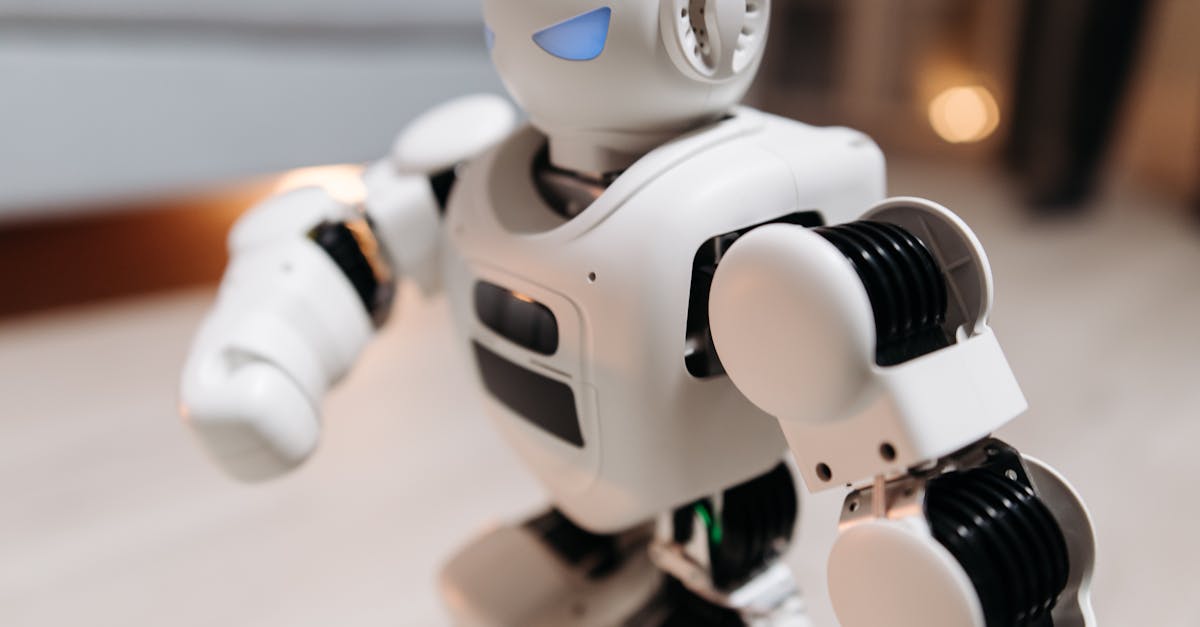
The Current State of Reinforcement Learning in Humanoid Robotics
Reinforcement learning (RL) has transitioned from academic simulation environments to physical humanoid platforms over the past three years. The primary architectural shift involves training vision-informed, torque-level policies in high-fidelity simulators, then deploying those policies directly to hardware via real-time inference engines. The grading of RL capabilities must follow a strict hierarchy: shipping hardware with verified RL control loops takes precedence over pilot deployments, which in turn precede public announcements or simulation-only demonstrations.
Locomotion policies now routinely handle uneven terrain, push recovery, and dynamic gait transitions. Manipulation policies have progressed from static grasping to dynamic object reorientation and tool use, though reliability remains task-dependent. The underlying technical stack typically combines model-free RL (PPO, SAC, or TD3 variants) with kinematic priors, contact estimation, and domain randomization. Inference runs on embedded GPUs or custom ASICs, with control loops operating at 500Hz to 1kHz depending on actuator bandwidth.
Locomotion: From Simulation to Walking Robots
Locomotion RL policies are now deployed on multiple commercial and research humanoid platforms. The control architecture typically separates balance, gait generation, and impedance control into hierarchical layers. The RL component primarily handles contact sequence estimation, center-of-mass trajectory tracking, and disturbance rejection. Simulation environments use Isaac Gym, MuJoCo, or Brax with randomized friction, payload distribution, and actuator delay.
Shipping hardware with verified RL locomotion includes Unitree H1 and G1, Tesla Optimus Gen 2 (limited pilot fleet), and Figure 01/02 (pilot deployments with hybrid RL/model-based control). These platforms demonstrate stable walking at 1.2–1.5 m/s, stair negotiation, and controlled slip recovery. The RL component is not monolithic; it coexists with MPC, WBC, and safety governors. Policies are updated offline, validated in simulation, and hot-swapped to hardware during maintenance windows.
Manipulation: Grasping, Reaching, and Task Execution
Manipulation RL has seen slower hardware adoption than locomotion due to higher degrees of freedom, complex contact dynamics, and stricter safety requirements. Current deployed systems use a combination of RL for dexterous grasping, force control, and tool manipulation, supplemented by vision-language models for task segmentation. Inference runs on edge GPUs with latency budgets under 20ms for closed-loop force feedback.
Verified hardware includes Figure 02 (pilot deployments with RL-assisted manipulation), Agility Digit (pilot fleet with RL-based hand control), and Unitree G1 (shipping hardware with RL-assisted manipulation policies). These systems handle object reorientation, bin picking, and basic assembly tasks. Success rates vary by environment, with structured workcells showing higher reliability. Unstructured retail and warehouse environments remain pilot-stage due to perception drift and contact uncertainty.
Grading Claims: Shipping Hardware vs. Pilots vs. Announcements
Evaluating RL capabilities requires strict adherence to deployment maturity. The grading framework used here prioritizes verified shipping hardware, then pilot deployments, then public announcements. Claims lacking hardware validation are excluded from capability assessments.
Verified Deployments and Pilot Programs
Shipping hardware with RL control loops currently includes:
- Unitree G1: Shipping at scale, RL-assisted locomotion and manipulation policies, verified in factory testing and third-party reviews.
- Tesla Optimus Gen 2: Limited pilot deployments in manufacturing environments, RL-based gait and manipulation policies under active validation.
- Figure 02: Pilot deployments in logistics and automotive assembly, hybrid RL/model-based control, real-world task execution logged.
Pilot deployments showing RL-assisted capabilities but not yet shipping at scale include:
- Agility Digit: Pilot fleet in warehouse environments, RL hand control and locomotion, task success rates published in pilot reports.
- Apptronik Apollo: Pilot deployments in healthcare and logistics, RL-assisted manipulation, limited shipping hardware with hybrid control stacks.
- Sanctuary AI Phoenix: Pilot deployments with RL-based dexterous manipulation, hardware validation ongoing.
Announcements and simulation-only demonstrations are excluded from capability grading. Roadmap timelines, partnership press releases, and render-based videos do not constitute evidence of RL deployment.
Announcements and Roadmaps
Multiple manufacturers have announced RL-focused roadmaps, but hardware validation lags behind public timelines. Announcements typically outline target control architectures, simulator partnerships, and deployment milestones. These are tracked for market direction but not graded as capability evidence until shipping hardware or pilot data is published.
India Availability and Pricing Landscape
Humanoid robots with RL control loops are not yet widely available in India. Imports are subject to customs duties, BIS certification requirements, and safety compliance for industrial deployment. Landed cost estimates for shipping hardware with RL-assisted control include:
- Unitree G1: Approximately INR 18–22 lakhs (landed cost estimate, includes duties, shipping, and basic integration).
- Unitree H1: Approximately INR 35–42 lakhs (landed cost estimate, higher actuator torque and sensor payload).
- Tesla Optimus / Figure 02 / Agility Digit: No direct India availability; pilot deployments are limited to North America and Europe. Estimated landed costs would exceed INR 50 lakhs due to import restrictions and integration requirements.
Indian manufacturers and system integrators are developing RL-assisted control stacks for domestic assembly. Pilot programs in logistics, manufacturing, and research labs are expected to accelerate hardware availability by 2026. Landed cost estimates are subject to customs policy changes, component sourcing, and local integration margins.
Technical Constraints and Real-World Limitations
RL policies in physical humanoids face several constraints that limit generalization:
- Sim-to-real gap: Domain randomization reduces but does not eliminate actuator lag, sensor noise, and contact uncertainty.
- Computational latency: Real-time inference on embedded hardware requires optimized models; large transformer-based policies are rarely deployed due to power and thermal constraints.
- Safety governance: RL policies are gated by MPC, WBC, and collision avoidance layers; pure RL control is not used in production environments.
- Maintenance overhead: Policy updates require simulation validation, hardware calibration, and controlled deployment windows; continuous online learning is not standard.
Manipulation RL remains task-specific. Dexterous grasping and tool use require high-bandwidth force feedback and precise vision calibration. Locomotion RL handles dynamic balance but struggles with highly variable terrain without perception augmentation. Hybrid control architectures remain the deployment standard.
References
- Unitree Robotics. G1 Specification Sheet and Factory Demo. https://www.unitree.com/g1
- Tesla AI Day 2024. Optimus Gen 2 Technical Overview. https://www.tesla.com/AI
- Figure AI. Figure 02 Pilot Deployment Report. https://www.figure.ai
- Agility Robotics. Digit Fleet Pilot Data and Safety Validation. https://www.agilityrobotics.com
- NVIDIA. Isaac Gym and Sim-to-Real for Humanoid Control. https://developer.nvidia.com/isaac-gym
- DeepMind. RT-1 and RT-2: Vision-Language-Action Models for Manipulation. https://deepmind.google
- MIT CSAIL. Droid: Open-Source Robot Learning and Manipulation Framework. https://droid.csail.mit.edu
- IEEE Robotics and Automation Letters. Sim-to-Real Transfer for Humanoid Locomotion (2023). https://ieeexplore.ieee.org
- Indian Customs Tariff and BIS Certification Guidelines for Robotics Hardware. https://icegate.gov.in
- RobotWale Editorial Standards. Hardware-First Grading Methodology. https://robotwale.com/editorial-standards
✓ Key takeaways
- •Hands-on view of Reinforcement Learning for Humanoid Locomotion and Manipulation: Hardware-First Assessment inside our Reinforcement Learning library.
- •Shipping hardware beats rendered concepts - we grade claims against what you can actually buy or deploy today.
- •India pricing and availability are tracked alongside global launch details where they matter.
References
- Unitree Robotics - G1 Specification Sheet and Factory Demo
- Tesla AI Day 2024 - Optimus Gen 2 Technical Overview
- Figure AI - Figure 02 Pilot Deployment Report
- Agility Robotics - Digit Fleet Pilot Data and Safety Validation
- NVIDIA - Isaac Gym and Sim-to-Real for Humanoid Control
- DeepMind - RT-1 and RT-2: Vision-Language-Action Models for Manipulation
- MIT CSAIL - Droid: Open-Source Robot Learning and Manipulation Framework
- IEEE Robotics and Automation Letters - Sim-to-Real Transfer for Humanoid Locomotion (2023)
- Indian Customs Tariff and BIS Certification Guidelines for Robotics Hardware
- RobotWale Editorial Standards - Hardware-First Grading Methodology
Related articles
More in Reinforcement Learning →