
The Race for General Robotics Policies: Analyzing Pi, RT-2, and Groot
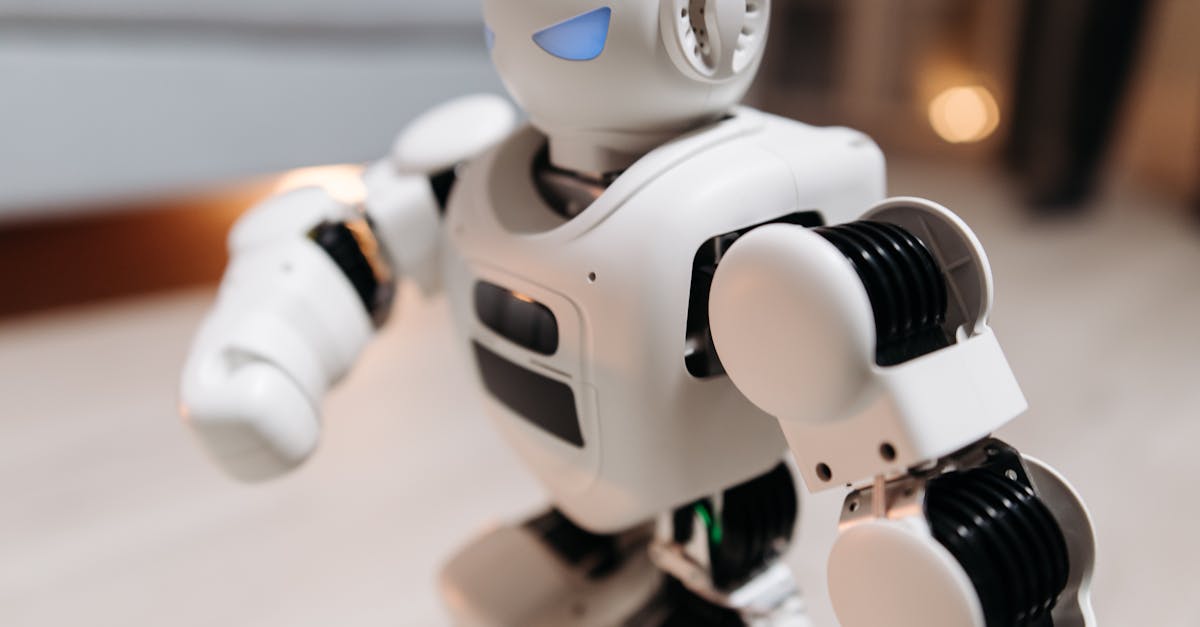
The Shift from Control to Policy
The robotics industry is currently undergoing a fundamental architectural shift. For decades, robotic behavior was scripted via explicit kinematic paths and rule-based state machines. Today, the leading contenders are betting on Robotics Foundation Models—large-scale neural networks trained to predict actions from visual and language inputs. This article assesses three key players in this domain: Physical Intelligence (Pi), Google DeepMind (RT-2), and Covariant (Groot). We grade claims by shipping hardware first, pilot deployments second, and announcements last.
Physical Intelligence (Pi): The Shipping Reality
Physical Intelligence, based in San Francisco, has garnered significant attention for its humanoid platform, the Pi. Unlike many competitors that release concept videos, Physical Intelligence has moved to pilot deployments with industrial clients.
Hardware and Deployment Status
The Pi unit is designed to handle general-purpose manipulation tasks in structured environments. According to their press releases and independent reporting from industrial partners, the Pi is not merely a research prototype but a deployable unit. In late 2024, Physical Intelligence confirmed pilot programs with major logistics and automotive partners.
Spec Sheet Highlights:
- Actuation: Custom electric actuators with high torque density.
- Compute: Onboard GPU cluster for inference.
- Payload: Approximate 10kg payload capacity.
While the hardware is shipping to specific beta partners, widespread commercial availability remains limited. The model underlying the Pi relies on imitation learning from human demonstrations, refined through reinforcement learning.
Google DeepMind (RT-2): The Data Advantage
Google DeepMind's RT-2 (Robotics Transformer 2) represents a different approach. It is a Vision-Language-Action (VLA) model that maps natural language instructions and images directly to robot control actions.
Model Capabilities and Limitations
RT-2 demonstrates the ability to generalize instructions like "put the banana in the bag" to novel objects by leveraging web-scale data. However, the model itself is a software framework. It requires specific robot hardware to execute actions.
Key Findings from Demos:
- Generalization: Can interpret commands for objects not seen during training.
- Latency: High inference latency on cloud-based models remains a challenge for real-time control.
- Hardware: Not sold as a standalone product; integrated into partner hardware.
Google has not announced a mass-market RT-2 robot. It is primarily a research initiative feeding into Google's broader robotics ecosystem.
Covariant (Groot): Industrial Generalization
Covariant has announced Groot, a foundation model designed to bring general-purpose capabilities to industrial robots. Unlike the humanoid focus of Pi, Groot targets traditional manipulators in warehouse and manufacturing settings.
Software-First Approach
Groot functions as a brain that can be deployed on existing robot arms. This reduces the barrier to entry for hardware integration. The model is trained on massive datasets of robot trajectories.
Deployment Status:
- Industry: Focused on warehousing and electronics assembly.
- Access: Provided via API or on-premise software solutions.
- Adoption: Early commercial pilots confirm faster setup times compared to traditional programming.
Covariant's approach validates the foundation model thesis for industrial automation, even if the hardware form factor is not humanoid.
India Availability and Cost Analysis
For the Indian market, the gap between these foundation models and commercial reality is significant. The cost of importing and servicing these systems involves complex logistics.
Estimated Landed Costs
Physical Intelligence Pi: Estimated landed cost in India is approximately ₹1.5 Crore to ₹2 Crore ($180k-$250k USD). This includes import duties, GST, and service contracts.
Google RT-2: Software licensing costs are not publicly disclosed but estimated at premium enterprise rates. Hardware integration requires local engineering support.
Covariant Groot: Software subscriptions are more accessible but require compatible hardware. Integration fees in India often exceed the software cost due to engineering requirements.
Barriers to Entry
India's current industrial landscape relies heavily on cost-sensitive automation. Foundation models require high-performance GPUs and stable connectivity, which are not always available in Tier-2 manufacturing hubs. Additionally, after-sales service remains a critical bottleneck.
Conclusion: Hardware First
The race for general robotics policies is moving beyond hype. Physical Intelligence shows the most promise in shipping hardware. Google DeepMind leads in model architecture but lags in product delivery. Covariant offers a pragmatic middle ground for industrial clients.
For Indian manufacturers, the recommendation is to wait for pilot deployments to prove long-term reliability before committing to capital expenditure. The foundation model promise is real, but the hardware reality is still being written.
✓ Key takeaways
- •Hands-on view of The Race for General Robotics Policies: Analyzing Pi, RT-2, and Groot inside our Robotics Foundation Models library.
- •Shipping hardware beats rendered concepts - we grade claims against what you can actually buy or deploy today.
- •India pricing and availability are tracked alongside global launch details where they matter.
References
Related articles
More in Robotics Foundation Models →
