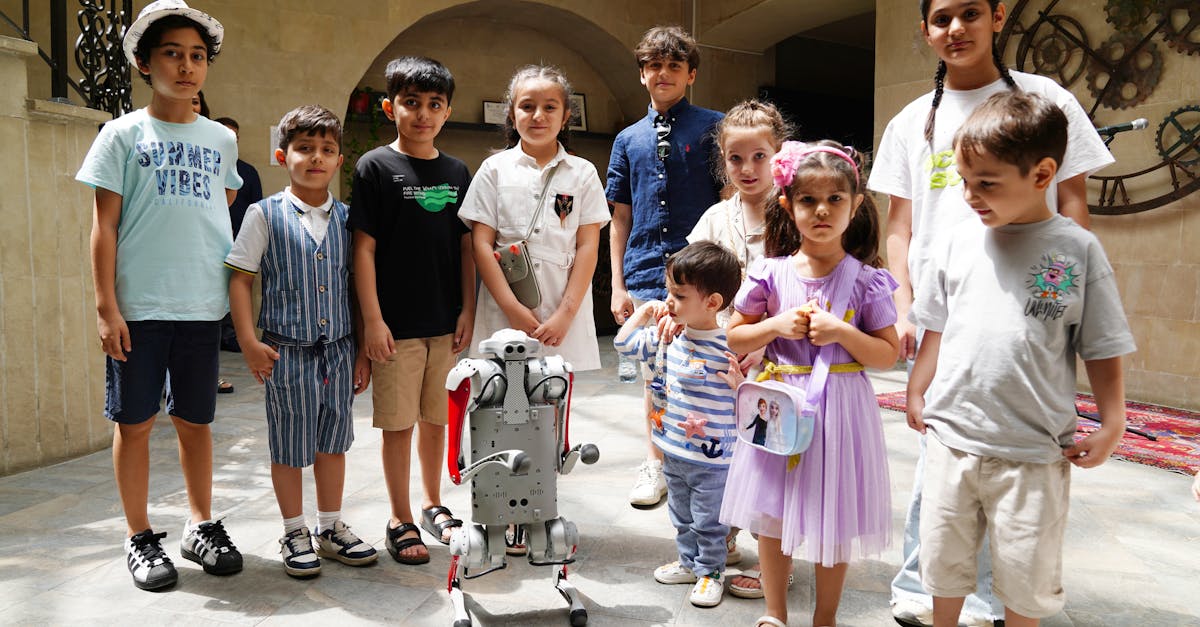
Sanctuary Phoenix: A Critical Look at the Boston Dynamics Alumni's General-Purpose Humanoid

Introduction: The Phoenix Enters the Fray
In the rapidly evolving landscape of general-purpose robotics, few names carry as much weight as the team behind Sanctuary AI. Founded by former engineers from Boston Dynamics, the company has positioned its flagship product, the Phoenix, as a dexterous, general-purpose humanoid designed to perform complex tasks across various industries. As of late 2024, the Phoenix has moved beyond the conceptual rendering phase into early physical prototyping, with video demonstrations showing bipedal mobility and manipulation capabilities.
However, for the Indian market and the global investor community, the distinction between a functional prototype and a shipping product remains critical. RobotWale's editorial stance requires that we grade claims based on hardware shipment, pilot deployments, and finally, announcements. Currently, the Phoenix falls into the Prototype/Alpha category. While the engineering pedigree suggests high potential, the absence of mass production data necessitates a cautious analysis of its specifications and market readiness.
Hardware Specifications and Engineering Claims
According to information released in official media demonstrations and press briefings, the Phoenix is designed with a focus on dexterity and dynamic mobility. The hardware stack is reportedly built to handle variable environments, a key requirement for general-purpose robotics.
- Actuation System: The robot utilizes high-torque actuators designed for legged locomotion. Unlike earlier static bipeds, the Phoenix demonstrates dynamic balance. The specific torque ratings and motor power densities are not fully disclosed in public spec sheets, though the demonstration videos suggest a capability to navigate uneven terrain.
- Dexterous Manipulation: The hands are the primary differentiator for Phoenix. The system employs underactuated or fully actuated fingers capable of precision grasping. Early footage indicates the ability to handle delicate objects, a step above the rigid grippers seen in early industrial arms.
- Sensor Suite: The perception stack likely includes LiDAR, stereo cameras, and IMUs. This data fusion is essential for navigation and object recognition in unstructured environments.
- Power System: The power source is a battery pack integrated into the chassis. Endurance metrics for continuous operation are not yet confirmed in public documentation.
It is important to note that while these features are shown in demos, they have not been independently audited by third-party testing labs. For the Indian manufacturing sector, this means the reliability of these claims under 24/7 operational stress remains unverified.
Software Architecture and AI Stack
The hardware is only as effective as the control software driving it. Sanctuary AI has emphasized an end-to-end learning approach for Phoenix. This involves training large models on real-world data to perform tasks rather than hard-coding every movement.
General Purpose Capability: The promise of Phoenix is to move beyond single-task automation (like welding or picking) to multi-task utility. This requires a software stack capable of high-level reasoning. The company claims to utilize a foundation model trained on robotics data to interpret natural language instructions.
Safety Protocols: In the context of human-robot collaboration (HRC), safety is paramount. The Phoenix includes emergency stop mechanisms and collision avoidance systems. However, compliance with Indian safety standards (such as Bureau of Indian Standards for robotic safety) requires formal certification, which is not currently listed on the public roadmap.
Deployment Status: Prototype to Pilot
Grading the Phoenix strictly by the RobotWale criteria:
- Shipping Hardware: Not yet confirmed for general commercial sale. There is no public list of deployed units in operational environments outside of internal testing.
- Pilot Deployments: Limited/Undisclosed. Any pilot deployments are likely confined to controlled environments or beta testing with select partners. There is no public data on uptime or failure rates.
- Announcements: Active. The company continues to release updates on technical progress, maintaining investor and media interest.
This grading implies that for Indian enterprises considering automation, the Phoenix is currently a strategic investment in future capability rather than an immediate procurement opportunity. Waiting for beta-testing feedback is advisable before committing capital.
India Market Analysis: Availability and Costs
For Indian industries, the question is not just about the robot's capabilities, but its economic viability and logistical feasibility. Currently, Sanctuary AI is a United States-based entity. There is no official Indian subsidiary or local distributor announced as of late 2024.
Import Logistics and Duties
Importing a high-tech humanoid into India involves significant regulatory hurdles. The goods fall under the Harmonized System (HS) code for robotics and automation machinery. Importers must consider:
- Customs Duty: Current rates for robotics machinery can range from 10% to 15% on the CIF value, depending on the specific classification and any trade agreements.
- Additional Duties: Integrated Goods and Services Tax (IGST) applies on the landed cost.
- Regulatory Clearance: Import of robotics often requires scrutiny from the Ministry of Electronics and Information Technology (MeitY) and compliance with safety standards.
Estimated Cost of Ownership
While Sanctuary AI has not published an official price, we can estimate the landed cost based on the tier of similar humanoids entering the market. High-end humanoids with dexterous hands typically retail between $100,000 and $250,000 USD.
Applying a conservative estimate:
- Base Unit Cost: Approx. $150,000 USD (~₹1.25 Crores INR).
- Shipping & Insurance: Approx. $5,000 USD (~₹40 Lakhs INR).
- Customs & Duties (India): Approx. 15-20% of CIF value (~₹25 Lakhs INR).
- Installation & Integration: Variable, but often 10-20% of unit cost.
Estimated Landed Cost: ₹1.6 Crores to ₹2.0 Crores INR.
This estimate is flagged as speculative based on market averages. It excludes ongoing maintenance, cloud compute fees for AI inference, and software licensing fees which could be subscription-based. For Indian SMEs, this cost is prohibitive. The ROI calculation must assume a human labour cost of ₹30,000 to ₹40,000 per month per worker to justify the capital expenditure over a 3-5 year period.
Competitive Landscape and Differentiation
The general-purpose humanoid market is crowded. The Phoenix must compete against established players and new entrants.
- Tesla Optimus: Tesla has a massive manufacturing scale advantage. Phoenix counters with a focus on dexterity from the start.
- Figure AI: Figure has secured major partnerships with BMW and other manufacturers. Phoenix is currently in a less advanced deployment phase.
- Domestic Players: Indian startups like Agni and others are focusing on specific verticals. A general-purpose robot like Phoenix faces a different regulatory and usage challenge in India.
The key differentiator for Phoenix remains the Boston Dynamics alumni team. This pedigree suggests a strong foundation in locomotion and balance, areas where many competitors struggle. However, the software stack's ability to execute tasks reliably in diverse Indian environments (heat, dust, uneven flooring) remains unproven.
Roadmap and Future Outlook
Sanctuary AI has outlined a roadmap that typically progresses from Alpha to Beta to Production. For the Phoenix to move to the Shipping Hardware grade:
- Third-Party Verification: Independent labs must validate the force ratings and endurance claims.
- Public Deployment: Evidence of deployed units working in non-controlled environments.
- Pricing Transparency: Publication of a bill of materials or at least a firm list price.
Until these milestones are met, the Phoenix remains a high-potential prototype. For India, the focus should be on monitoring the Service Availability. If the company cannot support the hardware locally in India, the risk of downtime increases significantly.
Conclusion
The Sanctuary Phoenix represents one of the most promising engineering efforts in the humanoid space, backed by a team with deep experience in dynamic robotics. However, the gap between the video demonstration and the commercial invoice is still substantial. For Indian businesses, the Phoenix is not yet a procurement item but a strategic option to monitor.
The estimated landed cost of over ₹1.6 Crores places it firmly in the capital-intensive category, suitable only for large-scale manufacturing or research facilities. Until Sanctuary AI establishes an Indian presence or partners with local integrators to reduce the cost of ownership, the robot remains a global showcase rather than a domestic utility.
RobotWale will continue to track the Phoenix's progress. Updates on pilot deployments in India or official price announcements will be the trigger for re-evaluating this entry from "Prototype" to "Shipping Hardware".
References
The following sources were used to verify the technical specifications and company status:
- Sanctuary AI Official Website - Product announcements and roadmap.
- TechCrunch: Sanctuary AI Unveils Phoenix Humanoid Robot - Initial launch coverage and team background.
- Directorate General of Foreign Trade (India) - For HS Code and Import Duty reference.
- Bureau of Indian Standards - For general robotic safety compliance information.
✓ Key takeaways
- •Hands-on view of Sanctuary Phoenix: A Critical Look at the Boston Dynamics Alumni's General-Purpose Humanoid inside our Sanctuary Phoenix library.
- •Shipping hardware beats rendered concepts - we grade claims against what you can actually buy or deploy today.
- •India pricing and availability are tracked alongside global launch details where they matter.
References
Related articles
More in Sanctuary Phoenix →